
The selection of an appropriate hydraulic pump—the critical component responsible for the conversion of mechanical energy into hydraulic fluid power—constitutes a fundamental engineering decision with significant implications for system performance, reliability, and service life. Among positive displacement pump configurations, vane pumps and gear pumps represent two predominant architectures, each governed by distinct operating principles and performance characteristics. A rigorous comparative analysis of these two pump typologies is therefore essential to informed hydraulic system design and optimization.
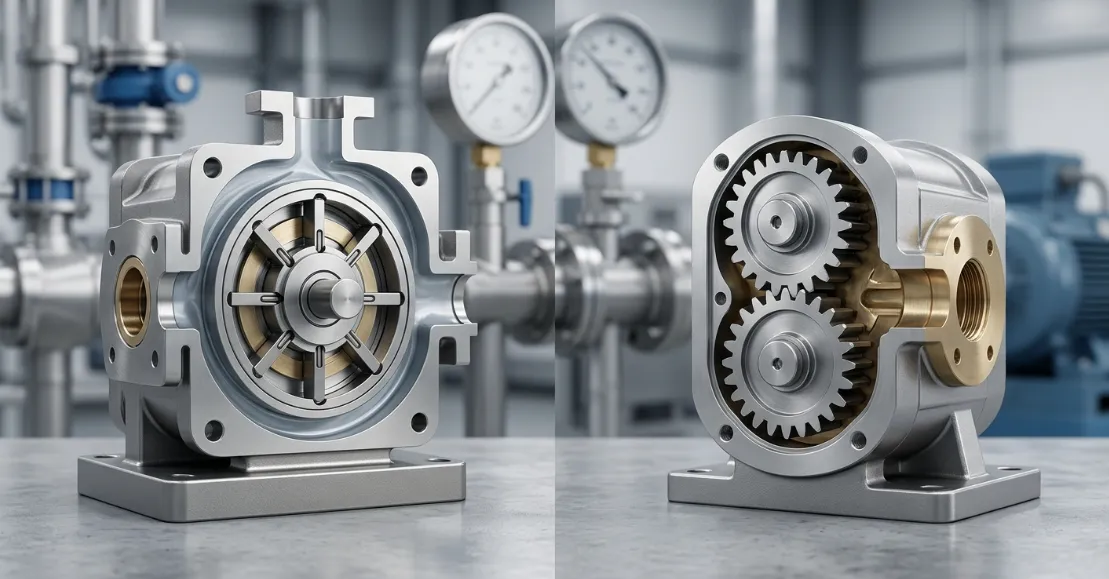
Choosing between a vane pump and a gear pump isn't really about which one is "better" — it depends on what your system actually needs. In this guide, we'll walk through how each type is built, where they shine in terms of efficiency and lifespan, and which applications tend to favor one over the other. The goal is to help you pick the right pump without second-guessing yourself.
Overview of Positive Displacement Pumps
A positive displacement pump moves fluid by trapping a fixed volume and forcing it from the suction side to the discharge side. Unlike centrifugal pumps, flow output is largely independent of discharge pressure, making these designs ideal for hydraulic power transmission.
Both vane pumps and gear pumps belong to the rotary pump family within the positive displacement category. They share the fundamental trait of sealed chambers that expand at the inlet and contract at the outlet, yet they achieve this through very different mechanical means.
What Is a Vane Pump?
A vane pump uses a slotted rotor mounted eccentrically inside a cam ring. Sliding vanes extend outward from the rotor slots under centrifugal force and spring pressure, creating sealed chambers between adjacent vanes, the rotor, and the cam ring.
As the rotor turns, the eccentricity causes these chambers to expand at the inlet port — drawing fluid in — and compress at the outlet port — pushing fluid out. This rotary pump working principle delivers smooth, low-pulsation flow that suits noise-sensitive applications.
Balanced vane pump designs use an elliptical cam ring with two inlet and two outlet ports, canceling radial bearing loads and extending service life. This makes the vane pump a popular choice among hydraulic pump types for mid-pressure industrial systems.
What Is a Gear Pump?
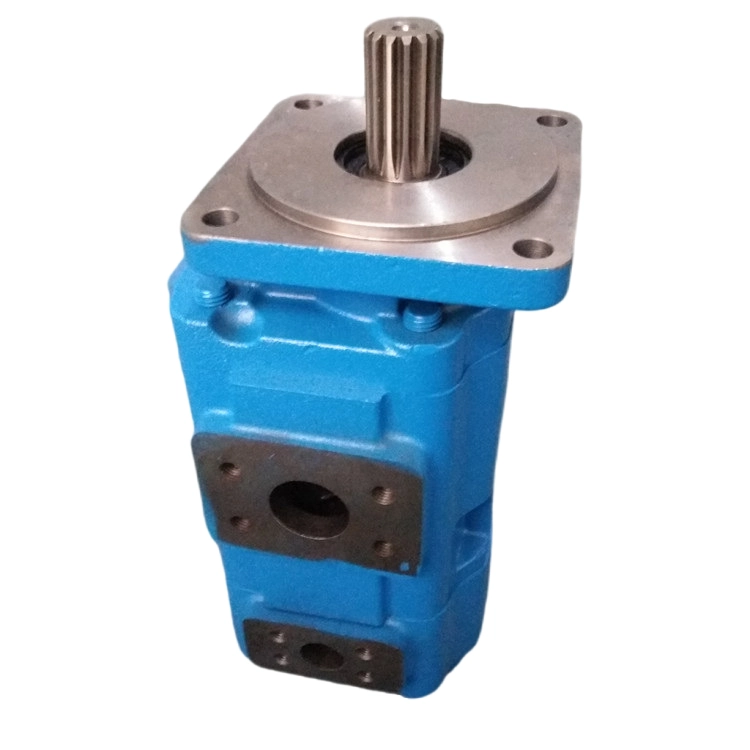
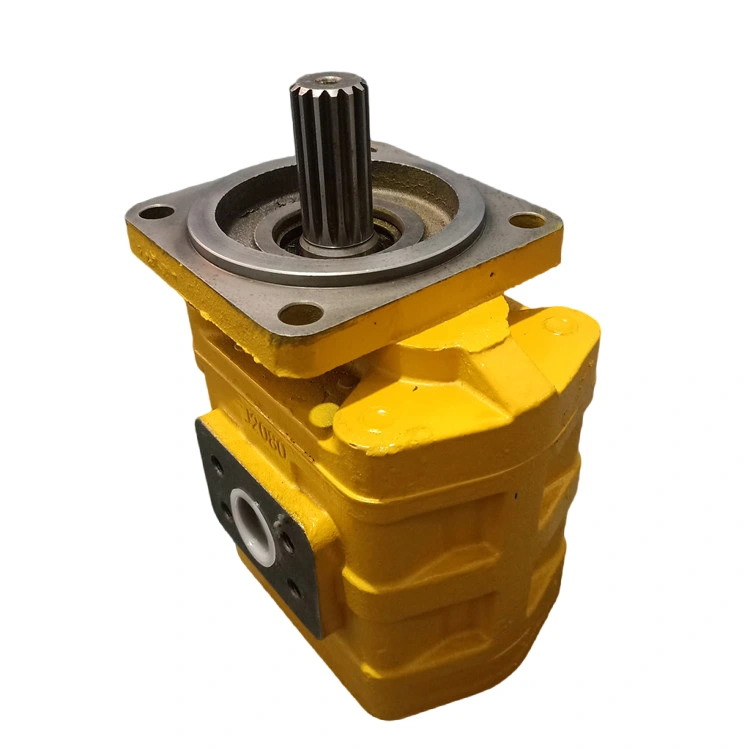
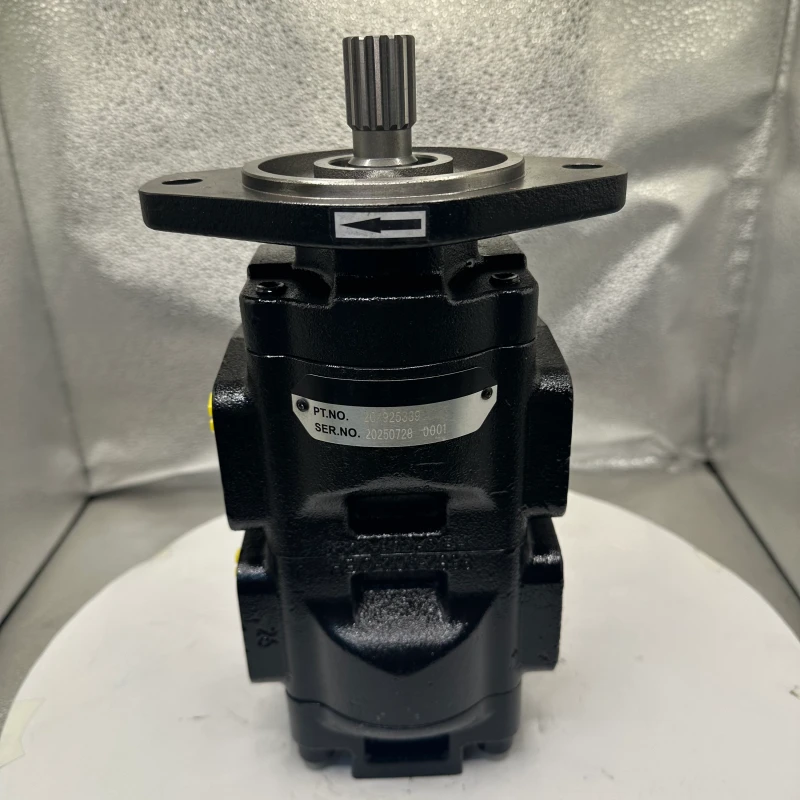
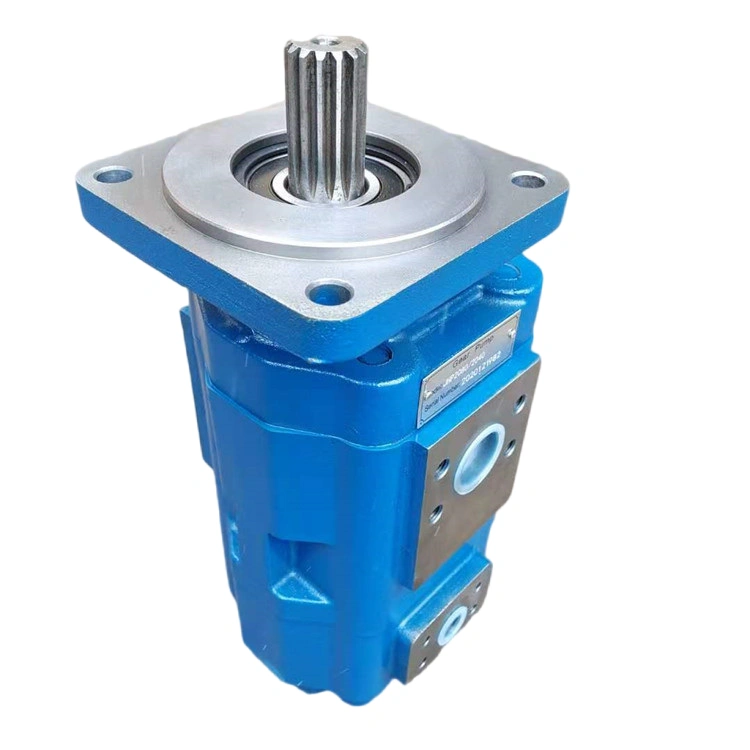
A gear pump traps fluid between meshing gear teeth and the pump housing, carrying it from the suction port to the discharge port. The two most common variants are external gear pumps (two identical spur gears) and internal gear pumps (a smaller gear rotating inside a larger ring gear).
In an external gear pump, fluid fills the spaces between teeth on both gears as they unmesh at the inlet. The trapped volumes travel along the housing wall and are squeezed out as the teeth re-engage at the outlet.
Gear pumps are among the simplest hydraulic pump types available. Their rugged construction, few moving parts, and tolerance for contaminated or viscous fluids make them the workhorse of mobile hydraulics and fuel transfer systems.
Vane Pump vs Gear Pump — Key Differences
Choosing between these two positive displacement pump designs requires comparing them across multiple engineering parameters. The differences in construction directly influence pressure capability, noise, efficiency, and total cost of ownership.
Below is a structured side-by-side breakdown covering the most critical selection criteria engineers evaluate when specifying a rotary pump for hydraulic or fluid-transfer duty.
Comparison Table
| Parameter | Vane Pump | Gear Pump |
|---|---|---|
| Operating Principle | Sliding vanes in slotted rotor | Meshing gear teeth |
| Pressure Range | Up to ~175 bar (2,500 psi) | Up to ~250 bar (3,600 psi) |
| Flow Consistency | Low pulsation, smooth output | Moderate pulsation |
| Efficiency (Volumetric) | 85–95% | 80–90% |
| Noise Level | Quieter operation | Louder at high speed |
| Fluid Viscosity Tolerance | Moderate (needs clean fluid) | High (handles thicker fluids) |
| Maintenance Complexity | Moderate (vane wear) | Low (fewer moving parts) |
| Cost | Medium | Low |
| Typical Speed Range | 1,000–3,000 RPM | 600–3,600 RPM |
Pump Efficiency Comparison
Volumetric efficiency measures how much of the theoretical displaced volume actually reaches the outlet. Vane pumps typically achieve 85–95% volumetric efficiency because the spring-loaded vanes maintain tight contact with the cam ring, minimizing internal leakage paths.
Gear pumps generally fall in the 80–90% range. Leakage occurs across gear tooth tips, between gear faces and side plates, and at the meshing point. However, when pumping high-viscosity fluids, the thicker oil naturally seals these clearances, and gear pump efficiency can approach vane pump levels.
Mechanical efficiency also matters. Vane pumps experience friction at every vane tip and slot, which increases with pressure. Gear pumps have fewer sliding contacts but generate losses through fluid shear between teeth. The net result is that overall pump efficiency comparison favors vane pumps in clean, mid-pressure systems and gear pumps in high-viscosity or contaminated environments.
Durability and Wear Patterns
Vane pumps wear primarily at the vane tips and cam ring surface. As vanes slide in and out of their slots, abrasive particles in the fluid accelerate erosion. This is why vane pumps demand clean, well-filtered hydraulic oil — typically 20-micron or finer filtration.
Gear pumps wear at the gear tooth flanks, tooth tips, and side plates. Because the clearances are larger and the geometry is simpler, gear pumps tolerate moderate contamination without catastrophic failure. This makes them more forgiving in field environments.
In clean-fluid systems with proper filtration, vane pumps can deliver 15,000–20,000+ hours of service. Gear pumps in harsh mobile applications often reach 5,000–10,000 hours before efficiency drops below acceptable levels, though their lower replacement cost offsets shorter intervals.
Rotary Pump Working Principle — How Each Design Moves Fluid
Understanding the fluid displacement mechanism in each pump clarifies why performance characteristics differ. Both designs are positive displacement pumps, but the geometry of their sealed chambers creates distinct flow behaviors.
The key distinction lies in how each pump forms, transports, and collapses its displacement chambers during a single shaft revolution.
Fluid Path in a Vane Pump
Fluid enters the vane pump through the inlet port where the rotor-to-cam-ring eccentricity is increasing. As the rotor turns, adjacent vanes move apart, expanding the chamber volume and creating a low-pressure zone that draws fluid in.
The trapped fluid travels with the rotating vane chamber around the cam ring. As the chamber approaches the outlet port, the eccentricity decreases, compressing the volume between vanes and forcing fluid out at system pressure.
Because multiple vane chambers overlap the inlet and outlet ports simultaneously, flow delivery is nearly continuous. This overlap is what gives vane pumps their characteristically smooth, low-pulsation output — a critical advantage in noise-sensitive hydraulic pump types.
Fluid Path in a Gear Pump
In an external gear pump, fluid enters the suction port where the two gears unmesh. The expanding space between separating teeth creates a vacuum that pulls fluid into the tooth valleys.
Each gear carries fluid in the pockets between its teeth, trapped between the tooth surfaces and the tight-clearance housing. The fluid travels along the outer periphery of both gears toward the discharge side.
At the outlet, the gears re-mesh. The converging teeth reduce the trapped volume to near zero, displacing fluid into the discharge line. The tight mesh point acts as a seal separating high-pressure discharge from low-pressure suction — this trapped-volume sealing is fundamental to the gear pump's positive displacement action.
Application Suitability Table
Real-world pump selection depends on matching the pump's strengths to the application's demands. Pressure requirements, flow quality, environmental conditions, and budget all influence whether a vane pump or gear pump is the better fit.
The table below maps common applications to the recommended pump type with a brief justification for each choice.
| Application | Recommended Pump | Reason |
|---|---|---|
| Mobile hydraulics (construction) | Gear Pump | Rugged, tolerates contamination |
| Industrial presses | Vane Pump | Smooth flow, lower noise |
| Fuel transfer | Gear Pump | Handles viscous fluids |
| Machine tool lubrication | Vane Pump | Precise, low-pulsation delivery |
| Automotive power steering | Vane Pump | Compact, quiet |
| Log splitters / small equipment | Gear Pump | Low cost, simple design |
Advantages and Limitations
No single pump design is universally superior. Each positive displacement pump type carries inherent trade-offs shaped by its mechanical architecture. Evaluating pros and cons in context leads to better system-level decisions.
Vane Pump Pros and Cons
Advantages:
- Smooth, low-pulsation flow reduces downstream pressure ripple and noise
- Self-compensating vane wear — vanes extend to maintain cam ring contact as tips erode
- Balanced designs eliminate radial bearing loads, extending bearing life
- Good volumetric efficiency in clean-fluid systems (85–95%)
- Variable displacement versions available for energy-saving circuits
Limitations:
- Sensitive to fluid contamination — particles accelerate vane and cam ring wear
- Lower maximum pressure capability compared to gear pumps (~175 bar vs ~250 bar)
- Higher initial cost and more complex internal assembly
- Not well-suited for very high-viscosity fluids that resist vane movement
Gear Pump Pros and Cons
Advantages:
- Simple construction with few moving parts — easy to manufacture and maintain
- Low cost makes them economical for budget-sensitive projects
- High-pressure capability (up to ~250 bar) in a compact package
- Tolerates contaminated and high-viscosity fluids better than vane designs
- Wide speed range (600–3,600 RPM) offers flexible system integration
Limitations:
- Higher flow pulsation creates pressure ripple and system noise
- Fixed displacement only — no built-in flow control without external valving
- Volumetric efficiency drops faster as clearances wear
- Louder operation, especially at high speeds, limits use in noise-sensitive environments
How to Choose Between a Vane Pump and a Gear Pump
The right choice depends on your system's specific operating conditions, not on which pump is "better" in the abstract. A structured decision framework helps engineers weigh competing requirements and arrive at the optimal hydraulic pump type.
Start by defining your non-negotiable constraints — maximum pressure, noise limits, fluid type — then evaluate secondary factors like cost, maintenance access, and expected service life.
Decision Criteria Checklist
Use this checklist to systematically narrow your selection:
- System pressure: If sustained pressure exceeds 175 bar, a gear pump is the safer choice
- Noise requirements: If the system operates near personnel or in enclosed spaces, a vane pump's quieter operation is advantageous
- Fluid cleanliness: If filtration cannot be maintained below 20 microns, choose a gear pump for contamination tolerance
- Fluid viscosity: For thick oils or fluids above ISO VG 68, gear pumps handle the load more reliably
- Flow quality: If actuators or valves require low-pulsation flow, vane pumps deliver smoother output
- Budget constraints: Gear pumps cost less upfront and are cheaper to replace
- Maintenance access: In remote or hard-to-service locations, gear pumps' simplicity reduces downtime
- Variable displacement need: If energy savings through flow control matter, vane pumps offer variable displacement options
- Speed range: Confirm your drive speed falls within the pump's optimal RPM window
- Space envelope: Both are compact, but gear pumps often have a smaller footprint at equivalent displacement
Pro tip: When two or more criteria conflict — for example, you need low noise but also high contamination tolerance — consider an internal gear pump as a hybrid solution that offers quieter operation than external gear pumps with better contamination handling than vane designs.
Frequently Asked Questions (FAQ)
Which pump is more efficient — vane or gear?
Vane pumps generally achieve higher volumetric efficiency (85–95%) compared to gear pumps (80–90%) because spring-loaded vanes maintain tighter internal sealing. However, gear pumps can match or approach vane pump efficiency in low-pressure applications with high-viscosity fluids, where the thicker oil naturally reduces internal leakage. The best pump efficiency comparison depends on your specific operating conditions.
Can a gear pump replace a vane pump in a hydraulic system?
In many cases, yes — both are positive displacement pumps delivering similar flow rates. However, engineers must account for increased flow pulsation, higher noise levels, and potential pressure ripple effects on downstream components. Adding pulsation dampeners or accumulators can mitigate these differences, but the total system cost may offset the gear pump's lower unit price.
Which pump lasts longer?
Service life depends heavily on operating conditions. Gear pumps often outlast vane pumps in dirty, harsh environments because they tolerate contamination better. Vane pumps can deliver longer service life — 15,000 to 20,000+ hours — when fluid is clean and well-filtered. The answer comes down to how well the fluid condition matches each pump's design requirements.
Are vane pumps quieter than gear pumps?
Yes. The sliding-vane design produces significantly less pressure ripple than meshing gear teeth, resulting in noticeably lower noise levels during operation. This is why vane pumps dominate in automotive power steering, indoor industrial machinery, and other applications where acoustic comfort matters. Noise differences can be 5–10 dB or more at comparable operating speeds.
What type of fluid works best in each pump?
Gear pumps handle a wider viscosity range and perform well with thicker fluids, greases, and even mildly contaminated oils. Vane pumps prefer low-to-medium viscosity, clean hydraulic oils — typically ISO VG 32 to VG 68 — with filtration at 20 microns or finer. Using the wrong fluid viscosity in either pump accelerates wear and reduces volumetric efficiency.
Is a vane pump a positive displacement pump?
Yes. Both vane pumps and gear pumps are classified as positive displacement, rotary pumps. They trap a fixed volume of fluid per revolution and force it from inlet to outlet regardless of discharge pressure. This distinguishes them from dynamic pumps like centrifugal designs, where flow varies significantly with back-pressure.