
Every hydraulic system is only as strong as its pump. Choosing the wrong type can slash efficiency by up to 30%, increase maintenance costs, and shorten equipment lifespan dramatically.
This guide breaks down the major hydraulic pump types so you can match the right positive displacement pump to your exact application. Whether you're specifying a pump for mobile equipment, industrial presses, or agricultural machinery, the information here will help you make a confident, cost-effective decision.
How Hydraulic Pumps Work — Core Principles
Positive Displacement vs. Non-Positive Displacement
A positive displacement pump traps a fixed volume of fluid and forces it into the discharge line with each mechanical cycle. This design guarantees consistent flow output regardless of downstream pressure changes.
Non-positive displacement pumps (centrifugal types) rely on fluid velocity to generate pressure. They are common in water systems but rarely used in hydraulic power applications because they cannot maintain flow against high back-pressure.
Nearly all hydraulic systems use positive displacement designs. Gear pumps, vane pumps, and piston pumps all fall into this category, differing primarily in how they capture and move fluid.
Key Performance Metrics
Pressure rating defines the maximum operating pressure a pump can sustain without damage or excessive internal leakage. It is measured in PSI or bar.
Volumetric efficiency compares actual fluid output to theoretical output. Higher percentages mean less internal leakage and better energy conversion.
Flow rate indicates the volume of fluid delivered per unit of time, typically expressed in gallons per minute (GPM) or liters per minute (LPM). Noise level matters in factory and operator-proximity environments where prolonged exposure affects safety and comfort.
These four criteria form the basis for every comparison in this article.
Main Types of Hydraulic Pumps Compared
Gear Pumps
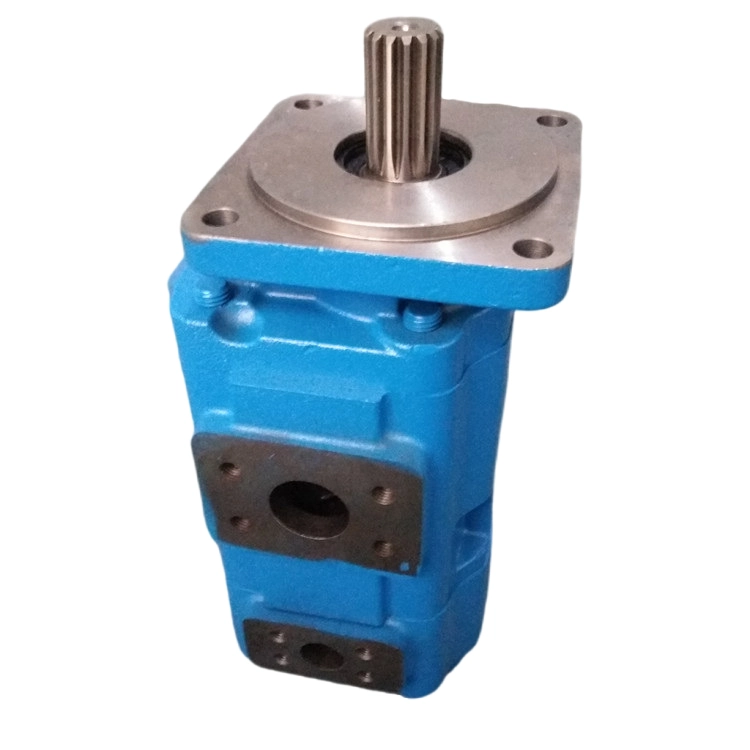
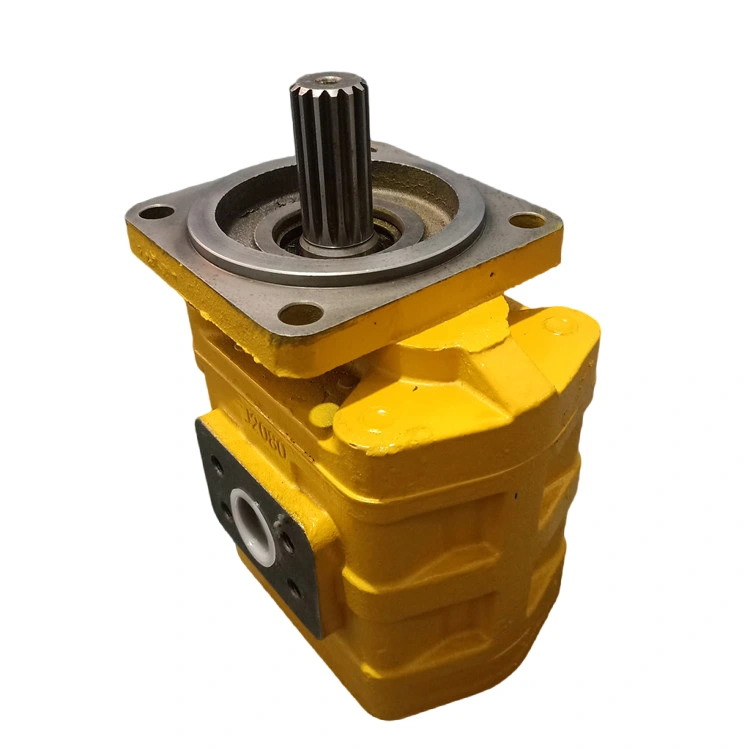
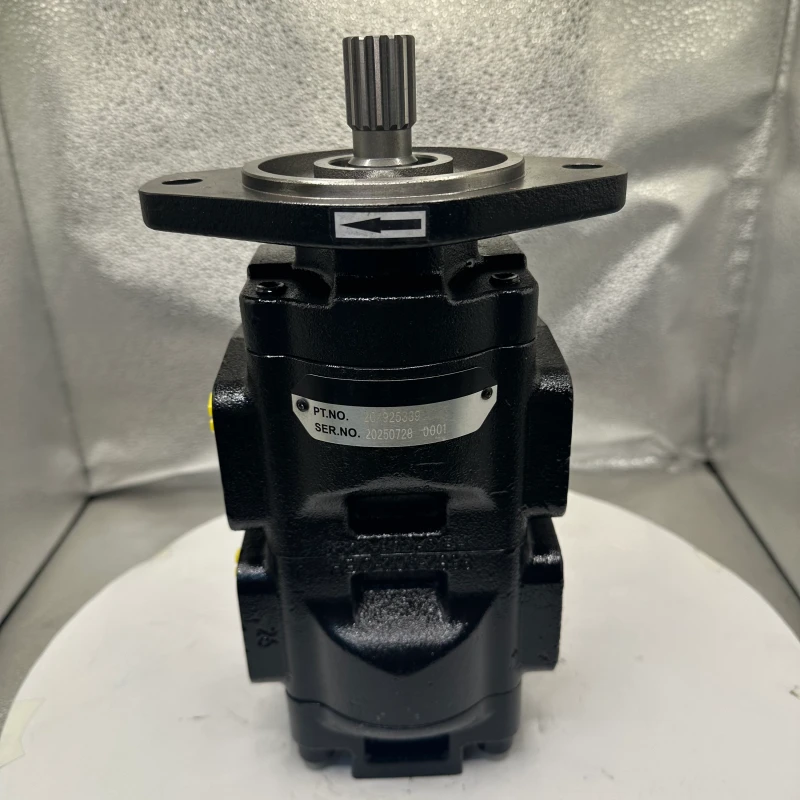
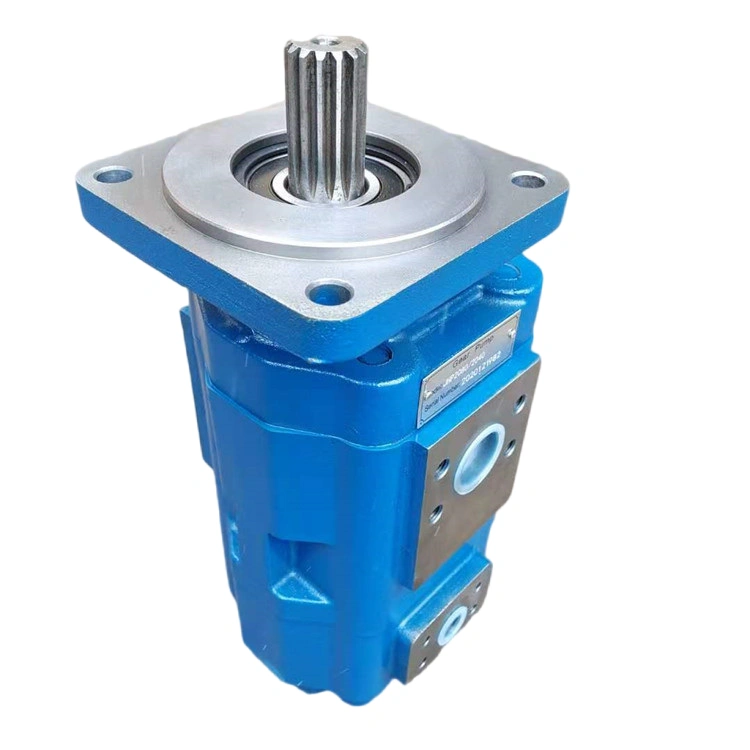
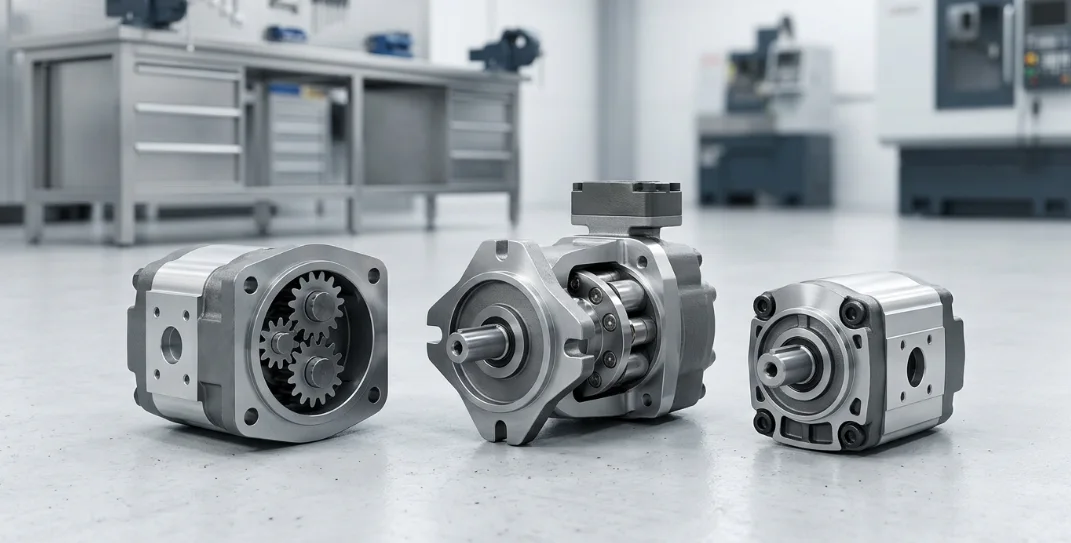
Gear pumps use two meshing gears to move fluid from the inlet to the outlet. They are fixed displacement, meaning they deliver the same volume per revolution regardless of system demand.
Gear pump efficiency typically ranges from 80% to 91% volumetric efficiency. The simple design means fewer internal components, lower manufacturing costs, and straightforward maintenance.
These pumps perform best in low-to-medium pressure applications up to approximately 3,500 PSI. They tolerate contamination better than more complex pump types, making them popular in rugged mobile and agricultural equipment.
Vane Pumps
Vane pumps use a slotted rotor with sliding vanes that press against a cam ring. As the rotor spins, the expanding and contracting chambers draw in and expel fluid.
A key vane pump hydraulic system advantage is balanced internal loading. This design reduces bearing stress, extends service life, and produces notably quiet operation compared to gear pumps.
Vane pumps deliver steady, pulse-free flow ideal for mid-pressure industrial machinery operating up to 3,000 PSI. They are a strong choice when noise reduction and smooth actuator motion are priorities.
Piston Pumps (Axial & Radial)
Piston pumps use reciprocating pistons within a cylinder block to displace fluid. Axial piston designs angle the pistons parallel to the drive shaft, while radial designs orient them perpendicular.
Piston pump performance reaches 92% to 98% volumetric efficiency — the highest of any hydraulic pump type. They handle pressures from 5,000 PSI up to 10,000 PSI in heavy-duty configurations.
Variable displacement capability allows piston pumps to adjust output flow on demand. This precision control translates directly into energy savings and finer actuator management in complex systems.
Hydraulic Pump Comparison Table
The following table summarizes the critical differences between the three main pump types to support your hydraulic pump selection process.
| Feature | Gear Pump | Vane Pump | Piston Pump |
|---|---|---|---|
| Max Pressure (PSI) | 3,000–3,500 | 2,500–3,000 | 5,000–10,000 |
| Volumetric Efficiency | 80–91% | 85–93% | 92–98% |
| Noise Level | High | Low–Medium | Medium |
| Cost | Low | Medium | High |
| Maintenance Complexity | Simple | Moderate | Complex |
| Variable Displacement | No | Limited | Yes |
| Typical Lifespan | Moderate | Moderate–Long | Long |
Hydraulic Pump Selection Guide by Application
Application Suitability Table
Matching pump type to application is the most important step in system design. Use this table as a starting reference for your hydraulic pump selection.
| Application | Recommended Pump Type | Reason |
|---|---|---|
| Mobile equipment (loaders, excavators) | Piston | High pressure, variable flow |
| Industrial presses | Vane or Piston | Steady pressure, low noise |
| Log splitters / small machinery | Gear | Cost-effective, simple |
| Injection molding | Piston (variable) | Energy savings, precision |
| Agricultural implements | Gear | Durability, easy maintenance |
Factors That Influence Hydraulic Pump Selection
Operating pressure and flow requirements are the primary filters. A pump must meet peak system demand without exceeding its rated pressure ceiling.
Duty cycle and ambient conditions determine thermal stress and wear rates. Continuous-duty applications demand pumps with superior heat dissipation and robust sealing.
Fluid type and contamination tolerance affect internal wear. Gear pumps handle dirty environments better, while piston pumps require cleaner fluid to maintain tight tolerances.
Budget vs. total cost of ownership is often overlooked. A low-cost gear pump may cost more over time if efficiency losses increase energy bills or if frequent replacements are needed.
Efficiency and Longevity Tips
Maximizing Gear Pump Efficiency
Select a hydraulic fluid with the correct viscosity for your operating temperature range. Fluid that is too thin increases internal leakage, while fluid that is too thick raises input torque requirements and generates excess heat.
Maintain filtration at or below the pump manufacturer's recommended cleanliness level (typically ISO 19/17/14 for gear pumps). Even though gear pumps tolerate contamination better than other types, particles accelerate wear on gear faces and housing bores.
Set relief valves correctly to prevent the pump from operating above its rated pressure. Chronic over-pressurization is the fastest path to premature gear pump failure.
Extending Piston Pump Performance
Follow scheduled maintenance intervals strictly. Piston pumps have tight internal clearances, and even minor wear on swashplates or valve plates degrades piston pump performance rapidly.
Contamination control is critical. Use high-efficiency filters (ISO 16/14/11 or better) and monitor particle counts regularly. A single contamination event can score cylinder bores and destroy slipper pads.
Thermal management prevents seal degradation and fluid breakdown. Ensure the system reservoir and cooler are sized to keep fluid temperature below 180°F (82°C) under peak load conditions.
Frequently Asked Questions (FAQ)
Which hydraulic pump type is most efficient?
Piston pumps deliver the highest volumetric efficiency, reaching up to 98% in well-maintained systems. This makes them the top choice for demanding applications where energy conservation and precise flow control are priorities. Their superior piston pump performance justifies the higher upfront investment in high-duty-cycle operations.
What is the cheapest hydraulic pump option?
Gear pumps offer the lowest upfront cost and simplest maintenance requirements. They are well-suited for light-to-medium duty cycles where maximum efficiency is less critical than reliability and budget constraints. Their straightforward design means replacement parts are widely available and inexpensive.
Can I use a vane pump in a high-pressure system?
Vane pumps are generally limited to approximately 3,000 PSI. For systems requiring higher pressures, a piston pump is the better hydraulic pump selection. Pushing a vane pump beyond its rated pressure accelerates vane tip wear and causes rapid efficiency loss.
How do I choose between fixed and variable displacement?
Variable displacement pumps (primarily piston types) save energy in systems with fluctuating demand by reducing output when full flow is not needed. Fixed displacement pumps (gear and most vane designs) suit constant-flow applications where the system always requires the same volume. The energy savings from variable displacement often pay back the higher purchase price within one to two years in industrial settings.
What is a positive displacement pump?
A positive displacement pump moves a fixed volume of fluid per revolution, ensuring consistent flow regardless of system pressure. All three main hydraulic pump types — gear, vane, and piston — fall into this category. This operating principle is what makes them suitable for hydraulic power transmission, where predictable flow under high pressure is essential.
Final Verdict — Matching Pump Type to Your Needs
There is no single "best" hydraulic pump. The right choice depends entirely on your system's specific pressure, flow, and duty-cycle requirements.
Choose a gear pump when simplicity, low cost, and contamination tolerance are your priorities. They excel in agricultural equipment, log splitters, and other applications where moderate pressure and easy serviceability matter most.
Choose a vane pump when quiet operation and smooth, pulse-free flow are essential. A vane pump hydraulic system is ideal for indoor industrial machinery, injection molding support circuits, and applications where operator comfort is a factor.
Choose a piston pump when maximum pressure, peak efficiency, and variable displacement control are non-negotiable. Mobile heavy equipment, high-tonnage presses, and energy-conscious industrial systems all benefit from superior piston pump performance.
Evaluate total cost of ownership — not just purchase price. Factor in energy consumption, maintenance intervals, expected lifespan, and downtime costs. The pump that aligns with all of these variables is the best pump for your application.