
If you've worked with hydraulic or fluid power systems long enough, you've probably had to pick between a vane pump and a gear pump at least once. It's one of those choices that seems straightforward until you realize the wrong call can cost you years of headaches — or a maintenance budget that spirals out of control. There's no one-size-fits-all answer here. It really comes down to what you're pumping, how much pressure you need, and how much noise you're willing to live with.
This comparative analysis presents empirical performance differentials, volumetric and mechanical efficiency data, and application-specific selection criteria to facilitate evidence-based decision-making in hydraulic pump specification. No single pump topology demonstrates universal superiority across all operating conditions; however, systematic evaluation of system parameters will reliably identify the optimal configuration for a given application.
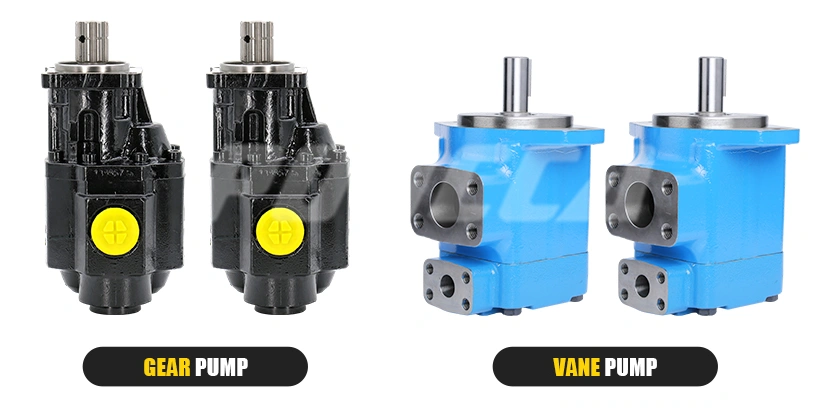
Understanding Positive Displacement Pump Types
Before diving into the vane pump vs gear pump efficiency debate, it helps to understand how each design converts mechanical energy into fluid flow. Both belong to the family of positive displacement pump types, meaning they trap a fixed volume of fluid and force it from inlet to outlet with each revolution.
How Vane Pumps Work
A vane pump uses a rotor mounted eccentrically inside a cam ring. Sliding vanes sit in slots on the rotor and extend outward under centrifugal force or spring pressure, maintaining contact with the cam ring's inner surface.
As the rotor turns, the chambers formed between adjacent vanes change volume. Fluid enters as chambers expand and is pushed out as they contract. This design is central to vane pump applications industrial settings demand — particularly where smooth, low-pulsation flow is critical.
The self-compensating nature of the vanes means they extend as they wear, maintaining tight internal clearances without manual adjustment.
How Gear Pumps Work
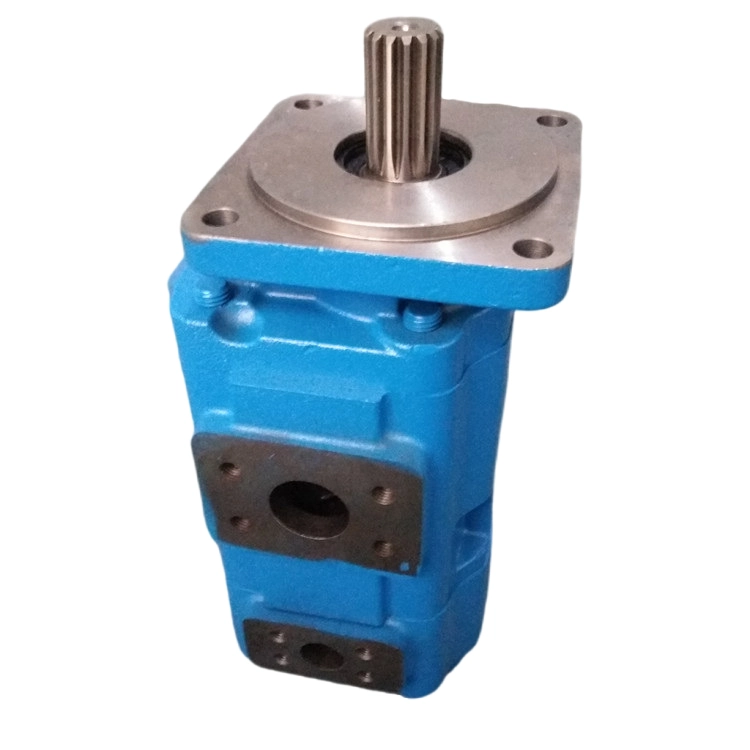
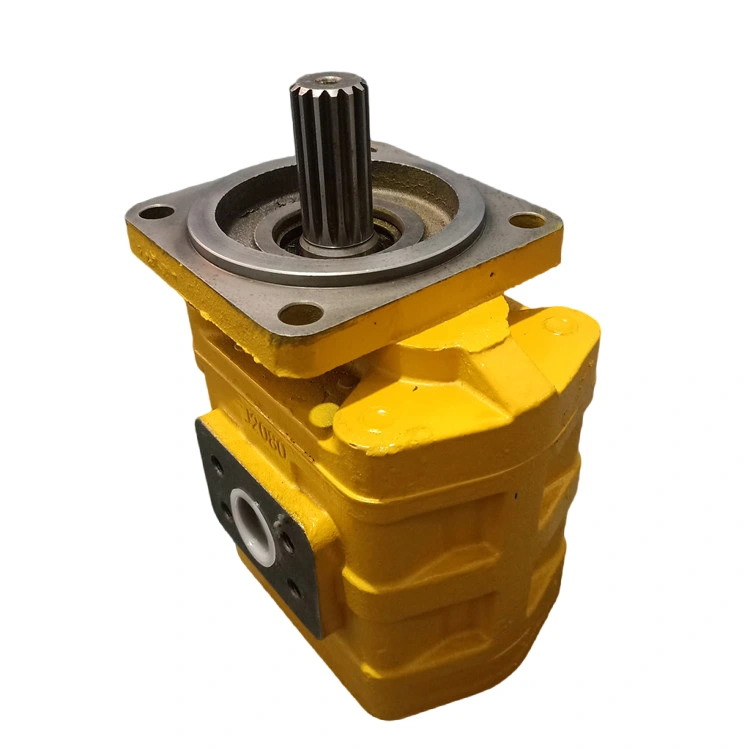
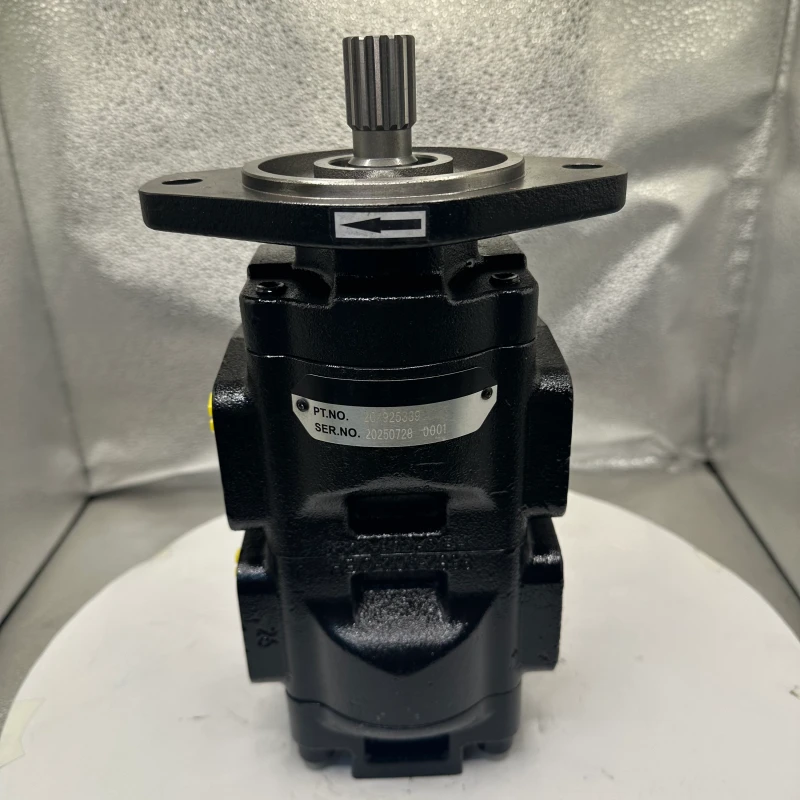
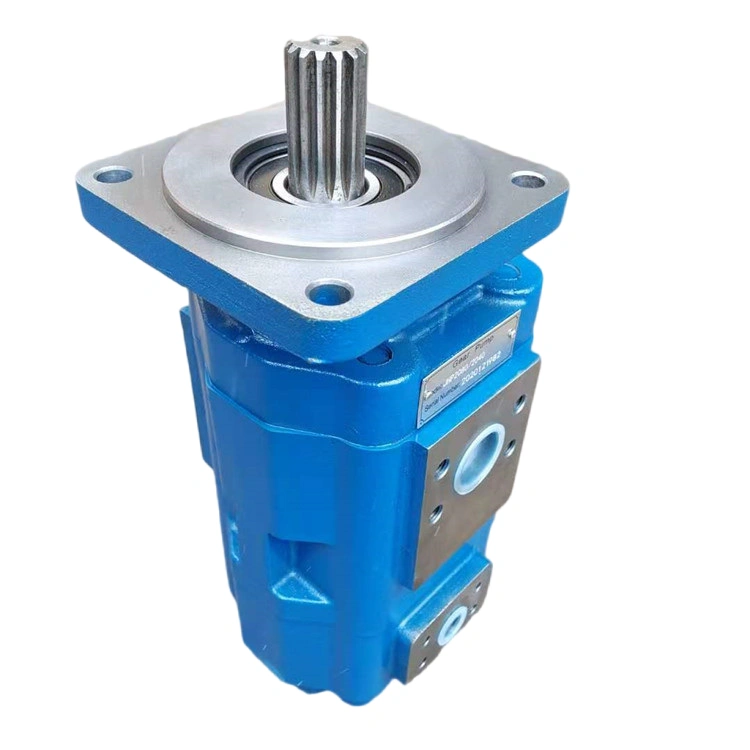
Gear pumps come in two primary configurations: external gear and internal gear. External gear pumps use two identical meshing gears rotating in opposite directions inside a close-tolerance housing.
Fluid is carried in the spaces between gear teeth and the housing wall, then squeezed out as the teeth mesh together at the outlet side. Internal gear designs use a smaller gear rotating inside a larger ring gear, with a crescent-shaped divider separating the inlet and outlet zones.
The simplicity of this meshing action gives gear pumps their reputation for ruggedness and reliability in harsh conditions.
Where They Overlap
Both vane and gear pumps are positive displacement designs. This means both deliver a consistent, predictable flow rate per revolution regardless of downstream pressure — up to their rated maximum.
Both are widely used in hydraulic power units, lubrication systems, and fluid transfer applications. The overlap in their operating envelopes is exactly what makes the selection decision challenging for engineers working in the moderate-pressure, moderate-flow range.
Vane Pump vs Gear Pump Efficiency — Direct Comparison
Efficiency is rarely a single number. When comparing these positive displacement pump types, you need to evaluate volumetric efficiency, mechanical efficiency, and overall system efficiency independently.
Volumetric Efficiency
Volumetric efficiency measures how much of the theoretical displaced volume actually reaches the outlet. Vane pumps typically maintain tighter internal clearances over their service life because the vanes continuously self-adjust to compensate for wear.
Gear pumps start with excellent volumetric efficiency — often 90% to 95% — but this degrades faster when handling abrasive or contaminated fluids. The fixed clearances between gear tips and the housing cannot self-compensate, so any wear directly increases internal leakage.
In clean fluid systems, both designs maintain high volumetric efficiency for extended periods. The difference becomes pronounced in applications where fluid cleanliness is difficult to guarantee.
Mechanical Efficiency
Mechanical efficiency accounts for friction losses within the pump. Gear pumps have an inherent advantage here because their primary motion is rotational with minimal sliding contact between components.
Vane pumps introduce friction between the vane tips and the cam ring, as well as between the vane sides and their rotor slots. This sliding contact generates heat and consumes energy, particularly at higher speeds and pressures.
However, modern vane pump designs with optimized materials and coatings have narrowed this gap significantly.
Overall System Efficiency
Overall efficiency combines volumetric and mechanical factors with system-level considerations. Fluid viscosity plays a major role — vane pumps tend to perform better with low-viscosity fluids where their tight clearances minimize slip.
Gear pumps excel with higher-viscosity fluids where the thicker fluid naturally seals the gear-to-housing clearances. Operating pressure and duty cycle further influence which design delivers better energy efficiency in a given installation.
There is no single winner in the vane pump vs gear pump efficiency comparison without specifying the operating conditions.
Head-to-Head Comparison Table
The following table summarizes the key performance parameters for a direct hydraulic pump comparison between vane and gear designs under typical operating conditions.
| Parameter | Vane Pump | Gear Pump |
|---|---|---|
| Pressure Range | Up to 175 bar (typical) | Up to 250 bar (typical) |
| Flow Range | Low to moderate | Low to high |
| Noise Level | Quieter operation | Louder at high speeds |
| Efficiency at Low Viscosity | Higher | Moderate |
| Tolerance to Contamination | Lower | Higher |
| Maintenance Cost | Moderate (vane replacement) | Low (fewer wear parts) |
| Fluid Compatibility | Clean hydraulic oils | Wider range including thicker fluids |
| Lifespan (clean fluid) | Long | Very long |
| Pulsation | Low | Moderate to high |
| Cost (initial) | Moderate | Lower |
Gear Pump Advantages and Disadvantages
Understanding the gear pump advantages and disadvantages helps clarify when this design is the right choice and when its limitations become deal-breakers.
Advantages
- Simplicity: Fewer moving parts mean fewer potential failure points and straightforward maintenance procedures.
- Ruggedness: Gear pumps tolerate contaminated fluids, temperature extremes, and rough handling better than most alternatives.
- High-pressure capability: External gear pumps routinely operate at 200-250 bar, with some designs rated beyond 300 bar.
- Contamination tolerance: The robust gear teeth and housing can handle particulate matter that would destroy a vane pump's cam ring.
- Lower upfront cost: Simpler manufacturing processes and fewer precision components keep initial purchase prices competitive.
- Wide viscosity range: Gear pumps handle everything from thin solvents to heavy oils and greases effectively.
Disadvantages
- Higher noise: The meshing action of gear teeth creates pressure ripples that translate into audible noise, especially at higher speeds.
- Greater pulsation: Flow output varies cyclically as each tooth engages and disengages, creating pressure spikes downstream.
- Fixed displacement only: External gear pumps cannot vary their output without changing speed, limiting control flexibility.
- Efficiency degradation: Once gear tips and housing wear, there is no self-compensating mechanism — efficiency drops permanently until parts are replaced.
- Higher shear: The tight meshing action can degrade shear-sensitive fluids over time.
Vane Pump Advantages and Disadvantages
Vane pumps occupy a performance niche that makes them indispensable in certain applications while unsuitable for others.
Advantages
- Quiet operation: The smooth sliding action of vanes produces significantly less noise than gear meshing, making vane pumps ideal for indoor and noise-sensitive environments.
- Low pulsation: Multiple vanes create overlapping displacement chambers, resulting in smoother flow output with minimal pressure ripple.
- Self-compensating wear: As vane tips wear, the vanes extend further to maintain contact with the cam ring, preserving volumetric efficiency without intervention.
- Variable displacement options: Some vane pump designs allow the cam ring position to shift, enabling variable output without changing rotational speed.
- Excellent low-viscosity performance: Tight clearances maintained by spring-loaded vanes minimize internal leakage with thin fluids.
Disadvantages
- Contamination sensitivity: Particles in the fluid accelerate vane tip and cam ring wear, and can jam vanes in their slots.
- Limited high-pressure capability: Most vane pumps are rated below 175 bar, restricting their use in high-pressure hydraulic systems.
- Vane tip wear: In demanding duty cycles with frequent pressure spikes, vane tips erode faster, requiring periodic replacement.
- Speed limitations: Centrifugal forces at very high speeds can cause vane chatter and accelerated wear.
- Fluid requirements: Vane pumps generally require clean, well-filtered hydraulic oils with adequate lubricity.
Hydraulic Pump Comparison by Application
Theory matters, but application context determines the right choice. The table below maps common industrial scenarios to the recommended pump type based on real-world operating conditions.
| Application | Recommended Pump | Reason |
|---|---|---|
| Mobile hydraulics (construction) | Gear pump | Rugged, handles contamination, compact |
| Industrial presses | Vane pump | Low noise, smooth flow, consistent pressure |
| Fuel transfer | Gear pump | Handles wide viscosity range, self-priming |
| Machine tools | Vane pump | Precision flow, low pulsation, quiet |
| High-pressure systems (>200 bar) | Gear pump | Pressure rating advantage |
| Office/indoor equipment | Vane pump | Noise reduction critical |
| Chemical processing | Gear pump | Material compatibility, handles viscous fluids |
| Plastics injection molding | Vane pump | Variable displacement saves energy |
Key Decision Factors
When selecting between these positive displacement pump types, five factors consistently drive the final decision in practice.
Operating Pressure Requirements
If your system operates above 175 bar continuously, gear pumps are the safer choice. Vane pumps can reach these pressures in short bursts, but sustained high-pressure operation accelerates vane tip wear and reduces service life.
For systems operating below 140 bar, both designs perform well, and other factors should drive the decision.
Fluid Cleanliness and Viscosity
Vane pumps demand clean fluid — typically filtered to ISO 18/16/13 or better. If your system cannot maintain this cleanliness level reliably, a gear pump will deliver longer service life with less maintenance.
Fluid viscosity also matters. Gear pumps handle a broader viscosity range, from thin fuels to heavy gear oils. Vane pumps perform best within a narrower viscosity band, typically 15-100 cSt.
Noise and Pulsation Tolerance
In factory environments where operators work near hydraulic equipment all day, noise levels directly affect worker comfort and regulatory compliance. Vane pumps typically produce 5-10 dB less noise than equivalent gear pumps.
Pulsation affects downstream components too. High pulsation accelerates fatigue in hoses, fittings, and valves. If your system is sensitive to pressure ripple, vane pumps offer a smoother output without requiring additional dampeners.
Budget — Initial vs. Lifecycle Cost
Gear pumps win on initial purchase price almost every time. However, total cost of ownership can favor vane pumps in clean-fluid applications where their self-compensating wear mechanism extends service intervals.
Factor in energy costs as well. Variable displacement vane pumps reduce power consumption during partial-load conditions, potentially saving thousands in electricity costs annually on high-duty-cycle machines.
Space and Weight Constraints
Gear pumps generally offer a better power-to-weight ratio and more compact packaging. For mobile equipment where every kilogram matters, this advantage is significant.
Vane pumps, particularly variable displacement models, tend to be larger and heavier for equivalent flow ratings. In fixed industrial installations where space is less constrained, this rarely matters.
FAQ
Can a vane pump replace a gear pump in an existing system?
Yes, but it requires careful evaluation. You need to match the flow rate and pressure ratings, verify that mounting dimensions are compatible or adapt the mounting, and — critically — upgrade your filtration system. Vane pumps require cleaner fluid than most gear pump installations provide. Budget for finer filters and more frequent fluid analysis to protect your investment.
Which pump lasts longer?
It depends entirely on fluid cleanliness. In systems with well-maintained, clean hydraulic oil, vane pumps can outlast gear pumps because their self-compensating vanes maintain efficiency as they wear. In dirty or contaminated environments, gear pumps survive far longer because their robust construction tolerates particulate matter that would quickly destroy a vane pump's cam ring and vane tips.
Are vane pumps more expensive than gear pumps?
Initial purchase price is typically 20-40% higher for a vane pump compared to an equivalent gear pump. However, total cost of ownership can favor vane pumps in applications where their variable displacement capability reduces energy consumption, or where their longer service life in clean systems offsets the higher upfront investment. Always calculate lifecycle cost, not just purchase price.
Which pump is quieter?
Vane pumps are significantly quieter than gear pumps in nearly all operating conditions. The smooth sliding action of vanes produces less mechanical noise than the repetitive meshing of gear teeth. Vane pumps also generate less flow pulsation, which reduces fluid-borne noise transmitted through piping. For indoor installations, factories with noise regulations, or any environment where operator comfort matters, vane pumps are the preferred choice.
What is the main disadvantage of a vane pump?
Sensitivity to fluid contamination is the primary limitation. Particles in the hydraulic fluid cause rapid wear on vane tips and the cam ring surface, leading to efficiency loss and eventual failure. This means vane pumps require better filtration, more frequent fluid monitoring, and cleaner operating environments than gear pumps. Their lower maximum pressure rating (typically 175 bar vs. 250 bar for gear pumps) is a secondary but significant limitation for high-pressure applications.
Do gear pumps or vane pumps have better efficiency?
Neither design is universally more efficient. Vane pumps deliver higher volumetric efficiency with low-viscosity fluids and maintain that efficiency longer in clean systems due to self-compensating wear. Gear pumps offer better mechanical efficiency due to fewer sliding contacts and perform more efficiently with high-viscosity fluids where the thicker fluid naturally seals internal clearances. The best efficiency for your system depends on your specific fluid, pressure, speed, and duty cycle conditions.