
Consider the following scenario: A maintenance engineer is dispatched to the production floor at 02:00 hours in response to a critical pump failure that has rendered an entire production line inoperative. The equipment nameplate identifies the unit as a piston pump, yet the subsequent requisition for replacement components precipitates a consequential determination — whether to procure pneumatic or hydraulic parts. An erroneous specification at this juncture results in prolonged operational downtime and substantial financial losses.
This confusion is more common than most professionals care to admit. The answer, however, is definitive: a hydraulic piston pump is a hydraulic device. It operates exclusively within hydraulic fluid power transmission systems, using incompressible liquid to generate and transfer force.
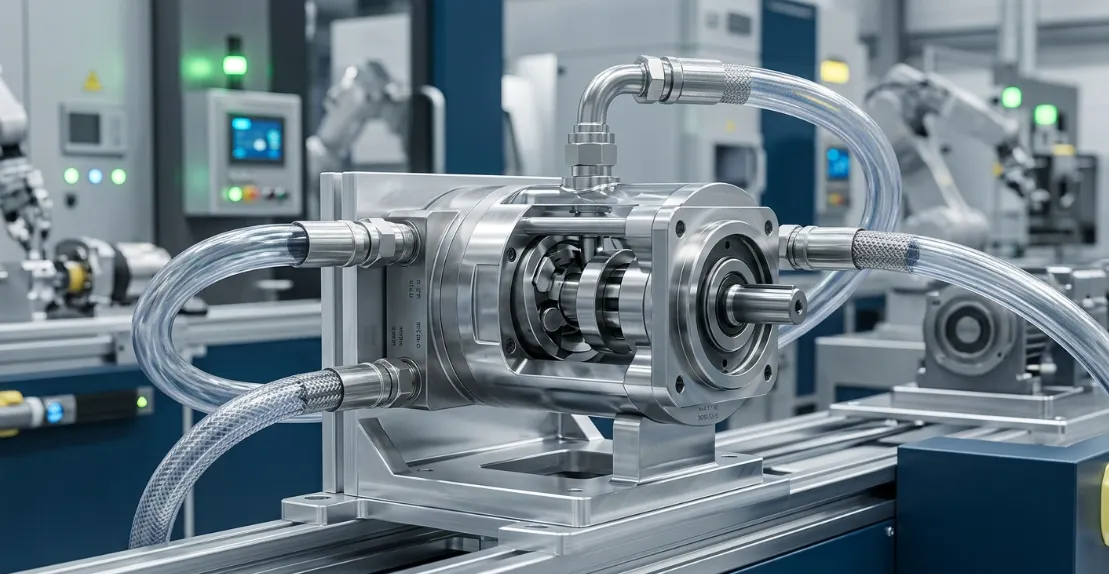
Yet the question persists across maintenance teams, procurement departments, and engineering students alike. Let's explore exactly why — and eliminate the confusion for good.
What Is a Hydraulic Piston Pump?
Core Definition and Classification
A hydraulic piston pump is a positive displacement pump type that uses reciprocating pistons to pressurize and move incompressible hydraulic fluid. It converts mechanical energy into hydraulic energy by trapping a fixed volume of fluid and forcing it through the discharge port under high pressure.
By every engineering classification standard — ISO 4391, SAE, and NFPA — this pump belongs firmly in the hydraulic category. Its design, operating medium, and system integration all confirm its hydraulic identity without exception.
Hydraulic Piston Pump Working Principle
The hydraulic piston pump working principle relies on reciprocating motion to create pressure differentials. During the suction stroke, the piston retracts within its cylinder bore, creating a low-pressure zone that draws hydraulic fluid in through the inlet port.
On the discharge stroke, the piston advances and compresses the trapped fluid. Because hydraulic oil is virtually incompressible, this mechanical force translates directly into fluid pressure — often reaching 350 bar or higher in standard industrial applications.
A valve plate or port plate controls the timing of suction and discharge, ensuring smooth and continuous hydraulic fluid power transmission. Multiple pistons operating in sequence produce near-pulseless flow, which is critical for precision motion control.
Types of Hydraulic Piston Pumps
Hydraulic piston pumps come in several configurations, each optimized for specific pressure ranges and applications. The three primary designs differ in how the pistons are arranged relative to the drive shaft.
| Type | Motion | Pressure Range | Common Use |
|---|---|---|---|
| Axial Piston | Linear/rotary | Up to 700 bar | Mobile hydraulics |
| Radial Piston | Radial outward | Up to 1000 bar | Heavy presses |
| Bent-Axis Piston | Angular drive | Up to 400 bar | Marine systems |
Axial piston pumps dominate mobile and industrial markets due to their compact size and variable displacement capability. Radial piston designs excel where extreme pressure is required, such as metal forming and hydroforming operations.
Pneumatic vs Hydraulic Systems — Key Differences
Understanding the fundamental distinctions between pneumatic vs hydraulic systems makes it immediately clear why a hydraulic piston pump cannot be pneumatic. These two technologies differ in their working medium, operating pressures, and performance characteristics.
Pneumatic systems use compressed air or gas — a compressible medium — to transmit force. Hydraulic systems use incompressible fluid, typically mineral-based oil, to achieve far greater pressures and more precise control.
| Feature | Pneumatic Systems | Hydraulic Systems |
|---|---|---|
| Working Medium | Compressed air/gas | Incompressible fluid (oil) |
| Pressure Range | 6–10 bar typical | 70–700 bar typical |
| Force Output | Low to moderate | Very high |
| Compressibility | Yes | No |
| Speed Control | Difficult | Precise |
| Contamination Risk | Low | Moderate (leaks) |
The pressure differential alone tells the story. A pneumatic system operating at 8 bar simply cannot perform the work of a hydraulic system running at 350 bar. The hydraulic piston pump exists precisely because applications demand the force density that only incompressible fluid power can deliver.
Why the Confusion Exists
Shared Piston Mechanism
The root of the confusion lies in shared mechanical architecture. Both pneumatic cylinders and hydraulic piston pumps use reciprocating pistons sealed within cylindrical bores. Visually, the components can appear nearly identical to someone unfamiliar with the internal specifications.
However, the piston is merely the actuator mechanism — it says nothing about the power medium. A pneumatic piston moves air. A hydraulic piston moves oil. The distinction is not in the hardware geometry but in what flows through it and at what pressure.
Pneumatic-Hydraulic Hybrid Systems
Hybrid systems further blur the line for non-specialists. Air-over-oil systems use compressed air to push hydraulic fluid through a secondary circuit, combining pneumatic supply with hydraulic output. Pneumatic-hydraulic boosters (intensifiers) amplify low-pressure air into high-pressure hydraulic force.
These systems contain both pneumatic and hydraulic components working in tandem. But each individual component remains classified by its own working medium. The hydraulic piston pump within a hybrid system is still hydraulic — it never processes air directly.
Piston Pump Applications Industrial
Heavy Manufacturing and Construction
In construction, hydraulic piston pumps power excavator booms, bucket cylinders, and slew drives. These applications demand variable flow rates and sustained high pressure that only piston pump technology can reliably deliver in mobile environments.
Manufacturing relies on hydraulic piston pumps for injection molding machines, metal forming presses, and press brakes. The ability to maintain constant pressure over extended dwell times makes them indispensable for precision forming operations.
Aerospace and Defense
Flight control actuators on commercial and military aircraft depend on hydraulic piston pumps for their exceptional power-to-weight ratio. These pumps deliver the rapid response and precise positioning required for aileron, elevator, and rudder control surfaces.
Landing gear extension and retraction systems use axial piston pumps operating at 210 bar (3,000 psi) in commercial aviation and up to 350 bar (5,000 psi) in military platforms. Reliability in these applications is non-negotiable.
Energy and Oil & Gas
Downhole pumps in oil extraction use hydraulic piston technology to maintain production from deep wells. Wind turbine pitch control systems rely on compact hydraulic piston pumps to adjust blade angles in response to changing wind conditions.
Offshore platforms use hydraulic piston pumps for BOP (blowout preventer) actuation, crane operations, and pipeline valve control — all environments where the high force density of hydraulic systems is essential.
| Industry | Application | Why Hydraulic Piston Pump |
|---|---|---|
| Construction | Excavator arms | High force, precise control |
| Manufacturing | Press brakes | Sustained high pressure |
| Aerospace | Landing gear | Compact, reliable power |
| Marine | Winch systems | Corrosion-resistant fluid |
| Agriculture | Tractor implements | Variable displacement |
Positive Displacement Pump Types Compared
Positioning the hydraulic piston pump among other positive displacement pump types reinforces its classification. All positive displacement pumps trap and move a fixed volume of fluid per cycle, but they differ significantly in medium, efficiency, and capability.
The comparison below shows that pumps are classified by their working medium first and mechanism second. A piston pump using oil is hydraulic. A piston pump using air is pneumatic. The piston design alone does not determine the category.
| Pump Type | Medium | Displacement | Efficiency |
|---|---|---|---|
| Hydraulic Piston | Oil | Variable/Fixed | 90–95% |
| Gear Pump | Oil | Fixed | 80–90% |
| Vane Pump | Oil | Variable/Fixed | 80–85% |
| Diaphragm (Pneumatic) | Air | Fixed | 70–80% |
| Pneumatic Piston | Air | Fixed | 60–75% |
Hydraulic piston pumps achieve the highest volumetric efficiency of any positive displacement design. Their ability to offer variable displacement further separates them from fixed-displacement alternatives, enabling energy savings of 30–50% in load-sensing systems.
The Definitive Answer
A hydraulic piston pump is hydraulic — by definition, by design, and by function. There is no ambiguity in engineering classification, and three proof points confirm this conclusively.
Working fluid: It operates exclusively with incompressible hydraulic liquid, not compressed gas. Operating pressure: It generates pressures between 70 and 1000 bar, far exceeding any pneumatic system's capability. System integration: It connects to hydraulic circuits containing directional valves, hydraulic cylinders, and fluid reservoirs — not air compressors and pneumatic tubing.
The word "hydraulic" in its name is not a modifier — it is a classification. Any pump labeled as a hydraulic piston pump belongs to the hydraulic fluid power family, and specifying or maintaining it requires hydraulic expertise, hydraulic fluid, and hydraulic-rated components.
FAQ
Can a piston pump be both pneumatic and hydraulic?
No. A single pump operates on one working medium at a time. It is either processing incompressible liquid (hydraulic) or compressible gas (pneumatic). Hybrid systems like air-over-oil boosters use separate, dedicated components for each medium — the hydraulic section remains hydraulic, and the pneumatic section remains pneumatic.
What makes a pump hydraulic rather than pneumatic?
The defining characteristic is the use of incompressible liquid — typically mineral oil or synthetic hydraulic fluid — as the power transmission medium. If the pump pressurizes and moves liquid, it is hydraulic. If it compresses and moves air or gas, it is pneumatic. The mechanical design of the pump (piston, gear, vane) is secondary to this classification.
Are hydraulic piston pumps more efficient than pneumatic pumps?
Yes, significantly. Hydraulic piston pumps achieve 90–95% volumetric efficiency because their working fluid is incompressible — virtually all mechanical input converts to fluid power output. Pneumatic piston pumps typically reach only 60–75% efficiency due to air compressibility, heat losses during compression, and leakage past seals at lower differential pressures.
What fluid does a hydraulic piston pump use?
Most hydraulic piston pumps use mineral-based hydraulic oil conforming to ISO VG 32, 46, or 68 viscosity grades. Synthetic hydraulic fluids (polyalphaolefin, phosphate ester) serve high-temperature or fire-resistant applications. Biodegradable alternatives such as HETG (rapeseed oil) or HEES (synthetic ester) are increasingly specified for environmentally sensitive operations in forestry, marine, and agriculture.
Where is a hydraulic piston pump most commonly used?
Piston pump applications industrial settings span construction equipment (excavators, loaders), manufacturing (injection molding, press brakes, CNC machines), aerospace (flight controls, landing gear), marine (deck cranes, steering gear), and energy (wind turbines, oil extraction). Any application requiring high pressure, precise flow control, or variable displacement in a compact package is a candidate for hydraulic piston pump technology.