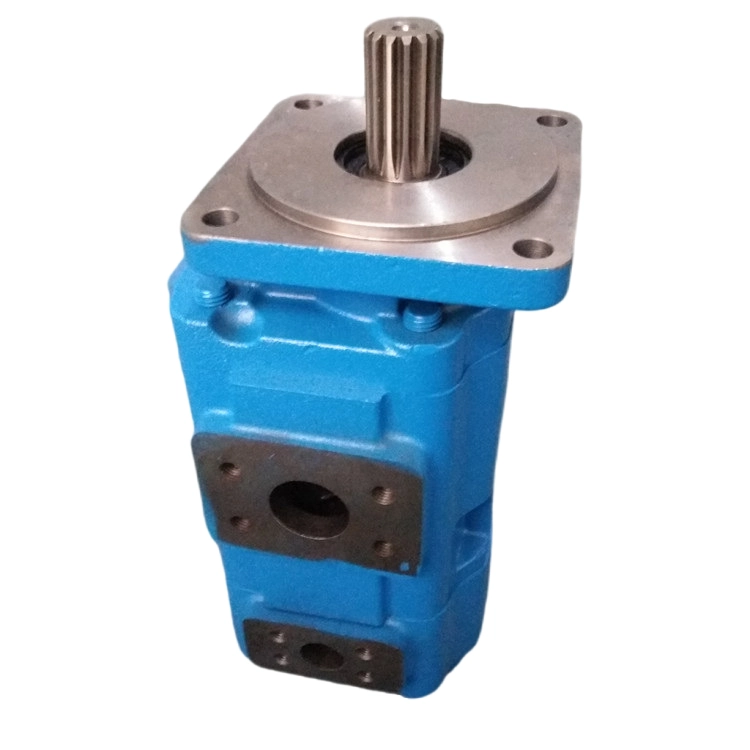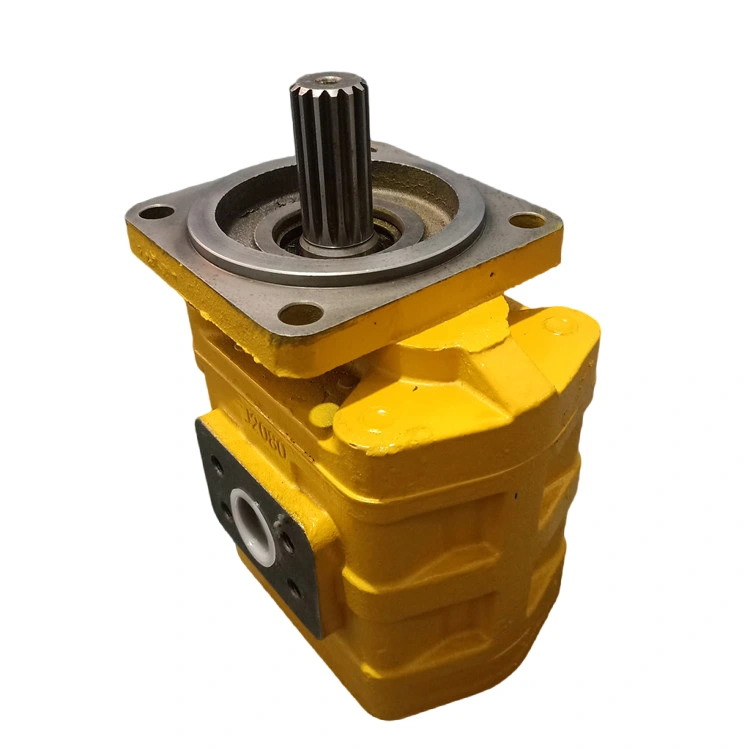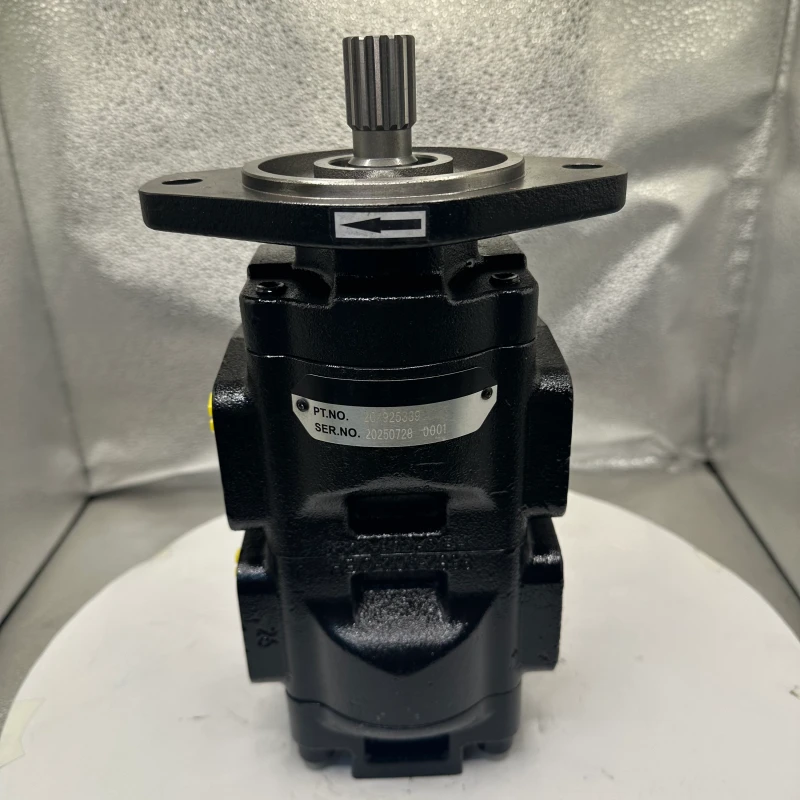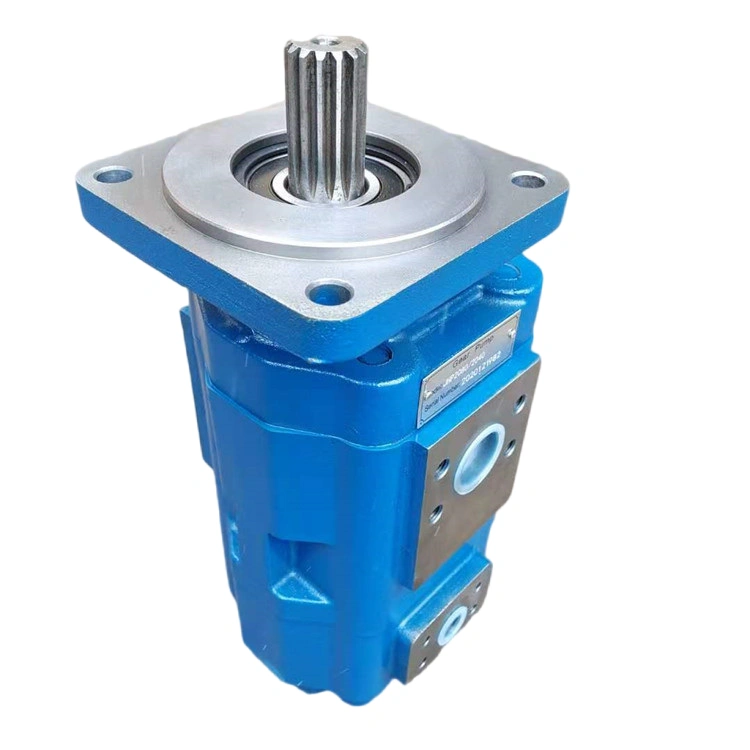

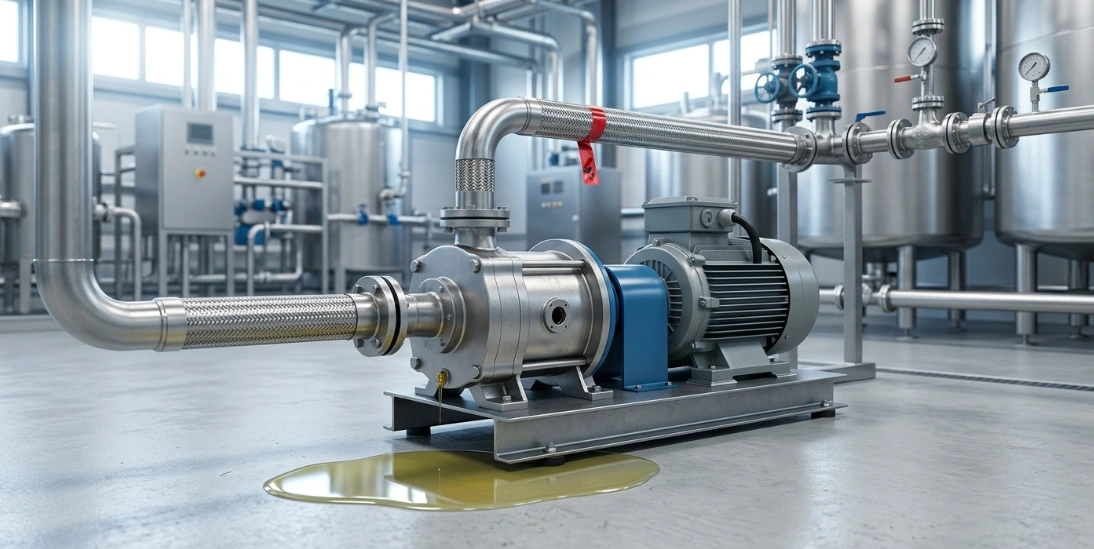
It's a Monday morning, and a plant engineer walks in to find fluid collecting where it shouldn't be — on the wrong side of a transfer system. A bit of digging points to the cause: someone rewired a motor over the weekend and accidentally flipped the gear pump's rotation direction. Now the fluid is running backward through the line. The first thought isn't just about what went wrong. It's whether the pump can handle this without tearing itself apart — and whether it's even safe to keep running.
The answer is more nuanced than a simple yes or no. Whether you can safely run a reverse flow gear pump depends on the pump's internal design, seal configuration, and lubrication architecture. This guide breaks down everything you need to know about bidirectional gear pump operation — from the underlying mechanics to real-world applications and performance trade-offs.
How Gear Pump Rotation Direction Works
Basic Operating Principle
A gear pump operates on a deceptively simple principle. Two meshing gears rotate inside a tightly fitted housing, trapping fluid in the spaces between gear teeth and the casing wall.
As the gears turn, they carry fluid from the inlet (suction) side to the outlet (discharge) side. The meshing point in the center prevents fluid from flowing back, creating a positive displacement action that generates consistent flow regardless of system pressure.
The drive gear is connected to the motor shaft, while the driven gear (idler) follows passively. Flow volume is determined by gear size, tooth geometry, and rotational speed.
Relationship Between Shaft Rotation and Flow Path
Here's the critical relationship: the direction of shaft rotation directly determines which port acts as the inlet and which acts as the outlet. Reverse the gear pump shaft rotation change, and you effectively swap suction and discharge sides.
This means a gear pump rotation direction reversal doesn't just slow or stop flow — it redirects it entirely. The former discharge port becomes the new suction port, creating a reverse flow gear pump scenario.
Understanding this relationship is essential before attempting any gear pump inlet outlet swap, whether intentional or accidental. The pump's internal components must be designed to handle fluid pressure and lubrication from either direction.
Can You Reverse a Gear Pump? — Direct Answer
Yes, many gear pumps can be reversed — but not all. The feasibility depends entirely on whether the pump was designed with symmetrical internal components that support bidirectional gear pump operation.
Symmetrical vs. Asymmetrical Gear Pump Designs
Symmetrical gear pump designs feature identical geometry on both sides of the gear mesh. Ports are centered, bearings are uniformly loaded, and seals work regardless of pressure direction. These pumps are inherently suited for bidirectional gear pump operation.
Asymmetrical designs, by contrast, incorporate directional features — tapered ports, offset relief valves, or pressure-loaded bearings that only function correctly in one rotation. Attempting to reverse these pumps risks mechanical damage or catastrophic seal failure.
External gear pumps are more commonly available in reversible configurations than internal gear pumps, though exceptions exist in both categories.
Conditions That Allow Reversal
- Internal relief valve orientation: The relief valve must be bidirectional or completely absent. A unidirectional relief valve will not protect the system when flow reverses.
- Bearing and seal design: Bearings must handle radial loads from either direction equally. Symmetrical plain bearings or needle bearings typically support this.
- Lubrication path independence: Internal lubrication channels must deliver fluid to bearings and seals regardless of which port is pressurized. Rotation-dependent lubrication paths will starve components when reversed.
- Port configuration: A gear pump inlet outlet swap is only feasible when ports are geometrically symmetrical. Identical port sizes, angles, and internal passages confirm reversibility potential.
Conditions That Prevent Safe Reversal
- Asymmetric wear patterns: Pumps that have operated in one direction for extended periods develop directional wear on gear faces and housing bores. Reversing these pumps increases internal leakage and accelerates further wear.
- One-directional lip seals: Lip seals rely on system pressure to press the sealing lip against the shaft. Reverse the pressure direction, and the seal lifts away — causing immediate external leakage.
- Built-in check valves: Some gear pumps incorporate internal check valves that block reverse flow entirely. Forcing reverse operation against these valves can overpressure the housing or stall the motor.
Comparison Table — Reversible vs. Non-Reversible Gear Pumps
| Feature | Reversible Design | Non-Reversible Design |
|---|---|---|
| Internal Relief Valve | Bidirectional or absent | Unidirectional |
| Shaft Seal Type | Symmetrical face seal | Directional lip seal |
| Bearing Lubrication | Pressure-independent | Rotation-dependent |
| Port Geometry | Symmetrical | Offset or tapered |
| Typical Application | Mobile hydraulics, metering | Fixed-process transfer |
Methods to Reverse Gear Pump Flow
Reversing Motor/Shaft Rotation
The most direct method to change gear pump rotation direction is reversing the drive motor. For three-phase electric motors, this means swapping any two of the three power leads. For DC motors, reversing polarity achieves the same result.
Before making this change, confirm the pump supports bidirectional operation. Also verify that any coupled accessories — filters, relief valves, check valves in the piping — can handle reversed flow direction.
After reversing, start the pump at low pressure and monitor for abnormal noise, vibration, or leakage before ramping to full operating conditions.
Swapping Inlet and Outlet Connections
When reversing the motor isn't practical or desirable, a gear pump inlet outlet swap at the piping level can redirect flow without changing shaft rotation. This approach keeps the pump's internal pressure dynamics unchanged.
This method works only when port sizes are identical and the system piping allows reconnection. It's common in tank-switching applications where the pump must draw from or deliver to different vessels without altering motor wiring.
Keep in mind that swapping connections doesn't change which side of the pump is pressurized internally — it simply redirects where fluid goes after leaving the pump.
Using a Bidirectional Gear Pump
For applications requiring frequent or routine flow reversal, the best approach is selecting a purpose-built bidirectional gear pump from the start. These pumps are engineered with symmetrical internals, dual-direction seals, and pressure-independent lubrication.
Bidirectional models are available from most major manufacturers in both external and internal gear configurations. They cost marginally more than unidirectional equivalents but eliminate the risk and guesswork of field-reversing a standard pump.
Specifying a bidirectional pump during system design also simplifies maintenance, since technicians don't need to track or verify rotation direction during reinstallation.
Performance Impact of Running a Gear Pump in Reverse
Even when a gear pump supports reverse operation, performance characteristics may shift slightly. The table below summarizes typical differences observed in field and laboratory testing.
| Parameter | Forward Operation | Reversed Operation |
|---|---|---|
| Volumetric Efficiency | Rated (95–98%) | May drop 2–5% |
| Seal Life | Full rated life | Potentially reduced |
| Noise Level | Normal | Slightly elevated |
| Internal Leakage | Minimal | Increased if wear is directional |
| Pressure Capability | Full rated | Verify with manufacturer |
The efficiency drop in reversed operation typically stems from directional wear patterns that developed during forward running. A pump reversed from new will generally show negligible performance difference in either direction.
Elevated noise often indicates trapped air or cavitation at the new suction port, which may require repositioning the inlet line or adjusting suction conditions.
Industry Applications Using Reverse Flow Gear Pumps
Hydraulic Systems (Loader Arms, Winches)
Mobile hydraulic equipment relies heavily on bidirectional gear pump operation. Loader arms must extend and retract, winches must spool in and out — all requiring flow reversal to change actuator direction.
In these systems, reversing the pump is often simpler and more cost-effective than using directional control valves, especially in compact mobile machinery where space and weight are constrained.
Chemical Metering and Dosing
Chemical processing plants use reverse flow gear pumps for precise bidirectional metering. This allows operators to dose chemicals into a process stream and then reverse flow to clear lines or return excess product to storage tanks.
The positive displacement nature of gear pumps makes them ideal for this role, since flow rate remains proportional to speed regardless of direction — enabling accurate volumetric control in both forward and reverse modes.
Fuel Transfer and Tank Switching
Marine vessels and fuel depots frequently transfer fuel between multiple tanks for ballast management or inventory rotation. Bidirectional gear pumps simplify these systems by eliminating the need for complex valve manifolds.
A single reversible pump can move fuel from Tank A to Tank B, then reverse to move it back — reducing component count, potential leak points, and maintenance burden compared to multi-valve alternatives.
Step-by-Step Checklist Before Reversing a Gear Pump
- Confirm pump model supports bidirectional operation — Check the manufacturer's datasheet for explicit bidirectional or reversible ratings.
- Check relief valve orientation — Verify the internal relief valve is bidirectional, removable, or absent. A unidirectional valve will not protect the reversed circuit.
- Inspect seal type and direction — Identify whether shaft seals are symmetrical face seals (safe to reverse) or directional lip seals (not safe without replacement).
- Verify lubrication path independence — Confirm that bearing and bushing lubrication does not depend on a specific pressure port being active.
- Consult OEM documentation — Contact the pump manufacturer if any doubt remains. Request written confirmation that your specific model and serial number supports reverse operation.
- Test at low pressure before full load — Run the reversed pump at minimal system pressure for several minutes. Monitor for leaks, abnormal noise, excessive heat, or vibration before gradually increasing to operating pressure.
Pro tip: Document the original rotation direction with an arrow on the pump housing before making any changes. This simple step prevents confusion during future maintenance or troubleshooting.
Frequently Asked Questions
Does reversing a gear pump damage it?
Not necessarily — if the pump is designed for bidirectional operation, reversing it causes no damage. However, reversing a unidirectional pump can destroy lip seals, starve bearings of lubrication, and bypass internal relief valves. Always verify the pump's design specifications before reversing. If the pump has significant runtime in one direction, directional wear patterns may cause increased leakage when reversed, even on nominally bidirectional models.
Can all external gear pumps run in both directions?
No, though many external gear pumps are reversible due to their inherently symmetrical gear arrangement. The limiting factors are usually the seals, relief valves, and lubrication paths rather than the gears themselves. Always check the specific model's documentation — even within the same product line, some variants may include directional components that prevent safe reversal.
What happens if you reverse an internal gear pump?
Internal gear pumps (including gerotor types) are generally less suited to reversal than external gear pumps. Their crescent seal geometry and asymmetric port plates are often designed for one flow direction only. Reversing an internal gear pump without manufacturer approval can cause the crescent to unseat, internal pressure to bypass, or the outer gear to disengage from proper meshing. Some manufacturers offer bidirectional internal gear pump models, but these are specialty items rather than the standard.
How do I know if my gear pump is bidirectional?
Look for these indicators: the datasheet explicitly states "bidirectional" or "reversible"; both ports are the same size and symmetrically positioned; the pump uses face seals rather than lip seals; and no directional arrow is permanently cast into the housing. When in doubt, contact the OEM with your pump's model and serial number for definitive confirmation. Never assume reversibility based on external appearance alone.
Is reverse flow gear pump efficiency the same as forward flow?
On a new, purpose-built bidirectional gear pump, efficiency in both directions is essentially identical — typically in the 95–98% volumetric efficiency range. However, a pump that has run extensively in one direction before being reversed may show a 2–5% efficiency drop due to directional wear on gear faces and housing bores. This gap tends to stabilize rather than worsen over time, but it should be factored into system design calculations when planning reversed operation on previously run pumps.