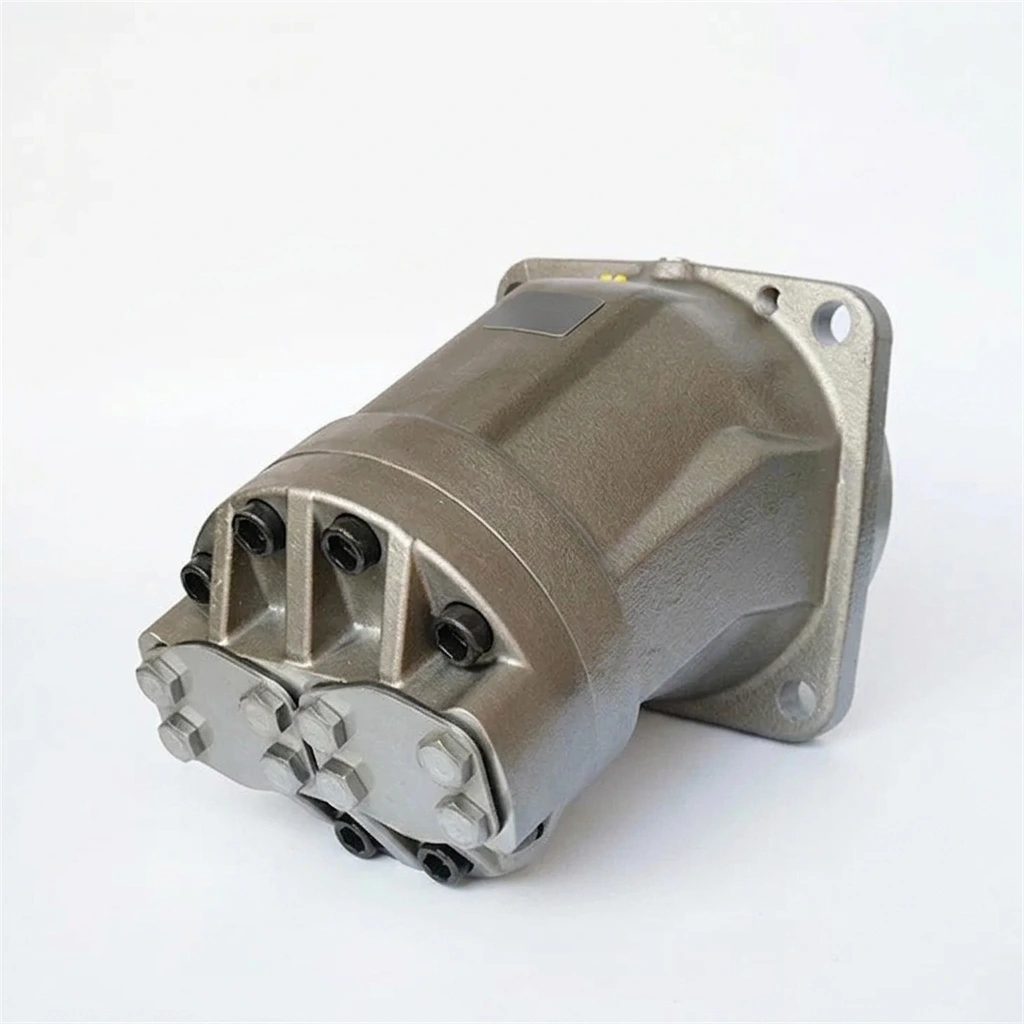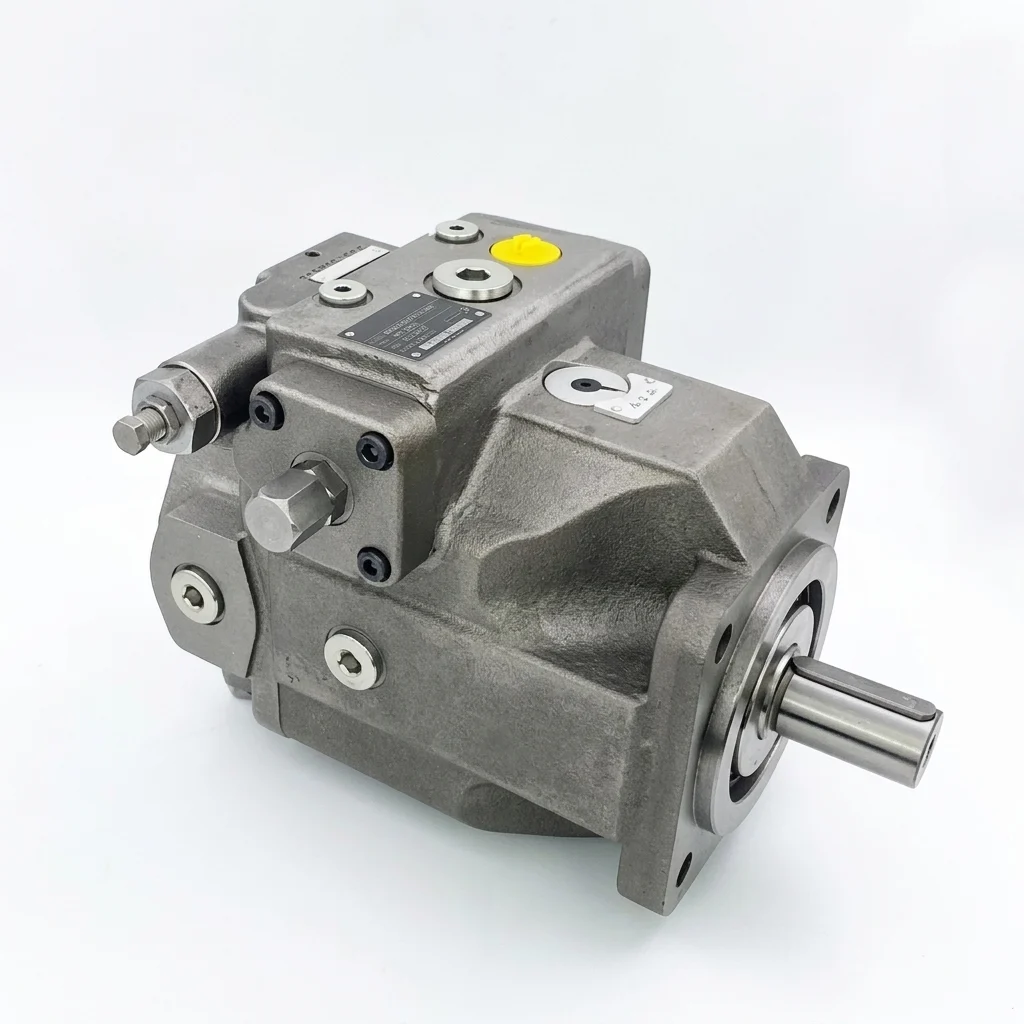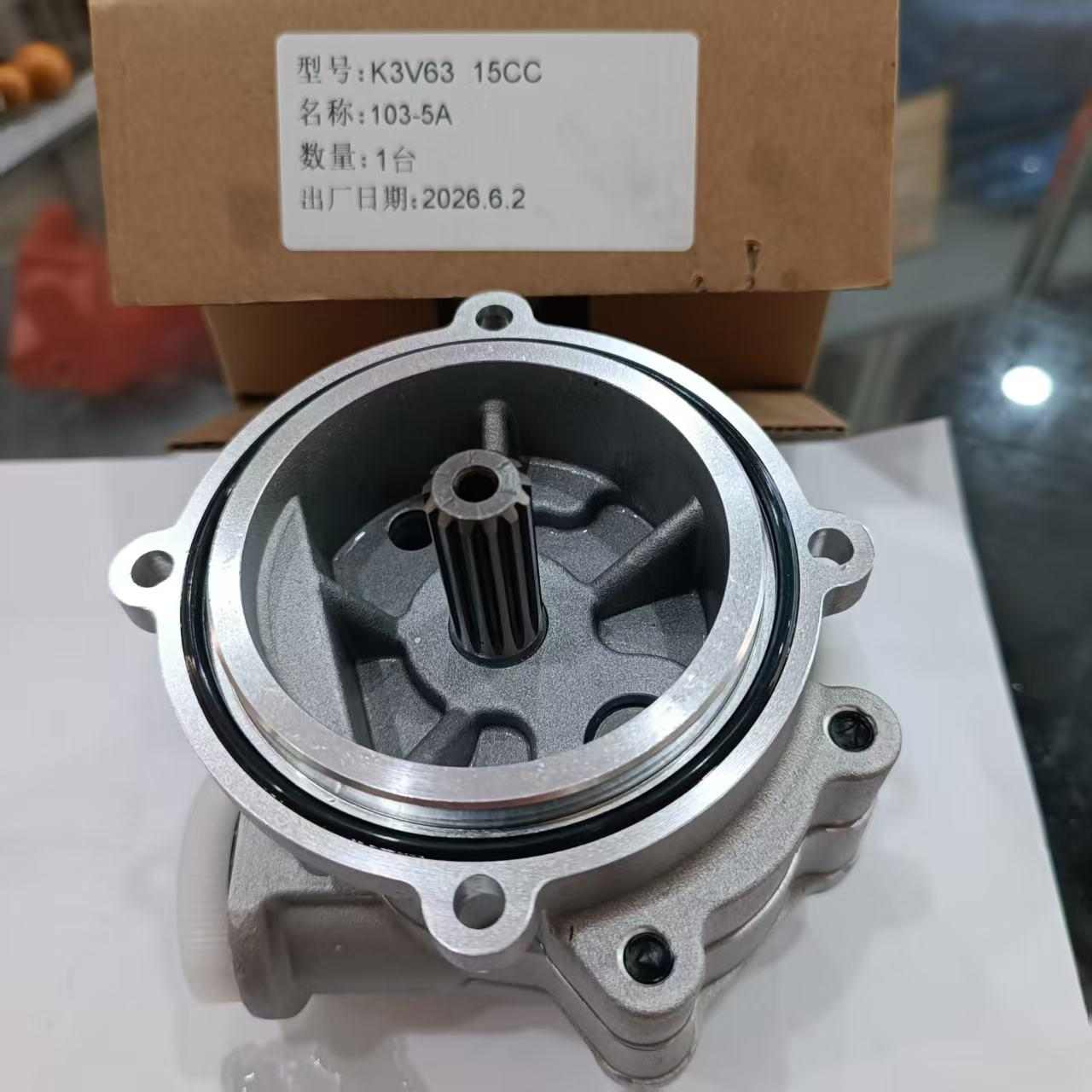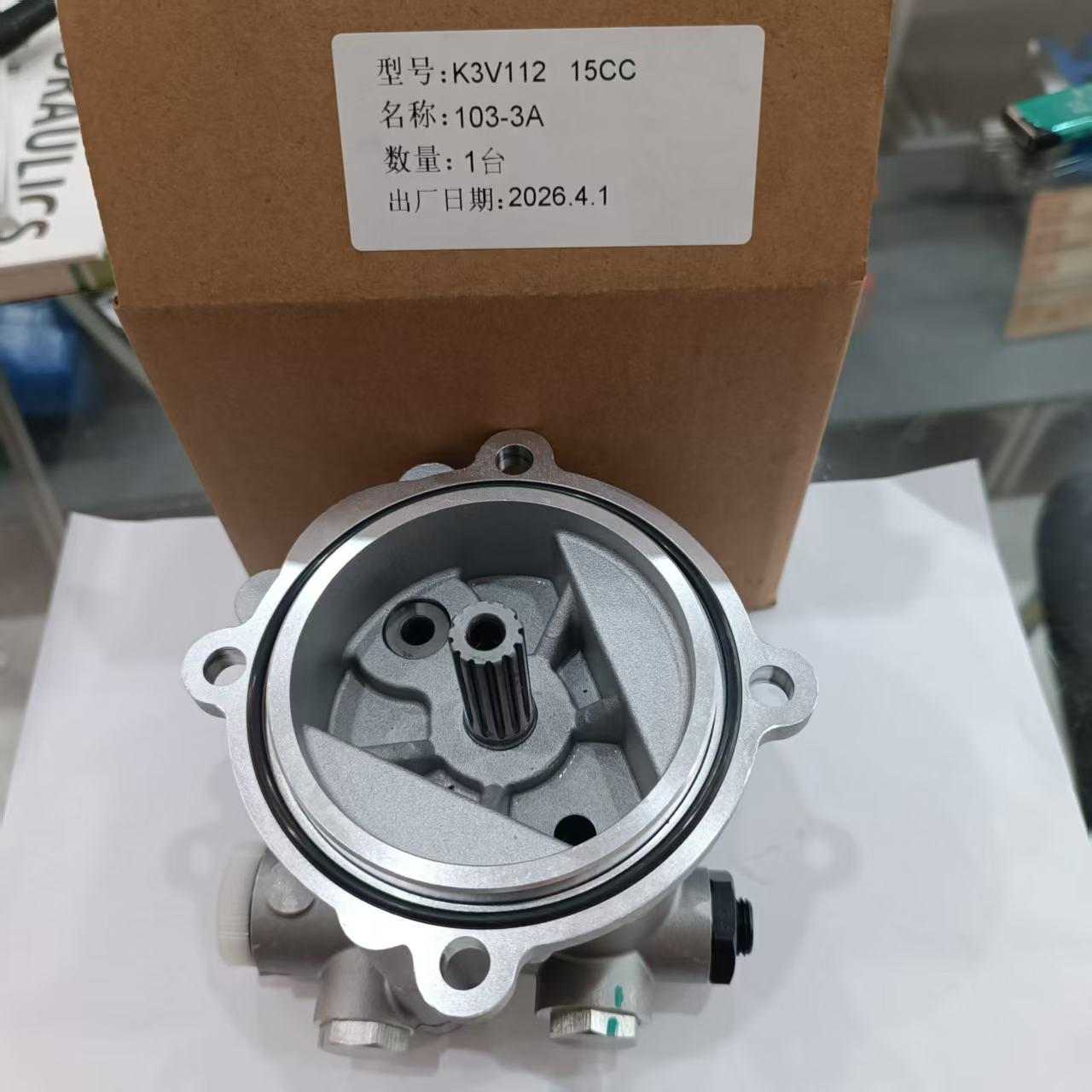

Pump selection is dull work. Getting it wrong is expensive. A unit can match the old one on displacement and still fail early because of pressure, duty cycle or a shaft spline that is one size off. This guide on how to choose a hydraulic pump or motor covers pump families, sizing criteria, motor selection, application examples and replacement fit.
The right hydraulic pump or motor depends first on three facts: working pressure, whether flow must vary, and how hard the duty cycle is. These three facts set the family (gear, vane or piston). Displacement, drive speed, mounting interface and the complete assembly code then set the exact unit. Matching on the series name alone is the most common cause of a wrong order.
Which Hydraulic Pump Do I Need for My Application?
The hydraulic pump you need depends on peak and continuous pressure, fixed or variable flow demand, and continuous or intermittent duty. Those factors choose between gear, vane and piston designs. Displacement, speed, mounting and the full assembly code then narrow the choice to one unit that will physically fit and survive the circuit.
Buyers often start from a catalog page and work backward. That gets the order of decisions wrong. A catalog lists hundreds of displacements, and most of them are ruled out by the circuit before size even matters.
The Three Questions That Narrow the Field
- What pressure does the circuit really see? Separate the pressure the system holds for long periods from the short spikes at relief setting. A circuit that runs near relief pressure for long periods rules out most standard gear and vane pumps.
- Does flow need to change while running? If actuators stop and start, or the machine uses load sensing, a variable-displacement pump avoids pushing unused flow over a relief valve. If one function runs at steady speed, a fixed unit is usually enough.
- Is the duty continuous or intermittent? A die-casting power unit running around the clock wears bearings and swashplates differently from a tipper pump that works a few minutes per cycle. A heavy duty cycle calls for more pressure margin and a design rated for continuous operation.
Answer those three and you usually have one family left, sometimes two. Everything after that is sizing and interface detail.
Piston Pump vs Gear Pump vs Vane Pump: Where Each One Earns Its Place
Piston pump vs gear pump vs vane pump comes down to pressure, flow control and budget. Gear pumps are the cheapest and simplest. Vane pumps run quietly at medium pressure. Piston pumps handle high pressure and variable flow but cost more and need cleaner oil. The circuit's demands, not price alone, should decide which one you buy.
A gear pump is a fixed-displacement pump that moves oil between the teeth of meshing gears and the housing. A vane pump uses sliding vanes in a rotor running inside a cam ring. A piston pump uses pistons in a rotating cylinder block. In axial designs, a swashplate or bent axis sets the stroke, and the stroke can be adjustable.
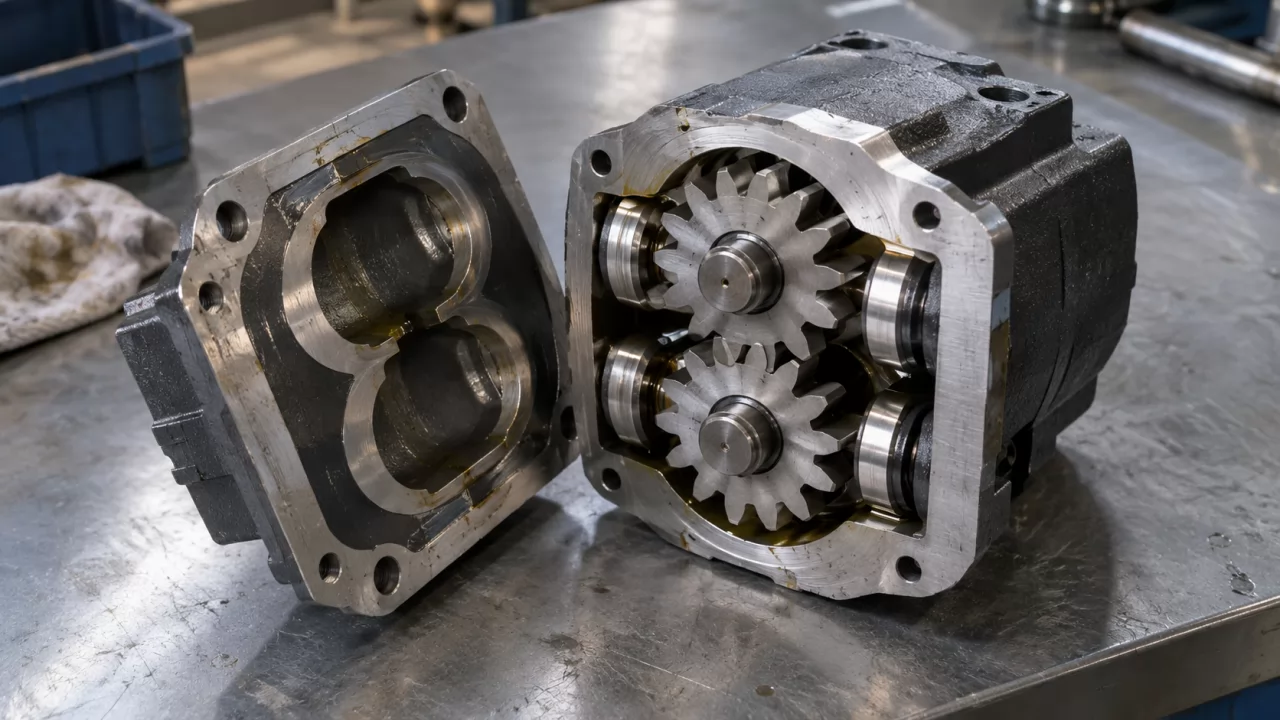
Side-by-Side Comparison
| Attribute | Gear pump | Vane pump | Piston pump |
|---|---|---|---|
| Typical working pressure | Low to medium; high-pressure designs reach roughly 250 bar or more | Medium, typically up to roughly 210 bar; some series higher | High, commonly roughly 250–400 bar depending on series |
| Overall efficiency | Lower, drops as wear opens clearances | Medium | Higher, stays more stable under load |
| Noise level | Higher | Lower, suits indoor machines | Medium |
| Contamination tolerance | Higher | Medium | Lower, needs finer filtration |
| Fixed or variable | Fixed only | Fixed or variable | Fixed or variable, wide choice of controls |
| Relative cost | Lower | Medium | Higher |
In short, pay for a piston pump only when pressure, efficiency or variable flow actually require one. Otherwise a gear or vane pump does the job for less money.
Some familiar series in each family: gear pumps such as AZPF and PGP505/PGP511 on mobile auxiliary circuits; vane pumps such as T6 and PV2R on presses and plastics machines; piston pumps such as A10VO for open-circuit industrial and mobile work and A4VG for closed-circuit hydrostatic travel drives.
Fixed vs Variable Displacement: When the Extra Cost Pays Back
A fixed pump delivers the same volume every revolution. Any flow the actuators do not use goes over the relief valve and turns into heat. In a circuit that idles often, holds pressure or runs several functions at different speeds, that wasted energy adds up to bigger coolers, hotter oil and shorter seal life.
A variable pump with a pressure-compensated or load-sensing control reduces its displacement to match demand. The payback grows with operating hours and with how much of the time the machine spends at partial load.
For a log splitter, a simple conveyor or a steady-speed fan drive, a fixed unit is usually the right choice. It is simpler, cheaper and easier to source.
How to Choose a Hydraulic Pump or Motor: Criteria That Decide the Spec
Choosing a hydraulic pump or motor starts from the duty the unit must perform, not from the old nameplate. Fix continuous pressure, peak pressure, required flow and duty cycle first. Then confirm drive speed, fluid and filtration, and the mounting interface. A unit that passes the duty checks but fails one interface check still will not install.
Pressure Rating and Duty Cycle
Datasheets usually list a continuous (nominal) pressure and a higher peak pressure for short periods. Size against continuous pressure, not peak. If the system runs near the rated figure for most of its cycle, choose a unit with headroom above that figure, or move up a family.
Pressure spikes from fast valve shifts or shock loads count too. Even a few milliseconds over peak rating, repeated thousands of times a shift, shortens bearing and housing life.
Displacement, Speed and Required Flow
Flow comes from displacement multiplied by speed. As a standard working formula, flow in L/min ≈ displacement (cc/rev) × speed (rpm) × volumetric efficiency ÷ 1000. A 28 cc/rev pump at 1,500 rpm therefore delivers roughly 40 L/min, a little less once volumetric losses are counted.
Then check speed limits. Every unit has a minimum and maximum allowable speed. Diesel engines that over-rev, or electric motors on variable-frequency drives running very slow, can push a correctly sized pump outside its range. Self-priming speed limits on the suction side matter as well, especially with long inlet lines.
Fluid, Contamination and Mounting Interface
- Viscosity range: Confirm that the oil grade stays inside the unit's permitted viscosity range at both cold start and maximum operating temperature.
- Filtration: Piston units usually call for a tighter cleanliness class, commonly expressed as an ISO 4406 code. A gear pump on the same filter may cope where a piston pump will not.
- Flange and shaft: SAE and ISO flange patterns differ, and so do spline profiles, keyed shafts and tapered shafts. One mismatch blocks installation.
- Ports and rotation: Port type (SAE flange, BSPP, metric), port position and clockwise or counter-clockwise rotation all have to match the existing pipework.
- Control: On variable units, the control type and its settings (pressure compensator, load sensing, electro-proportional) determine how the pump behaves in the circuit.
Rule of thumb: if you cannot state continuous pressure, required flow and rotation direction, you are not ready to send an RFQ.
How Do You Select a Hydraulic Motor for Construction Machinery?
To select a hydraulic motor for construction machinery, start with the torque and speed the load requires. Displacement sets torque per bar of pressure, available flow sets speed, and the motor type follows from speed range and installation space. Orbital motors suit compact low-speed drives, while axial piston motors suit higher speeds and pressures.
Hydraulic Motor Displacement and Torque in Plain Terms
Displacement is the volume of oil the motor takes in per revolution, given in cc/rev. Theoretical torque in Nm ≈ displacement (cc/rev) × pressure difference (bar) ÷ 62.8. Multiply that by mechanical efficiency to get what actually reaches the shaft.
Larger displacement gives more torque and less speed from the same flow. Speed in rpm ≈ flow (L/min) × 1000 ÷ displacement, reduced slightly by volumetric losses. So the sizing question is always a trade: at your available pressure and flow, which displacement gives enough torque at start-up and enough speed at full travel?
Breakaway torque deserves its own check. A motor that turns a mixer drum or a loaded winch has to start under load, and starting torque is usually lower than running torque.
Orbital Motors vs Piston Motors
An orbital motor is a low-speed, high-torque motor built around a gerotor or geroler set. It produces high torque in a short, compact body without a gearbox. OMP, OMS and BM-series units are common on sweeper brushes, auger drives, small drills and conveyor drives. Displacements vary widely; BM4-class units, for example, cover roughly 245–800 cc/rev.
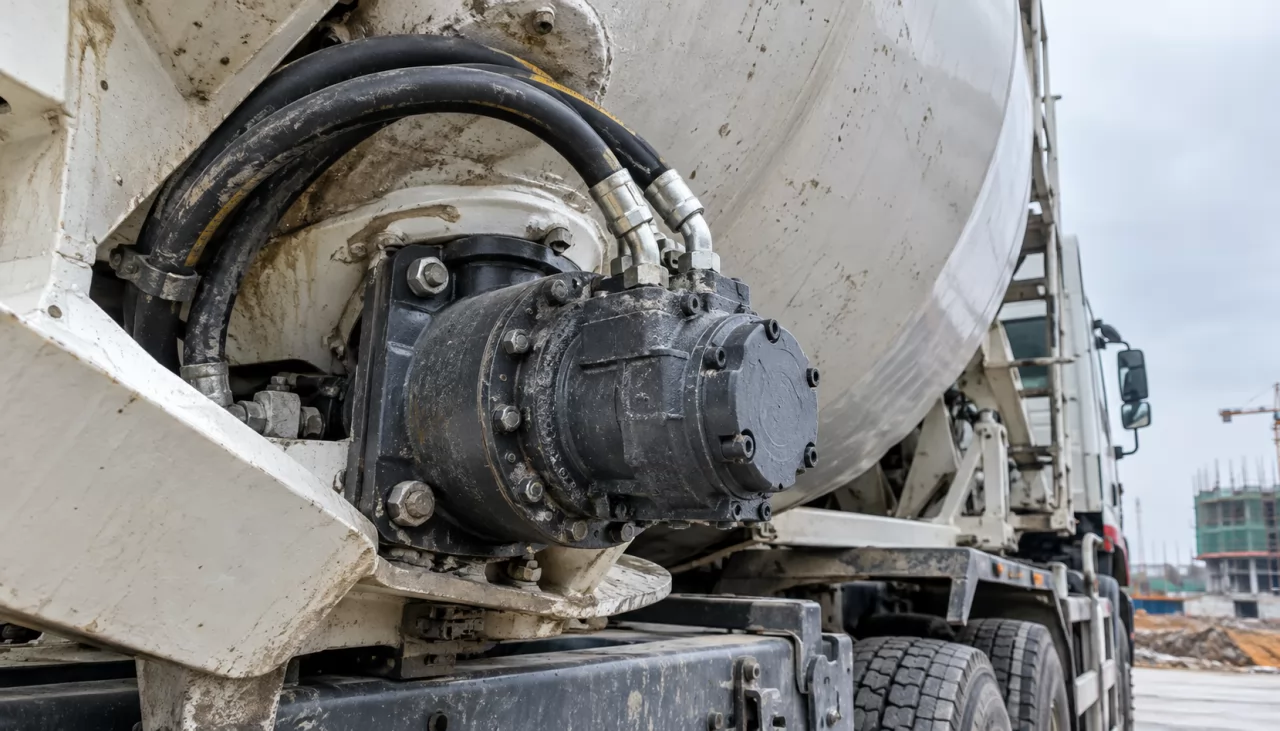
Axial piston motors such as the A2FM (fixed) and A6VM (variable) run at higher speeds and pressures with better efficiency. They usually drive through a reduction gearbox and are the normal choice for excavator travel and swing drives, roller drum drives and closed-loop propel circuits. A variable motor like the A6VM can shift to low displacement for travel speed and high displacement for climbing torque.
The trade-off: orbital motors cost less and fit tight spaces, but efficiency and life fall off under sustained high pressure. Piston motors cost more and need cleaner oil.
Application Scenarios: Matching Pump and Motor to the Machine
Application scenarios show that the same selection criteria lead to different hardware depending on the machine. Mobile equipment favors variable piston pumps for main circuits and gear pumps for auxiliaries. Industrial presses and casting machines favor variable vane or piston pumps for energy and heat control. Agricultural machines usually rely on fixed gear pumps.
Mobile and Construction Equipment
- Excavator main and travel circuits: Distributors stocking excavator parts need double variable piston pumps (K3V or A8VO class) for the main circuit and piston travel and swing motors. Check the regulator code, the tandem layout and the gear pump arrangement before quoting.
- Road rollers and pavers: Rental fleets and maintenance shops replace closed-circuit propel pumps such as the A4VG and A10VG along with matching drum motors. Confirm the charge pump size, the control type and whether the unit carries a through-drive for a second pump.
- Concrete mixer drum drives: Truck body builders need a closed-loop pump and motor pair that holds drum speed while the truck engine speed changes. Look at the control (often mechanical or electrical displacement control) and the motor's continuous pressure rating.
- Auxiliary functions: Tandem and triple gear pumps feed steering, cooling fans and pilot circuits. Check the section order, displacement of each section and the shared or separate inlet design.
Industrial and Agricultural Systems
- Die-casting and plastics machines: Machine builders and retrofit contractors use variable vane pumps (PV2R, T6 for fixed duties) or pressure-compensated piston pumps such as the A4VSO. The priorities are low noise, stable pressure holding and less heat during long hold phases.
- Mining and metallurgy power units: High-pressure continuous duty calls for piston pumps with generous pressure margin and filtration matched to dusty environments. Seal material should suit the fluid and the ambient temperature.
- Tractor hydraulics: Parts wholesalers stock tractor gear pumps by machine model. Rotation, drive gear or spline, and port positions vary between tractor models with similar pump bodies.
Why Do Replacement Pumps Fail to Fit, and How Do You Avoid It?
Replacement pumps usually fail to fit because the order was placed against a series name such as "A10VO 28" instead of the complete assembly code. The code also defines control, shaft, flange, ports, rotation and seals. Collecting the full code and machine details before the RFQ prevents most fit and performance problems.
Two pumps sharing a series and displacement can differ in a dozen ways. A shaft spline swap, a different port thread or a reversed rotation is enough to send the unit back. A different compensator setting may let it install and still make the machine behave wrongly.
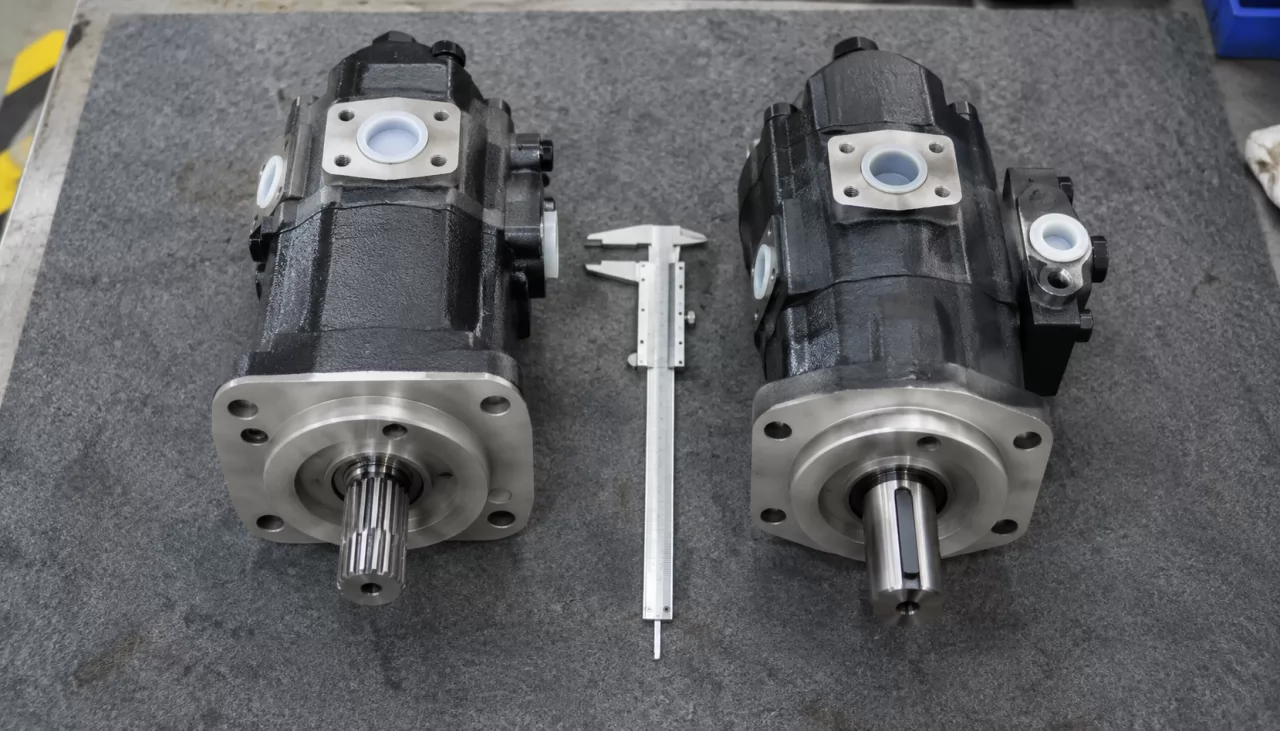
Replacement Hydraulic Pump Compatibility Checklist
- Photograph the complete nameplate and copy the full assembly code character by character, including any suffixes.
- Record the machine make, model and serial number, plus engine or electric motor details.
- Confirm rotation direction as viewed from the shaft end.
- Measure the shaft: spline profile and tooth count, or key and diameter, and length.
- Check the flange type, the bolt pattern and the pilot diameter.
- Identify the port type, the thread standard and port positions, including drain and gauge ports.
- Note the control type and any factory settings on variable units.
- Specify the seal material if the fluid or temperature is non-standard.
- State the quantity and the destination port so freight and packaging can be quoted.
- Agree the QC checks in the quotation, such as dimensional checks, leak inspection and pressure/flow testing where applicable, along with the documents you need for import.
Getting the Match Confirmed Before Sampling
Ask the supplier to confirm the full code in writing and, for custom or unclear parts, to send a drawing before sampling. Olive Branch Hydraulics matches replacement parts from the original product code, the machine model and the equipment details. Brand names and model numbers serve only to identify the part, and compatibility depends on the complete assembly code.
Approve the sample against the installed unit, ideally fitted on the actual machine, before you release bulk production.
FAQ
Can a gear pump replace a piston pump to cut cost?
Only in fixed-flow, lower-pressure circuits. In a variable or high-pressure system, a gear pump usually brings excess heat, poor efficiency and shorter life. Any savings on the purchase price tend to disappear in coolers, energy and downtime.
Does "Rexroth-compatible" guarantee an exact fit?
No. Fit depends on the complete assembly code, including shaft, flange, ports, rotation and control, not on the series name alone. Always confirm the full code before ordering.
What should I send to get an accurate quote?
Send the model or full assembly code, the quantity and the destination port. For replacements, add the machine model and equipment details, plus nameplate photos if you have them.
How do I size a hydraulic motor if I only know the load?
Convert the load into required torque and speed at the motor shaft, including any gearbox ratio. Then choose a displacement that gives that torque at your available pressure difference, and check that your flow gives the speed you need.