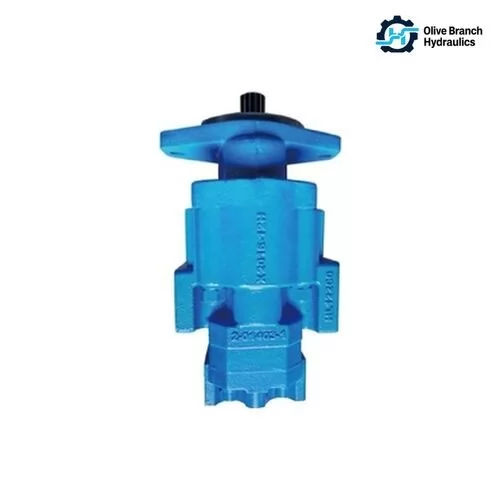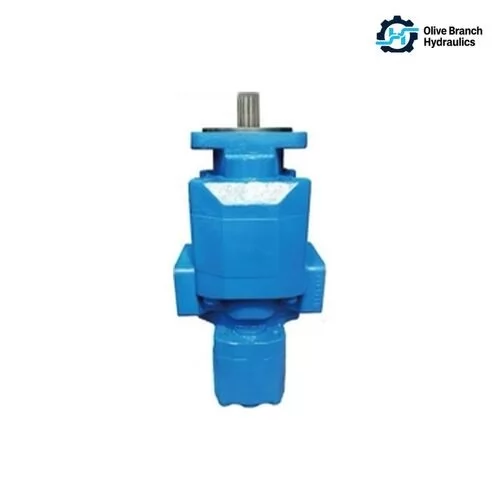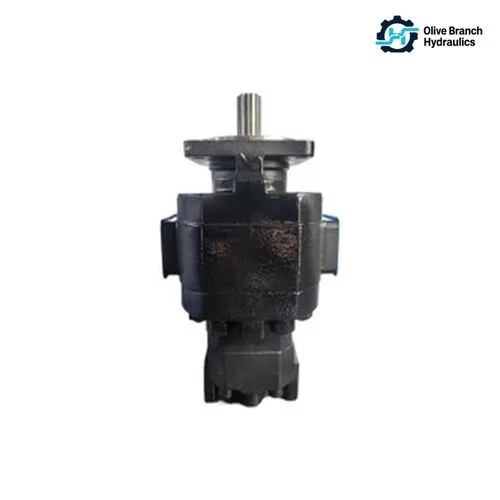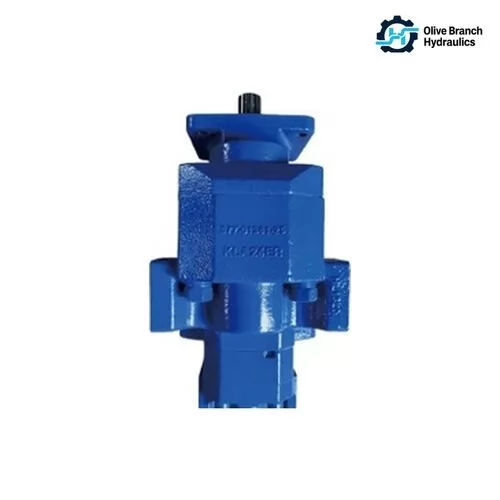

A replacement gear oil pump that is one spline count off, or has the wrong port thread, can keep a tractor or excavator parked longer than a slow shipment would. Most of those mismatches can be avoided. This guide covers the specs that decide fit, the applications where gear pumps make sense, how to match replacements, and what to agree with a supplier before you order.
A hydraulic gear pump is a fixed-displacement pump: it moves the same volume of oil on every shaft revolution. It suits tractors, construction equipment and industrial power units that need steady flow and simple servicing. When you replace one, displacement, pressure, flange, shaft, ports and rotation all have to match the original assembly code.
What Does a Gear Pump Actually Do in a Hydraulic Circuit?
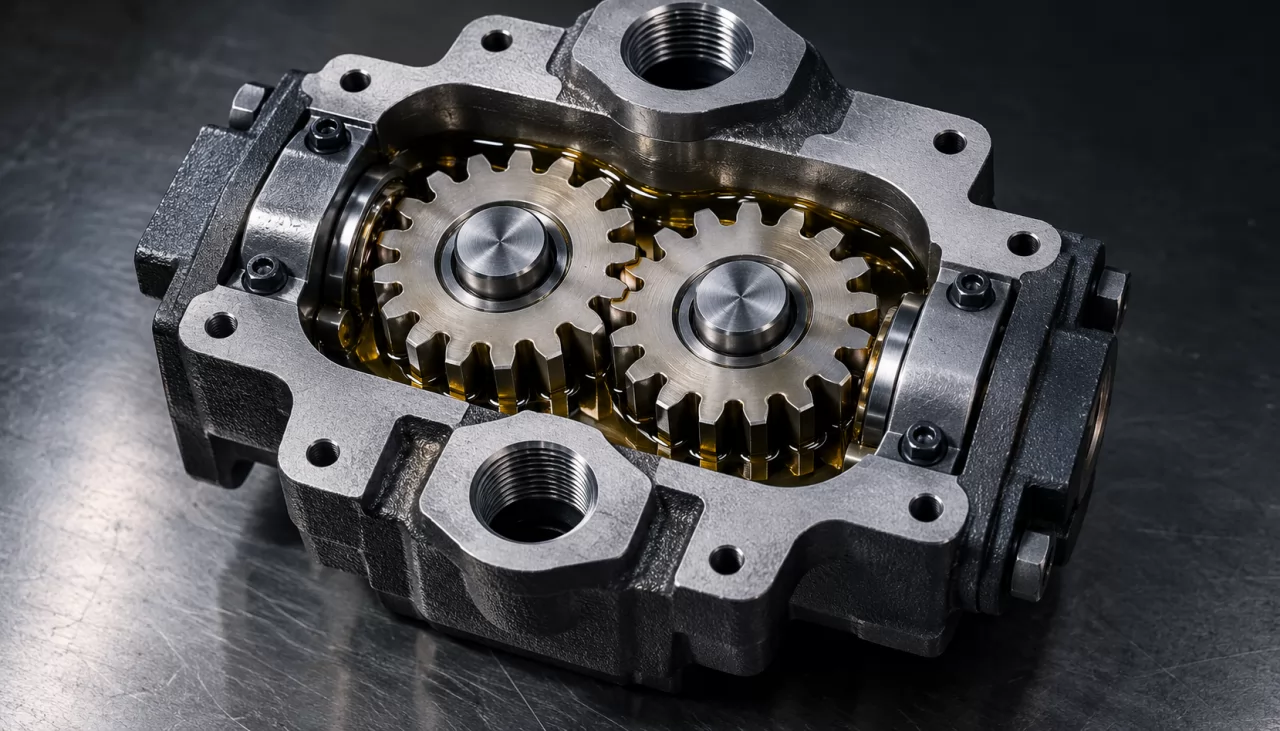
A gear pump turns shaft rotation into hydraulic flow. Two meshing gears carry oil around the housing wall from the inlet to the outlet, so each revolution delivers a fixed volume. The pump does not create pressure. Pressure builds when the circuit resists the flow, up to the pump's rating or the relief valve setting.
The term is used loosely in the trade. In a machinery RFQ it usually means a hydraulic gear pump. It can also mean a lubrication pump that circulates oil through a gearbox. These are different products with different pressure ratings, so confirm which one your customer means before you quote.
External vs Internal Gear Designs
An external gear pump uses two spur gears of equal size meshing side by side in a closed housing. The design is simple, tough and cheap to make, which is why it shows up on so much mobile equipment. An internal gear pump runs a small gear inside a larger ring gear. It is usually quieter and smoother, so you will often find it in industrial power units installed near operators.
Single, Tandem, Triple and Quadruple Configurations
A tandem gear pump is two or more pump sections stacked on one drive shaft. Each section feeds its own circuit. Triple and quadruple pumps take the same idea further. You need fewer drive points on the engine or gearbox. The cost is a longer, heavier assembly that has to fit the available space, and if the shared shaft or front section fails, every circuit it feeds goes down with it.
Where an External Gear Pump for Hydraulic Oil Earns Its Place
An external gear pump for hydraulic oil fits circuits that need steady flow, some tolerance for contamination and easy servicing more than they need variable output. Where a machine has to adjust flow to load continuously, a variable piston pump is usually the better choice. Gear pumps then handle the auxiliary duties.
Tractors and Agricultural Machinery
Tractors use gear pumps for implement lift, power steering and transmission lubrication or charge circuits. Maintenance-market distributors carry tractor hydraulic pumps as a high-turnover line, because they wear out on a predictable schedule. What you need here is fitment accuracy across many machine models, plus enough stock depth to cover seasonal demand peaks.
Construction Equipment
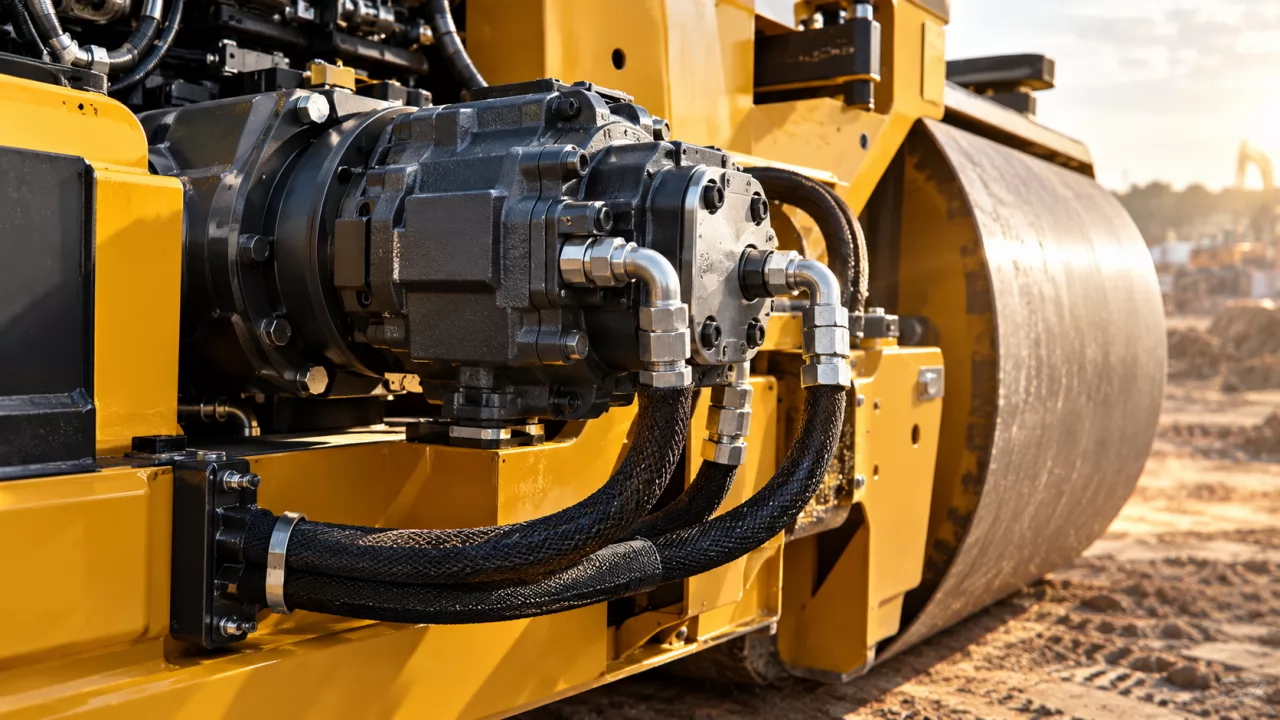
On pavers, road rollers, drills and concrete mixer trucks, gear pumps typically run pilot circuits, steering, fan drives and auxiliary functions. The main high-flow work circuits often use piston pumps, with a gear pump mounted alongside or behind them. Check pressure rating under continuous load, shaft strength and tandem stack length.
Industrial Power Units
Metallurgy, mining, plastics and die-casting machinery use gear pumps in power units and auxiliary circuits. Many of these run on two or three shifts. That makes duty cycle, noise level and heat generation as important as unit price. Plant engineers will usually ask for noise behaviour and continuous-rating data before they approve a substitute.
How to Choose a Gear Oil Pump for Machinery
Choosing a gear oil pump for machinery starts with three figures: displacement, pressure rating and drive speed. Next, fix the mechanical interface (flange, shaft and ports). Last, check fluid and duty-cycle conditions. Getting the interface wrong causes most returns. Getting operating conditions wrong causes most early failures.
- Displacement and speed: Theoretical flow is displacement multiplied by RPM. For example, 16 cc/rev at 1,500 rpm is about 24 L/min before volumetric losses. Actual output is a little lower, and the gap widens as the pump wears.
- Pressure ratings: Continuous pressure and peak (intermittent) pressure are separate figures on a datasheet. Size the pump to the continuous figure. High pressure gear pumps are available, but they cost more, and their speed and duty limits still apply.
- Mounting flange: SAE flanges follow SAE J744. European and metric flanges generally follow ISO 3019-2 or the original maker's own patterns. A flange that is close but not identical will not seal or align.
- Shaft: Splined, parallel keyed and tapered shafts are not interchangeable. Spline count, pitch and length all count, and a tapered shaft also needs the correct taper ratio and thread.
- Ports: Confirm the port type (SAE O-ring boss, BSPP, metric thread or split flange), the size and the position (side or rear). Port position decides whether the existing hoses reach.
- Fluid, temperature and duty cycle: Check the viscosity range at cold start and at operating temperature, the filtration level (often given as an ISO 4406 cleanliness code), inlet conditions, and whether the pump runs intermittently or continuously. These factors usually have a bigger effect on total cost of ownership than unit price does.
Tip: Put the rotation direction (clockwise or counter-clockwise, viewed from the shaft end) on every RFQ. A pump built for the wrong rotation will not deliver oil, and it can damage itself in a short time. This is the most common mismatch, and also the easiest one to avoid.
Rule of thumb: if you cannot write down all six of these points for the application, you are not ready to ask for a firm quote.
How Do You Match a Replacement Gear Pump for Tractor and Construction Equipment?
To match a replacement gear pump for tractor and construction equipment, send the original product code, the machine model and the equipment details. The supplier then matches against the complete assembly code, not just the series name. Two pumps from the same series can differ in flange, shaft, ports and rotation.
A full code from a nameplate covers displacement, rotation, flange, shaft, port type and any integrated valves. If the plate is worn or missing, photos of the shaft end, flange and ports, along with measured dimensions, help narrow down the match. Even then, ask for a confirmation drawing.
Olive Branch Hydraulics supplies gear pump series compatible with Rexroth, Parker, Marzocchi, Shimadzu, Casappa and Sunny lines, including AZPF, AZPG, AZPN, AZPB, AZPW, 1PF2G, ALP1-3, GHP1-3, PGP505, PGP511, PGP517, PGP315, PGP330 and PGP365. The range also covers tandem, triple and quadruple pumps, transmission pumps and tractor hydraulic pumps.
Note: Brand names and model numbers are used only to identify replacements. Compatibility depends on the complete assembly code, not on the brand or series name.
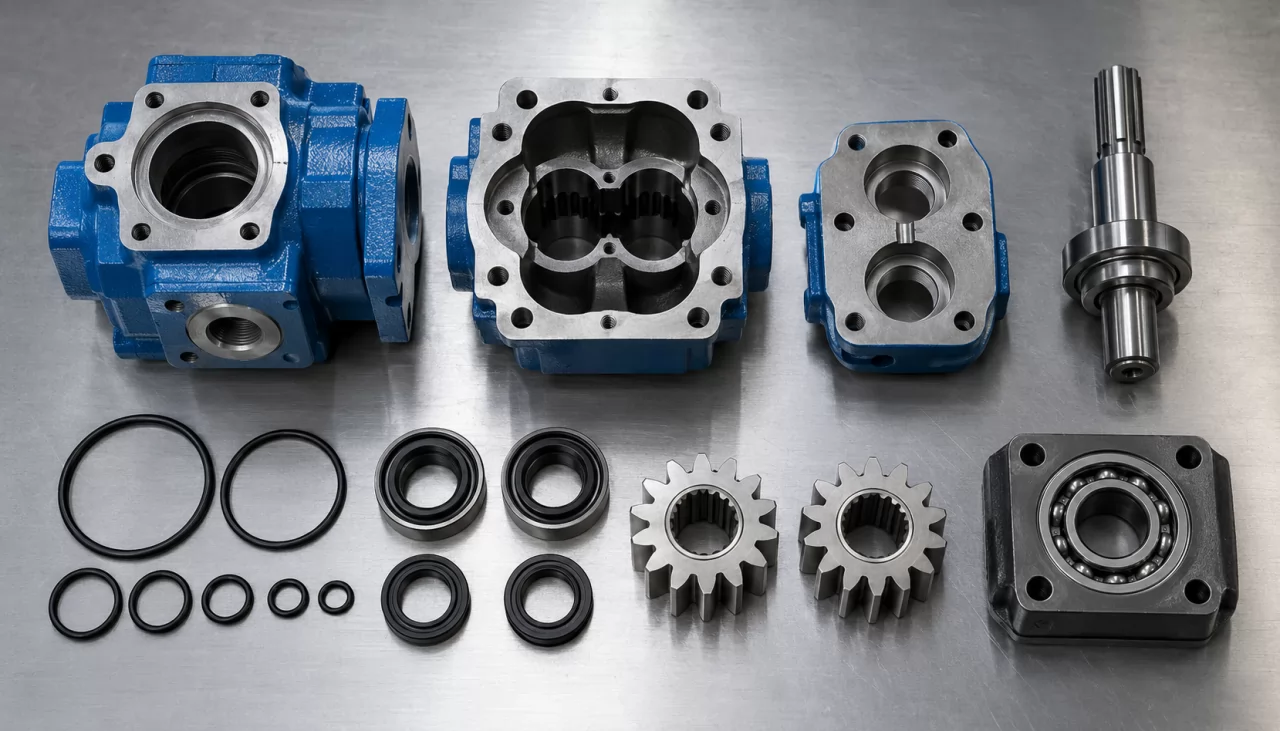
Gear pump replacement parts do not always mean a whole new pump. A seal kit is usually enough when the only problem is an external leak and the gears and housing are within wear limits. Replace one section of a tandem pump if just that section has worn. Replace the complete pump if the housing is scored, the shaft is damaged, or the cost of labour and downtime outweighs the saving on parts.
What to Confirm With a Hydraulic Gear Oil Pump Supplier Before Ordering
Before ordering from a hydraulic gear oil pump supplier, agree on the QC scope, the required documents and the approval steps in the quotation, before sampling starts. A disagreement over inspection scope is much cheaper to settle at the quote stage than after a shipment has been rejected.
Olive Branch Hydraulics follows this order flow:
- Inquiry
- Design, with drafts and 3D renders for approval
- Sampling
- Production with in-process quality control
- 100% final inspection
- Packaging and global shipping
- Quality checks: Write dimensional checks, leak inspection, and pressure/flow testing where applicable into the quote, along with the documents you need with the shipment.
- Customization: Custom hydraulic gear pumps can be built to customer specifications for OEM and aftermarket use. Distributors can also request custom P/T port configurations.
- Production location: The manufacturing partner in Ningjin was established in August 2010. Its production site is about 9 km from the Xinji sales office.
- Document references: Third-party document references belong to their holders. Do not treat them as the supplier's own certification.
FAQ
Is a gearbox lubrication pump the same as a hydraulic gear pump?
Usually not, although buyers often use the same name for both. In machinery sourcing the term normally means a hydraulic gear pump. Confirm whether the application is a hydraulic circuit or gearbox lubrication before you quote.
What information do I need to send for a quote?
Send the model, the quantity and the destination port. Olive Branch Hydraulics replies within 24 hours. For replacements, also include the original product code, the machine model and the equipment details.
Can a compatible pump drop straight into the OEM position?
Yes, but only when the complete assembly code matches. That means flange, shaft, ports, rotation and displacement. If any one of these differs, the pump will need adapters or rework, or it will not fit.
What usually causes early gear pump failure?
The usual causes are contaminated oil, inlet starvation or cavitation, and running above the rated pressure or outside the rated temperature. Checking filtration and the suction line before installing a new pump avoids most repeat failures.
Ready to Match Your Gear Pump?
Send the original product code, the machine model, the quantity and the destination port to [email protected] or +8615075996564 to get a match and a quote within 24 hours. Product series details are at https://www.hydrogeartech.com/.