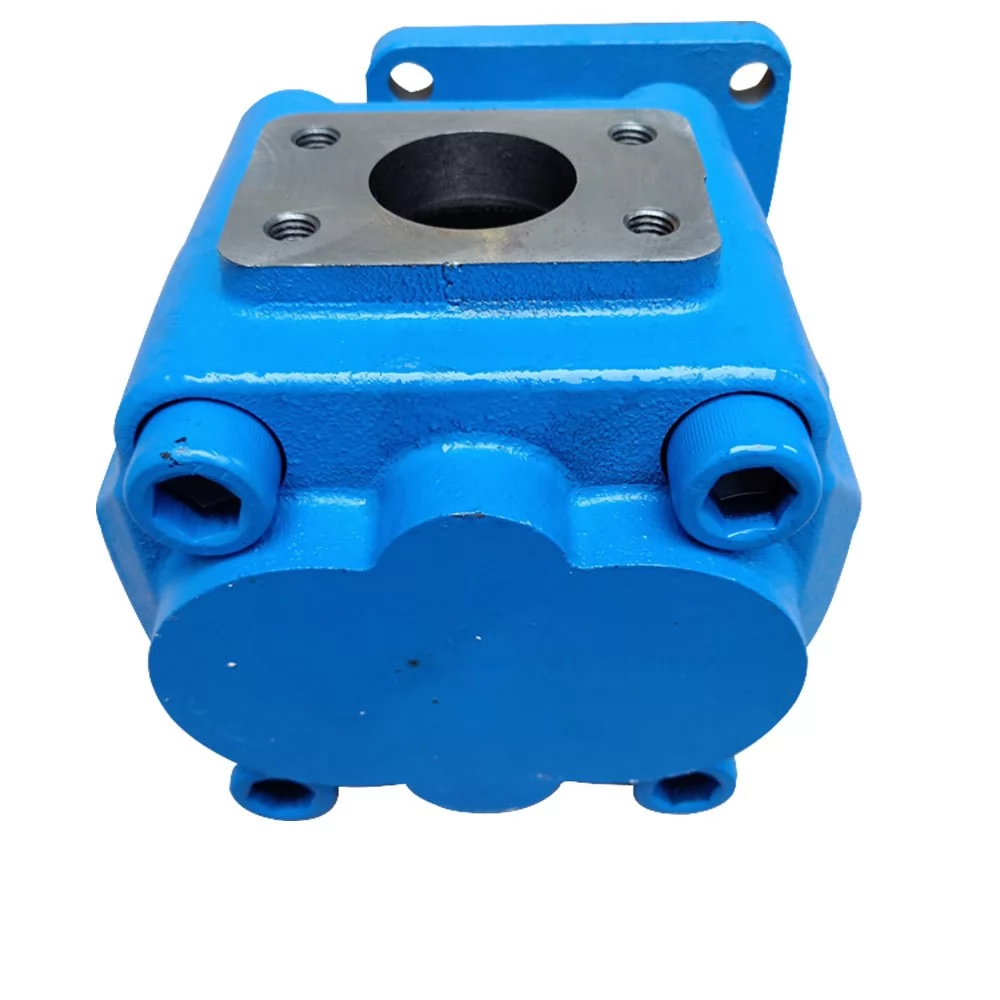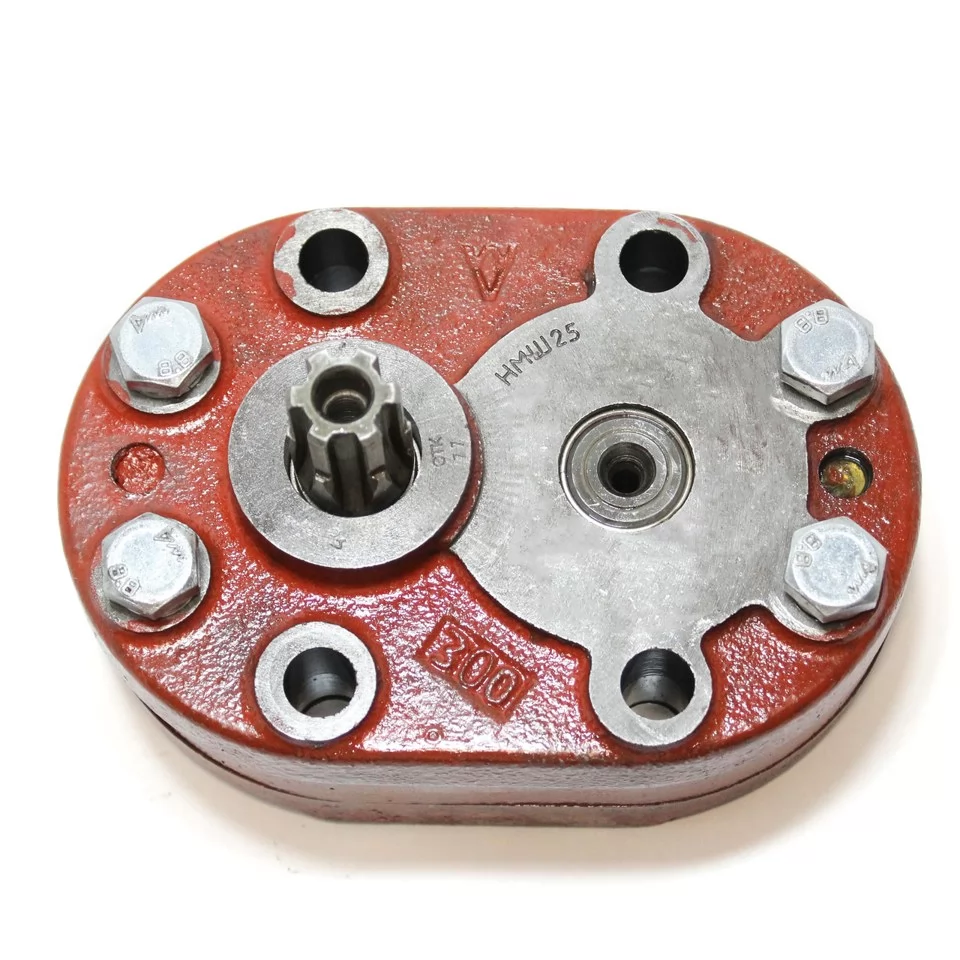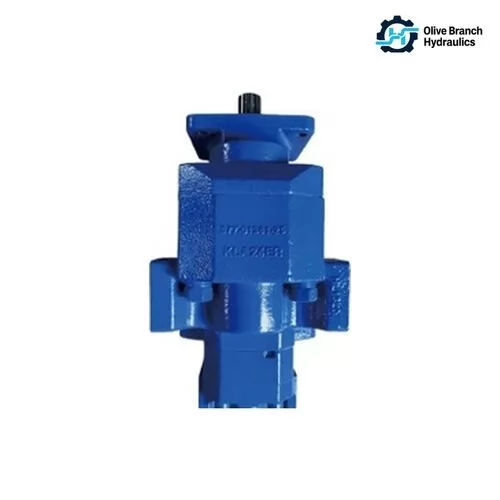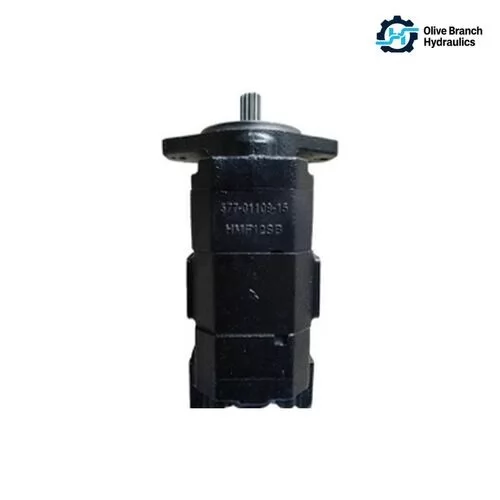

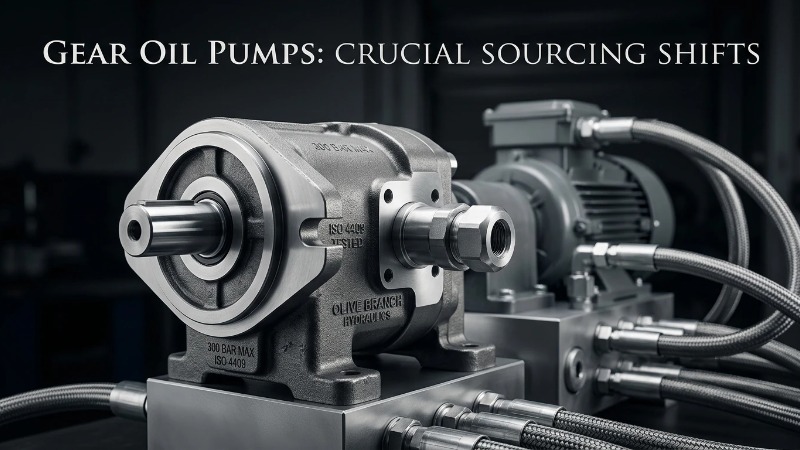
Why are procurement engineers across three continents suddenly requesting ISO 4409 test curves before they will even accept a quotation on a replacement gear pump? Rising demand for compact hydraulic power units across mobile machinery, metal-forming, and renewable-energy assembly lines is pushing plant engineers to re-evaluate high-pressure gear oil pump selection — with volumetric efficiency, noise thresholds, and OEM interchangeability now dictating procurement decisions ahead of unit price.
The shift, visible across inquiry patterns tracked by pump manufacturers through the first half of 2026, marks a departure from a decade of predominantly price-led sourcing. Standard-duty pressure ratings are trending toward 250–300 bar, tolerances have tightened enough to push volumetric efficiency benchmarks into the 92–95% band, and OEM-cross-referenced sourcing is displacing branded replacement channels for legacy HGP, CBHZ, CBK, and K3V-family part numbers.
Key Takeaways
- Pressure creep is real: "standard duty" is quietly migrating from 210 bar to 250–280 bar continuous across new HPU builds.
- Efficiency is the new price: 92–95% volumetric efficiency at rated pressure is now table stakes for heavy-duty specifications.
- OEM cross-reference is winning: dimensional and hydraulic interchangeability outrank brand loyalty for replacement gear pumps.
- TCO reframes the buy: energy draw accounts for 45–60% of five-year cost — a three-point efficiency gain often pays back the pump.
- Documentation is the differentiator: ISO 4409 test data and ISO 4406 cleanliness certification are being demanded per shipment, not per model.
What Is a High-Pressure Hydraulic Power Pack Gear Oil Pump?
A high-pressure hydraulic gear pump is a positive-displacement device — typically external-gear — that converts rotational input from an electric or diesel motor into pressurized fluid flow, generally in the 210–320 bar class. Within a hydraulic power unit (HPU), it is the primary energy-conversion element sitting between the prime mover and the downstream actuators, valves, and accumulators.
Core Components at a Glance
The performance envelope of any gear oil pump is set by five elements: the housing (usually cast iron for high-pressure duty), the drive and driven gears, bushings or bearing blocks, shaft seals, and the pressure-loaded side plates that seal the gear end-faces. Under sustained high-pressure duty, side-plate compensation quality and bushing PV rating determine whether the pump holds efficiency past 2,000 operating hours or drifts within months.
External vs. Internal Gear Configurations
External gear pumps remain dominant in power packs operating above 200 bar because their geometry tolerates higher differential pressure and simpler manufacture keeps unit cost defensible. Internal gear designs run quieter and with lower flow ripple, which is why they appear in precision hydraulics and injection-molding auxiliaries — but they lose ground above 250 bar continuous.
Why the News: What's Driving Demand
Three converging pressures explain the current surge in high-pressure gear pump inquiries:
- Electrification of mobile equipment is multiplying HPU counts per machine, as diesel-hydraulic circuits are broken into smaller, distributed electric-driven power packs.
- Downsizing of industrial presses — driven by floorspace and energy-cost pressures — requires higher pressure at lower displacement to preserve tonnage.
- MTBF expectations tied to unmanned and lights-out manufacturing shifts have made premature pump failure a line-stopping event rather than a maintenance nuisance.
Regional Demand Signals
Inquiry patterns across 2026 show North American buyers focused on retrofit and replacement into aging press lines, Western European specifiers pushing biodegradable-fluid compatibility ahead of updated Machinery Regulation requirements, and GCC markets driving orders around solar-tracker HPUs and desalination auxiliary circuits. Southeast Asian OEM assemblers, particularly in Vietnam and Thailand, are absorbing volume for mobile equipment and injection-molding auxiliaries where compact HPU footprints command a premium.
Specification Benchmarks: What Buyers Are Asking For
Procurement engineers and plant maintenance leads have converged on a fairly consistent request sheet. Below is the benchmark most Tier-2 industrial buyers now bring to the RFQ table.
Pressure, Displacement, and Efficiency Table
| Parameter | Standard Duty | Heavy Duty | Notes |
|---|---|---|---|
| Continuous pressure | 210 bar | 250–280 bar | Peak often 10–15% higher |
| Intermittent peak | 250 bar | 300–320 bar | ≤6 s duty |
| Displacement range | 1.0–25 cc/rev | 25–90 cc/rev | Per stage |
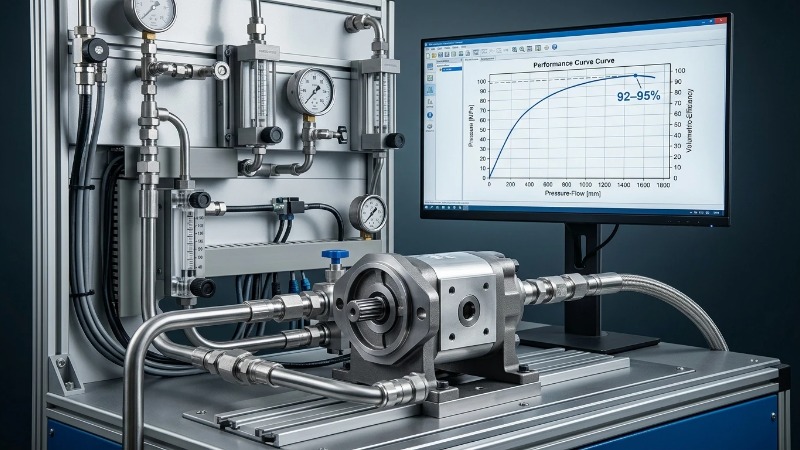
| Volumetric efficiency | 90–93% | 92–95% | At rated pressure, 50 cSt |
| Mechanical efficiency | 88–92% | 90–94% | Break-in dependent |
| Speed range | 500–3000 rpm | 600–3500 rpm | Viscosity-limited |
| Noise level | 72–78 dB(A) | 75–82 dB(A) | 1 m, rated load |
Mounting, Porting, and Interchangeability
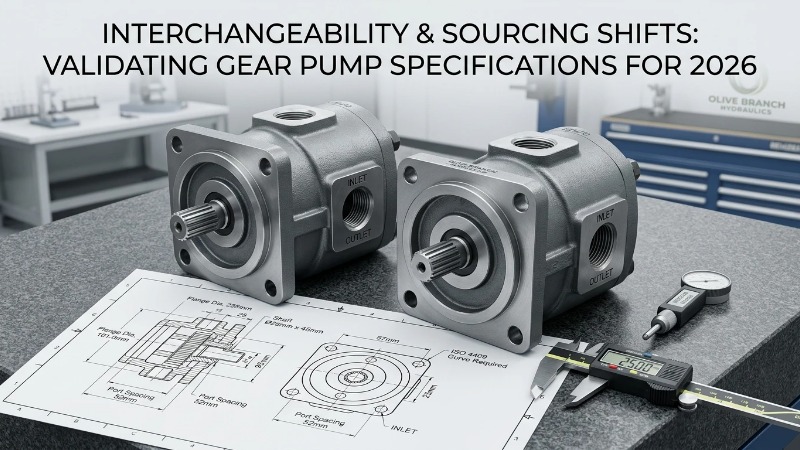
SAE A, B, BB, and C flange standards remain the reference points, backed by ISO 3019-1 and 3019-2 for shaft and mounting geometry. Port options split between BSPP and SAE straight-thread, and P/T port flexibility has become non-negotiable for retrofits into legacy HPUs where re-plumbing is not economical.
Materials and Sealing for Fluid Compatibility
Cast iron housings dominate above 210 bar; aluminum still appears in low-weight mobile applications up to roughly 175 bar continuous. PTFE-lined bushings extend life under marginal lubrication, while seal-material selection — FKM for HFC and higher-temperature service, NBR for standard mineral-oil circuits — must be specified against the actual fluid rather than assumed defaults.
Compliance and Testing: What "Verified" Should Mean
Applicable Standards
ISO 9001 is the manufacturing baseline. Beyond that, ISO 4409 governs steady-state performance test methods for positive-displacement pumps, ISO 4406 defines the fluid cleanliness classes that gate warranty claims, and CE Machinery Directive alignment remains mandatory for any pump destined for a European-installed HPU.
Pre-Shipment Inspection Protocols
A credible factory test report should include a pressure-hold trace, a flow-versus-pressure curve at the rated speed, internal leakage measurement in mL/min at maximum working pressure, and a noise-level reading at 1 m under rated load. Plant managers accepting shipment on trust alone — without the underlying curves — routinely inherit the drift into a warranty dispute six months later.
Total Cost of Ownership: Beyond the Purchase Price
TCO Breakdown Table
| Cost Factor | Share of 5-Year TCO | Key Driver |
|---|---|---|
| Acquisition | 15–25% | Pump + freight + integration |
| Energy (electric motor draw) | 45–60% | Volumetric + overall efficiency |
| Maintenance & spares | 10–20% | MTBF, seal life, contamination control |
| Downtime cost | 5–15% | Application criticality |
| Disposal / recycling | <2% | Housing material |
Efficiency-to-Energy Bridge
Consider a 15 kW hydraulic power pack running 6,000 hours per year. A three-percentage-point gain in overall efficiency — from, say, 82% to 85% — reduces annual electrical draw by roughly 3,200 kWh. At industrial tariffs common across Western Europe in 2026, that alone offsets the price differential between a commodity gear pump and a tighter-tolerance factory-direct unit within two operating years.
Application Snapshots
Metal Forming and Stamping Presses
Cycle-time compression and shock loading dominate the specification here. Displacement staging — pairing a low-displacement, high-pressure element with a larger fill stage — allows rapid ram approach followed by controlled forming pressure without oversizing the electric motor.
Mobile Equipment HPUs
Aerial lifts, agricultural implements, and municipal sweeper vehicles reward compactness and vibration tolerance. Aluminum-housing external gear pumps in the 4–16 cc/rev range dominate this bracket, usually with SAE A two-bolt mounting for driveline simplicity.
Injection Molding Auxiliary Circuits
Clamp-assist and ejector circuits demand stable pressure at variable flow. Internal gear designs earn their premium here through lower ripple, which translates directly into part-quality repeatability on thin-wall moldings.
Renewable-Energy Assembly and Test Rigs
Wind-blade pitch test stands and solar-tracker HPUs represent a growing procurement segment across MENA and Southeast Asian markets. Duty cycles are milder than press applications, but cleanliness expectations run higher — ISO 4406 20/18/15 is a common floor.
Sourcing Shift: OEM-Cross-Reference and Factory-Direct Channels
Why Buyers Are Cross-Referencing Legacy Part Numbers
HGP, CBHZ, CBK, CB-FC, JHP, CBGJ, CBT, and K3V-family references remain the dominant search anchors for replacement gear pumps. Maintenance leads increasingly prioritize dimensional and hydraulic interchangeability — mounting, shaft, port geometry, and flow-pressure envelope — over the badge on the housing, provided the test documentation holds up.
Factory-Direct vs. Distributor Models
Direct-from-factory channels compress lead time on non-stock configurations, open a customization window for custom P/T porting and shaft variants, and offer MOQ flexibility that traditional distributor networks struggle to match. The trade-off is that buyers must assume more of the technical vetting role — which circles back to the documentation demand.
What It Means: Implications for Plant Managers and Procurement
For Plant Managers
Standardize on two or three pressure classes across the facility. Every additional class multiplies spares inventory, technician training, and RFQ overhead without commensurate performance benefit.
For Procurement Engineers
Request full ISO 4409 test data and ISO 4406 cleanliness certification with every shipment, not just at the model-qualification stage. Batch-level drift is the primary source of field failures traced back to sourcing decisions.
For Maintenance Leads
Track volumetric efficiency drift — measured through simple flow-at-pressure checks — as the leading indicator of end-of-life. External leakage is a late signal; internal bypass tells you the story two to four months earlier.
Forward Look: Where the Segment Heads Next
Three trajectories are visible in the near-term outlook. Smart HPUs with embedded pressure and temperature sensing are moving from optional to specified on new industrial builds. Biodegradable HEES fluids are gaining ground in EU markets, forcing seal-material reconsideration across catalog ranges. And mobile and industrial gear pump specifications continue to converge as electrification erodes the traditional distinction between the two application worlds.
Frequently Asked Questions
What pressure rating qualifies a gear pump as "high pressure"?
Industry convention treats 210 bar continuous as the entry threshold for "high pressure" in a gear pump context, with heavy-duty units rated 250–280 bar continuous and 300–320 bar intermittent peak. Below 175 bar, the label is generally reserved for medium-pressure service.
Can a gear pump replace a piston pump in a high-pressure power pack?
Between 250 and 320 bar, a well-specified external gear pump can substitute for a piston pump at meaningfully lower acquisition cost and simpler maintenance, but with modest efficiency and noise penalties. Above 320 bar continuous, or where variable displacement is required, piston remains the correct choice.
How long should a high-pressure gear oil pump last?
MTBF ranges of 8,000–15,000 operating hours are realistic when fluid cleanliness is held at ISO 4406 20/18/15 or better and duty cycle stays within rated intermittent-peak limits. Contamination one class worse can halve service life.
What causes premature failure in high-pressure gear pumps?
Ranked by field-observed frequency: fluid contamination, cavitation from restricted suction or degraded viscosity, over-pressurization from missing or misadjusted relief valves, and coupling misalignment. Seal failure typically appears as a symptom of one of these root causes rather than an independent event.
Are OEM-cross-reference gear pumps reliable for critical applications?
Yes, provided the supplier furnishes ISO 4409 performance test data specific to the shipped unit, documented cleanliness certification, and dimensional conformance to the referenced part number. Cross-referenced units without traceable factory test documentation should be reserved for non-critical circuits.
What fluids are compatible with standard external gear pumps?
Mineral oils across ISO VG 32–68 grades are the default. HFC and HFD fire-resistant fluids require FKM seals and typically a de-rated pressure envelope, while biodegradable HEES fluids demand fluid-specific seal validation and slightly tighter cleanliness targets.
Request Documentation Before You Request a Quote
If you are re-specifying a hydraulic power unit, retrofitting a legacy press line, or cross-referencing a discontinued gear pump part number, the most useful next step is not a price — it is a document set. Ask any prospective supplier for an interchangeability chart against your existing HGP, CBHZ, CBK, or K3V-series references, a sample ISO 4409 test report, and a written statement of pre-shipment inspection protocol. Olive Branch Hydraulics maintains these as standard deliverables for OEM and MRO buyers across European, Middle Eastern, and Southeast Asian markets, and welcomes engineering conversations at the specification stage — before the RFQ is finalized.