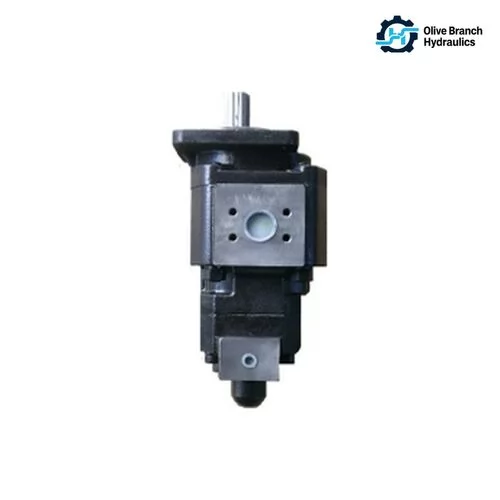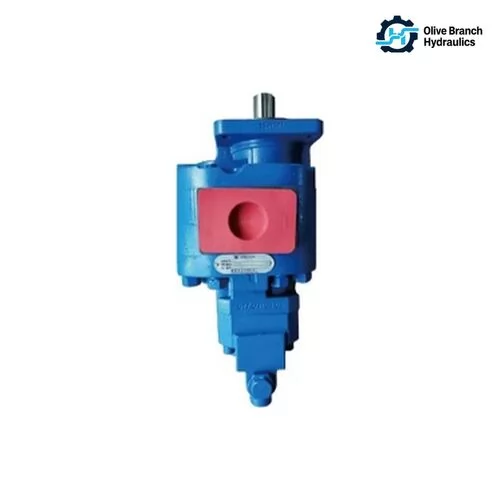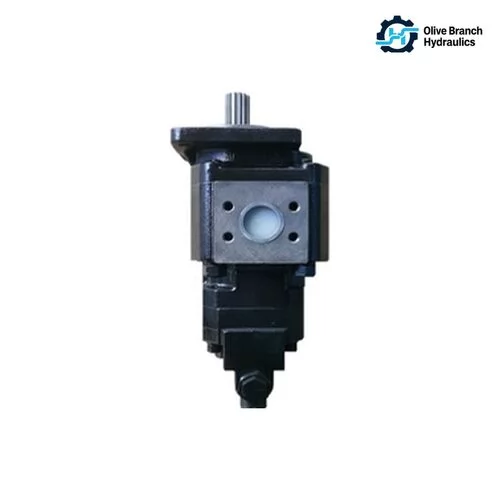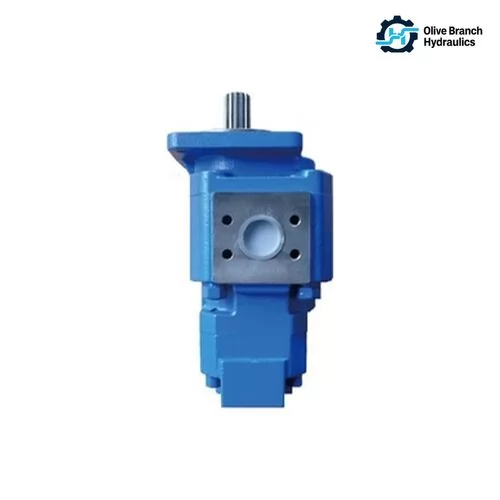

Quote from the full pump code, not from the casting. Two buyers can get the same request. The first matches the housing from a photo and ships within days. The second confirms the code, the machine and the measured fault first, and ships a few days later. When replacing a tandem gear pump on a backhoe loader, the second buyer avoids a return, a freight bill and an angry mechanic.
- Diagnose first: confirm the old pump actually failed, and find out why.
- Match both sections: front and rear displacement plus direction of rotation.
- Confirm the interfaces: shaft, flange, ports and any built-in valves.
- Quote on the full code: ask for the complete assembly code, not a series name.
- Control the first start: prime, idle, bleed and record pressures.
Same Casting, Different Pump: Why a Backhoe Loader Tandem Gear Pump Replacement Starts With the Code
A backhoe loader tandem gear pump replacement starts with the complete assembly code because two pumps with identical housings can differ in section displacement, rotation, shaft, port layout or internal valving. Only the full code, read together with the machine make, model and serial range, confirms that the replacement will fit and perform like the original.
A tandem gear pump is two gear pump sections on one common drive shaft, each with its own displacement and outlet. On a backhoe loader, one section usually feeds the loader and backhoe circuits while the other supplies steering or adds flow at low engine speed. Gear width sets each section's output, and gear width is invisible from outside.
What to Collect From Your Customer Before Quoting
- Nameplate code: the full string, photographed straight on, including suffixes.
- Machine data: make, model and serial range, since OEMs change pumps mid-production.
- OEM part number: from the parts book or the old invoice.
- Photos: shaft end, mounting flange and every port, with a ruler in frame.
When the Nameplate Is Missing or Worn
Measure the pump. Record gear width for each section, the spline tooth count or key size, the pilot diameter, the bolt spacing and the port thread type and size. A thread gauge and calipers cover most of it.
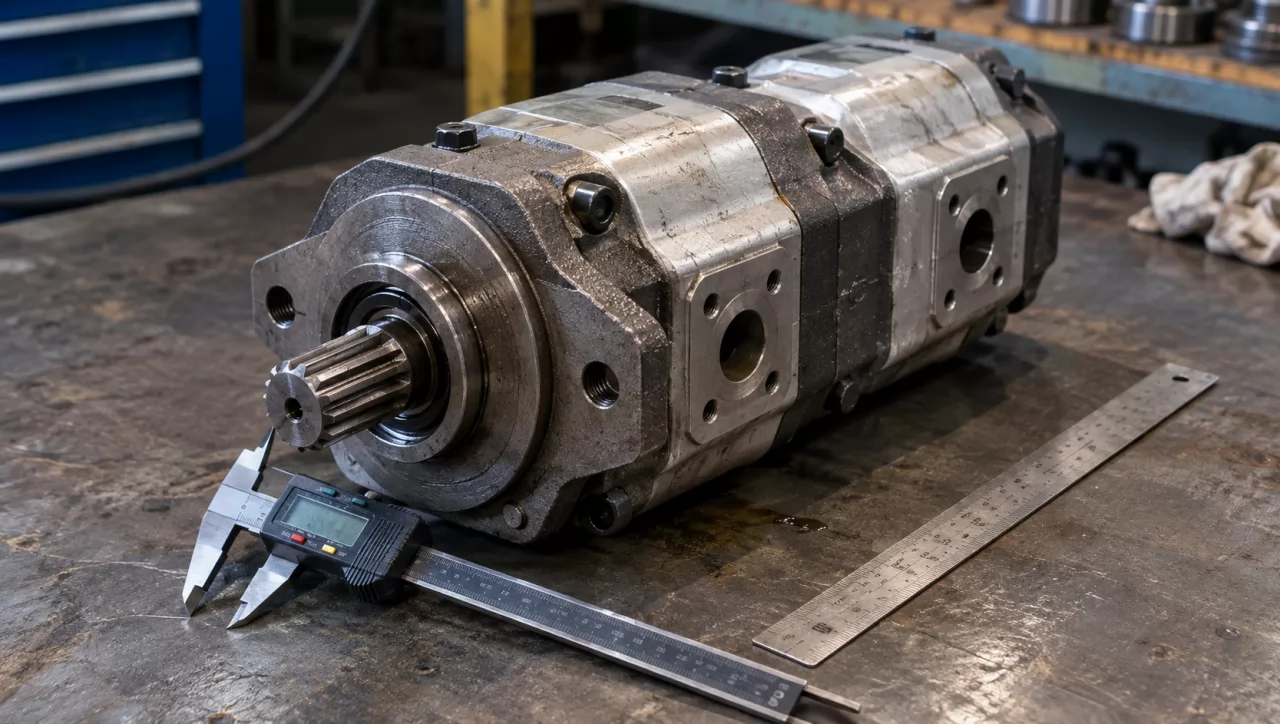
Treat measured-only orders as higher risk. Agree in writing that the buyer has confirmed the dimensions, and consider a single sample before a batch.
How to Check a Backhoe Hydraulic Pump Before Replacing It
Knowing how to check a backhoe hydraulic pump before replacing it saves money: measure pressure and flow for each pump section, then rule out the relief valve, the suction line and the oil condition. A pump that tests within the manual's figures is not the fault, and a new one will not cure slow cycles caused elsewhere.
Signs of a Failing Backhoe Hydraulic Pump
- Slow cycles: loader lift and boom movements take noticeably longer than before.
- Noise: a steady whine, or a gravelly sound that points to cavitation.
- Heat: the pump body or oil runs hotter than normal under the same work.
- External leaks: oil at the shaft seal or between sections.
- Fade when warm: performance drops as oil thins, a classic sign of internal wear.
Cavitation is the formation and collapse of vapour bubbles at the pump inlet when suction pressure drops too low. It sounds like pump failure but often starts with a restricted inlet.
Backhoe Hydraulic System Pressure Testing in Practice
Bring the oil to operating temperature first. Cold oil hides internal leakage. Then test each section separately against the figures in the machine's service manual.
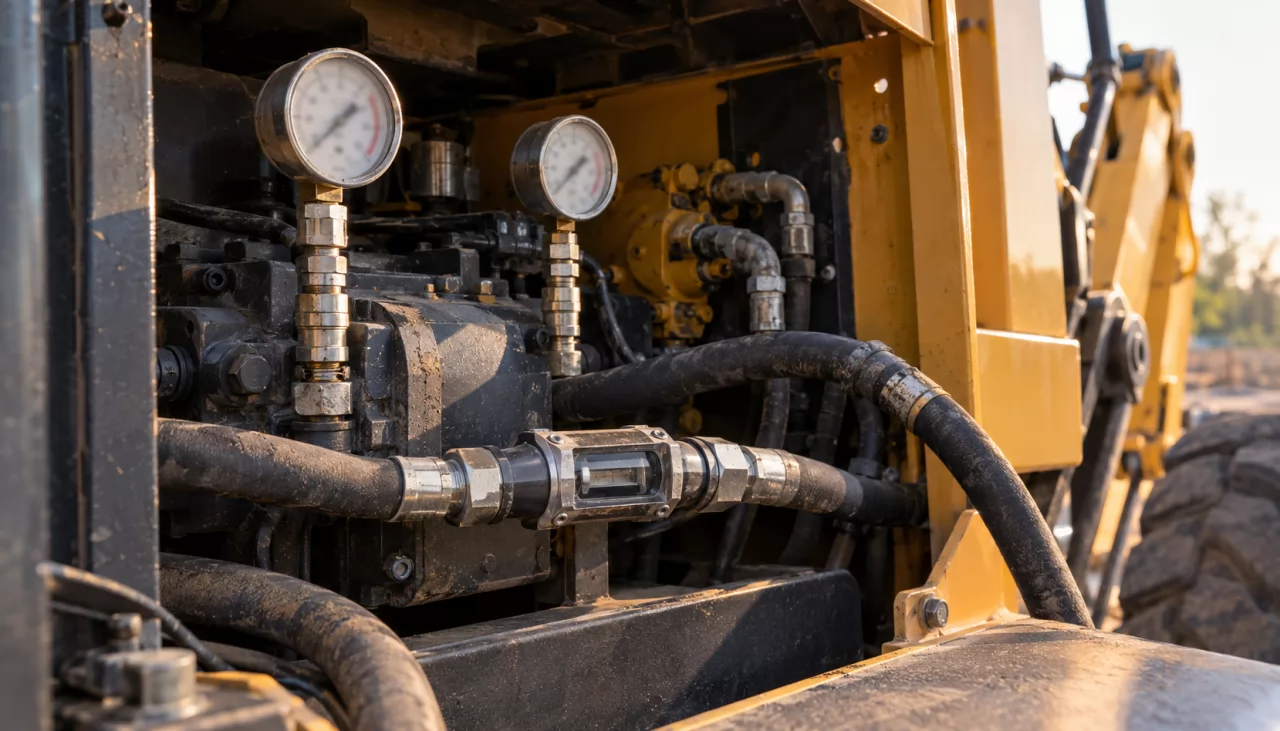
- Fit calibrated gauges at the test ports, or install an in-line flow meter at the section outlet.
- Run the engine at the rated speed given in the manual.
- Load the circuit gradually with the flow meter's valve and record flow at several pressures.
- Check where the relief valve opens. A low setting mimics a weak pump.
Flow that falls away sharply as pressure rises usually means worn gears or side plates. Flow that is low across the board points to the inlet or drive.
Common Mistakes That Cause a Second Pump Failure
- Leaving contaminated oil in the system. Debris from the old pump will score the new one within hours. Flush, change the oil and replace every filter, and check cleanliness against an ISO 4406 code if a particle count is available.
- Ignoring the suction strainer. A blocked strainer or collapsed suction hose starves the inlet and causes cavitation damage. Inspect and clean the whole suction side.
- Assuming the noise is the pump. Air leaks at a suction clamp, low oil level or a worn coupling make similar sounds. Test before you buy.
- Skipping the relief valve check. A relief valve stuck high overloads the replacement pump. Verify the setting during the test.
Which Specs Must Match for Backhoe Double Gear Pump Part Number Matching?
Backhoe double gear pump part number matching requires every functional spec to agree: displacement for each section, direction of rotation, shaft type, flange, port sizes and positions, inlet arrangement and any built-in valves. A pump that matches five of these six items will still fail to install or will run the machine incorrectly.
Displacement and Rotation for Each Section
Gear pump displacement is the volume of oil one section delivers per shaft revolution, given in cc/rev. Match it for the front and rear sections independently. Swapping the order, with the larger section at the rear, changes which circuit receives which flow.
Too little displacement slows the loader and backhoe. Too much raises flow and input torque, which can lug the engine at low idle and push oil over the relief valve as heat. Rotation, clockwise or counter-clockwise viewed from the shaft end, must match the drive. A gear pump turned the wrong way will not deliver oil and can blow its shaft seal.
Hydraulic Pump Shaft and Flange Compatibility, Ports and Valving
- Shaft: spline tooth count and pitch, tapered shaft with key, or parallel key. SAE splines and DIN 5480 metric splines are not interchangeable.
- Flange: SAE J744 two-bolt or four-bolt mounts versus European four-bolt patterns. Check pilot diameter and bolt spacing.
- Ports: thread type (BSPP, SAE O-ring boss, metric), size, and position. Side ports versus rear ports change the hose routing.
- Inlet: a shared inlet for both sections or separate inlets.
- Valves: some backhoe pumps carry an integral priority valve for steering or a built-in relief valve. Omit it and the steering may misbehave.
Where a distributor needs a pump to fit several machine variants, a custom P/T port configuration can sometimes be built to order on a gear pump, with drafts and 3D renders approved before sampling.
Tip: Brand names and model numbers identify the original part only. Compatibility depends on the complete assembly code, so confirm every suffix before you approve a quotation.
Pre-Order Verification Checklist
- Record the complete assembly code from the nameplate.
- Confirm machine make, model and serial range.
- Verify front and rear displacement in cc/rev.
- Check rotation as seen from the shaft end.
- Measure shaft type, spline count or key size.
- Match flange pattern, pilot diameter and bolt spacing.
- Identify port threads, sizes and positions, and the inlet layout.
- Note any integral priority or relief valve and its setting.
- State the quantity and the destination port in the RFQ.
What Should Installation Look Like When Replacing a Tandem Gear Pump on a Backhoe Loader?
Installation of a replacement tandem gear pump on a backhoe loader should follow a fixed order: make the machine safe, clean or flush the hydraulic system, fit the pump to the correct torque, prime it with oil, and start at low idle. Pressures are rechecked against the manual before the machine returns to full work.
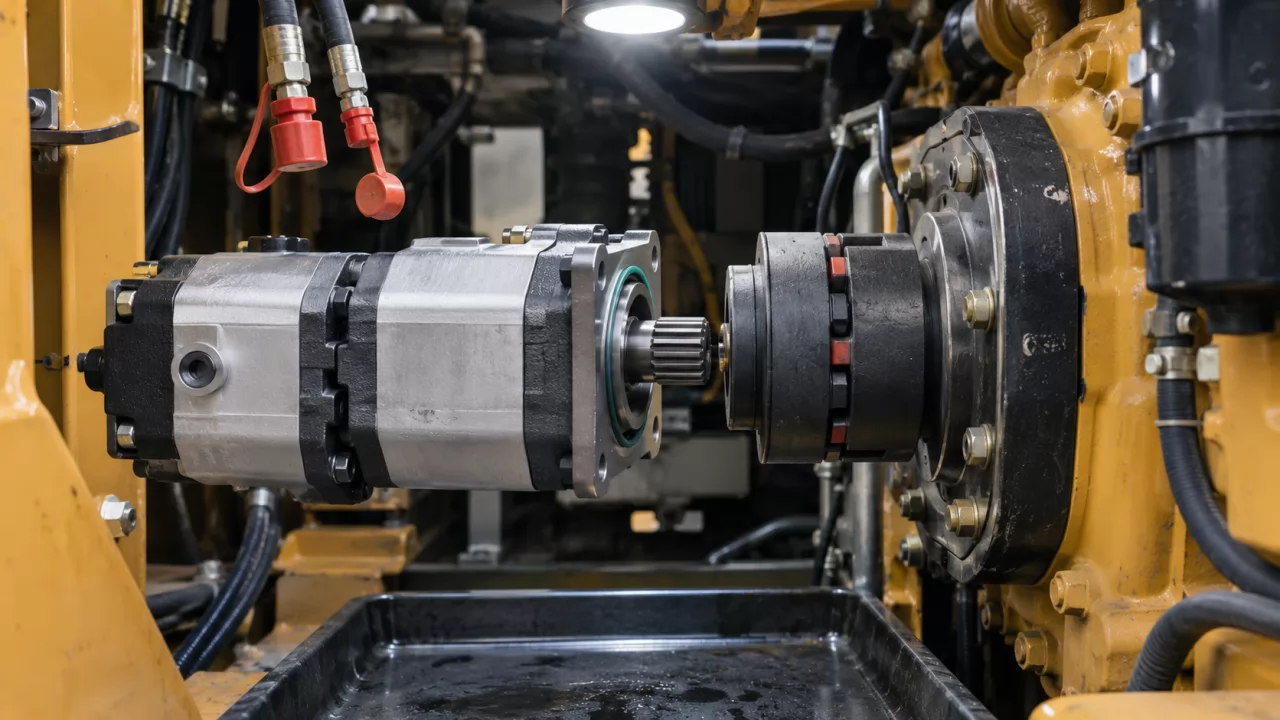
Note: Lower the loader bucket and the backhoe to the ground before you open any line. Never dry-start a gear pump; without oil at the inlet, the gears and side plates can seize within seconds.
Step-by-Step Fitting Sequence
- Shut down the engine and relieve system pressure by working the control levers.
- Cap every disconnected hose and port immediately to keep dirt out.
- Inspect the drive coupling and spline for wear or fretting; replace if worn.
- Fit the new pump with a new flange seal and torque the bolts to the manual's value.
- Flush the system, or at least change the oil and every filter, and clean the strainer.
- Fill the pump inlet and suction line with clean oil before connecting the last hose.
First Run and Warranty Protection
Start at low idle with no load. Cycle each function slowly to bleed air, watching for leaks and listening for cavitation. Top up the tank.
After warm-up, test each section's pressure and flow again. Write the readings down with the date, hours and oil grade. If a claim comes up, those numbers show the pump was installed and started correctly.
FAQ
Can I fit a tandem pump with slightly larger displacement to gain speed?
No. Extra displacement raises input torque and flow, which can lug the engine and send surplus oil over the relief valve as heat. Stay with the displacement specified for that machine.
Do I need to replace the coupling or drive spline along with the pump?
Only if they show wear, but always inspect them. A worn coupling causes misalignment and spline fretting that shortens the life of the new pump.
What should I send to get an accurate quote?
The model or full code, the quantity and the destination port. For a replacement match, add the original product code, machine model and equipment details.
What quality checks apply to a replacement gear pump?
Typically dimensional checks, leak inspection and pressure or flow testing where applicable. The exact checks and the documents required should be agreed in the quotation.
Get Your Tandem Pump Match Confirmed
Send our team the original pump code, the backhoe make and model, and clear photos of the shaft, flange and ports, along with quantity and destination port. We will check the match against the full assembly code and reply with a quote within 24 hours.