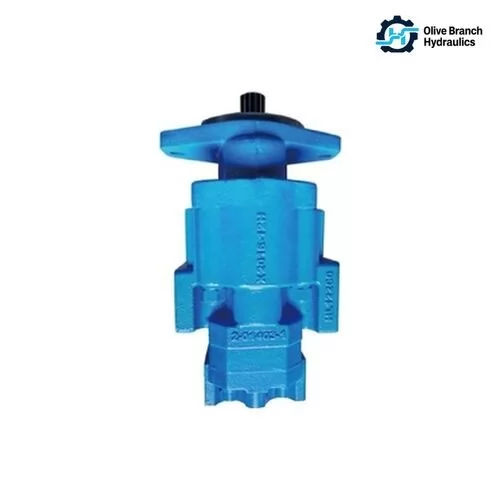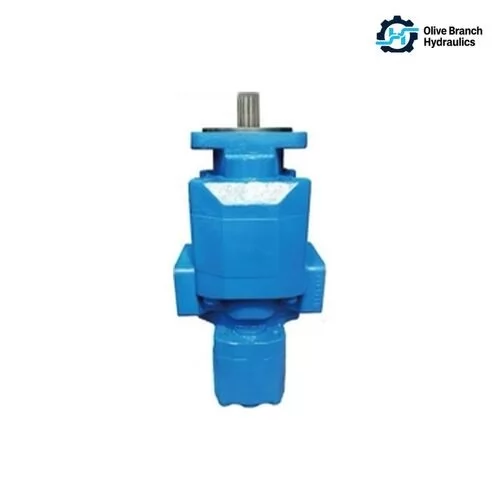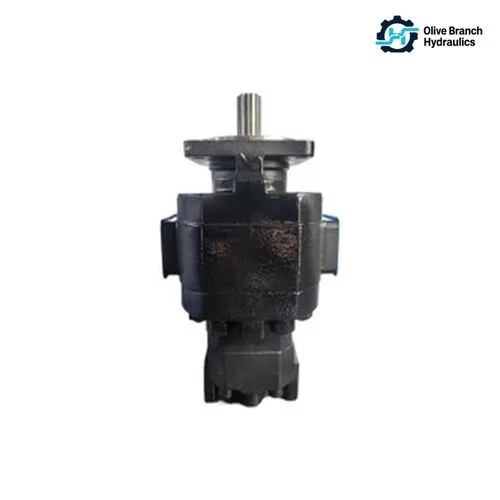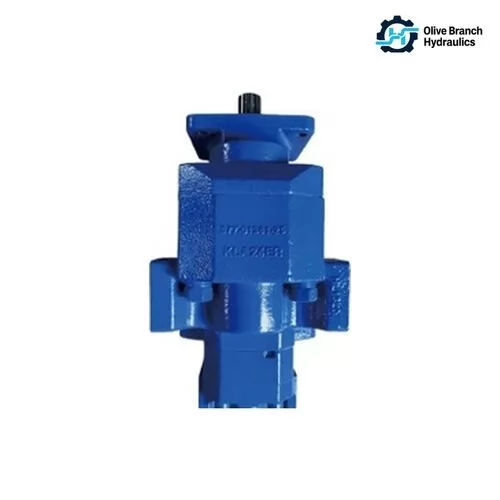

A gear pump is a commodity part. Plenty of people in the trade believe that, and it costs them money. When custom gear pumps China orders go wrong, the cause is rarely the pump type. It is usually a flange that doesn't mate, a shaft spec nobody pinned down, or QC terms loose enough that two batches arrive slightly different.
- Lock the full assembly code: a series name like AZPF or PGP is not a specification.
- Define every interface: flange, shaft, ports, rotation and pressure rating, all in writing.
- Approve drawings before sampling: fixing a 3D render costs far less than fixing a sample.
- Put QC and documents in the quotation: tests and paperwork you don't specify won't be done.
- Plan MOQ around variants: housing and shaft variety drives minimums more than total volume does.
Why Interfaces, Not Price, Decide Whether a Custom Gear Pump Program Works
A replacement or OEM gear pump succeeds or fails on five interface points: mounting flange, drive shaft, port configuration, direction of rotation and pressure rating. If any one is wrong, the pump won't fit or will fail early. Unit price only matters once all five are confirmed against the machine.
A gear pump is a positive-displacement pump that moves oil by trapping it between the teeth of two meshing gears and the housing wall. The concept is simple, and that is where the commodity myth comes from. The installation is the hard part. A pump that is a few millimeters off on pilot diameter, or has 9 spline teeth where the PTO expects 11, is scrap at the dealer's counter.
Cheap units that need rework, returns or a second shipment end up costing more than a correctly specified pump at a higher price. So the price comparison should come last, after the specs are confirmed.
The Assembly Code Is the Real Specification
An assembly code is the full order string printed on the nameplate. It encodes displacement, rotation, flange, shaft, ports and sometimes seals and valves. Brand names and series such as AZPF, ALP or PGP only tell you the family. Fit depends on the complete code, so treat a series name alone as an incomplete RFQ.
If the nameplate is worn or missing, measure the physical interfaces and photograph them with a scale in frame. That data does the same job as the code, but it is slower to work from.
What Can You Actually Customize in Custom Gear Pumps From China?
Custom gear pump programs can usually change displacement, mounting flange, shaft, porting, rotation and multi-section layout. The limits come from the body family: aluminum or cast-iron housing, plus the gear set it was designed around. Those two set the pressure ceiling and the range of displacements a given frame size can take.
When suppliers say "custom", they nearly always mean configuring proven components in a new combination. A brand-new housing is a different project, with tooling cost, longer lead time and more validation. Ask early which category your request falls into.
Displacement, Pressure and Duty Cycle
Displacement is the volume of oil the pump delivers per shaft revolution, usually given in cc/rev. Choose it from the flow you need at the machine's real working speed, not its maximum rated speed.
Pressure needs more care. Rated (continuous) pressure and peak (intermittent) pressure are separate figures, and the duty cycle decides which one matters. A log splitter sits at relief pressure for short bursts. A hydraulic power unit on a production line may run near rated pressure for hours. Leave margin for pressure spikes and for oil temperature rise, because hot oil thins out and internal leakage increases. Cast-iron bodies generally handle higher sustained pressure and heat than aluminum ones, which cost less and weigh less.
Flanges, Shafts, P/T Ports and Rotation
This is where most mismatches happen:
- Flange: SAE flanges follow SAE J744. European two-bolt and four-bolt patterns follow DIN or ISO 3019-2 metric dimensions. Confirm pilot diameter, bolt spacing and bolt size.
- Shaft: splined (tooth count, pitch, length), parallel keyed or tapered with a nut. A tapered 1:8 shaft and a tapered 1:5 shaft won't swap.
- P/T ports: pressure and suction port type (flange, BSP, SAE O-ring boss, metric), size and position. Side ports and rear ports affect hose routing.
- Rotation: clockwise (CW) or counter-clockwise (CCW), viewed from the shaft end. Some designs can't be reversed in the field.
Custom Tandem Gear Pumps and Multi-Section Builds
A tandem pump is two or more gear sections driven by one input shaft, with each section feeding its own circuit. Double, triple and quadruple builds are common on loaders, cranes and agricultural machines.
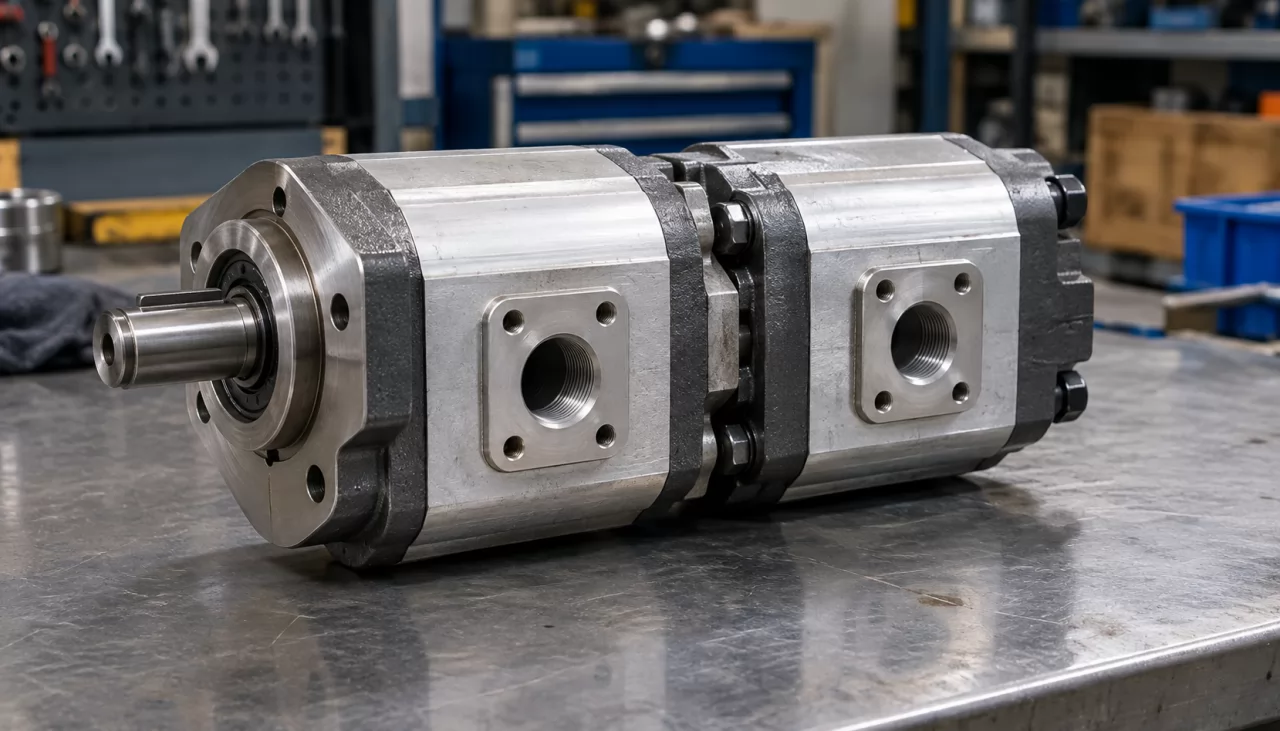
The added complexity comes from three things. Through-drive torque is the torque the first section's shaft and coupling must pass on to the sections behind it, and it caps the combined pressure and displacement downstream. Shared or separate inlets change how suction performs. Overall length can stop the pump fitting in a tight engine bay. Ask for the torque limit of the front shaft and coupling before you finalize section sizes.
How to Source Custom Gear Pumps From a Chinese Manufacturer, Step by Step
Sourcing custom gear pumps from a Chinese manufacturer follows a fixed sequence: RFQ with full data, approval of drawings and 3D renders, sample testing, production with in-process QC, final inspection, then packing and shipping. Skipping or rushing the drawing and sample stages is the most common reason a program needs a second round.
- RFQ: send complete technical and commercial data (listed below).
- Design review: the supplier returns drafts and 3D renders. Check every interface dimension against your machine.
- Sampling: a small number of units built to the approved drawing.
- Sample testing: you test on your bench or machine and sign off in writing.
- Production: bulk run with in-process checks on machining and assembly.
- Final inspection: dimensional, leak and functional checks as agreed in the quotation.
- Packing and shipping: export packaging and documents for your Incoterm (FOB, CIF or EXW).
What to Send With Your RFQ
Send the model or original product code, quantity and destination port. For replacement parts, add the machine model and equipment details. Attach photos of the nameplate, flange face, shaft end and ports, plus any drawings you have. Include target working pressure and drive speed if you know them. A complete RFQ gets a usable quote in one round instead of three emails.
Sample Approval Before You Commit Volume
Approve on your own data, not on the supplier's test sheet alone. Use this checklist before you release the bulk order:
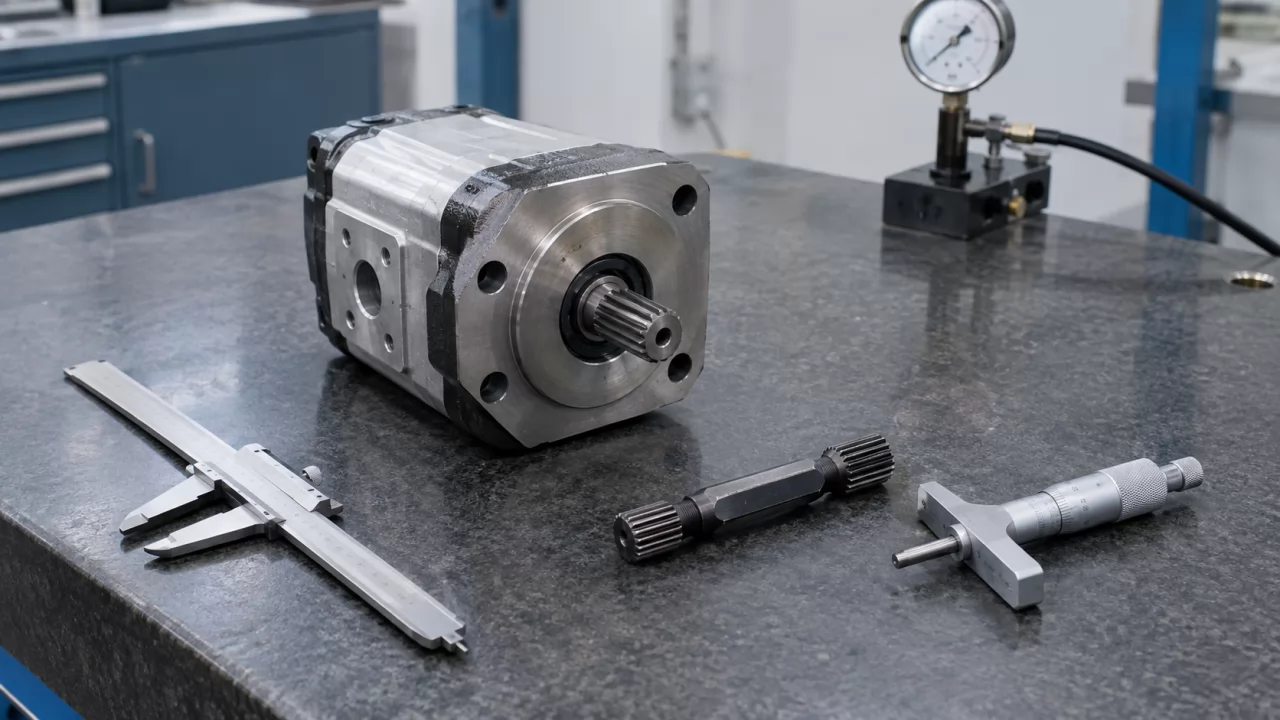
- Measure flange pilot, bolt pattern, shaft length and spline or key dimensions against your drawing.
- Verify rotation direction and port positions on the actual unit.
- Thread-check every port with a gauge or the mating fitting.
- Run the pump at working speed and record flow at several pressures, including near relief setting.
- Inspect the shaft seal and joints for weeping after a heat-soak run.
- Compare noise and case temperature against the original pump, if you have one.
- Photograph the nameplate, marking and packaging and keep them as the reference for bulk.
- Sign a written sample approval that names the drawing revision.
Private Label Hydraulic Gear Pumps: Branding, Marking and Documentation
Private label hydraulic gear pumps usually carry your nameplate, laser or cast marking, paint color, cartons and manuals. The branding is the easy part. You also need to agree in writing who owns the specification, who issues test reports and declarations, and how part numbers map between your catalog and the supplier's.
Set up a cross-reference table early: your part number, the supplier's internal code and the original assembly code it replaces. When a reorder comes in two years later, that table stops a silent substitution of a near-identical variant.
Decide also what goes on the nameplate. Displacement, rotation, max pressure, your part number and a batch or date code are the useful minimum. The batch code links field returns back to a production lot. Paint color can usually be matched to a RAL reference. Specify primer and topcoat if the pumps go to humid or coastal markets.
Trademark and Compatibility Wording
Original manufacturers' names and model numbers may appear only to identify what the part replaces. Write "replacement for" or "interchangeable with", and keep your own brand as the dominant mark on the pump and carton.
Note: Never put another company's logo on a private-label pump or carton, and never word listings to suggest the original manufacturer makes or endorses the part. Any third-party test reports or certificates belong to whoever holds them. They are not certifications of your brand or your supplier.
How Do You Choose an OEM Gear Pump Manufacturer for Distributors?
Choose an OEM gear pump manufacturer for distributors on engineering response, test capability, consistency across repeat batches and documentation quality. Catalog size matters less. A long model list looks good, but a supplier that answers drawing questions within a day and ships batch three identical to batch one will save you more money.
Criteria That Separate Factories From Resellers
- Machining control: ask whether housings, gears and shafts are machined in-house or at a partner plant nearby. You need to know who controls the tolerances on bore and gear width, because those set volumetric efficiency.
- Test bench: a bench that measures flow against pressure at speed is the minimum. Ask for a sample test record and see what it actually logs.
- Drawing support: can they produce dimensioned drafts and 3D models from your samples or photos? That ability is what makes reverse-matching possible.
- Batch traceability: date or lot codes on each unit, linked to inspection records, let you trace a field complaint back to its lot.
- Documentation: inspection reports, packing lists and declarations in a consistent format, ready before shipment and not after you chase.
- Engineering response: send a deliberately tricky technical question and time how long a specific, correct answer takes.
Rule of thumb: if a supplier can't send a dimensioned drawing of your exact configuration before quoting volume, don't place the order.
Matching Range Breadth to Your Catalog
Range breadth only helps if it matches what your customers bring to the counter. A distributor serving excavator and loader repair shops needs AZPF, ALP and PGP families plus tandem builds. An industrial power-unit catalog leans toward standard single-section pumps with SAE or DIN flanges. As one example of what to look for, Olive Branch Hydraulics offers custom P/T port configurations for distributors and provides drafts and 3D renders for approval before sampling. That combination matters when your catalog needs regional port variants of the same base pump.
What Drives MOQ, Price and Lead Time for a Wholesale Hydraulic Gear Pump Supplier?
For a wholesale hydraulic gear pump supplier, cost and lead time depend most on how many housing, cover and shaft variants you need, on any non-standard tooling, and on how much testing you require. Labor matters less. Ten models on one housing and shaft family cost less to produce than five models that each need different castings.
Castings and machining fixtures are the expensive part. A new cover with a rear port or an unusual flange needs a fixture or a casting pattern, and that cost is spread across the order quantity. That is why a variant-heavy order gets a higher MOQ, or a tooling charge, or both.
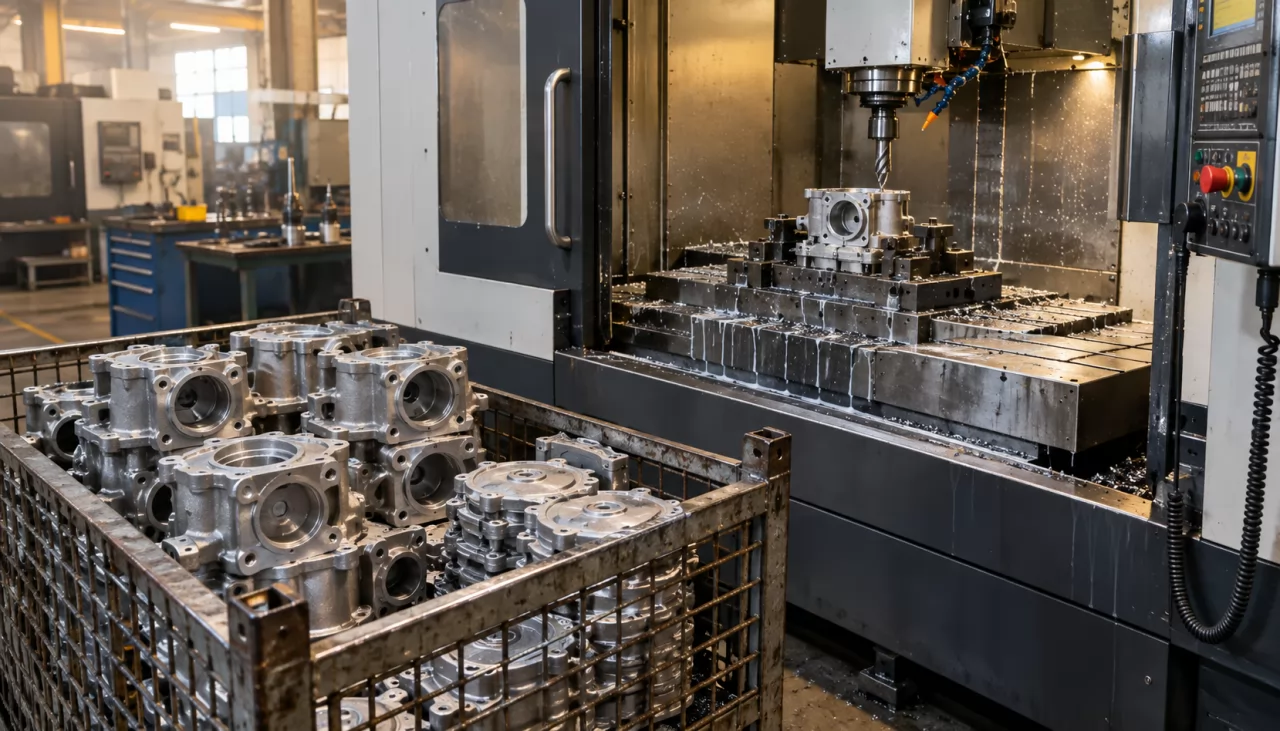
Testing changes cost too. A leak check on every unit is standard practice for most suppliers. Logged flow-pressure curves for each serial number, witness testing or third-party inspection add time and money. Specify only what your market actually demands, and agree it in the quotation so the price reflects it.
Lead time follows the same logic. Standard configurations built from stocked components move quickly. New castings, special seals or coatings add weeks. Ask the supplier which items in your order are on the critical path.
Consolidating SKUs to Lower Minimums
Standardize flanges and shafts across your range wherever your customers' machines allow it. Each production run gets bigger and restocking gets faster. Displacement can then vary inside a shared frame without adding tooling.
Tip: Before your first order, sort your target models by flange and shaft. Several "different" pumps often turn out to share a body and differ only in gear width or port thread, so they can go into one production batch.
Which Mistakes Cause Field Failures in Aftermarket Replacement Gear Pumps?
Field failures in aftermarket replacement gear pumps usually come from installation and specification errors, not manufacturing defects. The common causes are wrong rotation, mismatched spline counts, under-rated pressure, poor inlet conditions and contaminated oil at installation. Most of these are visible on the failed pump to anyone who knows what to look for.
- Wrong rotation: the pump runs dry and often blows the shaft seal almost immediately.
- Spline mismatch: forced fits damage both the shaft and the coupling.
- Under-rated pressure: a pump specified for a lower pressure than the relief setting wears its bushings or cracks its housing.
- Inlet problems: undersized suction lines, clogged strainers or high inlet lift cause cavitation. Cavitation is the formation and collapse of vapor bubbles, and it pits gear faces and housings.
- Contamination: reusing dirty oil or skipping the filter change at installation scores the gear sides. ISO 4406 cleanliness codes are the usual way to specify and check oil condition.
How Distributors Should Handle Returns
Before you blame the pump, ask for photos of the failed unit, the operating pressure and relief setting, and the oil condition, including when the filter was last changed. Scoring patterns, a melted seal or a sheared spline each point to a different root cause. Send that evidence to your supplier with the batch code so the claim can be resolved on facts.
FAQ
Can a supplier match a pump without the original drawing?
Yes, usually. A capable supplier can work from the original product code, the machine model, clear photos and measured dimensions of the flange, shaft and ports. Expect a drawing for your approval before any sample is made.
What inspection should be written into the quotation?
Dimensional checks, leak inspection and pressure/flow testing where applicable. Also state the sampling rule or 100% inspection, which records come with each shipment, and any documents your market requires, so nothing gets argued about after production.
Are low-volume mixed-model orders possible?
Often, yes, if the models share housings and shafts. Mixing several body families in a small order usually raises the per-unit price or the minimum per model. Grouping by frame size keeps it workable.
How should private-label pumps be packed for export?
Packed individually in branded cartons, with ports plugged and shafts protected, then palletized or crated. Use anti-rust oil or VCI film for sea freight, and put your part number and batch code on every outer carton.
Send Your Specs for a Quote
Send the model or original product code, quantity and destination port to our team at [email protected], and expect a reply within 24 hours. For replacement pumps, add the machine model and equipment details, plus nameplate photos if you have them.