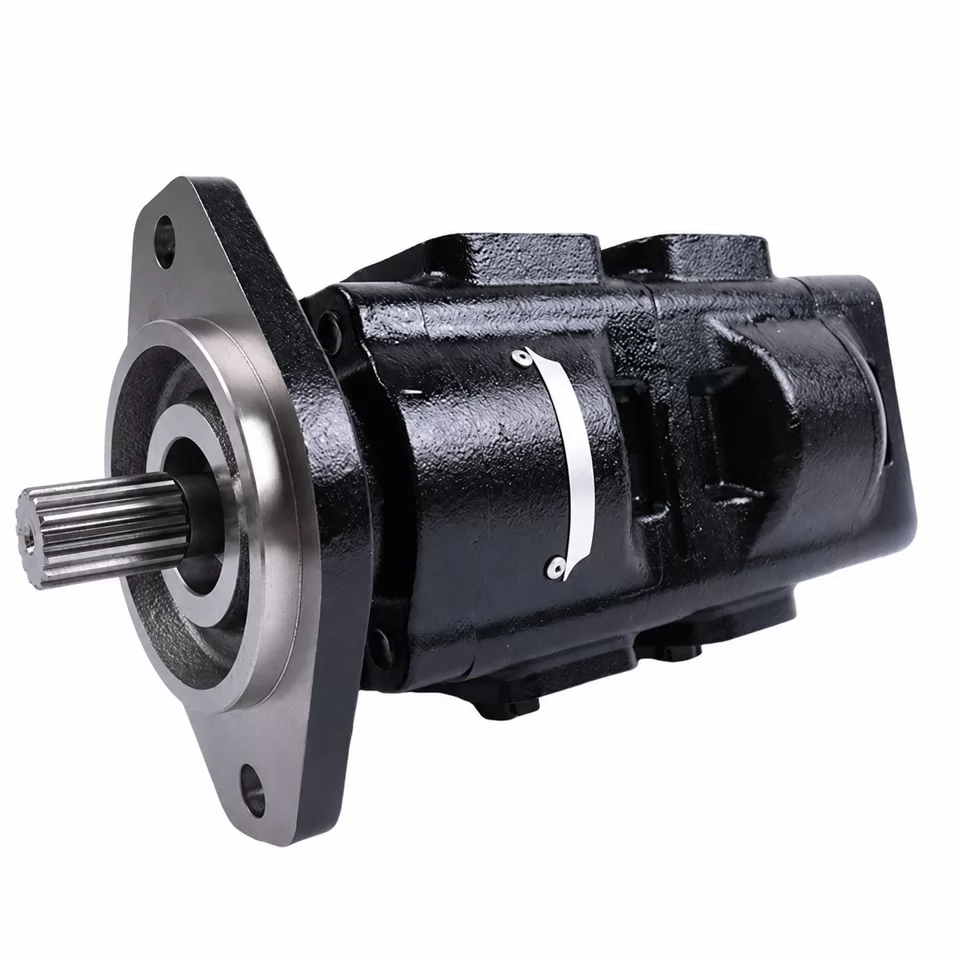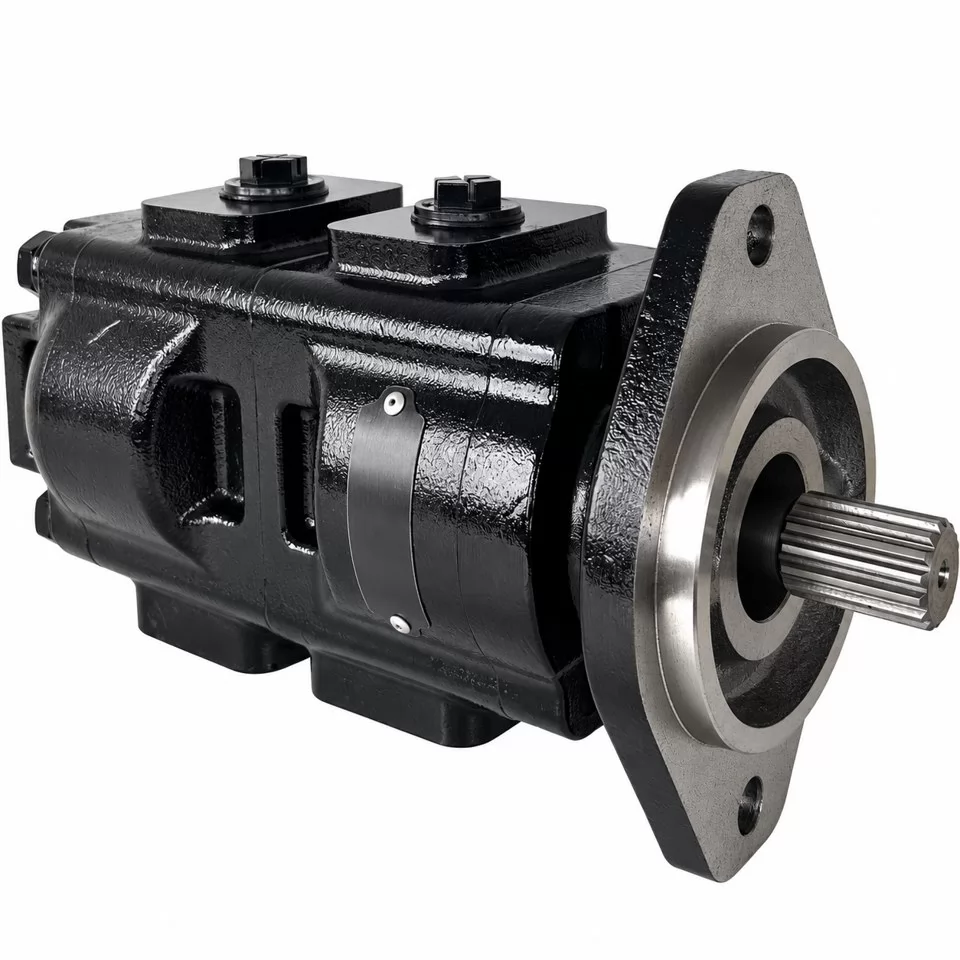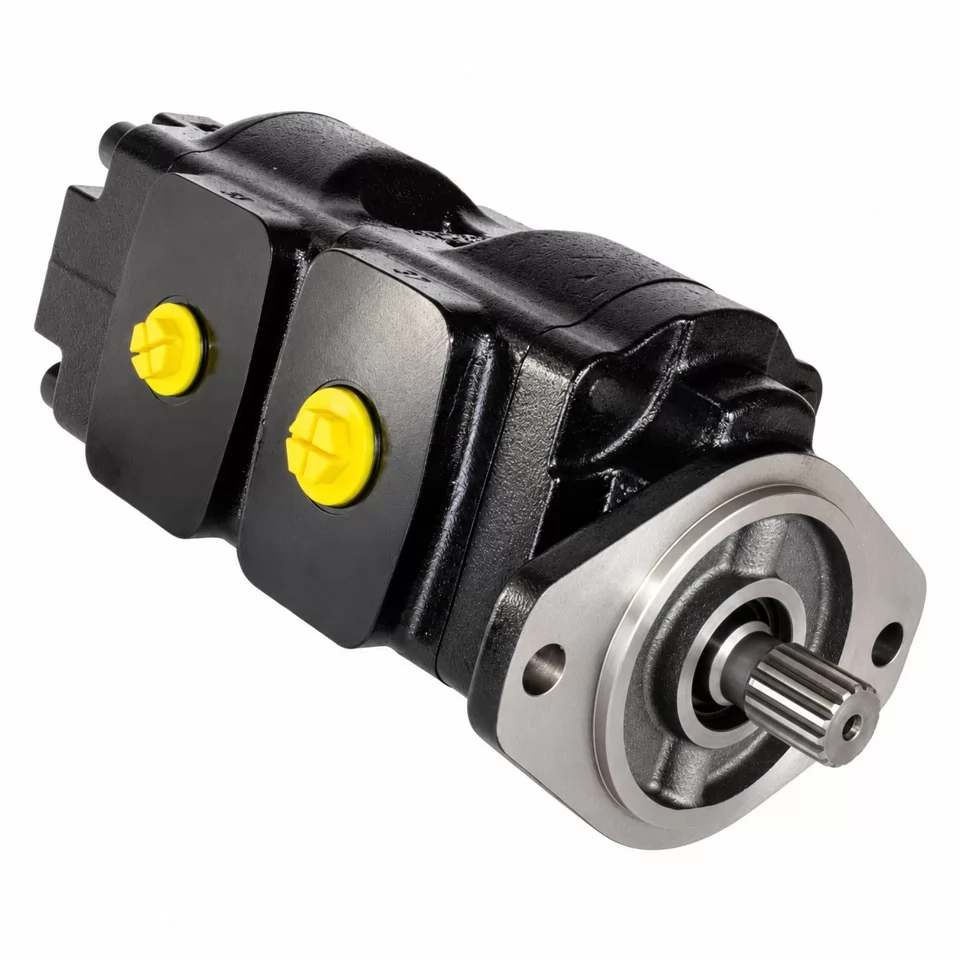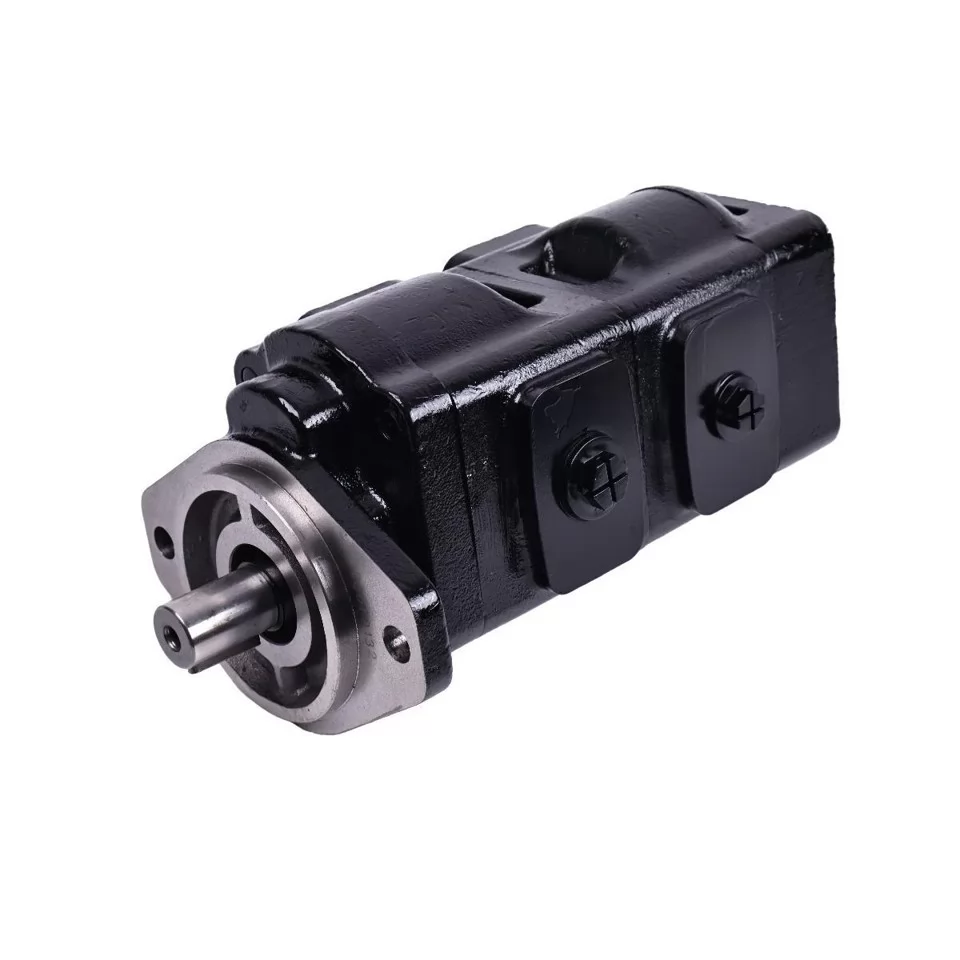

The order went out against the number on a worn nameplate. The tandem pump arrived with a spline that would not take the coupling and a pressure port pointing at the chassis rail. The backhoe stayed down for another two weeks while someone found a second unit. Most of the work in replacing a JCB hydraulic gear pump is making a few decisions in the right order.
How do you find the right replacement gear pump for a JCB machine?
Work in a fixed order. Start with the JCB part number, then the machine model and serial range, then physical checks on the old unit. Each step narrows the match. None of them is reliable on its own, because two pumps that look the same can differ in displacement, rotation or porting.
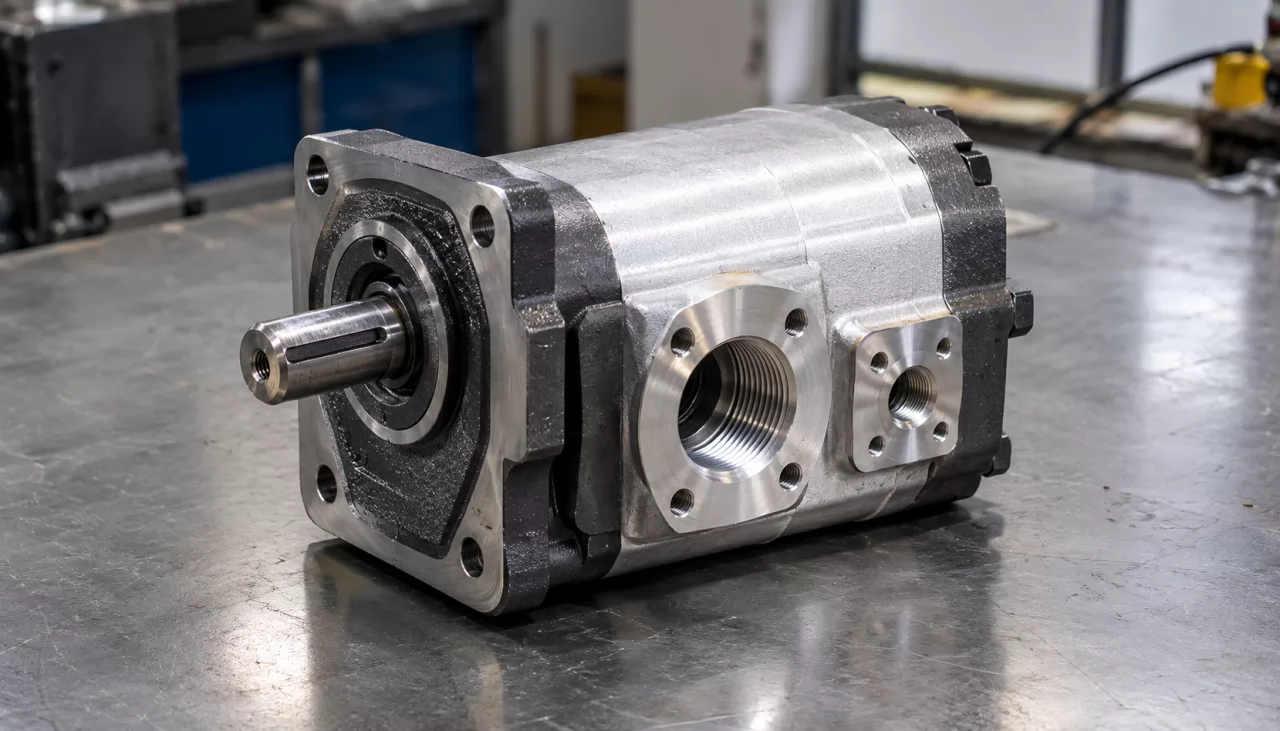
A hydraulic gear pump is a fixed-displacement pump that moves oil through the mesh of two gears turning inside a close-fitting housing. On JCB backhoe loaders the main pump is usually a tandem unit: two gear sections on one drive shaft, each feeding its own circuit. That means you are matching two sets of numbers on one part. A mistake in either section shows up in operation, through slow loader arms or weak steering, even when the pump bolts on cleanly.
The order matters because each source has a different weakness. A part number can be superseded. A serial range can be misread. Measurements can be taken from a pump that a previous workshop already swapped for something non-standard. If you use all three and check them against each other, the errors usually show up before the RFQ goes out.
Start from the JCB part number, then confirm it against the machine
A JCB tandem gear pump part number normally follows the 20/xxxxxx format, for example a reference like 20/912800. It tells you which pump JCB fitted to a given build. It does not prove that the pump in front of you still matches that number, or that the number still matches the machine. Build year, serial range and later supersessions can all change the spec behind the same family of references.
So treat the number as the opening move. Check it against the chassis serial in the parts book. If the book shows a serial break, confirm which side of the break the machine sits on.
When the nameplate is unreadable or missing
Paint, pressure washing and corrosion often destroy pump tags. If the tag is gone, rebuild the identity from other sources:
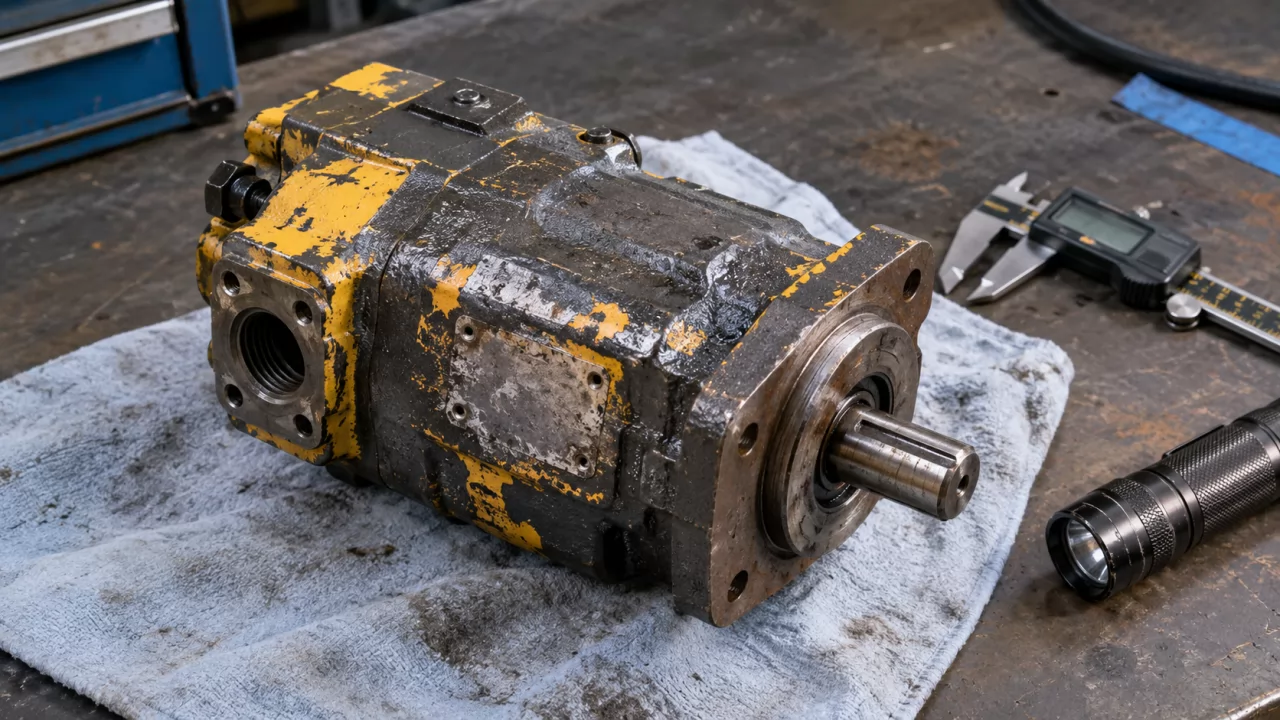
- Machine model: 3CX, 4CX or another variant, written exactly as it appears on the machine plate.
- Chassis serial: the full number, so you can find the right serial break in the parts book.
- Parts book reference: the page and item number for the pump assembly, which also shows related seals and couplings.
- Measured data: shaft diameter and spline count, flange pattern, port sizes and positions, and direction of rotation viewed from the shaft end.
Supersessions and regional builds that catch buyers out
When JCB supersedes a part number, the later pump may change in ways that are easy to miss: a different section displacement, a revised port thread, or a new shaft for a different coupling. Market-specific builds add another layer, because machines built for different regions are not always specified the same way. And the two units can look almost identical on a bench. Ask the supplier which reference they are actually quoting against, and get the answer in writing.
Choose a JCB hydraulic gear pump source by how you sell
Before you compare quotes, decide which kind of unit fits your business. There are three routes, and the right one depends on your customers more than on the pump.
- OEM: use it when warranty terms, fleet maintenance contracts or rental agreements specify genuine parts. Expect a higher price and less room to negotiate.
- Aftermarket: an aftermarket hydraulic gear pump for a JCB backhoe loader makes sense when price and availability drive your margin and your workshop customers accept non-genuine parts.
- Custom-built: worth considering when you stock non-standard port or shaft variants, or when you want fewer SKUs covering more machines.
What to compare beyond unit price
Two quotes at similar prices can carry very different costs once returns, rework and downtime are included. Check these before you compare on price:
- Displacement per section: in cc/rev for each gear section. A small difference changes cycle times and can overload the engine at low idle.
- Rated and peak pressure: the continuous rating and the intermittent peak, stated separately. A pump rated close to the relief setting will wear quickly.
- Rotation, shaft and spline: clockwise or counter-clockwise, spline count and pitch, and shaft length. Any one of these alone can stop installation.
- Flange and ports: flange pattern, port type (BSP, SAE flange or O-ring boss) and port orientation relative to the mounting face. These decide whether existing hoses reach without adapters.
- Seals and housing: nitrile (NBR) or fluoroelastomer (FKM) seals depending on oil type and temperature, and an aluminium or cast-iron body. Both affect service life in hot or high-duty work.
Rule of thumb: if a supplier cannot state all five in writing for the exact unit quoted, the price is not comparable yet.
Where a custom P/T port configuration makes sense
A P/T port configuration is the layout of the pressure (P) and tank or suction (T) ports on the pump body. If you serve several machine types, standardising that layout can let one pump body cover more than one application and reduce the stock you hold. The trade-off is a larger first order and more engineering sign-off. Olive Branch Hydraulics, for example, builds gear pumps to customer specification with custom P/T ports, and sends design drafts and 3D renders for approval before any sample is made. Whoever builds your units, approve the drawing first. Changing a port position on paper costs nothing. After sampling it costs time.
Tip: Brand names and model numbers only identify which pump is being replaced. Fit depends on the complete assembly code, so put that code in every RFQ.
Lock down specs, QC and logistics before you place a JCB backhoe hydraulic pump replacement order
Most mismatched pumps trace back to a vague RFQ. The decisions you made on part number, source and spec only protect you if they are written down, tested on a sample and checked again before the goods leave the factory.
Approve samples against the drawing and against a real machine if you can, not only against a datasheet. Mount the sample, connect the hoses and run it under load. On your sign-off, record the exact assembly code you approved so production cannot drift to a nearby variant. For sea freight, ask for each pump to have its ports capped, its shaft protected and the unit treated against corrosion, with cartons or crates strong enough for container stacking. Salt air and condensation in a container can mark shaft surfaces before the pump is ever fitted.
The pre-order checklist for tandem and single gear pumps
Send the answers with your RFQ:
- Have I given the JCB part number and the full assembly code, not just the series name?
- Have I included the machine model and chassis serial for each line item?
- Is the displacement of each section stated, along with rotation viewed from the shaft end?
- Are the shaft, spline, flange, port types, port orientation and seal material all specified?
- Have I stated quantity per part number and the destination port?
- Have I listed the documents I need with the shipment, such as test reports, packing list and certificate of origin?
QC terms worth writing into the quotation
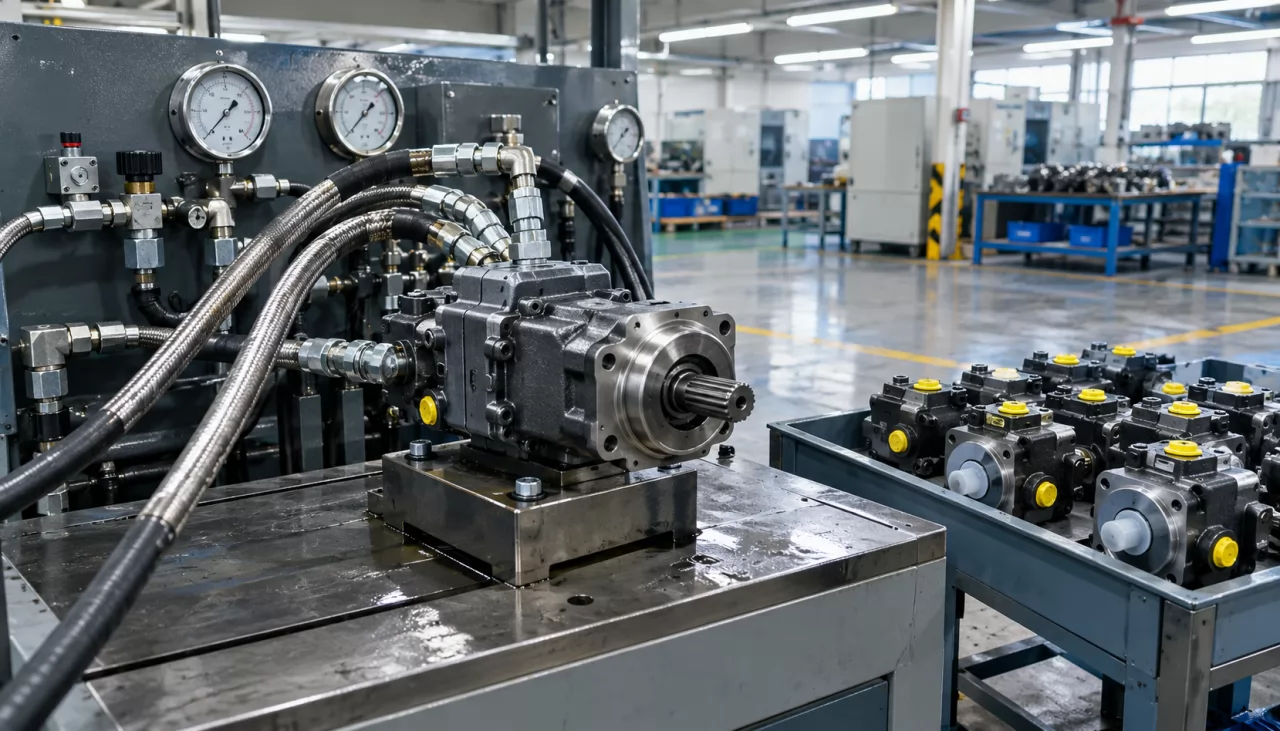
Agree the inspection scope before you pay a deposit, not after the goods are at sea. For gear pumps, that usually means dimensional checks on shaft, flange and ports, leak inspection, and pressure and flow testing where the setup allows it. Ask what a test report will contain and whether it is tied to a serial or batch number.
Be careful with documents. If a supplier refers to a third-party certificate or test document, it belongs to the party that issued it. It is not a certification of the supplier's own product unless it says so. Ask for each document by name in the quotation.
Failure patterns to rule out before blaming the pump
A new pump fitted to a dirty system often fails the same way the old one did. Contaminated oil scores the gear faces and side plates. A blocked or collapsed suction line causes cavitation, which pits the housing and leaves a noise workshops tend to blame on the pump. A relief valve set too high pushes the pump past its rating on every cycle. Before your workshop customers file a warranty claim, they should be able to answer:
- Was the oil changed and the system flushed when the new pump went in?
- Were the suction strainer and filters replaced, and is the suction hose sound?
- Was the main relief pressure checked with a gauge after installation?
- Is the oil the grade the machine specifies, at a normal working temperature?
Note: Release stored pressure and lower all attachments to the ground before any line is opened. Hydraulic oil under pressure can penetrate skin.
FAQ
Does an aftermarket pump for a JCB 3CX fit without modification?
Only if the full assembly code matches, including displacement, rotation, shaft, flange and ports. Similar-looking units often differ in at least one of these.
Can I order a tandem pump using only the JCB part number?
Usually you can get a quote that way. Confirm the machine serial range and any supersession before you approve the sample.
What is the usual route for a custom gear pump order?
Inquiry, then design drafts and 3D renders, then sampling, then production with in-process QC, 100% final inspection, packaging and shipping.
If an aftermarket pump fails early, will the supplier accept my customer's word that the pump was at fault?
Probably not, and a good supplier shouldn't either. Expect to be asked for the returned unit, an oil sample and answers to the installation questions above. Agree the claim procedure in the quotation so you aren't settling it after the fact.
Next step: send your part numbers for a match check
Send the JCB part numbers, machine models and serials, quantities and destination port to [email protected] or +8615075996564. Our team will check each line against the points above and reply with a quotation within 24 hours.