Think about what happens when a hydraulic system has to run a boom cylinder, steer the machine, and keep auxiliary attachments going — all at once, off a single engine-driven shaft. One gear pump on its own just can't split flow into separate, independent streams without bolting on more pumps, more drives, and more headaches. That's the problem a tandem gear pump was built to solve. Stack two or more gear stages inside one compact housing and you get a dual stage gear pump that feeds independent hydraulic circuits from a single input shaft — keeping construction rigs, farm equipment, mining machines, and factory automation running without the clutter of extra hardware.
What Is a Tandem Gear Pump?
Definition and Core Concept
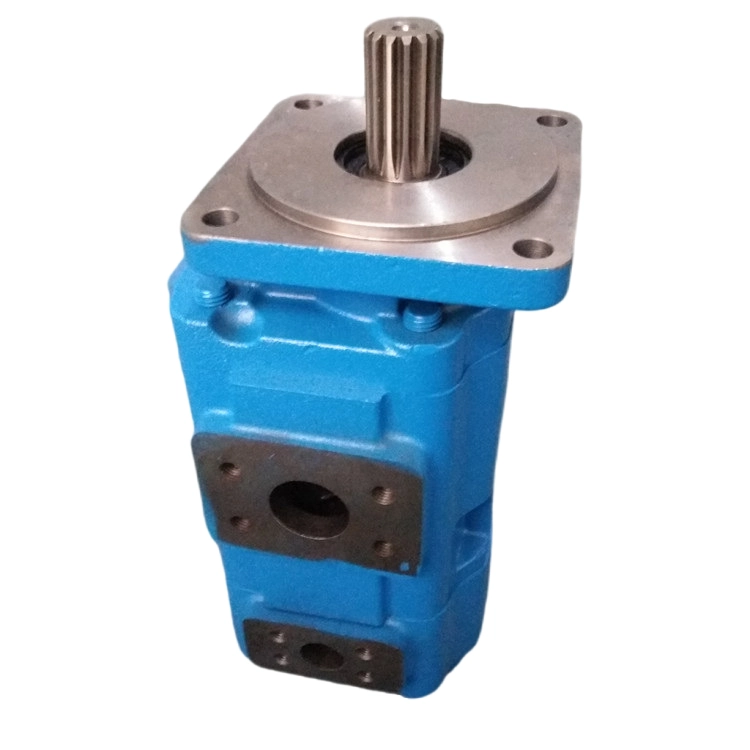
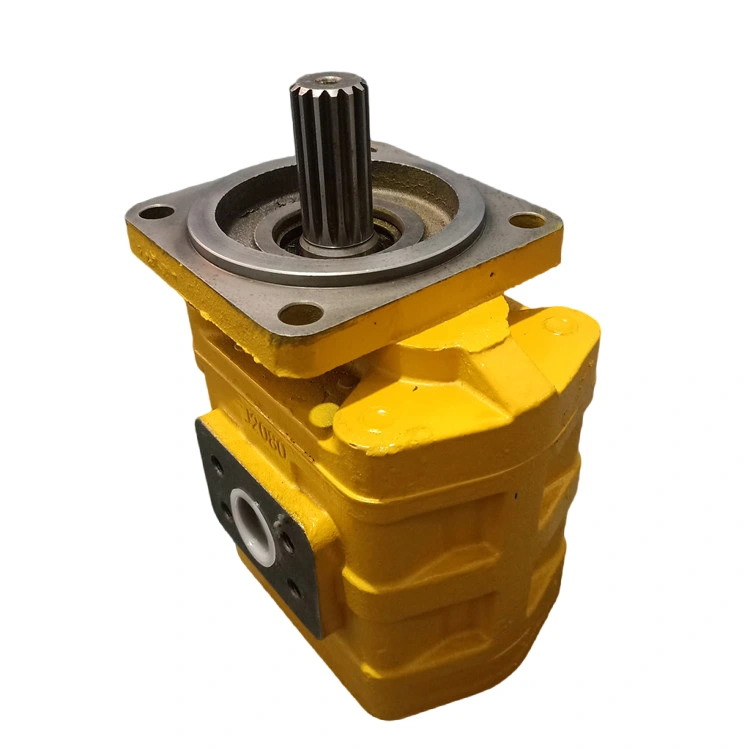
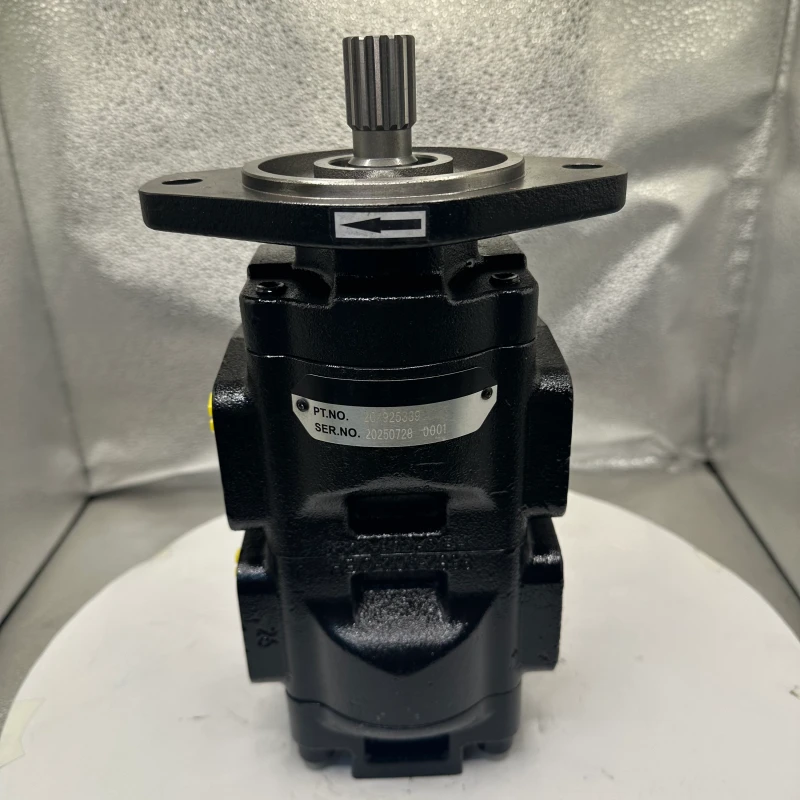
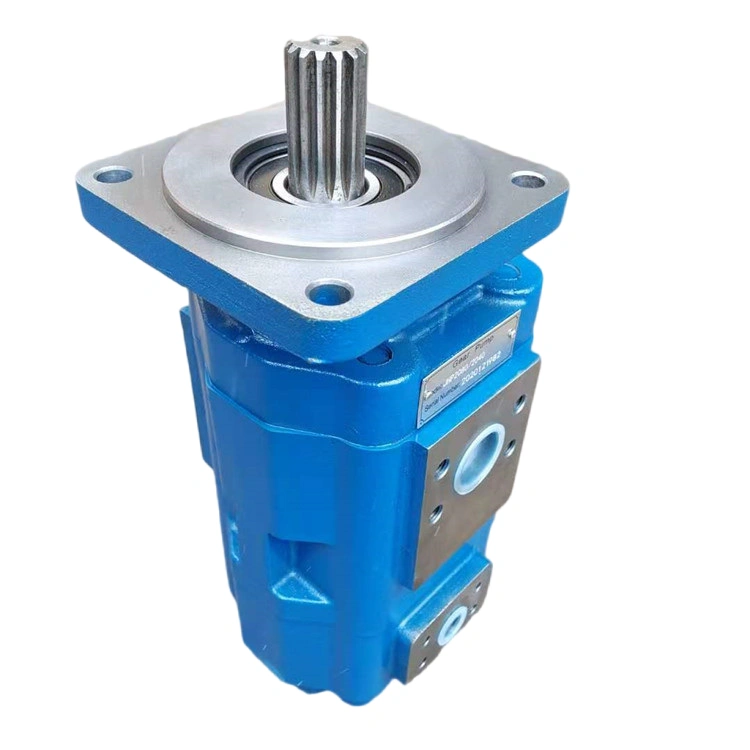
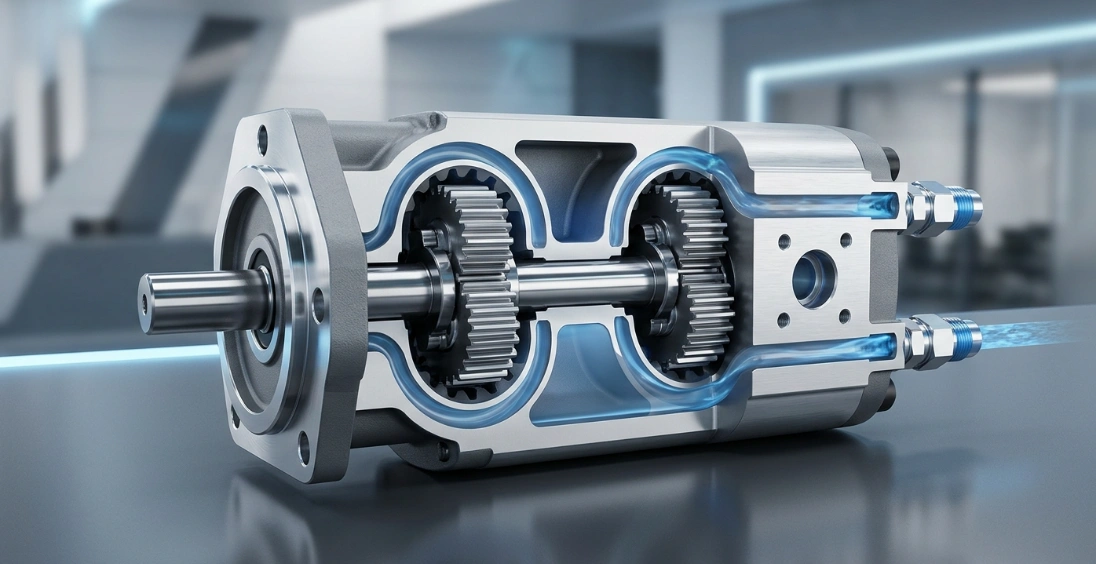
A tandem gear pump is a positive displacement pump mechanism that combines two or more gear stages within a single housing to deliver independent or combined hydraulic fluid flow. Each stage contains its own set of meshing gears, yet all stages share a common drive shaft powered by one prime mover.
This design allows a single input source to produce multiple output flow streams — each with its own pressure rating and gear pump flow rate. The result is a compact, efficient hydraulic fluid transfer system that eliminates the need for multiple standalone pumps.
Key Components Overview
| Component | Function |
|---|---|
| Drive Gear (Front Section) | Receives input torque from prime mover |
| Driven Gear (Front Section) | Meshes with drive gear to create fluid displacement |
| Drive Gear (Rear Section) | Powered via shared shaft from front section |
| Driven Gear (Rear Section) | Creates secondary flow output |
| Housing/Body | Contains gear sets, maintains tolerances |
| Inlet/Outlet Ports | Directs hydraulic fluid transfer system pathways |
| Shaft Seal | Prevents external leakage |
| Bearing Plates | Supports gear shafts, minimizes friction |
How Does the Tandem Gear Pump Operate?
The Positive Displacement Principle
Every gear pump — tandem or otherwise — operates on the positive displacement pump mechanism. As two gears mesh together, they unmesh at the inlet side, creating a localized vacuum that draws fluid into the pump cavity.
The fluid becomes trapped in the spaces between gear teeth and the housing wall. As the gears rotate, these fixed volumes of fluid are carried from the inlet side around the periphery to the outlet side.
When the gears re-mesh at the outlet, the trapped fluid is squeezed out and displaced into the discharge port under pressure. This process repeats with every revolution, delivering a predictable, consistent flow.
Dual Stage Gear Pump Flow Path
In tandem hydraulic pump operation, hydraulic fluid is drawn from the reservoir through inlet ports into both pump sections simultaneously. The shared drive shaft rotates both gear sets at the same speed, but each section operates as its own independent pumping unit.
The front section draws fluid, displaces it, and delivers it to its dedicated outlet port. The rear section does the same — through its own inlet and outlet — producing a second independent flow stream. This dual stage gear pump architecture gives system designers two separate circuits from one mechanical input.
Step-by-Step Operation Sequence
| Step | Action | Result |
|---|---|---|
| 1 | Prime mover rotates shared drive shaft | Both gear sets begin rotation |
| 2 | Gear unmeshing at inlet creates vacuum | Fluid drawn from reservoir into both sections |
| 3 | Fluid trapped between gear teeth and housing | Fixed volume carried around periphery |
| 4 | Gears re-mesh at outlet side | Fluid displaced into discharge ports |
| 5 | Independent outlets deliver flow | Separate circuits receive dedicated gear pump flow rate |
Flow Rate and Pressure Characteristics
The gear pump flow rate of each section is determined by three primary factors: gear width (face width), tooth geometry (module and number of teeth), and rotational speed. A wider gear or faster rotation means more fluid displaced per revolution.
In a dual stage gear pump, each section can be sized differently. For example, the front section might deliver 40 L/min for a high-demand boom circuit, while the rear section delivers 20 L/min for steering. Both operate at the same RPM, but different gear dimensions produce different displacements.
Pressure capability is governed by internal clearances, bearing strength, and housing integrity — not by flow rate. Each section can sustain its rated pressure independently of the other.
Advantages of Tandem Gear Pump Design
Space and Weight Efficiency
A tandem gear pump consolidates what would otherwise require two separate pumps, two mounting brackets, and potentially two drive couplings into a single, compact unit. One input drive powers multiple outputs — dramatically reducing component count, mounting space, and overall system weight.
For mobile equipment where every kilogram matters and engine PTO space is limited, this integration is a significant engineering advantage.
Independent Circuit Supply
Each section of the tandem pump feeds a separate hydraulic circuit with its own pressure and flow characteristics. This enables simultaneous operation of steering, lifting, and auxiliary functions without one circuit starving another.
Because each section is a self-contained positive displacement pump mechanism, a pressure spike or load change in one circuit does not affect flow delivery to the other. This independence improves machine responsiveness and operator control.
Performance Comparison Table
| Feature | Single Gear Pump | Tandem Gear Pump |
|---|---|---|
| Flow Outputs | 1 | 2 or more |
| Drive Sources Required | 1 per pump | 1 shared |
| System Complexity | Higher (multiple pumps) | Lower (integrated unit) |
| Mounting Space | More | Less |
| Independent Pressure Zones | No | Yes |
| Cost Efficiency | Lower at scale | Higher at scale |
Common Applications
The versatility of tandem hydraulic pump operation makes it a preferred choice across industries that demand multi-circuit hydraulic power from compact, reliable packages.
Industry Application Table
| Industry | Typical Application | Why Tandem Pump Fits |
|---|---|---|
| Construction Machinery | Excavators, loaders | Simultaneous boom + steering circuits |
| Agricultural Equipment | Tractors, harvesters | Implement + transmission hydraulics |
| Mining | Haul trucks, drills | High-demand multi-circuit systems |
| Special Vehicles | Refuse trucks, cranes | Multiple actuator groups |
| Industrial Automation | Press systems, conveyors | Precise dual-flow control |
| Shipbuilding | Deck machinery, steering | Redundant hydraulic fluid transfer system |
About Olive Branch Hydraulics — Your Tandem Gear Pump Partner
Company Overview
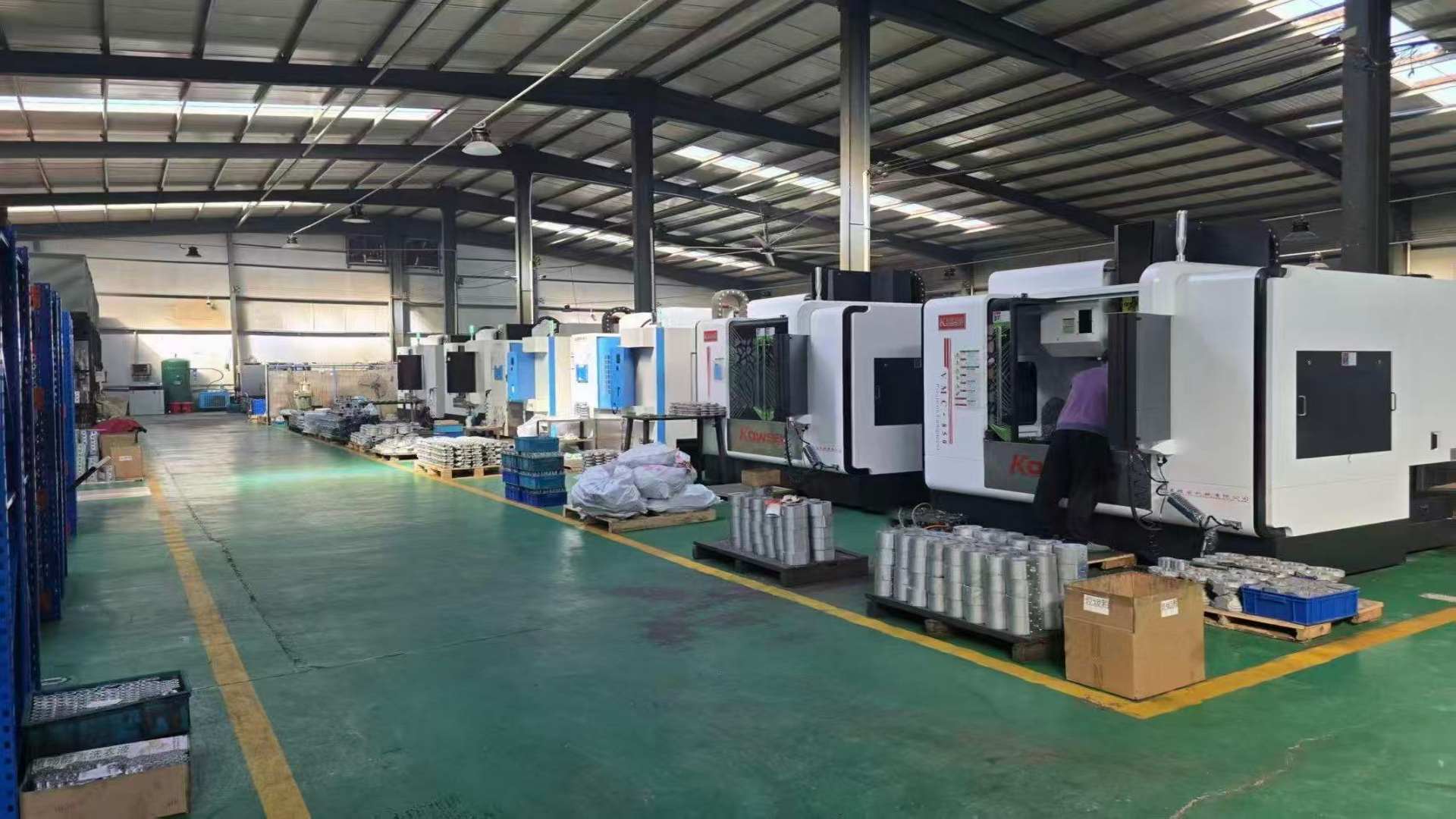
Headquartered in Xinji, Hebei — one of China's premier equipment manufacturing hubs — Olive Branch Hydraulics is a specialized provider of high-end hydraulic components and fluid power systems. We integrate R&D, precision manufacturing, and custom engineering to deliver reliable hydraulic solutions to customers worldwide.
Our focus on tandem gear pumps and advanced hydraulic components is backed by years of hands-on experience serving demanding industries where downtime is not an option.
Our Approach
We don't just manufacture parts — we solve problems. Built on a foundation of non-standard customization, precision machining, and rigorous quality control, we partner with clients across construction machinery, agricultural equipment, mining, special vehicles, industrial automation, and shipbuilding to bring their hydraulic challenges to workable, lasting solutions.
Every tandem gear pump we produce is engineered with your specific application in mind — from gear sizing and port configuration to mounting interface and pressure ratings.
Why Choose Olive Branch for Tandem Gear Pumps
| Capability | Benefit to You |
|---|---|
| Non-standard Customization | Pump sections sized to your exact circuit needs |
| Precision Machining | Tight tolerances for maximum volumetric efficiency |
| Rigorous Quality Control | Consistent gear pump flow rate across production runs |
| Integrated R&D | Optimized dual stage gear pump designs for your application |
| Global Service | Technical support and delivery worldwide |
Frequently Asked Questions (FAQ)
What is the difference between a tandem gear pump and two separate gear pumps?
A tandem gear pump shares a single drive shaft and housing, reducing weight, cost, and mounting complexity compared to running two independent pumps. Both sections are mechanically synchronized and draw from a common input, eliminating the need for additional couplings, brackets, and drive connections that separate pumps would require.
Can each section of a tandem gear pump deliver different flow rates?
Yes — each section can have different gear widths or displacements, allowing a customized gear pump flow rate per circuit. This is one of the core advantages of the dual stage gear pump design, enabling engineers to match flow delivery precisely to each circuit's demand without oversizing or wasting energy.
What type of hydraulic fluid works best in a tandem gear pump?
Standard mineral-based hydraulic oils (ISO VG 32, 46, or 68) are most common for tandem gear pump applications. Fluid selection depends on operating temperature range, required viscosity at working conditions, and system compatibility. Always consult the pump manufacturer's specifications for approved fluid types.
How does a tandem gear pump maintain pressure in two circuits simultaneously?
Each section operates as an independent positive displacement pump mechanism with its own outlet port and pressure rating. Because the gear sets are mechanically isolated within the housing, pressure buildup in one circuit does not affect flow delivery or pressure capability in the other circuit.
What maintenance does a tandem hydraulic pump require?
Regular fluid changes, filter maintenance, inlet condition checks, and monitoring for wear-related flow loss keep tandem hydraulic pump operation reliable long-term. Pay attention to unusual noise, rising operating temperature, or declining flow output — these are early indicators that internal clearances may be increasing due to wear.
Can Olive Branch Hydraulics customize a tandem gear pump for my specific application?
Sure thing — we do custom tandem pump setups all the time. If you've got specific pressure, flow, or mounting needs, we can work with that. Whether it's a different port layout, a particular shaft setup, unusual gear ratios, or certain material requirements, our engineering and manufacturing folks will sit down with you and figure out the right configuration. The goal is simple: build a hydraulic system that actually fits your application, not force you into something off the shelf.