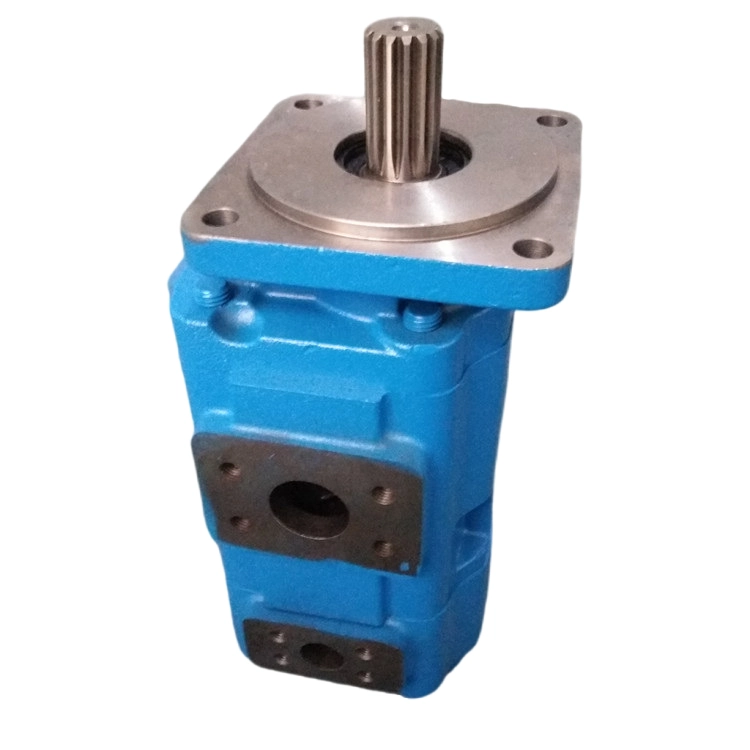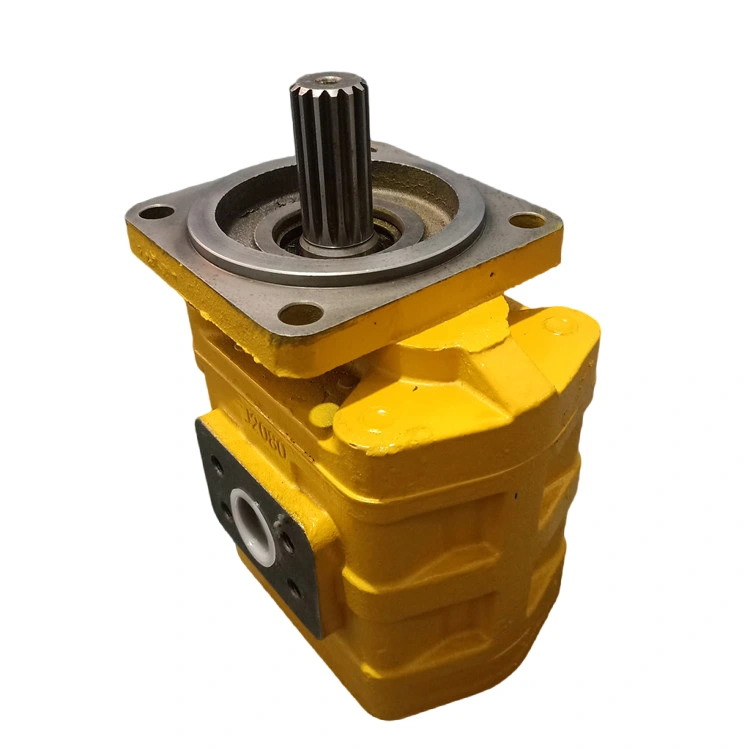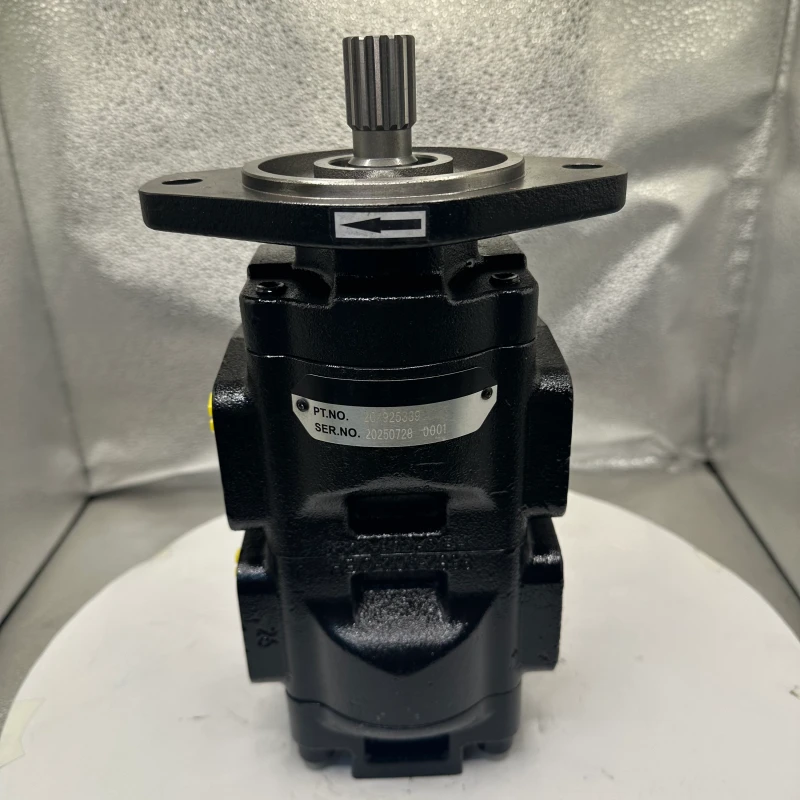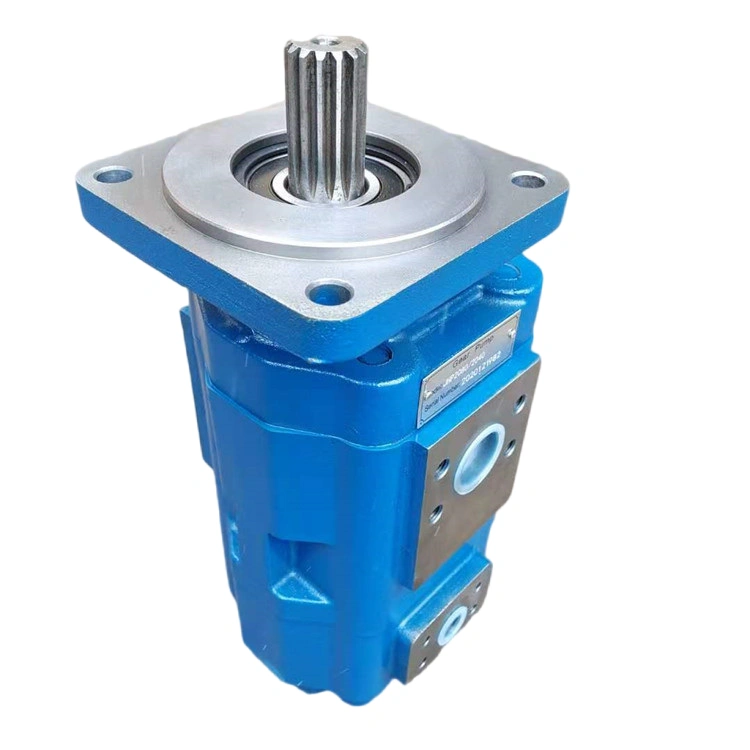

Say you've got a hydraulic winch that goes down on an offshore platform, 200 miles out from the nearest port. The motor's seized up, but there's a spare axial piston pump sitting in storage. One of the hydraulic guys on the crew hooks pressurized fluid into the pump's ports, flips the flow path around, and just like that — the shaft starts turning. Winch is back up and running inside an hour. So was that a desperate field hack, or actually a solid move grounded in real engineering?
The answer lies in a fundamental concept called fluid power reversibility — and understanding it can save operations, reduce costs, and open up design possibilities you may not have considered. Let's explore exactly when and how a piston pump can function as a piston motor, backed by real-world data and manufacturer specifications.
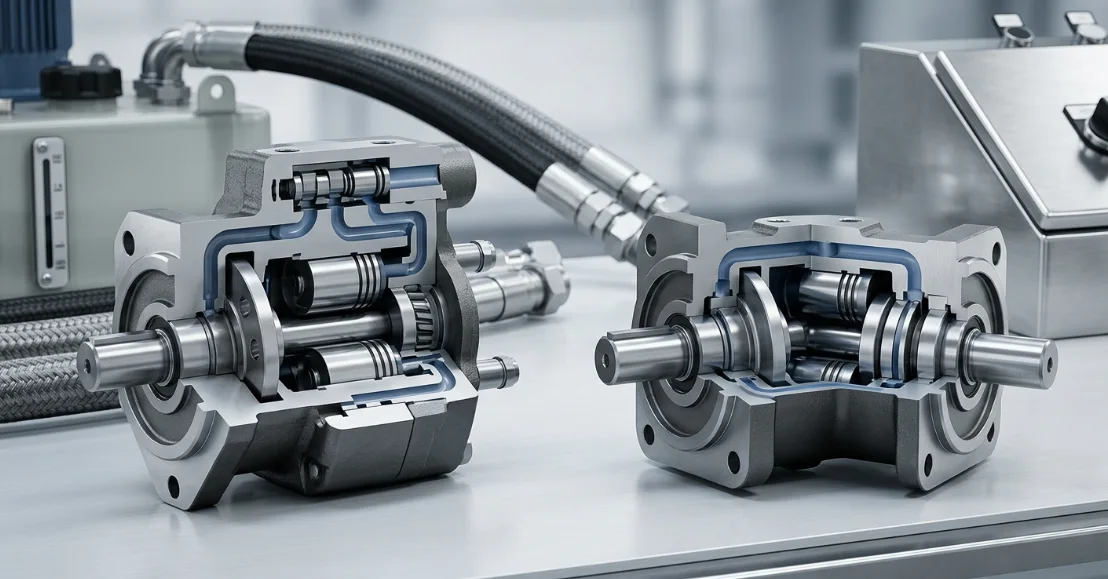
The Principle of Reversibility in Fluid Power Systems
How Piston Pumps and Piston Motors Work
A piston pump converts mechanical energy (shaft rotation) into hydraulic energy (pressurized fluid flow). Pistons reciprocate inside cylinders, displacing fluid through ports timed to the shaft position. The displacement volume, operating pressure, and flow rate define the pump's output.
A hydraulic piston motor does the exact opposite — it accepts pressurized fluid and converts that energy back into shaft rotation. The pistons are pushed by incoming fluid pressure, driving the shaft through the same mechanical linkage.
Here's the critical insight: both devices share nearly identical internal architecture. The cylinder block, pistons, valve plate (or commutator), and shaft assembly are mechanically the same in many designs. This shared construction is what makes the hydraulic pump motor principle possible.
Why Reversibility Is Physically Possible
Fluid power reversibility rests on a simple thermodynamic truth: energy conversion between mechanical and hydraulic forms is bidirectional. If you input torque to move fluid, you have a pump. If you input pressurized fluid to produce torque, you have a motor.
In rotary-valve piston units, the valve plate or port timing mechanism doesn't inherently "know" whether it's pumping or motoring. The geometry that allows fluid in and out of the cylinders works in both directions. This is why many manufacturers design and rate their axial piston units for both pump and motor duty from the factory.
Key Differences That Affect Performance
While the principle is sound, running a pump as a reciprocating pump engine introduces real performance differences. Valve plate timing in a pump is optimized to minimize pressure spikes during the transition between high-pressure and low-pressure kidney ports. In motor mode, the timing requirements shift slightly, which can cause incomplete filling of cylinders.
Bearing loads also change direction. A pump shaft typically experiences loads pushing the cylinder block against the valve plate. In motor mode, these forces may reverse, loading bearings and seals in ways they weren't optimized for.
Case drain flow increases in motor mode because high-pressure fluid acts on more internal leakage paths. Without adequate case drain capacity, internal pressure builds, accelerating seal wear and reducing volumetric efficiency by 3–10% compared to dedicated motor operation.
Types of Piston Pumps and Their Motor Conversion Potential
Axial Piston Pumps
Axial piston designs — both swashplate and bent-axis — offer the highest suitability for piston pump motor conversion. Their rotary valve plate provides continuous, timed port access without check valves, making bidirectional energy conversion inherently possible.
Bent-axis units are particularly well-suited because their fixed angle geometry produces consistent displacement and the bearing arrangement handles reversed loads effectively. Swashplate designs work well too, though the slipper-pad-to-swashplate interface experiences different loading patterns in motor mode that can increase wear over extended operation.
Radial Piston Pumps
Radial piston pumps offer moderate conversion potential. Cam-ring variants with rotary distributors can function as motors, and some are specifically designed for this dual role in low-speed, high-torque applications like wheel drives.
Crankshaft-type radial pumps are more limited. Their commutation valving may require modification to properly time fluid delivery in motor mode. Efficiency losses are higher due to the mechanical friction of the eccentric or cam mechanism operating under reversed loading conditions.
Reciprocating (Plunger) Pumps
Reciprocating plunger pumps have low suitability for motor conversion. The fundamental problem is their reliance on check valves (suction and discharge) rather than rotary timing mechanisms. Check valves are passive — they open and close based on pressure differential, not shaft position.
To run a plunger pump as a motor, you would need to add an external valving mechanism and a cam or crankshaft linkage to convert linear piston force into rotation. At that point, you've essentially built a new machine rather than converted an existing one.
Comparison Table
| Pump Type | Motor Conversion Feasibility | Efficiency Loss | Typical Modification Needed |
|---|---|---|---|
| Axial Piston (Bent-Axis) | High | 3–8% | Minimal — drain line, case pressure management |
| Axial Piston (Swashplate) | High | 5–10% | Valve plate timing adjustment |
| Radial Piston | Moderate | 8–15% | Commutation valve changes |
| Reciprocating Plunger | Low | 20%+ | Requires external valving and cam mechanism |
Real-World Applications and Data
Industrial Hydraulic Systems
Closed-loop hydrostatic transmissions are the most common example of the hydraulic pump motor principle in action. In these systems, the same unit model operates as both pump and motor — one on each side of the loop. Bosch Rexroth's A4VSO series and Eaton's PVH series are explicitly rated for both pump and motor operation in their datasheets.
Parker Hannifin's PV and P1 series axial piston units are another example. Their technical documentation specifies separate performance curves for pump mode and motor mode, acknowledging the efficiency differences while confirming operational viability in both directions.
Mobile Equipment
Skid-steer loaders routinely use reversible axial piston units in their hydrostatic drive systems. The same model serves as the pump (driven by the engine) and the wheel motor (driving the tracks or wheels). This approach saves weight, reduces parts inventory, and simplifies maintenance.
Excavator swing drives, crane winch systems, and agricultural harvester drives also leverage this principle. In these applications, the unit may alternate between pumping (during braking or lowering) and motoring (during acceleration or lifting) within the same duty cycle — a concept known as regenerative operation.
Performance Data Table
| Parameter | Dedicated Motor | Pump Running as Motor |
|---|---|---|
| Volumetric Efficiency | 95–98% | 88–94% |
| Mechanical Efficiency | 92–96% | 85–92% |
| Max Speed Rating | 100% rated | 70–90% rated |
| Service Life (hours) | 10,000–20,000 | 6,000–14,000 |
| Cost | Higher (purpose-built) | Lower (repurposed unit) |
These figures are based on published data from major manufacturers operating units at 80% of rated pressure. Actual results vary with fluid cleanliness, temperature, and system configuration.
Limitations and Risks of Using a Piston Pump as a Motor
Bearing and Seal Wear Patterns
When a pump operates as a motor, the direction of thrust loads on the cylinder block and shaft bearings often reverses. Pump bearings are sized and positioned to handle loads pushing the cylinder block toward the valve plate. In motor mode, the high-pressure fluid may push the block away from the plate, creating a separation force that increases leakage and accelerates valve plate wear.
Shaft seals face higher case pressure in motor mode due to increased internal leakage. If the case drain line is undersized or restricted, pressure builds inside the housing, potentially blowing the shaft seal outward — a failure mode rarely seen in normal pump operation.
Cavitation and Timing Issues
Port timing on a pump valve plate is optimized to pre-compress fluid before it enters the high-pressure kidney and to decompress it before entering the low-pressure kidney. In motor mode, the timing requirements are slightly different because the cylinder is being filled by system pressure rather than displacing fluid against system pressure.
If the timing is wrong, cylinders may not fill completely before they rotate past the inlet port. This creates a partial vacuum inside the cylinder — cavitation — which causes noise, vibration, pitting damage to the valve plate, and rapid erosion of the piston bores. Even a 2–3 degree timing error can produce measurable cavitation damage over hundreds of hours.
Warranty and Safety Considerations
Most pump manufacturers void warranty coverage if a unit is operated outside its specified mode unless the datasheet explicitly rates it for motor duty. This is a critical distinction: a pump that can physically run as a motor is not the same as a pump that is rated to run as a motor.
From a safety perspective, running an unrated pump as a motor in a critical application (overhead lifting, personnel transport, steering systems) introduces liability risk. If the unit fails prematurely due to reversed loading, the operator may bear full responsibility. For non-critical or emergency applications, the risk calculus is different — but it should always be a conscious engineering decision, not an assumption.
How to Safely Convert a Piston Pump to Run as a Motor
Step-by-Step Evaluation Checklist
- Verify valve type: Confirm the pump uses a rotary valve plate or distributor, not check valves.
- Check manufacturer datasheet: Look for motor-mode ratings, curves, or bidirectional specifications.
- Assess case drain capacity: Ensure the drain port and line can handle 5–15% of full flow at motor-mode leakage rates.
- Determine speed limits: Derate maximum speed to 70–90% of pump-mode rating unless manufacturer specifies otherwise.
- Evaluate pressure rating: Confirm the unit's pressure rating applies in motor mode (some units have lower motor-mode ratings).
- Inspect bearing configuration: Verify that thrust bearings can handle reversed axial loads.
- Review duty cycle: Determine whether the application is intermittent, continuous, or emergency-only.
Required Modifications
Case drain relief: Install a low-pressure relief valve (typically 1–3 bar) on the case drain line to maintain minimum internal lubrication pressure without allowing dangerous pressure buildup. This single modification addresses the most common failure mode in pump-to-motor conversions.
Timing adjustments: On swashplate units, the valve plate may need to be rotated 2–4 degrees to optimize port timing for motor operation. Some manufacturers offer motor-specific valve plates as replacement parts for their pump models.
External pilot supply: If the pump has a servo-controlled displacement mechanism, it may need an external pilot pressure source in motor mode since it can no longer generate its own charge pressure. A small auxiliary pump or accumulator circuit typically provides this.
When to Use a Dedicated Hydraulic Piston Motor Instead
Choose a purpose-built hydraulic piston motor when the application demands continuous duty at high loads, when efficiency losses of 5–15% are unacceptable, or when the system is safety-critical. If the motor will operate more than 4,000 hours per year at over 75% of rated pressure, the cost premium of a dedicated motor is justified by extended service life and reduced maintenance.
For intermittent duty, emergency backup, prototype systems, or applications where a single reversible unit simplifies the circuit, running a rated pump in motor mode is a legitimate and widely accepted engineering practice.
Frequently Asked Questions
Can any piston pump work as a motor?
No. Only pumps with rotary valve mechanisms — primarily axial piston and some radial piston types — can function as motors without major modification. Check-valve-based reciprocating plunger pumps cannot reverse their energy conversion path because their valving is passive and position-independent. Always verify the specific pump model's datasheet for motor-mode ratings before attempting conversion.
What efficiency loss should I expect?
Typically 5–15% lower overall efficiency compared to a purpose-built hydraulic piston motor. Axial piston bent-axis units lose the least (3–8%), while radial piston units may lose 8–15%. The losses come from suboptimal valve timing, increased internal leakage, and higher friction from reversed bearing loads. Operating at lower speeds and pressures minimizes these losses.
Is it safe to run a pump as a motor long-term?
It can be acceptable for low-duty or emergency applications, particularly when using manufacturer-rated bidirectional units. For continuous high-load use exceeding 4,000 annual hours, a dedicated motor is recommended to avoid premature bearing and seal failure. Monitor case drain flow rate as an early indicator of internal wear — a sudden increase signals accelerating degradation.
Do manufacturers support this practice?
Some manufacturers explicitly rate specific pump models for bidirectional use. Bosch Rexroth, Parker Hannifin, and Eaton all publish motor-mode performance data for select axial piston pump series. However, this support is model-specific — not all pumps from these manufacturers are rated for motor duty. Always verify the datasheet and consult the manufacturer's application engineering team before operating a pump as a motor in a production system.
What industries commonly use this approach?
Marine, mining, agriculture, and mobile hydraulics are the most common industries leveraging piston pump motor conversion. These sectors value weight savings, reduced parts inventory, and circuit simplification. Hydrostatic transmissions in construction equipment, ship deck machinery, and agricultural harvesters routinely use identical units as both pumps and motors within the same system.
Take the Next Step
Understanding fluid power reversibility opens real engineering possibilities — from emergency field repairs to optimized hydrostatic circuit designs. But the difference between a successful conversion and a costly failure comes down to informed decision-making.
Before converting any piston pump to motor duty: pull the manufacturer datasheet, verify motor-mode ratings, assess your duty cycle, and size your case drain system properly. If the datasheet doesn't explicitly address motor operation, contact the manufacturer's application engineering team — they can confirm feasibility and recommend any required modifications for your specific unit.
For new system designs, consider specifying a factory-rated bidirectional unit from the start. The marginal cost increase is minimal compared to the flexibility and parts commonality you gain across your hydraulic circuit.