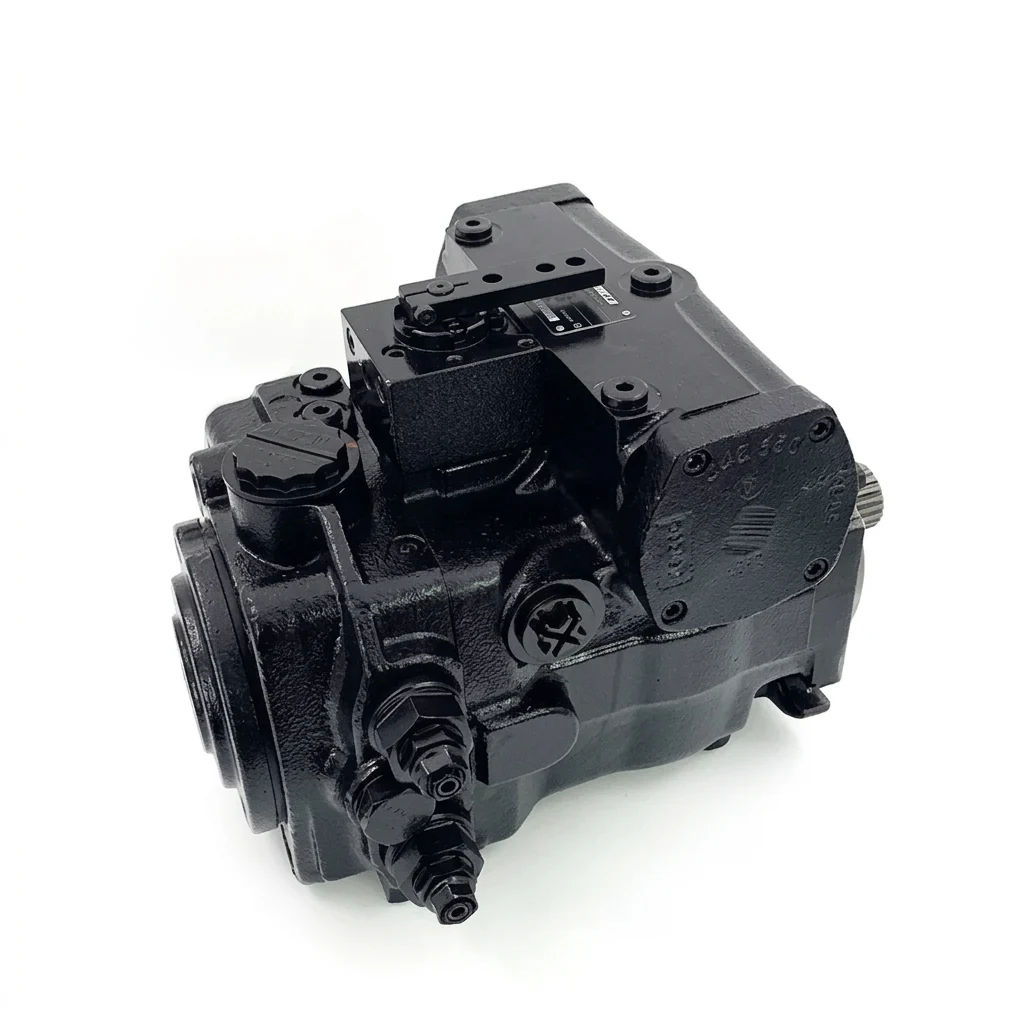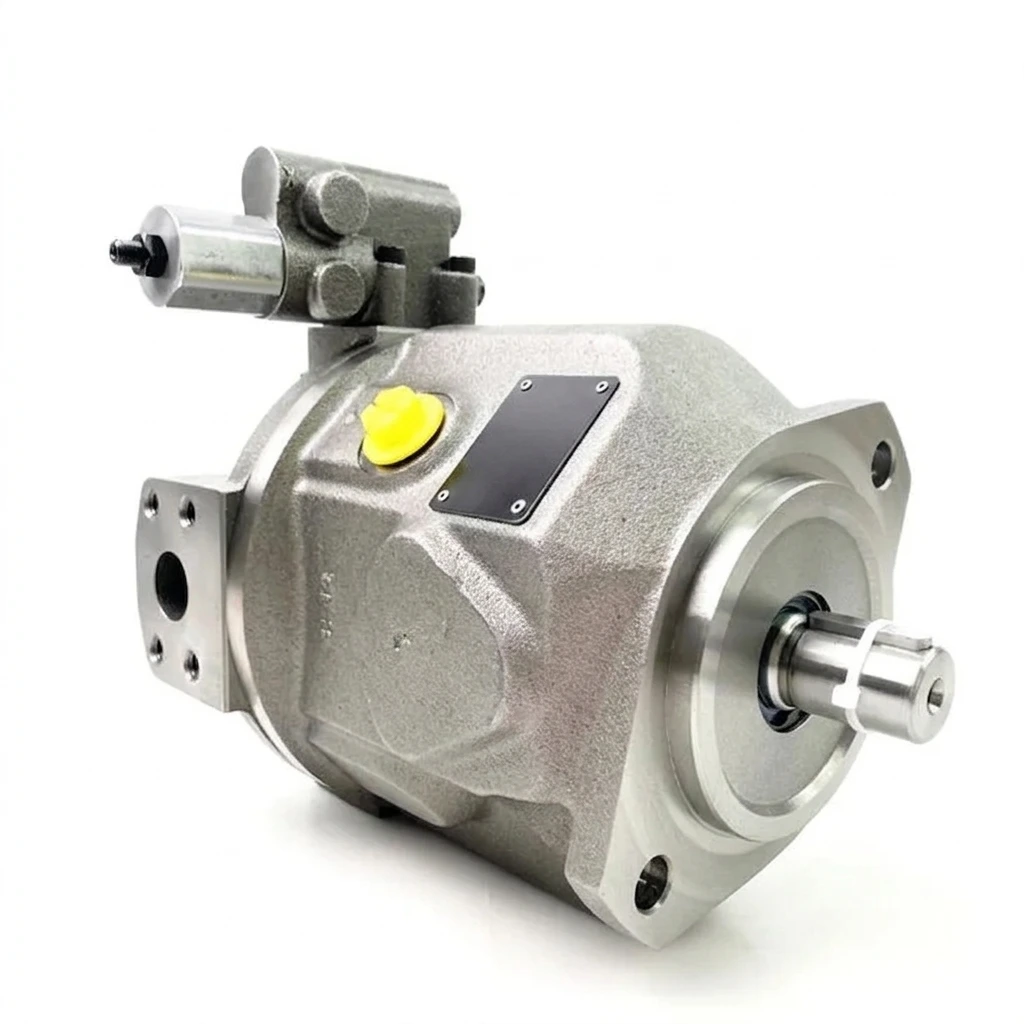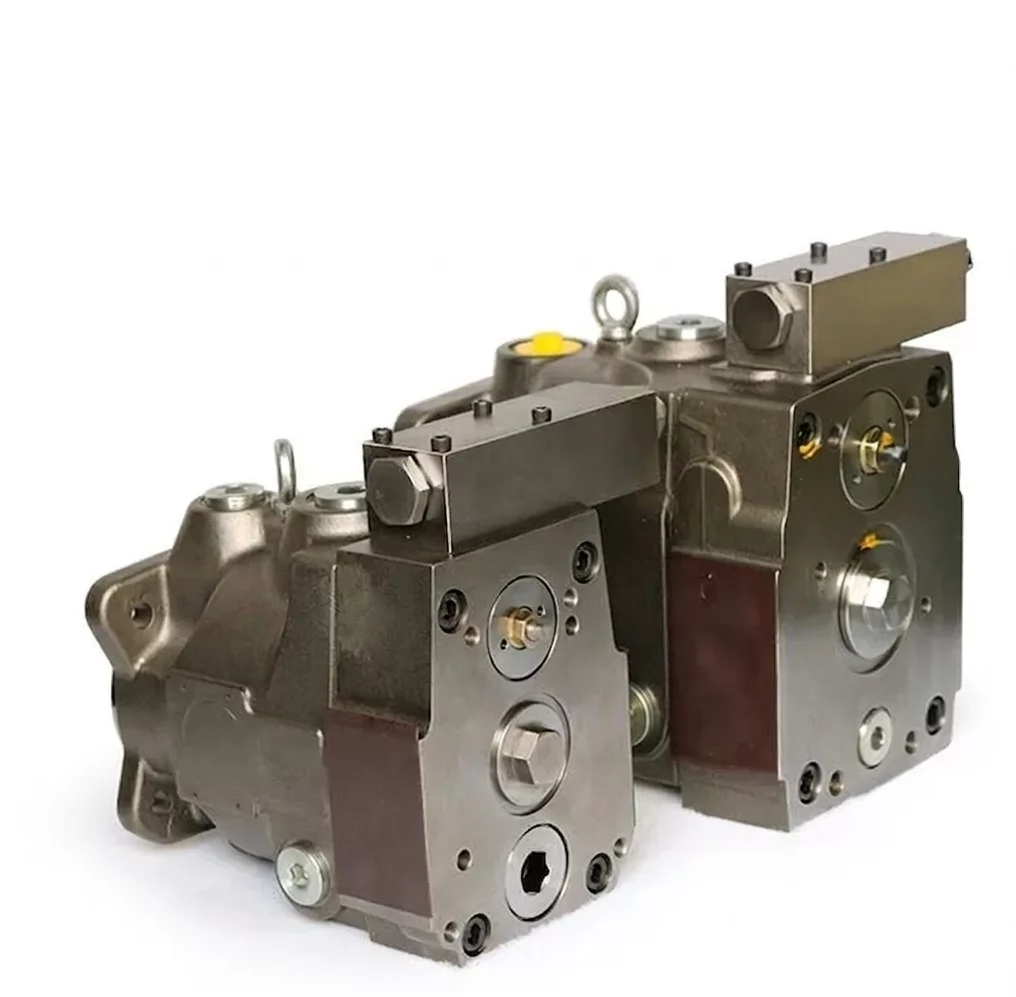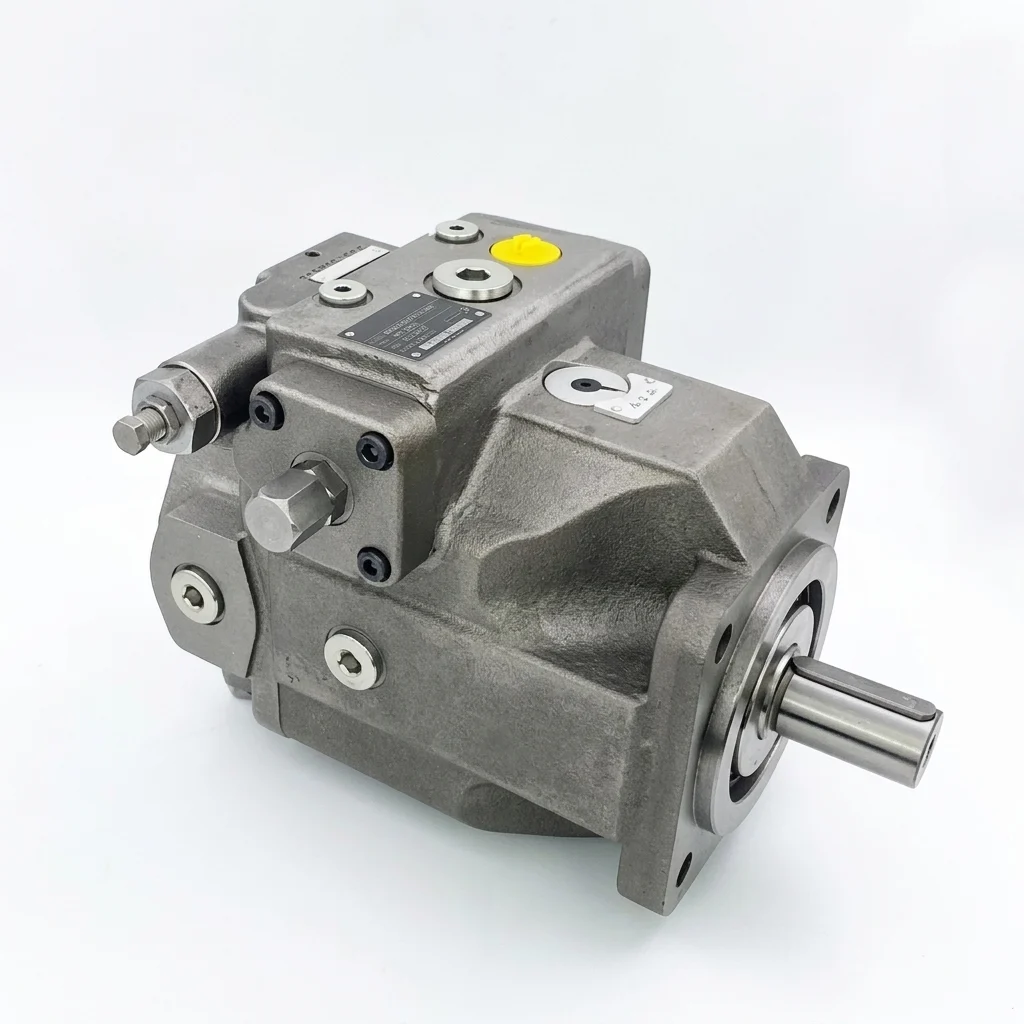
Sourcing hydraulic piston pumps from China has moved from a cost-driven experiment to a strategic procurement decision for OEMs across Europe, North America, the Middle East, and Southeast Asia. The manufacturing base has matured, tolerances have tightened, and testing protocols have caught up with Western benchmarks. What hasn't changed is the difficulty of separating capable factories from trading intermediaries.
This guide is written for procurement leads, technical buyers, and engineering managers who need a repeatable framework, not a supplier directory dump. We'll cover evaluation criteria, regional manufacturing clusters, product-specific benchmarks, pricing realities, and the sourcing mistakes that cost the most in the field.
Introduction: Why China Dominates the Global Piston Pump Supply Chain
China produces the majority of the world's hydraulic components by volume, and piston pumps are one of the fastest-growing subcategories in the export basket. Three factors drive this position: a dense supplier ecosystem for castings and precision components, decades of accumulated tooling investment, and a workforce trained to Japanese and German engineering standards through joint ventures dating back to the 1990s.
For buyers, the practical implication is a genuine choice between standardized high-volume production and specialized OEM customization. The cost-performance ratio for mid-pressure and high-pressure axial piston pumps now sits 30 to 55 percent below equivalent European-branded units, without the compromise on interchangeability that defined the market a decade ago.
The Numbers Behind China's Hydraulic Export Growth
Recent trade data illustrates the scale and direction of the export flow. The table below reflects publicly reported figures aggregated from customs data through the 2025 fiscal year.
| Metric | Value / Range | Notes |
|---|---|---|
| Annual piston pump export volume | ~4.8 million units | Combined axial, radial, and bent-axis categories |
| Top export destinations | USA, Germany, UAE, Vietnam, Turkey, Brazil | Europe and Middle East fastest-growing regions |
| FOB unit pricing band (mid-tier axial) | USD 180 – 720 | Depending on displacement and OEM compatibility |
| OEM/ODM share of exports | ~62% | Majority of shipments are branded or private-label |
| Year-over-year export growth | +11.4% | Piston pump segment outpacing broader hydraulic category |
What This Guide Covers
- A scoring model for evaluating Chinese piston pump manufacturers
- Regional manufacturing clusters and their specialties
- Product-type breakdowns with pressure and compatibility notes
- A featured manufacturer profile plus a comparison of other established players
- Sourcing pitfalls, pricing bands, and shipping considerations
- An FAQ addressing the questions procurement teams ask most
How to Evaluate a Chinese Piston Pump Manufacturer
Before comparing manufacturers, procurement teams benefit from a scoring framework that turns fuzzy impressions into weighted decisions. The criteria below are the ones that correlate most strongly with long-term supplier performance in our observation of the market.
Core Evaluation Criteria (Scoring Table)
| Criterion | Weight | What to Verify |
|---|---|---|
| ISO 9001 certification | 15% | Valid certificate, audit history, scope covers piston pumps |
| Production capacity | 10% | Machining centers, assembly lines, monthly output ceiling |
| R&D depth | 15% | In-house engineers, CAD/CAE tools, patent portfolio |
| OEM flexibility | 20% | Non-standard displacement, port config, branding options |
| Testing infrastructure | 20% | Pressure benches, flow meters, leak detectors, material analyzers |
| Lead time consistency | 10% | Historical on-time delivery rate, buffer stock policy |
| After-sales support | 10% | Warranty terms, spare parts availability, technical response time |
Red Flags to Watch For
- Traders posing as factories. Ask for machining video walkthroughs, live factory tours, and the business license showing manufacturing scope.
- Missing pressure test documentation. Every unit shipped should have a traceable test report, not a generic template.
- No traceability on castings and machined components. Serial numbers should tie back to material batches and machining runs.
- Vague warranty terms. "Case by case" is a warning sign; look for defined duration, coverage scope, and RMA procedure.
Certifications That Actually Matter for Piston Pumps
ISO 9001 is the baseline for quality management and should be non-negotiable. IATF 16949 becomes relevant when the pump feeds into automotive or heavy-vehicle assembly lines. CE marking is required for EU-bound shipments where the pump is part of a machinery assembly under the Machinery Directive.
REACH and RoHS compliance affects material selection, particularly for seals, coatings, and any electronics on smart pumps. Not every certification adds value for every buyer, but missing the relevant ones will stall customs clearance or trigger downstream OEM audits.
The Chinese Piston Pump Manufacturing Landscape
Piston pump production is concentrated in three regional clusters, each with distinct strengths. Understanding where a supplier sits geographically often predicts what kind of partner they'll be.
Key Manufacturing Clusters
| Region | Specialty Products | Typical Factory Scale | Export Orientation | Cost Positioning |
|---|---|---|---|---|
| Hebei (Xingtai, Ningjin) | Gear pumps, piston pumps, cycloidal motors, OEM customization | Mid-scale, engineering-led | High (60%+ export share) | Mid-tier, customization premium |
| Zhejiang (Ningbo, Wenzhou) | Standardized axial piston pumps, valves | Large-scale, high throughput | Mixed domestic/export | Competitive on volume SKUs |
| Jiangsu | Industrial pumps, high-pressure applications | Large-scale, capital-intensive | Primarily domestic OEM | Mid to high-tier |
Hebei: The Heavy-Duty and OEM Customization Belt
Ningjin County in Xingtai City sits inside one of China's premier equipment manufacturing hubs, with a supplier density built around castings, precision machining, and hydraulic component assembly. The cluster around North Zhujiazhuang Village in Sujiazhuang Town is where Olive Branch Hydraulics operates its integrated R&D, precision manufacturing, and custom engineering facility.
The regional advantage here is engineering flexibility. Buyers who need non-standard displacement, custom P/T port configurations, or application-specific engineering support tend to source from Hebei because the ecosystem is built around solving problems, not just fulfilling catalog orders.
Zhejiang and Jiangsu: High-Volume Standardized Production
Coastal clusters focus on high-throughput standardized SKUs feeding domestic OEMs and export buyers who need catalog-spec units in container-load quantities. Lead times are shorter for stock items, but customization scope is generally narrower and MOQs on non-standard orders are higher.
Piston Pump Types Produced in China
| Type | Typical Pressure Range | Common Applications | OEM Compatibility Notes |
|---|---|---|---|
| Axial piston (fixed) | 210 – 350 bar | Industrial machinery, mobile equipment | Rexroth A2F, Kawasaki equivalents |
| Axial piston (variable) | 280 – 420 bar | Excavators, injection molding, load-sensing systems | K3V, K5V, A10VSO, A11VO patterns |
| Radial piston | 350 – 700 bar | Presses, testing rigs, marine applications | Moog, Bosch Rexroth compatibility available |
| Bent-axis piston | 350 – 450 bar | Winches, mobile hydraulics, agricultural machinery | Parker F11/F12, Rexroth A2FM patterns |
Leading Piston Pump Manufacturers in China: Profiles and Comparison
Rather than ranking suppliers by promotional weight, this section applies a consistent profile template so buyers can compare like-for-like. The featured manufacturer is Olive Branch Hydraulics, followed by a comparison of other established players.
Comparison Table: Manufacturer Snapshot
| Manufacturer Type | Product Focus | MOQ | OEM Capability | Primary Export Markets | Certifications |
|---|---|---|---|---|---|
| Olive Branch Hydraulics (Hebei) | Gear pumps, piston pumps, cycloidal motors, valves, distributors | Low (prototype-friendly) | Full custom, non-standard supported | Europe, N. America, Middle East, SE Asia | ISO 9001 |
| Zhejiang high-volume producers | Standardized axial piston, K3V series | Medium to high | Limited to catalog variants | Global, distributor-driven | ISO 9001, CE (select SKUs) |
| Jiangsu industrial specialists | High-pressure industrial pumps | Medium | Project-based customization | Domestic OEM, select export | ISO 9001, IATF 16949 |
Featured Manufacturer: Olive Branch Hydraulics (Hebei)
Headquartered in Industrial Zone, North Zhujiazhuang Village, Sujiazhuang Town, Ningjin County, Xingtai City, Hebei Province, Olive Branch Hydraulics is a specialized provider of high-end hydraulic components and fluid power systems. The company integrates R&D, precision manufacturing, and custom engineering under one roof, and works with clients across construction machinery, agricultural equipment, mining, special vehicles, industrial automation, and shipbuilding.
The positioning is deliberately narrow: non-standard customization, precision machining, and rigorous quality control. This is a factory built to solve hydraulic problems, not to push catalog SKUs on price alone. That focus makes it a strong fit for procurement teams whose engineering roadmap includes bespoke displacement, port configuration, or performance requirements.
Product Portfolio at a Glance
| Category | Model Series | Notes |
|---|---|---|
| Gear pumps | HGP, K3V, CBHZ, CBK, CB-FC, JHP, CBGJ, CBT | Broad displacement and pressure coverage |
| Cycloidal hydraulic motors | BM, BMR | Low-speed, high-torque applications |
| Multi-way valves | Custom manifolds | Mobile equipment, agricultural machinery |
| Directional and relief valves | Standard and custom | SAE-standard compatibility |
| O/Y-core distributors | Configurable P/T ports | SAE-standard, custom port patterns |
Manufacturing and Testing Infrastructure
Production runs on precision machining centers and automated assembly lines, with dedicated honing, boring, and grinding equipment for cylinder blocks, valve bodies, and mating surfaces. Every product is built under ISO 9001 standards, and the in-house testing center is equipped with pressure benches, flow meters, leak detectors, and material analyzers.
The commitment to 100% pre-shipment inspection is a firm policy, not a marketing line. No exceptions. For buyers who have absorbed the cost of a bad batch, that discipline is often the deciding factor.
OEM and Non-Standard Customization Capabilities
- Custom P/T port configurations aligned with buyer-specified manifolds
- Displacement adjustments within the mechanical envelope of each series
- Application-specific engineering support from drawing review through first-article
- SAE-standard compatibility for interchangeability with existing installations
- Private-label and OEM branding for distributor and system integrator partners
Other Notable Chinese Piston Pump Manufacturers
Beyond Olive Branch Hydraulics, the market includes a spectrum of established players covering axial piston, K3V-series, and Rexroth-compatible product lines. The comparison below summarizes the categories rather than promoting individual competitors, since buyer fit depends heavily on the specific application and volume profile.
| Category | Strengths | Typical Buyer Fit |
|---|---|---|
| Large state-affiliated hydraulic groups | Broad catalog, high pressure ratings, IATF 16949 | Domestic OEM programs, high-volume standardized supply |
| Coastal export specialists | Container-load throughput, catalog K3V and A10VSO equivalents | Distributors and aftermarket buyers |
| Engineering-led mid-scale factories | Customization depth, prototype support, responsive engineering | OEMs with bespoke specifications and lower volumes |
Product-Focused Deep Dive: K3V and Axial Piston Pumps from Chinese Factories
The K3V series is one of the highest-search-volume categories in the Chinese piston pump export market, driven by demand from the excavator aftermarket. Understanding compatibility mapping is critical for buyers replacing OEM units in the field.
K3V Piston Pump Compatibility Matrix
| K3V Model | Typical Excavator Class | Common OEM Fitments |
|---|---|---|
| K3V63 | 10 – 13 ton | Kobelco SK130, Hyundai R130 |
| K3V112 | 18 – 22 ton | Kobelco SK200, Hyundai R210, Volvo EC210 |
| K3V140 | 25 – 30 ton | Hyundai R250, Kobelco SK260 |
| K3V180 | 30 – 40 ton | Hyundai R305, Kobelco SK330 |
| K3V280 | 45 – 55 ton | Hyundai R450, Doosan DX520 |
Specification Comparison: Chinese vs. Original OEM
| Parameter | Original OEM (K3V112) | Chinese Equivalent (K3V112) |
|---|---|---|
| Displacement | 112 cc/rev | 112 cc/rev |
| Rated pressure | 320 bar | 320 bar |
| Maximum pressure | 350 bar | 350 bar |
| Rotation speed (max) | 2100 rpm | 2100 rpm |
| Weight | ~65 kg | ~65 – 68 kg |
| Interchangeability | Reference | Direct bolt-on replacement |
Where Compatibility Matters Most
Dimensional interchangeability is critical in three application scenarios: construction excavators where downtime cost dominates the pump price, mining equipment where field service intervals are long, and material handling systems where installation labor is expensive. In all three, a bolt-on replacement that matches port pattern, shaft spline, and mounting flange saves far more than a slightly cheaper unit that requires adapter plates or hose reconfiguration.
Sourcing, Pricing, and Logistics: Practical Guidance for Buyers
Typical Price Ranges by Product Class
| Product Class | FOB Price Band (USD) | Volume Notes |
|---|---|---|
| Small gear pumps (CB-series) | 25 – 90 | Tiered pricing above 500 units |
| Mid-size axial piston (fixed) | 180 – 420 | Discounts at 100+ units |
| Variable displacement (K3V-series) | 380 – 1,150 | Model-dependent, K3V280 at upper end |
| Cycloidal motors (BM/BMR) | 45 – 220 | Displacement-driven |
| Multi-way valves (custom) | 120 – 650 | Function count and port config drive cost |
MOQ, Lead Times, and Payment Terms
Standard industry practice for OEM orders sits between 30 and 60 days for first production runs, with 20 to 35 days for repeat orders. Stock SKUs ship within 7 to 15 days depending on volume. MOQs vary widely: engineering-led factories accept low prototype quantities, while high-volume producers typically require container-load orders.
Payment terms most commonly follow 30% deposit and 70% balance against copy of B/L. Established relationships often shift to L/C at sight or O/A terms after several successful shipments.
Shipping to Europe, North America, the Middle East, and Southeast Asia
Container consolidation is standard for orders that don't fill a full 20-foot container, with LCL rates competitive on the major trade lanes. HS code 8413.50 covers reciprocating positive displacement pumps and 8413.60 covers rotary positive displacement pumps, with country-specific subdivisions.
For EU-bound shipments where the pump forms part of a machinery assembly under the Machinery Directive, CE marking documentation should be prepared upstream, not at the port. Middle East destinations often require SASO or G-Mark for certain end applications.
Quality Control Checkpoints Before Shipment
- Pressure and flow bench testing across the operating range
- Leak detection under static and dynamic conditions
- Material verification via spectrometer or hardness testing
- Documentation package including test reports, certificate of origin, packing lists, and material certifications
Common Sourcing Mistakes and How to Avoid Them
Mistake 1: Choosing on Price Alone
The lowest quote almost always has a hidden cost. Field failures generate warranty claims, downstream OEM reputation damage, and inventory buffer requirements that erase the initial saving. A pump priced 20% below the market rate should trigger due diligence, not celebration.
Mistake 2: Skipping Factory Audits
An on-site or third-party audit is a cost that pays for itself on the first serious order. Essentials to verify include machining floor capacity, test bench count and calibration status, incoming material inspection procedure, and finished goods traceability. Video audits are acceptable for early screening but should not replace physical inspection for strategic suppliers.
Mistake 3: Underestimating Compatibility Testing
Bench specs matching on paper is necessary but not sufficient. Real fitment testing on the buyer's target equipment reveals port alignment issues, shaft engagement tolerance, and control response characteristics that a specification sheet cannot capture. Budget for a first-article sample and a live test cycle before committing to production volume.
FAQ: Piston Pump Sourcing from China
Are Chinese piston pumps reliable for high-pressure industrial applications?
Yes, when sourced from ISO 9001 certified manufacturers with documented pressure testing and traceable materials. High-pressure applications above 350 bar demand tighter tolerances on cylinder blocks, valve plates, and swash plates, and the better Chinese factories now match those tolerances through dedicated honing and grinding equipment. The variable is factory selection, not country of origin.
Can Chinese manufacturers produce Rexroth, Kawasaki, or Parker-compatible piston pumps?
Dimensional interchangeability is well-established for the mainstream OEM series, including K3V, A10VSO, A11VO, and F11 patterns. Port position, shaft spline, and mounting flange are typically direct bolt-on. Where compatibility ends is in proprietary control algorithms on electronically controlled units and long-term wear characteristics under extreme duty cycles, which still favor original OEM in the most demanding applications.
What is the typical MOQ for OEM piston pump orders?
Ranges vary by factory type. Engineering-led OEM specialists often accept prototype quantities of 5 to 20 units for first-article development, with production MOQs from 50 to 200 units depending on the customization scope. High-volume standardized producers typically require 500+ units for OEM branding.
How long does it take to develop a custom piston pump?
A representative timeline runs 3 to 4 weeks for technical drawing review and DFM feedback, 5 to 8 weeks for first-article sample production, 2 to 3 weeks for testing and refinement, and 6 to 10 weeks for initial production release. Total end-to-end is typically 16 to 25 weeks for a fully bespoke design, shorter when starting from an existing platform.
What documentation should I request before placing an order?
Request the ISO 9001 certificate with valid audit date, pressure test reports for the specific model, material certifications for critical components, dimensional inspection sheets, and photographs of the actual production line. For EU-bound shipments, add the CE conformity declaration and technical file references.
Which Chinese region is best for OEM piston pump manufacturing?
Hebei's customization strength suits buyers with bespoke specifications, non-standard displacement, or lower production volumes. Zhejiang and Jiangsu are stronger for high-volume standardized SKUs where price per unit dominates the decision. Many buyers end up with a two-supplier strategy: one Hebei partner for engineered products and one coastal partner for catalog items.
Making the Right Choice: Final Considerations for Decision Makers
The Total Cost of Ownership Perspective
Unit price is one variable in a multi-year sourcing decision. Reliability under duty cycle, field failure rate, warranty response time, and engineering support during design iterations all show up in the P&L eventually. A pump that costs 8% more but reduces field failures by 40% is a straightforward win.
Building a Sustainable Supplier Relationship
The best supplier relationships in this category share three characteristics: regular communication cadence between engineering teams, joint reviews of field performance data, and roadmap alignment on upcoming product changes. Treating a piston pump supplier as a component vendor caps the value they can deliver. Treating them as an engineering partner unlocks the customization, cost engineering, and reliability improvements that compound over time.