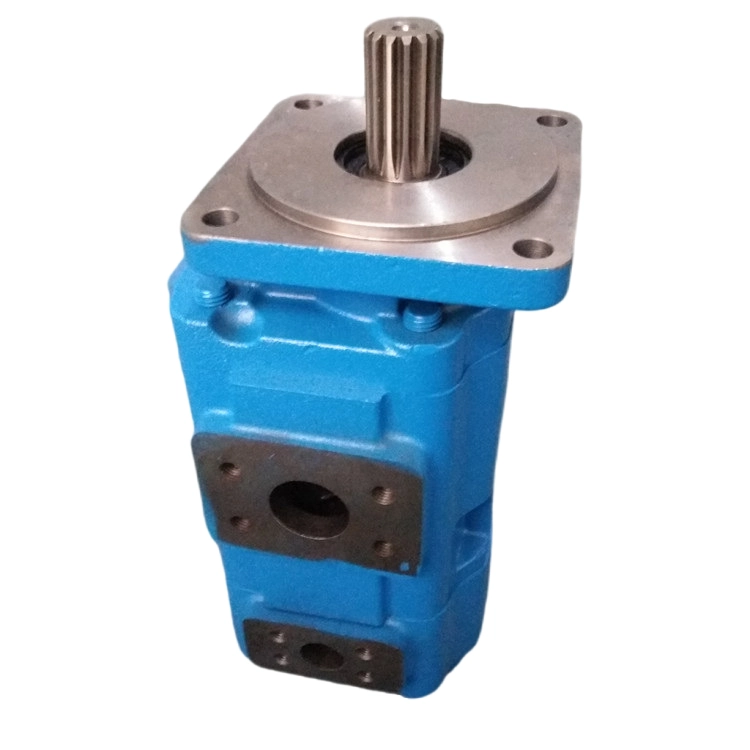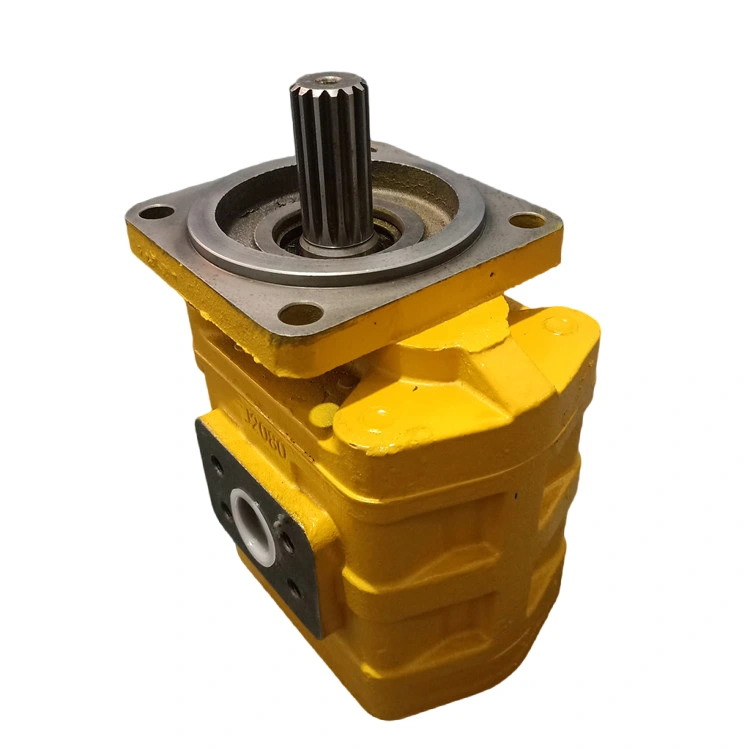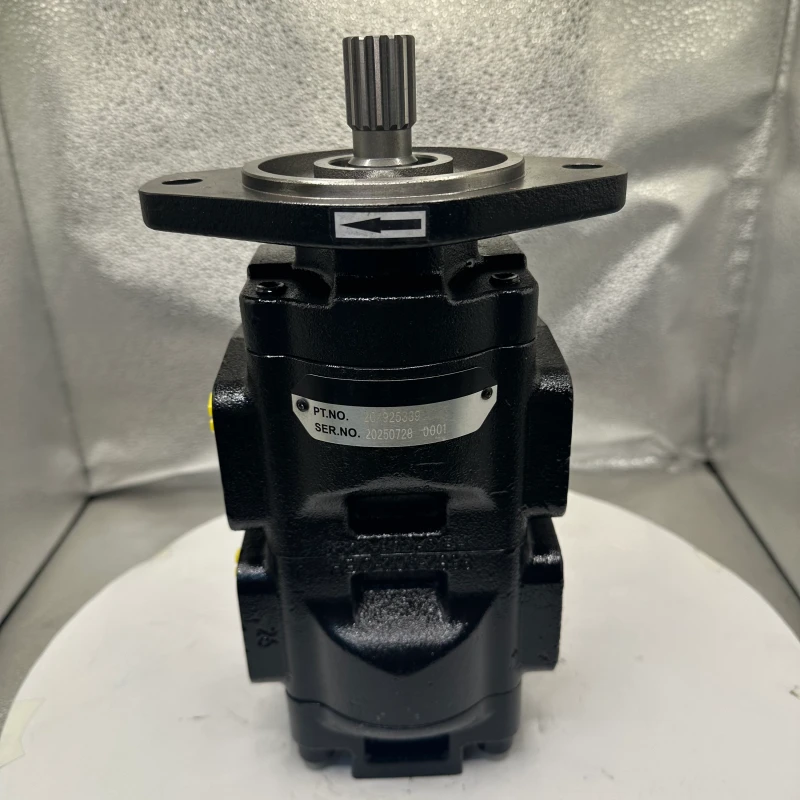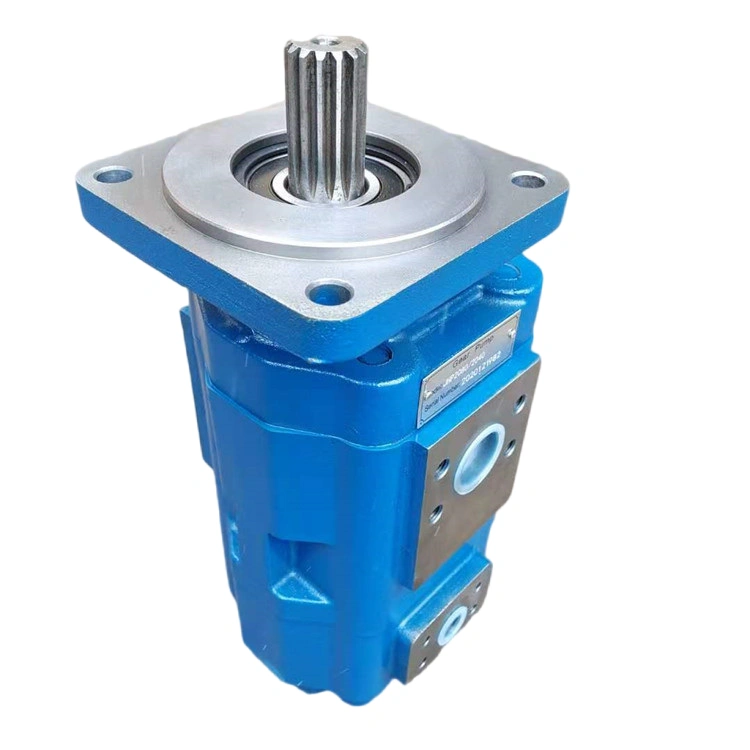

Industrial hydraulic systems constitute approximately 30% of aggregate energy consumption within manufacturing facilities, representing a substantial proportion of operational expenditure. Notably, a singular design intervention — the adoption of variable displacement piston pumps — has been empirically demonstrated to yield reductions of 30–50% in hydraulic energy demand. This raises a critical inquiry: what are the underlying mechanisms by which this pump architecture achieves such significant energy efficiency gains without compromising, and indeed enhancing, overall system performance?
So what makes these pumps so effective? It comes down to a pretty straightforward idea — supply only the flow and pressure the system actually calls for, right when it's needed. In this article, we'll walk through how variable displacement hydraulic piston pumps work, what gives them an edge over fixed-displacement designs, and where they tend to pay for themselves fastest in everyday hydraulic piston pump applications.
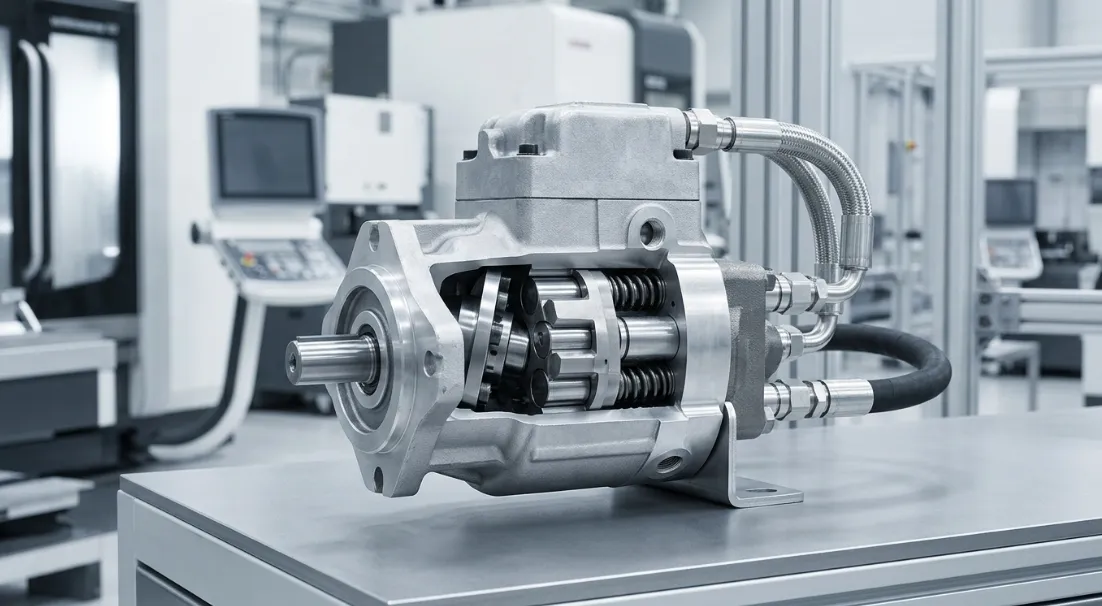
Understanding Variable Displacement Hydraulic Piston Pumps
How Variable Displacement Works
At the heart of every axial piston variable pump is a swashplate — an angled plate that controls the stroke length of internal pistons. By changing the swashplate angle, the pump modulates its flow output from zero to maximum displacement without changing shaft speed.
This on-demand delivery is the foundation of pressure compensated pump design. A built-in compensator senses system pressure and automatically adjusts the swashplate angle, reducing displacement as pressure rises toward the setpoint. The result is a pump that idles with near-zero flow when the system is satisfied, consuming minimal power.
This closed-loop feedback between system pressure and pump output is what separates variable displacement pump efficiency from conventional fixed-output designs. The pump becomes a responsive component rather than a brute-force flow source.
Fixed vs. Variable Displacement — Core Differences
Fixed displacement pumps deliver a constant volume of fluid per revolution regardless of downstream demand. Any excess flow must be routed over a relief valve, converting unused hydraulic energy directly into heat.
Variable displacement pumps eliminate this waste by matching output to load. This fundamental mechanical distinction is why they dominate modern flow control hydraulic systems where demand fluctuates throughout the operating cycle.
| Feature | Fixed Displacement | Variable Displacement |
|---|---|---|
| Flow Output | Constant regardless of demand | Adjusts to system demand |
| Energy Consumption | High (continuous full flow) | Low (matches load requirements) |
| Heat Generation | Significant excess heat | Minimal waste heat |
| System Complexity | Simpler circuit | Requires feedback controls |
| Lifespan Under Partial Load | Shorter | Longer |
| Typical Efficiency Range | 60–75% | 85–95% |
Key Advantages of Variable Displacement Piston Pumps
Superior Energy Efficiency
Variable displacement pump efficiency is the single biggest reason engineers specify these units. Because the pump only does work proportional to actual demand, energy that would otherwise be wasted as heat stays in the prime mover — whether that's an electric motor or a diesel engine.
Real-world data from mobile equipment OEMs confirms the impact. Caterpillar and Komatsu have reported 35–50% fuel savings after retrofitting mid-size excavators with load-sensing variable piston pumps compared to older gear-pump configurations. In electric-drive injection molding machines, energy saving hydraulic pumps have demonstrated up to 50% reduction in kWh per cycle during hold phases.
These are not laboratory figures. They reflect measured performance across thousands of operating hours in production environments.
Precise Flow and Pressure Control
Variable piston pumps deliver proportional output matching — the flow and pressure track the load signal in real time. This makes them ideal for flow control hydraulic systems that require fine actuation, such as CNC machine tool clamping, robotic arm positioning, and servo-hydraulic test rigs.
Load-sensing control further refines this capability. The pump maintains a fixed pressure differential (typically 14–20 bar) above the highest load signal, ensuring each actuator receives exactly the flow it requests without starving parallel circuits. The result is smoother motion, less overshoot, and tighter positional accuracy.
Reduced Heat Generation and Cooling Costs
Every unit of energy dumped over a relief valve becomes heat in the hydraulic fluid. Fixed displacement systems in cyclic applications can generate so much excess heat that large oil coolers and oversized reservoirs become necessary just to maintain safe operating temperatures.
Variable displacement pumps dramatically reduce throttling losses. Lower oil temperatures mean smaller coolers, less coolant consumption, and extended fluid life — hydraulic oil degradation rate doubles for every 10°C rise above 60°C. Plants switching to variable pumps routinely report oil change intervals extending by 25–40%.
Extended Component Lifespan
Lower average operating pressures translate directly to reduced mechanical stress on every downstream component. Seals last longer because thermal cycling is minimized. Valves experience less cavitation and erosion. Actuator rod seals see fewer pressure spikes.
The cumulative effect is measurable: maintenance teams managing variable-pump systems typically report 20–30% longer intervals between major overhauls compared to equivalent fixed-displacement circuits running the same duty cycle.
Compact System Design
Because a variable pump self-regulates, many auxiliary components become unnecessary. Unloading valves, accumulator charging circuits, and multi-pump staging arrangements can often be eliminated entirely.
This translates to smaller reservoirs (less heat means less oil volume needed for cooling), fewer hose connections, and a reduced overall machine footprint. In mobile equipment, the weight savings alone can improve payload capacity and fuel economy beyond the pump's direct efficiency gains.
Operational Flexibility Across Multiple Actuators
A single variable displacement piston pump can serve multiple circuits operating at different pressures and flows simultaneously. Load-sensing and flow-sharing valves distribute available pump output proportionally, so one actuator's demand doesn't starve another.
This multi-circuit capability replaces what would otherwise require two or three dedicated fixed pumps, each with its own relief valve and plumbing. The reduction in component count simplifies troubleshooting and reduces potential leak points.
Real-World Applications and Performance Data
Hydraulic Piston Pump Applications by Industry
Variable displacement piston pumps have become the standard in industries where duty cycles are highly variable. The following table summarizes documented performance improvements across key sectors.
| Industry | Application | Reported Benefit |
|---|---|---|
| Construction (Excavators) | Boom/arm/bucket control | 40% fuel reduction vs. gear pumps |
| Injection Molding | Clamp and injection pressure | 50% energy savings during hold phase |
| Marine Deck Equipment | Winch and crane operation | 30% smaller hydraulic power unit |
| Metal Forming Presses | Tonnage control | 45% lower electricity consumption |
| Agriculture | Implement steering and lift | 25% longer hydraulic oil service intervals |
Case Study — Energy Saving Hydraulic Pumps in Manufacturing
A Midwest automotive stamping plant documented the results of replacing 12 fixed-displacement vane pumps (each driving a 200-ton press) with axial piston variable displacement units equipped with pressure compensation and load sensing.
Before the retrofit, each press consumed an average of 45 kW during production — even though actual hydraulic demand peaked at only 30 kW and averaged just 18 kW across the cycle. The fixed pumps ran at full displacement continuously, dumping excess flow through relief valves.
After installation, average power draw dropped to 22 kW per press. The plant recorded annual energy savings of $48,000 per machine, achieving full return on investment within 14 months. Secondary benefits included a 35% reduction in cooling water usage and elimination of two chronic overheating shutdowns per summer season.
Design Considerations and Limitations
Higher Initial Cost
Variable displacement axial piston pumps typically cost 2–3× more than fixed-displacement gear or vane pumps of equivalent flow rating. The swashplate mechanism, servo piston, compensator valve, and tighter manufacturing tolerances all contribute to the price premium.
However, lifecycle cost analysis consistently favors the variable pump in applications with duty cycles below 70% average load. Energy savings, reduced cooling infrastructure, and extended component life typically recover the cost difference within 12–24 months of continuous operation.
Maintenance Complexity
Swashplate bearings, servo pistons, and electronic displacement controllers introduce failure modes that don't exist in simpler pump designs. Technicians need specific training to diagnose compensator malfunctions, servo drift, and swashplate bearing wear.
Contamination control is also more critical. The tight clearances in piston-slipper assemblies (often under 5 microns) demand ISO 18/16/13 or cleaner fluid. Plants must invest in quality filtration and regular oil analysis to protect their investment.
When Fixed Displacement Still Makes Sense
Not every hydraulic circuit benefits from variable displacement. Constant-speed, single-function systems — such as a dedicated hydraulic power pack running a conveyor at steady state — gain little from demand-matching because demand never changes.
In these applications, the simplicity, lower cost, and easier maintenance of a fixed gear or vane pump remain the rational choice. The key decision factor is duty cycle variability: the more the load fluctuates, the greater the payoff from variable displacement.
Frequently Asked Questions
What is the main advantage of a variable displacement pump over a fixed displacement pump?
The primary advantage is energy efficiency. A variable displacement pump only delivers the flow and pressure the system demands at any given moment, eliminating the wasted energy that fixed pumps continuously dump through relief valves. This on-demand operation can reduce hydraulic energy consumption by 30–50% in typical cyclic applications.
How does a pressure compensated pump design save energy?
A pressure compensated pump automatically reduces displacement — and therefore flow — when system pressure reaches a preset value. During idle or low-demand periods, the pump de-strokes to near-zero output, consuming only enough power to overcome internal friction. This prevents the continuous energy waste of pushing fluid over a relief valve at full system pressure.
What industries benefit most from variable displacement piston pumps?
Industries with highly variable duty cycles see the largest gains. Mobile equipment (construction and agriculture), plastics processing (injection molding), metal forming (hydraulic presses), and marine hydraulics (deck cranes and winches) consistently report the highest energy savings and fastest ROI from variable displacement pump adoption.
Are variable displacement pumps more expensive to maintain?
Yes, they have more complex internal components including swashplate bearings, servo pistons, and compensator valves that require trained technicians and stricter contamination control. However, lower operating temperatures and reduced system stress often offset these costs by extending intervals between overhauls and reducing downstream component failures.
Can a variable displacement pump replace multiple fixed pumps in a circuit?
In many cases, yes. A single load-sensing variable displacement pump can supply several actuators at different pressures and flows simultaneously through flow-sharing directional valves. This consolidation simplifies plumbing, reduces potential leak points, and lowers overall system cost despite the higher individual pump price.