Every year, unplanned piston pump failures cost industrial operations millions in downtime and repairs. Understanding the root causes of these failures is the difference between proactive maintenance and catastrophic breakdowns. Here's what goes wrong — and why.
Whether you operate hydraulic systems, process equipment, or high-pressure cleaning units, piston pump problems follow predictable patterns. Recognizing these patterns early gives you the power to intervene before a minor issue becomes a production-stopping emergency.
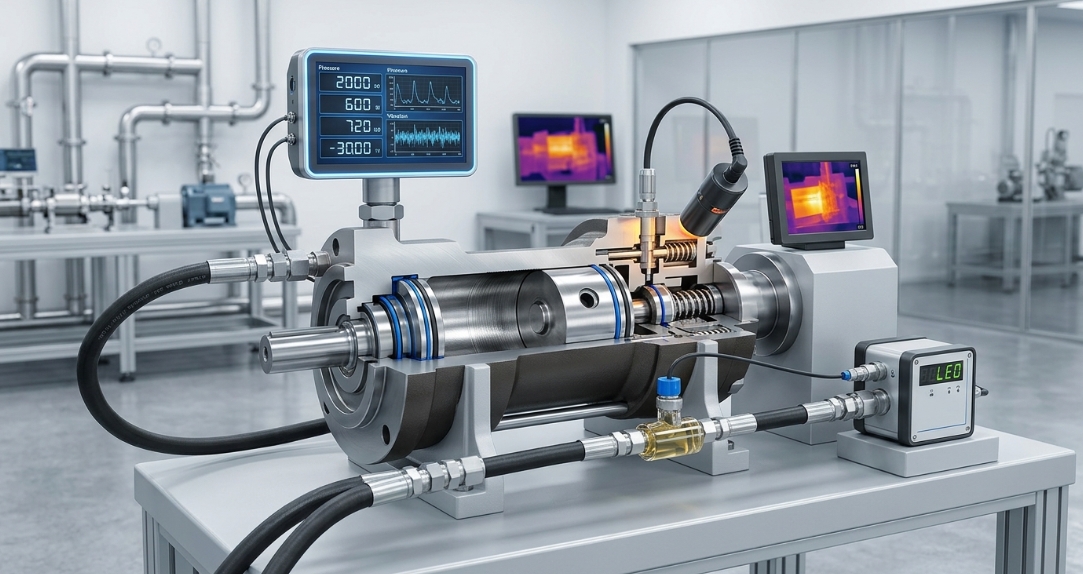
Common Piston Pump Failure Causes
Piston pumps are precision machines operating under extreme pressures and repetitive motion. Over time, multiple failure modes emerge that can compromise performance, safety, and system integrity.
Internal Component Wear and Tear
Reciprocating pump wear and tear is inevitable in any system with moving parts under load. Pistons, cylinder bores, seals, and valves all degrade through continuous friction and repeated fatigue cycles.
As pistons reciprocate thousands of times per minute, microscopic material loss accumulates on cylinder walls and piston rings. This gradual erosion increases clearances, reduces volumetric efficiency, and eventually leads to blow-by where pressurized fluid escapes past worn surfaces.
Fatigue cracking in metal components is another consequence of cyclic loading. Even properly maintained pumps will eventually reach their fatigue life limit, making scheduled inspections critical for catching early-stage wear before it cascades into catastrophic failure.
Cavitation Problems
Pump cavitation problems occur when local fluid pressure drops below the vapor pressure of the hydraulic fluid. This causes vapor bubbles to form in low-pressure zones, typically at the pump inlet.
When these vapor bubbles travel into higher-pressure regions, they collapse violently against metal surfaces. The resulting micro-jets of fluid impact the material at extreme velocities, causing pitting, erosion, and surface fatigue on pistons, valve plates, and cylinder bores.
Beyond physical damage, cavitation reduces volumetric efficiency and introduces characteristic high-pitched noise and vibration. Left unchecked, cavitation can destroy a piston pump in weeks rather than the years of service life you'd expect under normal conditions.
Seal and Packing Failures
Seals and packing are the first line of defense against leakage in any piston pump. When these components degrade, the consequences are immediate and measurable — pressure loss, reduced output, and contamination ingress.
Internal leakage from worn seals allows pressurized fluid to bypass the piston, reducing the pump's ability to maintain target pressure. External leakage creates housekeeping issues, environmental concerns, and fluid loss that can starve the system.
Seal failures are accelerated by chemical incompatibility with the process fluid, excessive temperature, improper installation, and contamination. Abrasive particles in the fluid act like sandpaper against seal surfaces, dramatically shortening their service life.
Valve Malfunction
Inlet and outlet valves in piston pumps must open and close with precise timing under high-frequency cycling. When valves degrade, stick, or seat improperly, the entire pump's flow and pressure characteristics become erratic.
Valve seats erode over time from repeated impact and fluid flow, preventing complete sealing. Debris trapped between valve and seat creates leak paths that worsen with each cycle. Corrosion attacks valve surfaces, particularly in aggressive fluid environments.
Sticking valves — caused by varnish buildup, corrosion, or swelling — disrupt the pump's timing. This leads to pressure spikes, flow pulsation, and in severe cases, hydraulic hammer that can damage downstream components.
Hydraulic Piston Pump Troubleshooting
Effective hydraulic pump troubleshooting requires a systematic approach. Symptoms often overlap between different root causes, making accurate diagnosis essential before committing to repairs.
Pressure Fluctuations and Loss
Erratic or insufficient pressure output is one of the most reported piston pump problems. The causes range from simple (low fluid level) to complex (internal component failure).
Start diagnosis by checking the basics: fluid level, inlet restrictions, and relief valve settings. If these are normal, move to internal causes — worn pistons, damaged seals, or leaking valves that allow pressure to bleed off internally.
A flow meter and pressure gauge installed at strategic points help isolate whether the issue is pump-side or system-side. Comparing actual flow and pressure against the pump's rated specifications reveals the degree of internal degradation.
Excessive Noise and Vibration
Abnormal noise from a piston pump is never just a nuisance — it's a diagnostic signal. Different noise profiles point to different root causes, making careful listening a valuable troubleshooting tool.
A high-pitched whine or crackling sound typically indicates cavitation or aeration, where air is being drawn into the suction line. A knocking or hammering noise suggests mechanical issues like bearing wear, misalignment, or loose internal components.
Vibration analysis can pinpoint the frequency and source of the problem. Frequencies matching the pump's reciprocating speed point to piston or valve issues, while higher-frequency vibration often indicates bearing degradation or fluid-borne noise from cavitation.
Overheating Issues
Piston pumps generate heat as a byproduct of pressurizing fluid and overcoming internal friction. When heat generation exceeds the system's ability to dissipate it, thermal failures follow rapidly.
Excessive operating temperature breaks down hydraulic fluid, reducing its viscosity and lubricating properties. This creates a destructive cycle: thinner fluid increases internal leakage, which generates more heat, which further degrades the fluid.
Common causes include operating above rated pressure, insufficient cooling capacity, blocked heat exchangers, and using fluid with incorrect viscosity grade. Continuous monitoring of fluid temperature is one of the simplest and most effective predictive maintenance practices.
Fluid Contamination Effects
Contamination is responsible for up to 80% of hydraulic system failures according to industry studies. Particulates, moisture, and chemical contaminants all attack piston pump internals from different angles.
Hard particles act as abrasives, scoring cylinder walls, piston surfaces, and valve seats. Soft particles like rubber fragments from degraded hoses can lodge in valve seats, preventing proper sealing. Even particles smaller than the pump's internal clearances cause damage through a silting effect.
Moisture contamination reduces the fluid's lubricating film strength, promotes corrosion, and can cause cavitation at lower-than-expected temperatures. Maintaining fluid cleanliness to the pump manufacturer's specified ISO cleanliness code is non-negotiable for achieving rated service life.
Piston Pump Maintenance Issues
Many piston pump failures trace back not to design flaws or operating conditions, but to maintenance practices. The gap between what maintenance schedules require and what actually gets done is where most problems originate.
Lubrication Failures
Proper lubrication is the single most important factor in piston pump longevity. Using the wrong fluid, extending change intervals, or allowing lubricant degradation all lead to accelerated wear.
Hydraulic fluid serves multiple roles: lubrication, heat transfer, sealing, and corrosion protection. When any of these functions degrades due to contamination, oxidation, or thermal breakdown, the pump suffers. Fluid analysis programs that track viscosity, particle count, and acid number provide early warning of lubricant failure.
Selecting the correct viscosity grade for the operating temperature range is critical. Fluid that's too thin won't maintain adequate film strength; fluid that's too thick increases internal friction and heat generation, creating the conditions for thermal failure.
Misalignment and Installation Errors
A piston pump installed with shaft misalignment, improper mounting, or incorrect piping loads is compromised from day one. These installation errors create uneven loading that accelerates bearing wear and seal failure.
Angular and parallel misalignment between the pump shaft and drive motor impose radial loads on bearings not designed to handle them. The result is premature bearing failure, shaft seal leakage, and increased vibration that propagates through the entire system.
Piping strain — where rigid piping forces the pump housing out of alignment — is a common but overlooked installation error. Flexible connectors, proper pipe supports, and alignment verification after piping connection prevent this entirely avoidable failure mode.
Neglected Preventive Maintenance Schedules
Skipping scheduled inspections and maintenance tasks is the most common path to unplanned piston pump failure. Minor issues that would cost minimal time and money to address during planned maintenance become major failures when ignored.
A small seal leak left unaddressed allows contamination ingress that damages pistons and cylinders. A slightly elevated temperature reading that goes uninvestigated masks fluid degradation that will eventually cause seizure. Each deferred maintenance item compounds risk.
Effective preventive maintenance programs combine time-based tasks (fluid changes, filter replacements) with condition-based monitoring (vibration analysis, fluid sampling, thermography) to catch developing problems regardless of how they manifest.
Problem Severity and Impact Comparison Table
The following table compares common piston pump problems by their root cause, severity, and operational impact to help prioritize maintenance and troubleshooting efforts.
| Problem | Root Cause | Severity | Downtime Risk | Repair Cost |
|---|---|---|---|---|
| Cavitation | Low inlet pressure / fluid vaporization | High | High | Medium-High |
| Seal Failure | Wear, contamination, chemical attack | Medium-High | Medium | Low-Medium |
| Valve Malfunction | Fatigue, debris, corrosion | Medium | Medium | Medium |
| Overheating | Excess load, poor cooling | High | High | High |
| Contamination Damage | Poor filtration, ingress | High | High | High |
| Misalignment | Installation error | Medium | Medium | Low-Medium |
Symptoms vs. Causes Diagnostic Table
Use this diagnostic reference table to match observable symptoms with their most likely causes and recommended corrective actions for efficient hydraulic pump troubleshooting.
| Symptom | Possible Causes | Recommended Action |
|---|---|---|
| Loss of pressure | Worn seals, valve leak, cavitation | Inspect seals, check inlet conditions |
| Excessive noise | Cavitation, aeration, bearing wear | Verify fluid levels, check alignment |
| Overheating | Fluid degradation, overload | Test fluid condition, reduce duty cycle |
| Erratic flow | Valve sticking, air ingress | Inspect valves, bleed system |
| External leakage | Packing/seal failure | Replace seals, check shaft condition |
Frequently Asked Questions (FAQ)
What is the most common cause of piston pump failure?
Seal degradation and fluid contamination are the primary causes of piston pump failure, often forming a destructive cycle: contamination accelerates seal wear, while failed seals allow further ingress. Without adequate preventive maintenance, minor issues escalate to complete pump failure.
How do you prevent cavitation in piston pumps?
Prevent cavitation by maintaining inlet pressure above the fluid's vapor pressure. Keep suction lines properly sized, short, and unrestricted. Use correct-viscosity fluid, maintain reservoir levels, and regularly inspect inlet filters for blockage.
How often should piston pumps be serviced?
Maintenance intervals depend on operating hours, duty cycle severity, and OEM recommendations. Seal and packing inspections are typically required every 2,000–4,000 hours, with fluid analysis quarterly or every 500 hours in demanding applications. High-duty-cycle pumps near maximum rated pressure need more frequent attention. Always follow your specific pump model's OEM maintenance manual.
Can contaminated hydraulic fluid destroy a piston pump?
Particulate and moisture contamination is the primary driver of accelerated reciprocating pump wear, capable of reducing pump life by 80% or more. Abrasive particles score precision surfaces, increasing clearances and internal leakage. Moisture promotes corrosion, degrades lubricity, and causes micro-pitting. Proper filtration and fluid cleanliness is the most cost-effective way to protect your piston pump investment.
What are the signs a piston pump needs immediate repair?
Unexplained pressure drops indicate serious internal failure requiring immediate troubleshooting. Metallic debris in fluid samples or on magnetic plugs signals active component destruction. Excessive heat combined with abnormal vibration or new noise points to imminent mechanical failure. If any combination of these symptoms appears, shut down the pump and inspect immediately to prevent secondary damage to the hydraulic system.