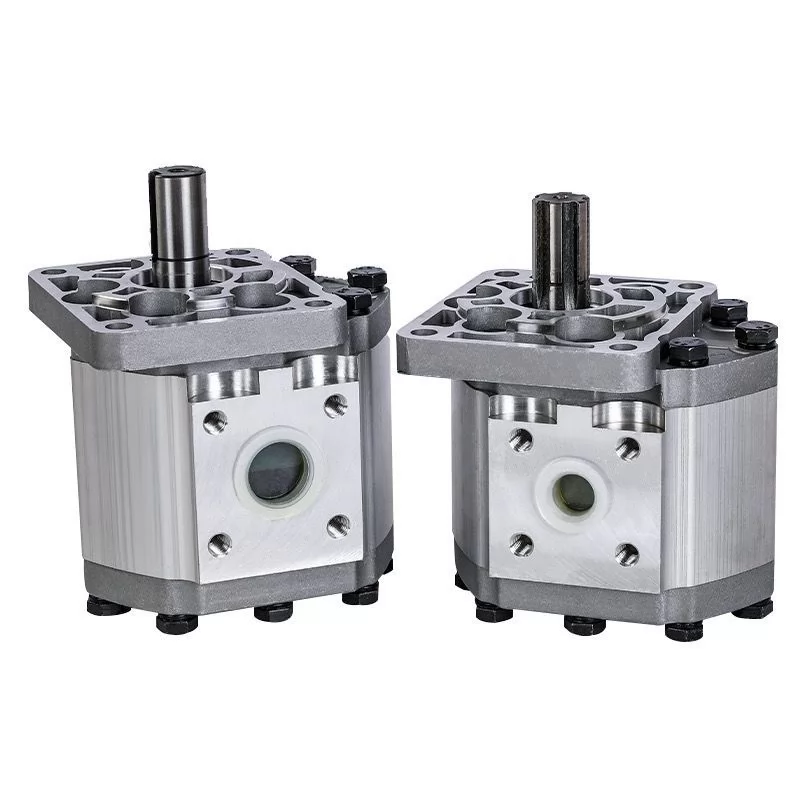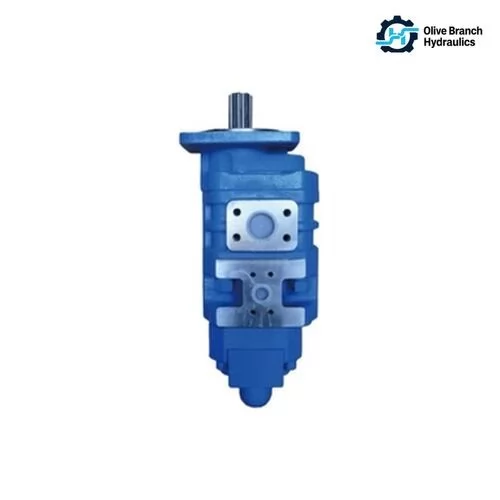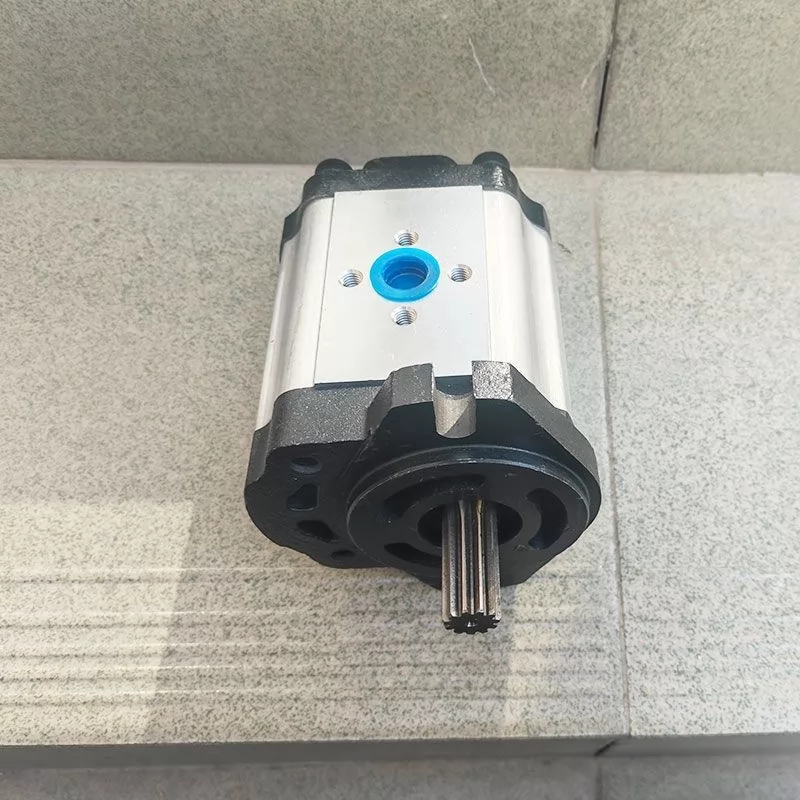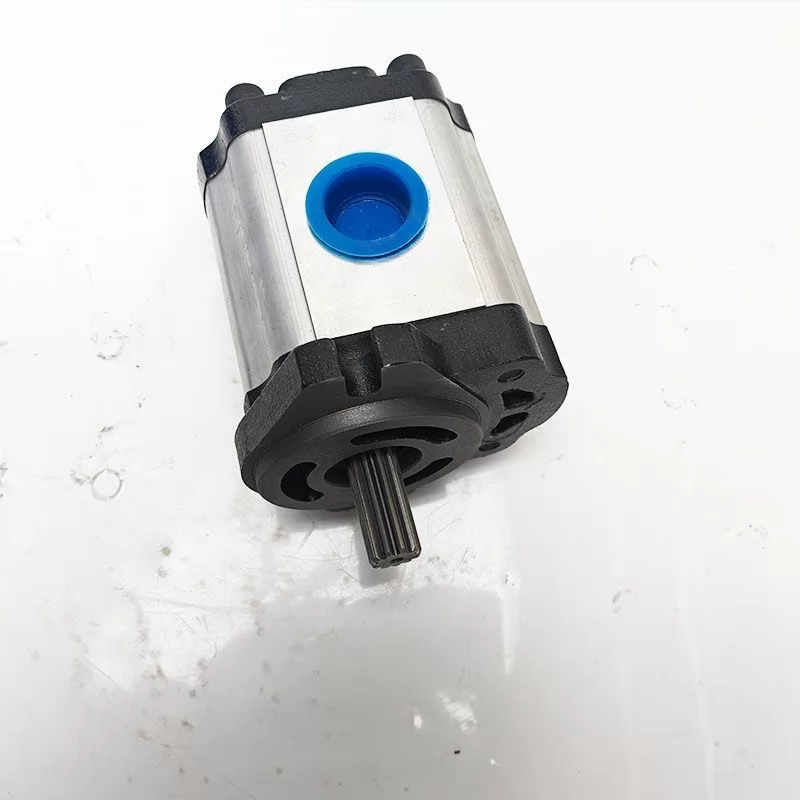
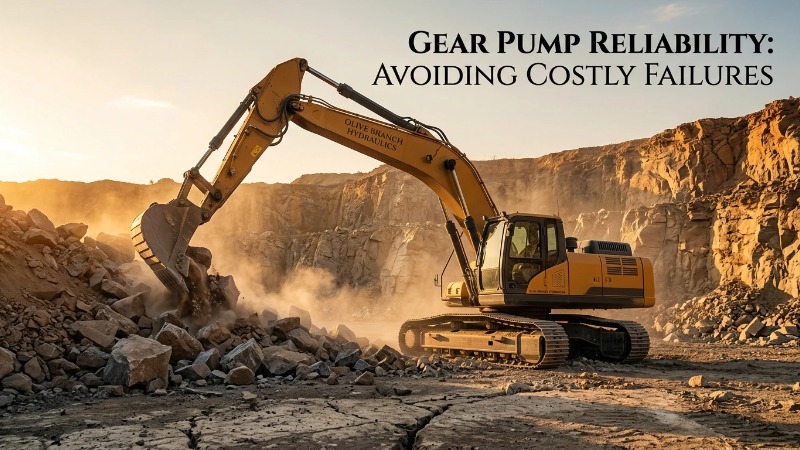
A cracked pump housing on a 40-ton excavator in a Saudi quarry doesn't announce itself with a warning light — it announces itself with a puddle of ISO 46 fluid and a foreman on the phone demanding to know why the replacement unit is still in a container off Jebel Ali. That single failure, on a machine billing at $2,400 per operating day, costs more than an entire pallet of correctly-specified pumps. This guide gives procurement teams a repeatable framework to shortlist, audit, and qualify Chinese hydraulic gear pump suppliers — so the next PO is a routine reorder, not an incident report.
Key Takeaways
- Reliability is measurable: dimensional consistency batch-to-batch, MTBF under rated duty, on-time delivery, and post-sale technical response — not marketing claims.
- Four non-negotiables: verified in-house manufacturing, ISO 9001 with traceable test records, 100% pre-shipment testing, and documented tolerance control.
- Certifications that matter: ISO 9001 (baseline), CE (for EU integration), and third-party test reports from SGS or TÜV.
- TCO beats unit price: a 35% cheaper pump with a 5% warranty return rate is more expensive over three years than a vetted supplier.
- The #1 sourcing mistake: skipping the factory audit and trusting glossy PDFs.
Why the Manufacturer Matters More Than the Spec Sheet
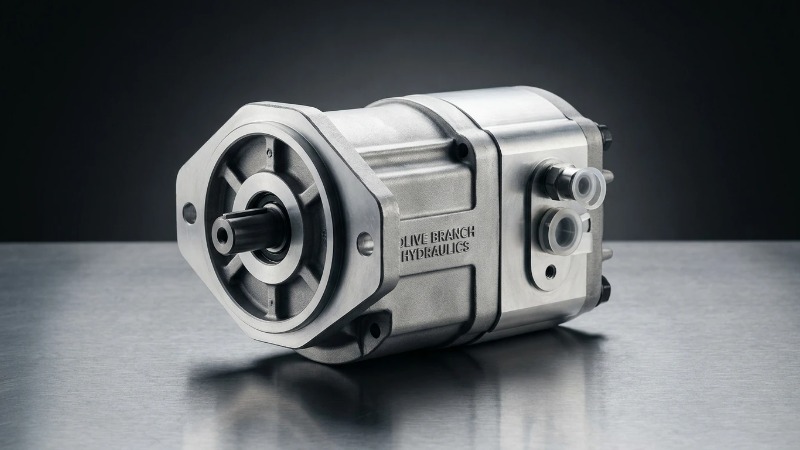
Two pumps with identical displacement, pressure rating, and mounting flange can behave completely differently in the field. The gap is not in the spec sheet — it's in the machining tolerances, the metallurgy of the gears, and whether every unit was flow-tested or only one in fifty was sampled.
By the end of this article, you will have a defensible framework to score any supplier, a workflow to run from longlist to pilot order, and a TCO lens to justify the decision to your CFO.
The True Cost of a Wrong Supplier Choice
A leaking pump doesn't just cost the price of a replacement. It triggers international RMA logistics (often $200–$400 per unit in freight and duties alone), warranty labor at the end customer's site, line stoppage penalties on OEM contracts, and — the hardest cost to recover — reputational damage when your branded machine strands a customer in the field.
For a mid-size OEM shipping 5,000 machines per year, a 3% pump failure rate translates to 150 field incidents. At $1,500 average remediation cost, that's $225,000 annually — more than the entire pump procurement budget for many buyers.
What "Reliable" Actually Means in Hydraulic Sourcing
Strip away the marketing language and reliability breaks down into four measurable dimensions:
- Dimensional consistency: gear-to-housing clearance variance under ±5 microns across a production batch.
- MTBF at rated duty: documented mean time between failures at the pump's rated pressure and RPM, not laboratory idle conditions.
- On-time delivery: ≥95% of POs shipped within the confirmed window over a rolling 12-month period.
- Technical response time: substantive engineering answers — not sales pleasantries — within 24 hours of a technical query.
Understanding the Chinese Gear Pump Landscape
Before shortlisting, understand what you're actually looking at. The Chinese hydraulic supply base is stratified, and comparing across tiers without knowing it wastes weeks of RFQ cycles.
Manufacturers vs. Trading Companies vs. Assemblers
You will encounter three business models, and each has legitimate use cases:
- True manufacturers: own the CNC machining, honing, gear cutting, heat treatment (in-house or tightly controlled outsourced), and assembly. They control tolerances and can genuinely customize.
- Assemblers: buy machined components from sub-suppliers and assemble/test in-house. Quality can be good if their incoming QC is disciplined, but they cannot change fundamental geometry quickly.
- Trading companies: no production facility. Useful for small, mixed-SKU orders where consolidation matters, but a poor choice for OEM programs or custom designs.
The tell during due diligence: ask for a live video walkthrough of the machining floor and request to see the specific CNC machine cutting your pump housing. Trading companies deflect; manufacturers just point the camera.
Common Gear Pump Families Produced in China
The dominant series you'll see quoted include HGP (Taiwan-origin design, widely produced in China for mobile hydraulics), CBK and CBT (compact aluminum-body pumps for agricultural and small industrial power packs), CBHZ and CB-FC (heavy-duty cast iron for construction machinery), JHP and CBGJ (high-pressure industrial applications), and K3V (piston pump family, often produced alongside gear pump lines for excavator OEMs).
Cast Iron vs. Aluminum Body Selection
Aluminum housings (CBK, CBT families) win on weight and cost for pressures up to ~210 bar and light-duty cycles — mobile equipment, small tractors, packaging machinery. Cast iron (CBHZ, CBGJ) is the correct choice above 250 bar continuous, in corrosive or high-vibration environments, and where the pump will see sustained duty cycles beyond 60% loading.
The 7-Criteria Framework for Vetting a Supplier
This is the audit spine. Apply it to every candidate on your shortlist and score them consistently.
1. Verified Manufacturing Capability
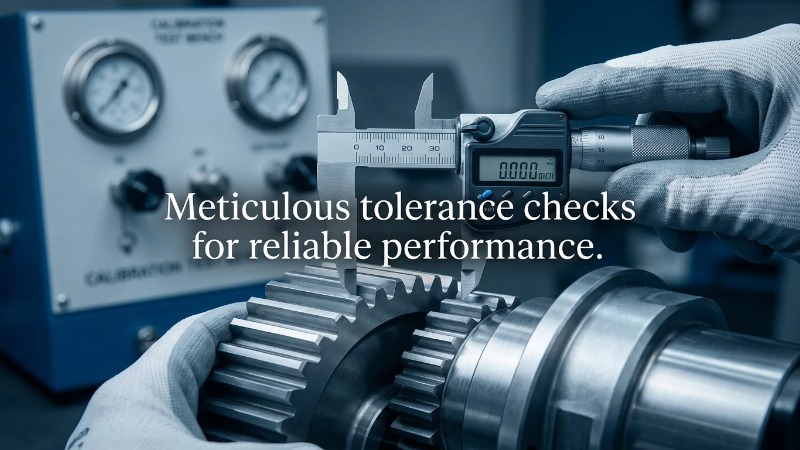
What to look for on-site or on video: a CNC machining center count that matches claimed capacity (a factory producing 20,000 pumps/month cannot do it on six machines), dedicated honing and boring lines for pump bores, in-house or tightly-audited heat treatment, and automated assembly with poka-yoke fixtures.
Red flags: workshops shared with unrelated products, backdrop photos that don't match satellite imagery of the claimed address, and refusal to show the machining floor in real time.
2. Certifications That Actually Signal Quality
| Certification | What It Proves | Buyer Priority |
|---|---|---|
| ISO 9001 | Documented quality management system | Mandatory baseline |
| CE Marking | EU market compliance for machinery integration | Required for EU shipments |
| ISO 14001 | Environmental management | Preferred, not blocking |
| Third-party test reports (SGS, TÜV) | Independent performance verification | Strong differentiator |
| Named OEM client audits (Caterpillar, Bosch tier) | Proven OEM discipline | Elite tier |
Verify ISO 9001 certificates against the issuing body's online registry — counterfeit certificates are the most common paperwork issue in the market. If the certificate lists IAF-accredited bodies (UKAS, ANAB, CNAS), cross-checking takes about five minutes.
3. Tolerances, Metrology, and Batch Consistency
This is where an OEM gear pump manufacturer earns or loses your trust. Ask for the tolerance specification on gear-to-housing radial clearance (typically 15–35 microns depending on displacement class), surface finish requirements on the bore (Ra ≤ 0.4 µm for pressure-critical zones), and gear face flatness.
Then ask how variance is controlled: is there SPC (statistical process control) on the CNC lines? Are CMM (coordinate measuring machine) reports generated per batch? A serious supplier will send you an anonymized sample report within a day.
4. In-House Testing Infrastructure
A credible testing center includes pressure benches rated at least 1.5× the pump's maximum working pressure, flow meters calibrated to traceable national standards, leak detection under both hot (60–80°C) and cold-start conditions, and material spectrometers verifying incoming raw material (particularly the gear steel and housing casting).
The 100% Pre-Shipment Inspection Standard
Batch sampling is inadequate for hydraulic components because failure modes cluster around individual machining defects, not systemic ones. A full-lot test protocol should include: flow rate at rated RPM (typically 1500 or 1800 RPM), volumetric efficiency at rated pressure, internal leakage measurement, external leak check under sustained pressure, and noise level in dB at one meter. Every serial number should have a traceable test record — no exceptions.
5. OEM & Customization Capability
Real customization means changing port configurations between SAE, BSP, and metric standards; producing splined, keyed, or tapered shaft variants; adjusting displacement within a housing family; and modifying pressure ratings through gear material and clearance changes. Rebadging is not customization — if the supplier's "custom" option is just your logo laser-etched on a stock unit, you're paying a manufacturer for a trading company's service.
6. Compatibility & Cross-Reference Engineering
For aftermarket buyers, the ability to produce dimensionally and functionally interchangeable equivalents for Rexroth, Parker, Casappa, Kayaba, and similar reference brands — without IP infringement — is decisive. A capable china hydraulic gear pump factory will maintain a cross-reference database and be able to quote against a competitor's part number within 48 hours.
7. Commercial Terms, Lead Time, and MOQ Flexibility
Benchmark expectations: 30% deposit / 70% against B/L copy is standard; L/C at sight is reasonable above $50,000. Lead times: 15–25 days for stock series (CBK, CBT, HGP), 40–60 days for genuine custom designs including tooling. MOQ should scale with customization depth — a supplier demanding 500 units for a stock CBT pump is either overbooked or not interested in your account.
Pros & Cons: Sourcing Gear Pumps from China
| Advantages | Trade-offs |
|---|---|
| 30–60% unit cost savings vs. European brands | Longer lead times for sea freight (25–40 days to EU/US) |
| High OEM/customization flexibility at low MOQs | Time-zone lag on technical support |
| Mature supply base for standard series (CBK, HGP, CBT) | Quality variance across tiers — audit is non-negotiable |
| Direct-from-factory pricing bypasses distributors | IP protection requires clear NDA and tooling ownership terms |
| Established export logistics ecosystem | Currency and tariff exposure |
Step-by-Step: Executing Your Supplier Selection
Step 1 — Build a Longlist of 8–12 Candidates
Sourcing channels worth working: Alibaba Verified Supplier tier (filter by years of export experience and transaction volume), Made-in-China Audited status, industry trade shows (bauma Munich, bauma China, PTC Asia), and — most valuable — referrals from non-competing equipment OEMs already sourcing from China.
Step 2 — RFQ with Engineered Specifications
A tight RFQ eliminates 60% of the noise. Include: displacement in cc/rev, rated and peak pressure in bar, RPM operating range, port type and thread standard, shaft type and dimensions, mounting flange standard (SAE A/B/C/D), rotation direction viewed from shaft end, working fluid and viscosity range, and end-application context. Ambiguity in the RFQ invites the supplier to quote against the cheapest interpretation.
Step 3 — Sample Order and Bench Testing
Order 3–5 samples per candidate. Test independently — either through a third-party lab (SGS, Intertek) or on your own dyno. Run volumetric efficiency at 80% and 100% of rated pressure, cold-start behavior at –10°C if the application demands it, and 500-hour endurance if your timeline permits.
Step 4 — Factory Audit (On-Site or Virtual)
Use the 7-criteria framework as your checklist. For a first engagement, a live-video walkthrough conducted by a third-party auditor (QIMA, Bureau Veritas, TÜV Rheinland) is now an accepted substitute for a personal visit, at roughly $500–$1,200 per audit.
Step 5 — Pilot Production Order
Structure the pilot at 10–20% of your projected annual volume, with staged payment tied to pre-shipment inspection milestones. A pilot at 5 units tells you nothing about batch consistency; a pilot at 500 units under normal production conditions does.
Step 6 — Contract, IP, and Tooling Ownership
Non-negotiable clauses: measurable quality thresholds with penalty framework (e.g., >2% defect rate triggers rework at supplier cost), tooling ownership if you paid for custom molds or fixtures, exclusivity terms if the design is proprietary, and warranty scope including who pays outbound freight on RMA units.
Total Cost of Ownership: Looking Beyond Unit Price
TCO Components Often Overlooked
Freight and duties (5–15% depending on destination and HS code interpretation), warranty claim handling labor, spare parts inventory carrying cost, and the compounding cost of one field failure per 1,000 units shipped — which typically consumes 3–8 hours of engineering and customer service time per incident.
Sample TCO Comparison
| Cost Element | Low-Cost Supplier | Vetted Mid-Tier Supplier |
|---|---|---|
| Unit price (indexed) | 100 | 135 |
| Warranty return rate | 4–7% | <1% |
| Field failure remediation cost | High | Low |
| Downtime risk on end customer | Significant | Minimal |
| Indexed 3-year TCO | ~145 | ~140 |
Illustrative ranges based on typical industry patterns, not a specific published study. Validate against your own return and warranty data before presenting to stakeholders.
Common Mistakes Buyers Make
Mistake 1: Choosing on Unit Price Alone
The cheapest quote wins the PO and loses the account within two production cycles. Price is the easiest variable to compare and the least predictive of long-term cost.
Mistake 2: Skipping the Factory Audit
Glossy PDFs and website photography are cheap to produce. A $800 third-party audit is the highest-ROI spend in the entire procurement process.
Mistake 3: Vague Technical Specifications on the RFQ
Ambiguous specs let the supplier substitute cheaper gear steel, looser clearances, and unrated seals — and technically deliver "to spec."
Mistake 4: No Written Quality Agreement
Verbal commitments about tolerances, testing scope, and defect rates do not survive the first dispute. Get it into the contract or assume it doesn't exist.
Mistake 5: Ignoring After-Sales Responsiveness
Test it before you sign. Send a technical question at 9 AM your local time and observe when — and how substantively — it's answered. If the pre-sale response is slow, the post-sale response will be worse.
Red Flags to Walk Away From
- Refusal or repeated postponement of a live video factory tour.
- Inability to provide traceable test reports for a specific serial number.
- Evasive answers when asked for tolerance specifications in microns.
- MOQ demands that don't match claimed monthly capacity.
- Marketing photos that appear on multiple competing supplier websites (reverse image search takes 30 seconds).
- ISO 9001 certificate from an unaccredited certification body.
Frequently Asked Questions
How long does it take to qualify a new gear pump manufacturer in China?
Realistic timeline is 8–16 weeks from longlist to approved pilot production: two weeks for RFQ and shortlist, three to four weeks for sampling and independent testing, two weeks for factory audit scheduling and execution, and four to six weeks for the pilot production run and post-shipment evaluation.
What's the minimum order quantity I should expect?
For standard series like CBK, CBT, and HGP, MOQs typically start at 50–100 units per model. For genuine OEM customization involving new tooling, expect 200–500 units minimum to amortize tooling cost, though established relationships can negotiate lower.
Can Chinese manufacturers meet EU CE and REACH requirements?
Yes, reputable factories routinely ship CE-marked pumps into the EU. Confirm the CE documentation depth — some suppliers provide only self-declaration without a supporting technical file, which will not survive a customs or notified-body audit. Budget additional lead time when full technical files and third-party test reports are required.
How do I protect my custom pump design from being resold?
Three layers: a bilingual NDA signed before sharing drawings (enforceable in Chinese courts if properly structured), explicit tooling ownership clauses stating that molds and fixtures paid for by you cannot be used for other customers, and exclusivity terms with defined geographic or channel scope. Practical enforcement is imperfect, so also fragment your supply — keep critical geometry details with a trusted supplier and avoid sending complete assembly drawings to unvetted candidates.
What warranty terms are standard?
Industry norms for hydraulic gear pumps sit at 12–18 months from shipment date or a defined operating-hour ceiling (commonly 2,000 hours), whichever comes first. Negotiable elements include extended coverage for OEM programs, freight responsibility on RMA units, and whether replacement or credit is the default remedy.
Should I use a sourcing agent or work directly with the factory?
Direct engagement makes sense when annual order value exceeds roughly $150,000, technical complexity is high, and you have internal engineering bandwidth to manage the relationship. A sourcing agent is worth their 3–8% margin when you're consolidating across many SKUs, order volumes are modest, or your team lacks Mandarin capability and China time-zone availability.
How do I verify a supplier's ISO 9001 certificate is genuine?
Identify the certification body listed on the certificate, confirm it's accredited by an IAF signatory (CNAS, UKAS, ANAB, etc.), then use the certifying body's online registry to look up the certificate number. The lookup takes minutes and catches the majority of counterfeit documents circulating in the market.
Conclusion: Turning a Framework into a Purchase Order
You now have the complete toolkit: a working definition of reliability across four measurable dimensions, a 7-criteria vetting framework, a 6-step selection workflow from longlist to signed contract, and a TCO lens that reframes the decision for finance stakeholders. The buyers who scale confidently in this market are not the sharpest negotiators — they're the ones who run the audit discipline every time, on every candidate, without shortcuts.
Your Next Step
If you're building or refreshing your shortlist, take the low-risk first step: request a factory audit package from Olive Branch Hydraulics. It includes our ISO 9001 documentation, recent third-party test reports, tolerance and metrology specifications for the pump family you're evaluating, and cross-reference support against your existing bill of materials. If you'd prefer to start with hardware, we can ship sample units from stock series (HGP, CBK, CBHZ, CB-FC, JHP, CBGJ, CBT) for independent bench testing — or scope a custom OEM program with defined tooling ownership from day one.
Apply the framework this article just handed you. We'll be ready when your RFQ lands.