
A hydraulic pump operating above 85 dB doesn't just violate workplace safety standards — it signals mechanical inefficiency that's costing you thousands in energy waste and premature component failure. Every decibel of excess noise represents energy that should be moving fluid, not shaking pipes and rattling enclosures. Here's the systematic approach to silencing it and reclaiming that lost performance.
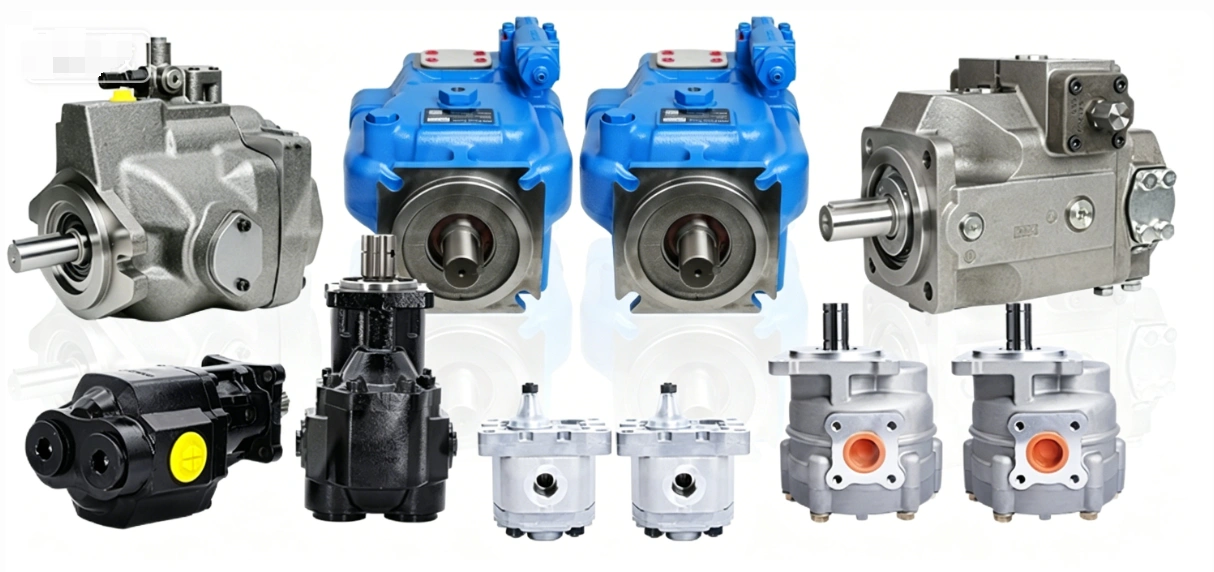
Understanding Hydraulic Pump Noise Sources
Before applying any hydraulic pump noise reduction strategy, you need to understand where the sound originates. Noise in hydraulic systems follows three distinct transmission paths: mechanical, fluid-borne, and airborne.
Mechanical Noise Origins
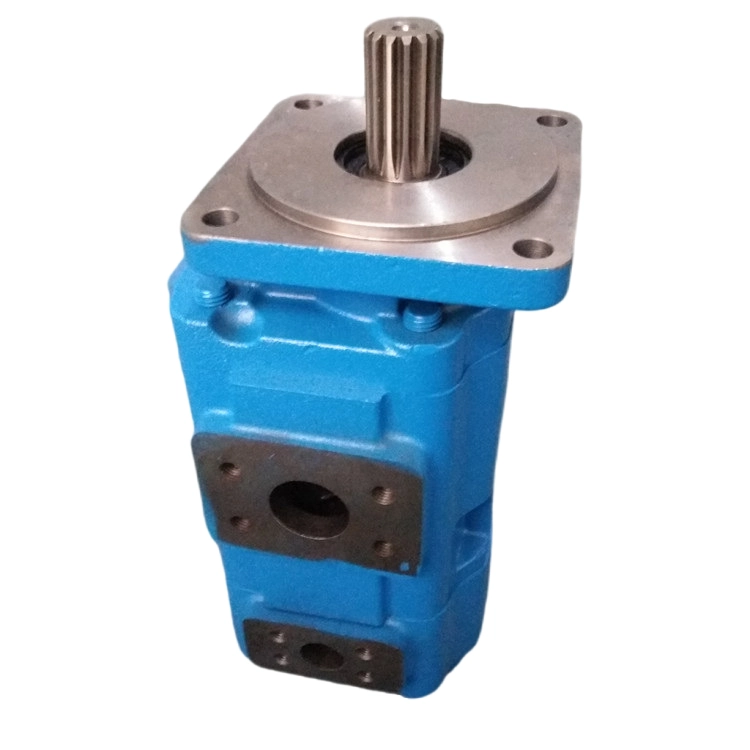
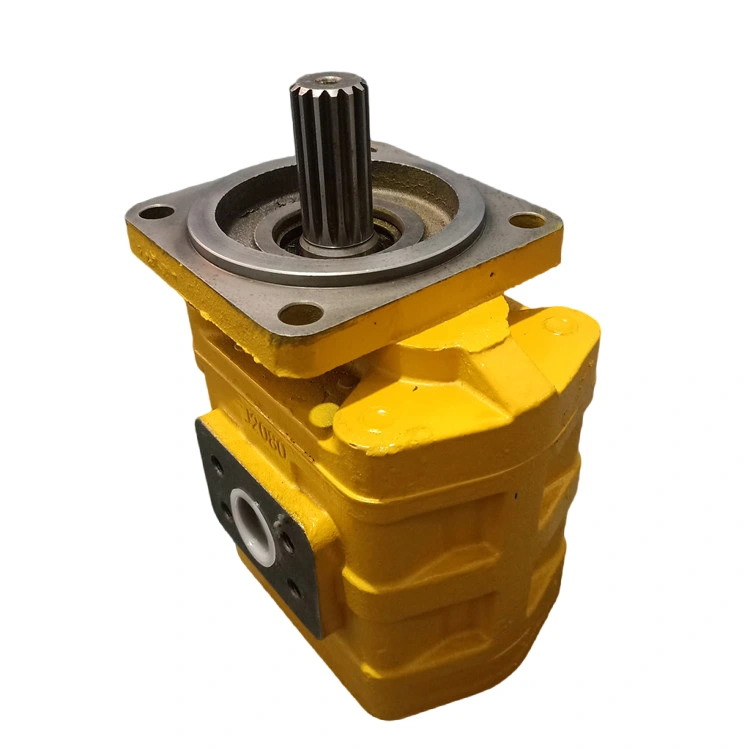
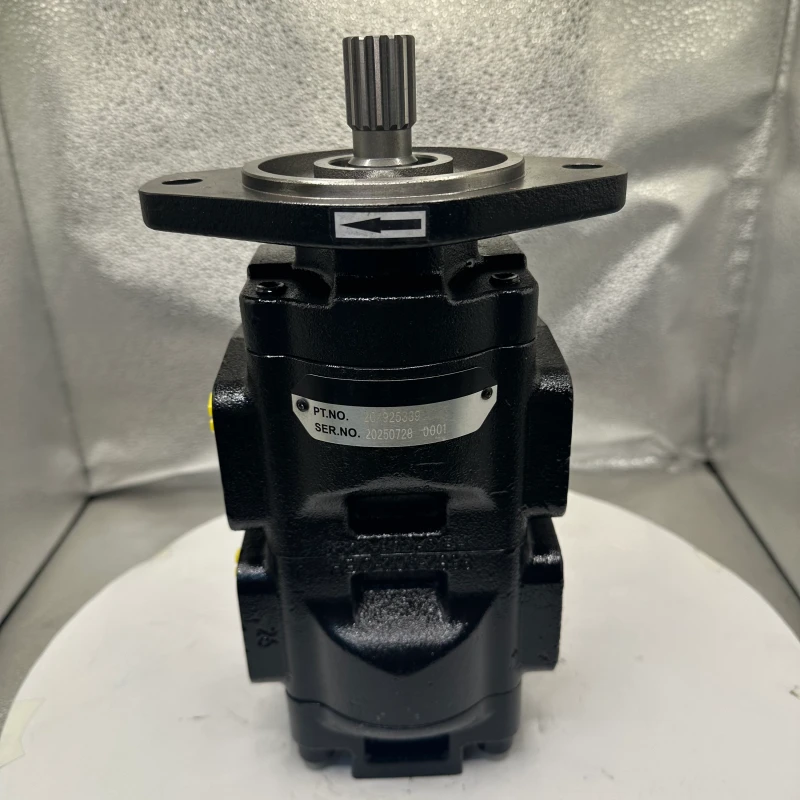
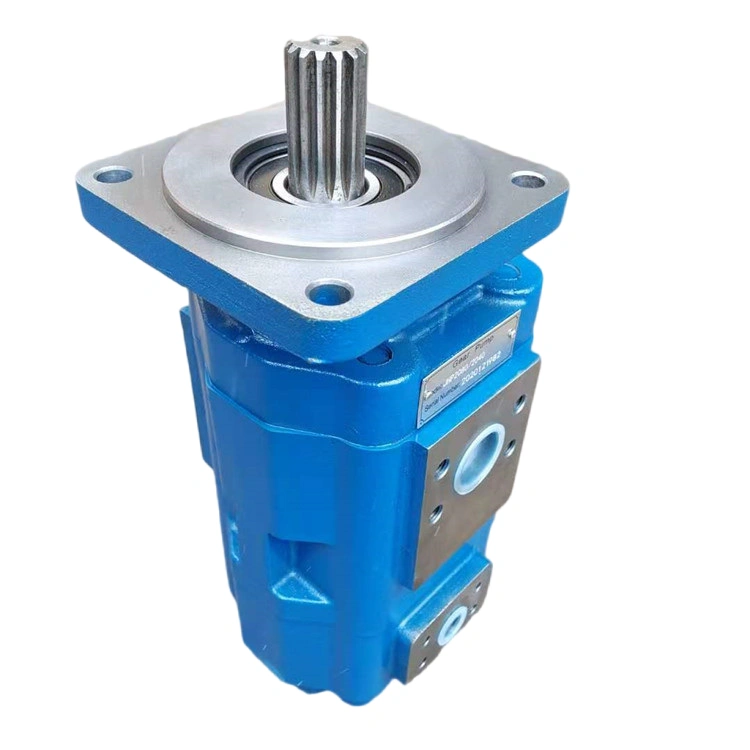
Gear meshing is the most recognizable mechanical noise source in hydraulic pumps. As gear teeth engage and disengage, they create periodic impacts that radiate directly through the pump housing as structure-borne vibration.
Bearing wear introduces broadband noise that increases progressively as clearances grow. Worn bearings allow shaft whip and orbital movement, generating frequencies that weren't present when the pump was new.
Shaft misalignment creates cyclical loading that produces noise at rotational frequency and its harmonics. Even 0.05 mm of misalignment can increase noise output by 3–6 dB while accelerating seal and bearing degradation.
Cavitation occurs when inlet pressure drops below the fluid's vapor pressure, forming vapor bubbles that collapse violently against metal surfaces. This produces a distinctive crackling or rattling sound and causes rapid erosion of pump internals.
Fluid-Borne Noise and Pressure Pulsation Control
Pressure ripple is generated every time a pump displacement chamber transitions between inlet and outlet ports. These pulsations travel through hydraulic lines at the speed of sound in the fluid — approximately 1,400 m/s in mineral oil.
As pressure waves encounter restrictions, bends, and fittings, they excite pipe walls into vibration. This structure-borne energy then radiates as airborne noise, often far from the pump itself, making pressure pulsation control essential for system-wide quiet operation.
The frequency of fluid-borne noise is directly tied to pump speed and the number of displacement elements. A nine-piston pump running at 1,500 RPM produces a fundamental pulsation frequency of 225 Hz, with harmonics extending well into the audible range.
Noise Level Benchmarks by Pump Type
Different pump architectures produce fundamentally different noise signatures. The table below provides reference values for hydraulic system vibration dampening planning and compliance assessment.
| Pump Type | Typical Noise Level (dB) | Acceptable Threshold (dB) | Primary Noise Cause |
|---|---|---|---|
| Gear Pump | 80–95 | 78 | Gear meshing |
| Vane Pump | 70–85 | 72 | Vane slap |
| Piston Pump | 75–90 | 75 | Valve plate transition |
| Screw Pump | 65–75 | 68 | Fluid compression |
Gear pumps consistently produce the highest noise levels due to the aggressive meshing action of their displacement elements. Screw pumps offer the quietest operation but are limited in pressure capability.
Hydraulic Pump Noise Reduction Methods
Effective noise control follows a hierarchy: reduce noise at the source first, then address the transmission path, and finally treat the receiver environment. This approach delivers the best results per dollar invested.
Source-Level Noise Control
Selecting a pump with inherently low noise characteristics is the single most impactful decision. Modern helical gear pumps, for example, produce 6–10 dB less noise than their spur gear equivalents due to gradual tooth engagement.
Operating speed directly correlates with noise output. Reducing pump speed by 20% while increasing displacement to maintain flow can lower noise by 4–7 dB without sacrificing system performance.
Inlet conditions are critical for cavitation prevention. Maintain inlet line velocities below 1.2 m/s, keep suction filters clean, and position the reservoir above the pump inlet whenever possible. A starved pump is always a loud pump.
Hydraulic System Vibration Dampening Techniques
Flexible couplings between the motor and pump absorb misalignment-induced vibration before it enters the hydraulic circuit. Elastomeric jaw couplings are the standard choice, providing both angular and parallel misalignment compensation.
Anti-vibration mounts isolate the pump and motor assembly from the mounting structure. Select mounts with a natural frequency at least 3x lower than the pump's fundamental excitation frequency to achieve effective isolation.
Bladder-type accumulators installed near the pump outlet act as pulsation dampeners, absorbing pressure spikes before they propagate through the system. Proper pre-charge pressure — typically 60–80% of working pressure — is essential for effective dampening.
Flexible hose sections between the pump and rigid piping break the mechanical connection that transmits vibration. A minimum length of 600 mm is recommended for effective decoupling at typical pump frequencies.
Fluid Power Acoustic Treatment Solutions
Acoustic enclosures provide the highest single-intervention noise reduction, typically 15–25 dB depending on construction. Use minimum 2 mm steel panels lined with 50 mm acoustic foam, ensuring adequate ventilation to prevent overheating.
Barrier walls positioned between the pump and operator areas reduce noise through mass and absorption. A single-layer barrier provides approximately 10 dB reduction; double-wall construction with an air gap achieves 15–20 dB.
Acoustic wrapping applied directly to hydraulic lines addresses pipe-radiated noise at the source. Mass-loaded vinyl with a foam decoupling layer reduces line-radiated noise by 8–12 dB across the frequency spectrum.
Reservoir design modifications — including internal baffles, thicker walls, and constrained-layer damping panels — reduce the tank's role as a noise amplifier. The reservoir often acts as a large radiating surface for fluid-borne pulsation energy.
Hydraulic Pump Maintenance Tips for Noise Prevention
Scheduled fluid analysis every 500 operating hours catches contamination and degradation before they cause noise-generating wear. Monitor particle counts, water content, and viscosity as primary indicators.
Replace suction filters at 75% of their rated dirt-holding capacity, not at bypass. A partially clogged inlet filter creates the pressure drop conditions that trigger cavitation noise.
Coupling alignment checks should occur at every scheduled shutdown. Thermal growth during operation shifts alignment from cold-set values, so measure alignment at operating temperature when possible.
Bearing condition monitoring using vibration analysis detects degradation 4–8 weeks before noise becomes obvious. Track overall vibration velocity and watch for emerging peaks at bearing defect frequencies.
Noise Reduction Solutions Comparison
The following table ranks common interventions by effectiveness, cost, and practicality to help you prioritize your hydraulic pump noise reduction investment.
| Method | Noise Reduction (dB) | Cost Level | Implementation Difficulty | Longevity |
|---|---|---|---|---|
| Pulsation dampener | 8–15 | Medium | Moderate | 5–10 years |
| Acoustic enclosure | 15–25 | High | Low | 10+ years |
| Flexible hose sections | 5–10 | Low | Low | 2–4 years |
| Anti-vibration mounts | 6–12 | Low | Low | 5–8 years |
| Pump replacement (low-noise) | 10–20 | High | High | 10+ years |
| Line clamp optimization | 3–6 | Low | Low | Indefinite |
| Accumulator installation | 8–14 | Medium | Moderate | 7–10 years |
For most facilities, the optimal starting point combines anti-vibration mounts, flexible hose sections, and line clamp optimization. These three low-cost interventions typically deliver 14–28 dB combined reduction before any major capital expenditure.
Step-by-Step Noise Diagnosis Process
Systematic diagnosis prevents wasted effort on interventions that don't address the actual dominant noise source. Follow this process before committing to any solution.
Identifying the Dominant Noise Source
Use isolation testing to pinpoint the primary noise contributor. Disconnect the hydraulic lines and run the pump unloaded — if noise persists, the source is mechanical (bearings, coupling, or motor).
Reconnect lines and pressurize the system while blocking individual circuit branches. A significant noise change when blocking a specific branch indicates that branch contains the primary radiation path.
Place your hand (with appropriate protection) on various components while the system runs. Vibrating surfaces that feel most active are likely the dominant radiators. A mechanic's stethoscope provides more precise localization.
Measuring and Documenting Baseline Noise
Position the measurement microphone at 1 meter from the pump at operator head height, per ISO 3744 guidelines. Take readings at four positions around the pump (0°, 90°, 180°, 270°) and average the results.
Frequency spectrum analysis reveals more than overall dB readings. A peak at pump fundamental frequency indicates displacement-related pulsation; broadband elevation suggests cavitation or turbulent flow.
Document operating conditions during every measurement: system pressure, flow rate, fluid temperature, and pump speed. Noise characteristics change significantly with operating parameters, and undocumented measurements are unrepeatable.
Prioritizing Fixes by Cost-Effectiveness
Calculate the dB-reduction-per-dollar ratio for each candidate intervention using the comparison table above. Low-cost, low-difficulty solutions should always be implemented first regardless of their individual dB reduction.
Stack interventions strategically. Noise reduction is logarithmic — the first 10 dB reduction is far more perceptible than the second 10 dB. Target the dominant source first for maximum perceived improvement.
Consider implementation downtime as a cost factor. Solutions that can be installed during normal maintenance windows carry lower true cost than those requiring dedicated shutdowns.
Preventive Design Strategies for Quiet Hydraulic Systems
The most cost-effective noise control happens at the design stage. Retrofitting quiet operation costs 3–5x more than designing it in from the start.
System Layout and Line Routing
Minimize sharp bends in hydraulic lines — use bend radii of at least 3x the tube outer diameter. Sharp bends create turbulence and reflect pressure waves, amplifying both fluid-borne and airborne noise.
Secure lines at intervals no greater than 1.5 meters using cushioned clamps. Unsupported line spans vibrate at their natural frequency when excited by pressure pulsation, acting as noise radiators.
Separate the pump and power unit from operator zones by maximum practical distance. Every doubling of distance reduces noise by approximately 6 dB in free-field conditions, making layout the cheapest form of fluid power acoustic treatment.
Fluid Selection and Condition Management
Match fluid viscosity to the pump manufacturer's optimal range at operating temperature. Viscosity that's too low increases internal leakage and metal-to-metal contact noise; too high restricts inlet flow and promotes cavitation.
Prevent air entrainment by designing return lines to discharge below the reservoir fluid level and maintaining adequate dwell time for air separation. Entrained air compresses and expands with pressure changes, generating noise at every restriction.
Control fluid temperature within a 15°C operating band using appropriately sized coolers. Temperature swings cause viscosity variation that shifts the pump in and out of its optimal acoustic operating window.
Frequently Asked Questions (FAQ)
What is the most common cause of hydraulic pump noise?
Cavitation and air ingestion account for the majority of sudden noise increases in hydraulic pumps. These conditions are typically caused by restricted inlet lines, clogged suction filters, or low fluid levels that allow air to enter the pump inlet. Addressing inlet conditions resolves the noise in approximately 60% of cases without any other intervention.
Can hydraulic pump noise indicate a failing component?
Yes — rising noise levels often precede bearing failure, gear wear, or seal degradation by several weeks. This makes noise monitoring a valuable predictive maintenance tool. A consistent 3 dB increase from baseline typically indicates a component has entered its degradation phase and should be scheduled for replacement during the next planned shutdown.
How much noise reduction is possible without replacing the pump?
Peripheral modifications including pulsation dampeners, anti-vibration mounts, flexible hose sections, and acoustic enclosures typically achieve 10–25 dB reduction when combined strategically. This is often sufficient to bring non-compliant systems within workplace safety standards without the capital expense and downtime of a full pump replacement.
Does hydraulic fluid type affect pump noise?
Directly and significantly. Incorrect viscosity increases internal leakage and metal contact, while degraded fluid with entrained air amplifies pressure pulsation noise throughout the entire circuit. Switching to the manufacturer-recommended viscosity grade and maintaining fluid cleanliness can reduce noise by 3–8 dB as a standalone measure.
How often should hydraulic systems be checked for noise issues?
Monthly sound level checks at consistent measurement points and quarterly frequency spectrum analysis are recommended as baseline hydraulic pump maintenance tips for noise management. Any increase of 3 dB or more from the documented baseline should trigger immediate inspection, as this represents a doubling of acoustic energy and signals a developing mechanical issue.