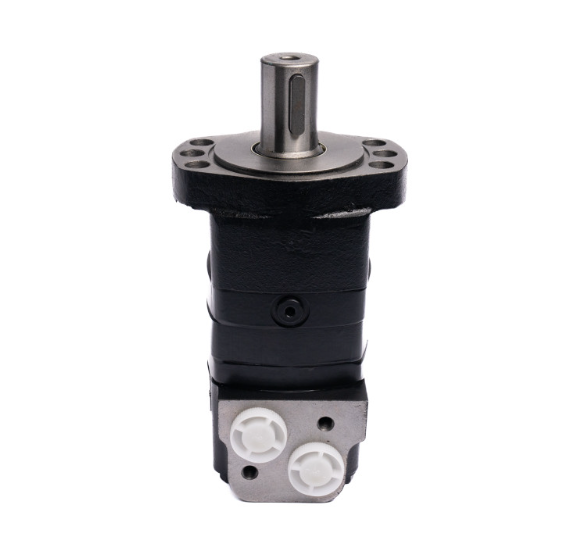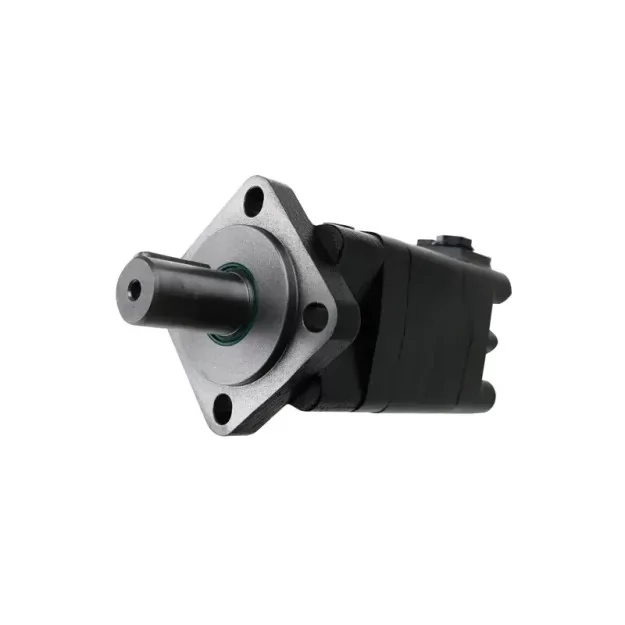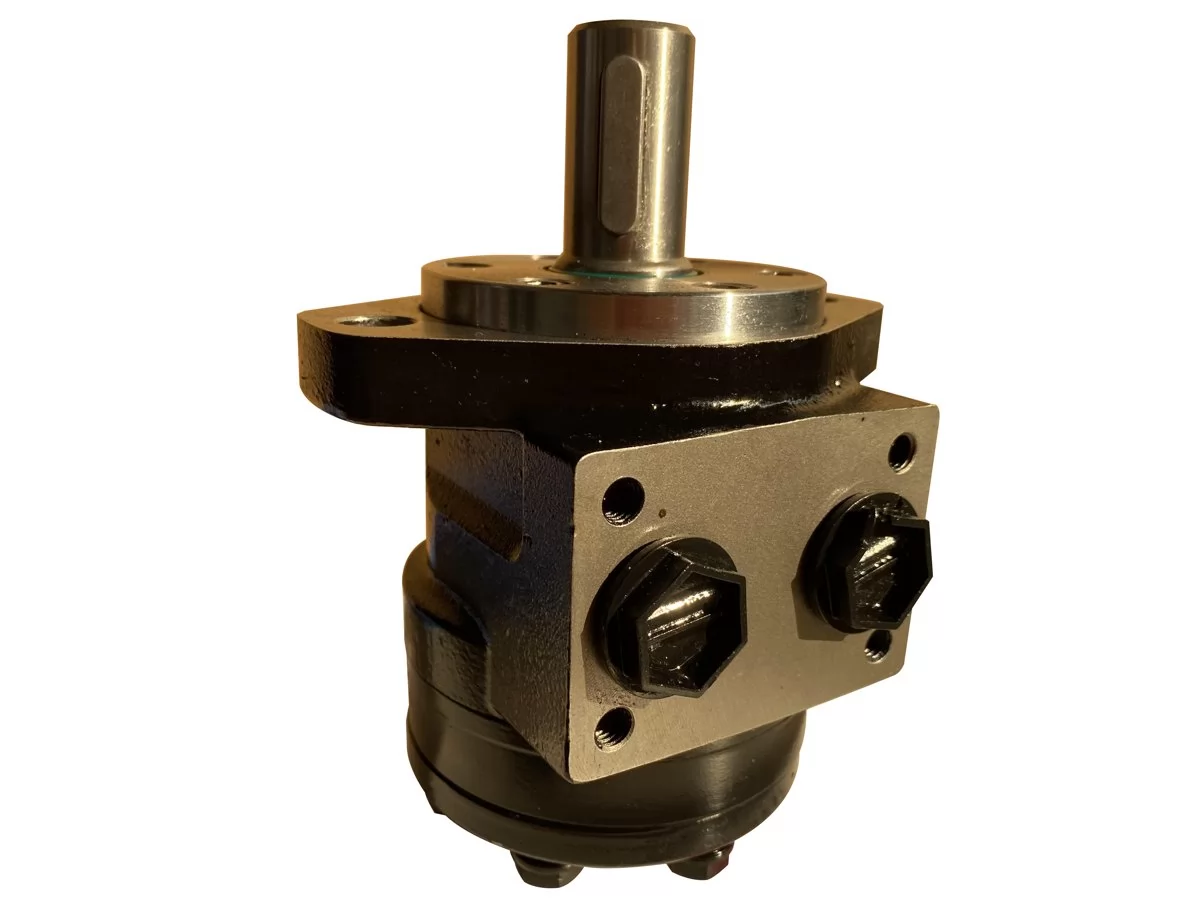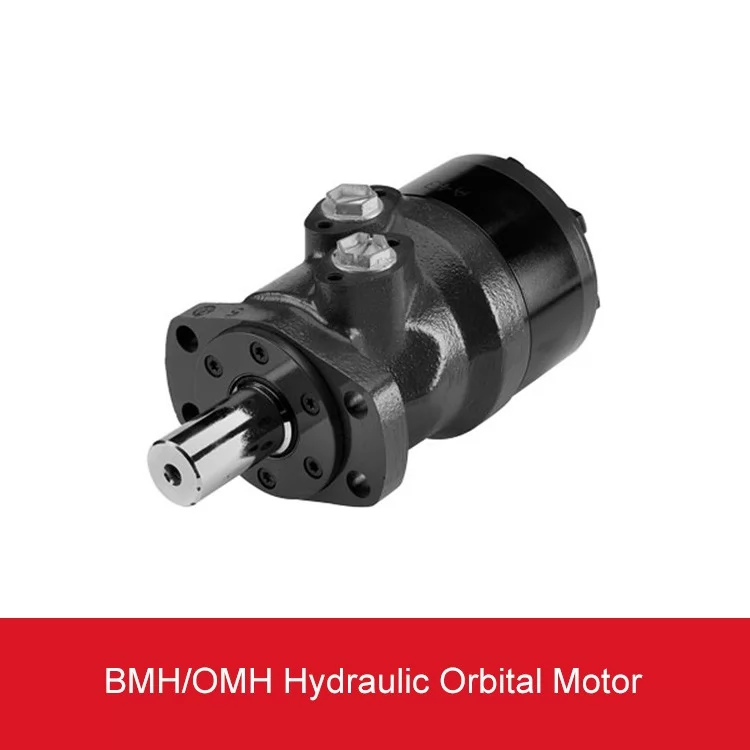

Engineers specifying compact hydraulic drives consistently return to the BM5 platform for one reason: it delivers high torque at low speed without the footprint of axial piston alternatives. This review breaks down the technical envelope, performance data, and procurement realities that matter when committing to the BM5 in serial production or aftermarket replacement.
Overview of the BM5 Hydraulic Motor
The BM5 is a low speed high torque motor built around a gerotor (geroler) displacement element, sized for the middle of the orbital motor market. It bridges the gap between smaller BMR units used on light mobile equipment and the heavier BMP and BMV families specified for harsher continuous-duty applications.
Its appeal lies in displacement density. A BM5 frame can deliver torque outputs that would otherwise require a vane or radial piston motor at two to three times the cost.
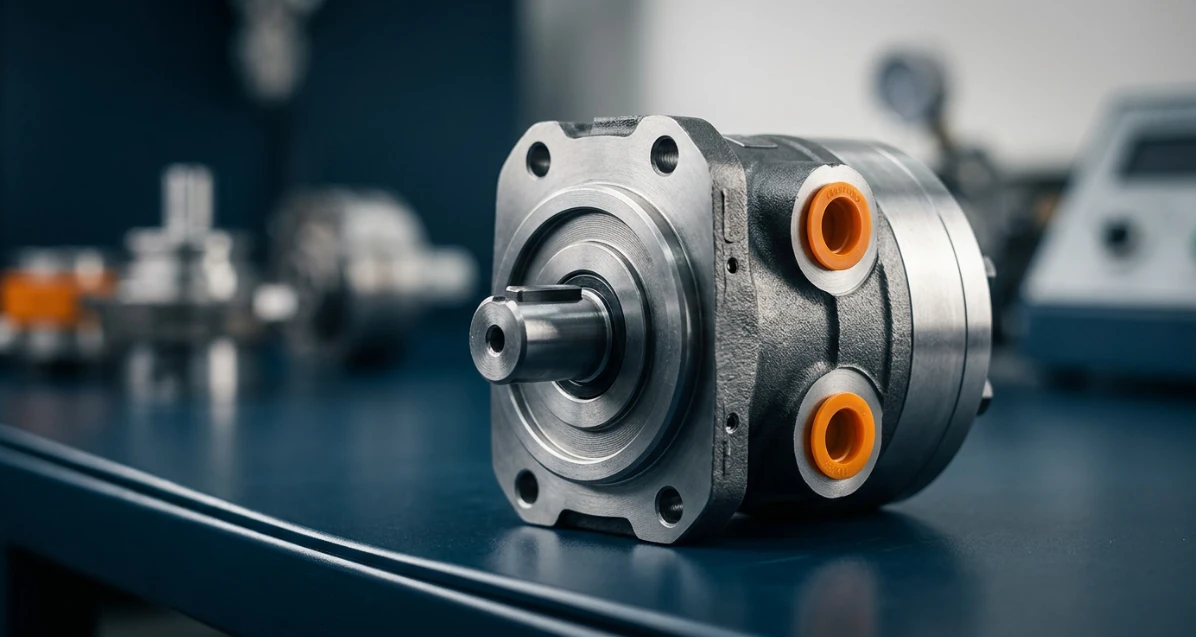
What Defines the BM5 Series
The BM5 uses a geroler ring with hardened rollers rather than a sliding gerotor, which reduces internal friction and improves volumetric efficiency at low rpm. Standard configurations include a 25 mm parallel keyed shaft, 4-bolt square flange, and G1/2 working ports with G1/4 case drain.
Within the orbital lineup, the BM5 sits directly above the BMR series in torque capacity but below the BMP series in pressure rating. This positioning makes it the default choice for medium-duty mobile and industrial drives.
Core Engineering Specifications
BM5 motors are typically offered in displacements from 50 cc/rev up to 490 cc/rev, with continuous pressure ratings of 140 bar and peak pressures reaching 200 bar on the smallest displacements. Mass ranges from roughly 7 kg on the 50 cc unit to 11 kg on the 490 cc variant.
Technical Specifications & Performance Data
The data below reflects published manufacturer envelopes for BM5-pattern motors compliant with the original Danfoss OMP geometry. Real-world performance varies with fluid temperature, contamination level, and load profile.
Displacement & Speed Range Table
| Displacement (cc/rev) | Max Continuous Speed (rpm) | Max Intermittent Speed (rpm) | Max Continuous Torque (N·m) | Max Continuous Pressure (bar) |
|---|---|---|---|---|
| 50 | 950 | 1150 | 96 | 140 |
| 80 | 750 | 930 | 153 | 140 |
| 100 | 600 | 750 | 192 | 140 |
| 160 | 475 | 600 | 305 | 140 |
| 200 | 375 | 465 | 380 | 140 |
| 250 | 300 | 375 | 465 | 140 |
| 315 | 240 | 300 | 545 | 125 |
| 400 | 190 | 240 | 610 | 110 |
| 490 | 155 | 195 | 680 | 100 |
Pressure & Torque Output Comparison
Continuous and intermittent ratings diverge meaningfully on smaller displacements, where the gerotor element can absorb pressure spikes without compromising sealing. On larger displacements, bearing loads dominate and the continuous pressure ceiling drops.
| Displacement (cc/rev) | Continuous Pressure (bar) | Intermittent Pressure (bar) | Peak Pressure (bar) | Peak Torque (N·m) |
|---|---|---|---|---|
| 80 | 140 | 175 | 200 | 220 |
| 160 | 140 | 175 | 200 | 440 |
| 250 | 140 | 175 | 190 | 635 |
| 400 | 110 | 140 | 160 | 790 |
Efficiency Curves & Volumetric Performance
Mechanical efficiency on a well-broken-in BM5 typically runs between 87% and 92% across the mid-band of its operating envelope. Below 50 rpm, mechanical efficiency drops to roughly 80% as static friction becomes a larger fraction of total torque demand.
Volumetric efficiency holds above 93% under nominal conditions but degrades sharply above 80°C fluid temperature or when contamination exceeds ISO 4406 19/17/14. Starting torque efficiency, often the most critical metric for conveyor and winch duty, sits at approximately 80% of theoretical.
BM5 vs. BMR Series: Head-to-Head Comparison
The most frequent cross-shopping question we encounter is whether the application warrants the larger BM5 frame or whether a BMR series hydraulic motor will suffice. The answer hinges on torque demand, side load, and installation envelope.
Dimensional & Mounting Differences
| Parameter | BM5 | BMR |
|---|---|---|
| Standard shaft diameter | 25 mm | 25 mm |
| Flange pattern | 4-bolt square, 82.5 mm pilot | 2-bolt or 4-bolt, 82.5 mm pilot |
| Working ports | G1/2 or 7/8-14 SAE | G1/2 or 7/8-14 SAE |
| Displacement range | 50–490 cc/rev | 50–400 cc/rev |
| Max continuous pressure | 140 bar | 140 bar |
| Typical mass | 7–11 kg | 5.5–9 kg |
| Bearing capacity (radial) | Higher | Lower |
Performance Trade-Offs
The BM5 carries a heavier-duty bearing housing, which makes it the better choice when the driven shaft sees radial load from belts, sprockets, or cantilevered augers. The BMR runs slightly faster at equivalent displacement and weighs less, favoring it on light mobile equipment where every kilogram matters.
For continuous-duty conveyor or mixer drives above 250 N·m, the BM5 bearing pack delivers materially longer service life. For intermittent low-load duty, the BMR offers better cost efficiency.
Cost-Per-Torque Analysis
| Motor | Displacement (cc/rev) | Continuous Torque (N·m) | Indicative OEM Cost (USD) | Cost per N·m |
|---|---|---|---|---|
| BMR-160 | 160 | 290 | $95 | $0.33 |
| BM5-160 | 160 | 305 | $115 | $0.38 |
| BMR-315 | 315 | 520 | $135 | $0.26 |
| BM5-315 | 315 | 545 | $165 | $0.30 |
Indicative pricing reflects mid-2026 distributor channels and varies with order volume, manufacturer tier, and region.
Application Suitability & Use Cases
Optimal Applications
- Belt and roller conveyor drives below 750 rpm output
- Agricultural augers, seed meters, and grain unloaders
- Street sweepers, snow throwers, and brush drives
- Hydraulic winches up to roughly 2-tonne pull rating
- Concrete and feed mixers with steady torque demand
- Compact skid-steer attachments and zero-turn mower drives
When to Specify a Different Motor
The BM5 is not the right answer for every duty profile. High-frequency reversing service, where the motor flips direction more than 30 times per minute, accelerates seal wear and points toward the BMER (disc valve) family.
Applications with sustained pressure above 200 bar belong to the BMP or BMV series, which use disc valving and reinforced bearings to handle the load. Heavy radial side load from gear drives or chain sprockets above the published limit also warrants stepping up.
Integration Considerations
Case drain is mandatory whenever the return-line back-pressure exceeds 10 bar or in closed-loop circuits. The drain port should route to tank with no restrictions, sized for at least 5% of theoretical flow.
Recommended fluid viscosity sits between 15 and 100 mm²/s at operating temperature, with optimal performance around 35 mm²/s. Cold-start viscosity should not exceed 2000 mm²/s to avoid cavitation damage on the first revolution.
Reliability, Service Life & Failure Modes
Expected Service Life Under Standard Duty
Field data from OEM equipment puts B10 life for a BM5 running at 70% of rated pressure and ISO 4406 18/16/13 cleanliness at approximately 8,000 to 12,000 hours. Pushing operation to 100% rated pressure or letting contamination drift to 20/18/15 cuts that figure roughly in half.
Common Failure Modes
- Shaft seal leakage: The leading warranty claim, usually traced to excessive case pressure or chemical incompatibility with the working fluid.
- Geroler wear: Visible as flow loss and falling output speed under load. Almost always tied to particulate contamination.
- Bearing failure: Manifests as shaft runout, vibration, and eventual seal failure. Driven by radial overload or misaligned couplings.
- Internal leakage at the commutator: Reduces volumetric efficiency below 80% and indicates end-of-life on the wear plates.
Maintenance Best Practices
Specify a 10-micron return-line filter with bypass indicator, and verify cleanliness at commissioning. Schedule fluid analysis every 500 operating hours and full fluid change at 2,000 hours or annually, whichever comes first.
Inspect shaft seal area, port fittings, and mounting bolt torque at every service interval. Replace the shaft seal preventively at 5,000 hours on high-cycle reversing applications.
Sourcing & Procurement Guidance
Identifying Quality Manufacturers
The BM5 footprint is widely cloned, with quality varying dramatically between suppliers. OEM-grade units following the original Danfoss OMP or White Drive Roller Stator pattern use hardened rollers, ground commutator surfaces, and double-lip Viton shaft seals.
Lower-tier replicas often substitute single-lip NBR seals, unhardened gerotor elements, and cast-iron end covers with porosity issues. Verify hardness certificates on the geroler, request volumetric efficiency test data, and confirm the seal kit material matches your fluid chemistry.
Specification Checklist for Buyers
- Confirm displacement in cc/rev based on torque and speed calculations
- Specify shaft type: 25 mm parallel keyed, 1-inch splined (SAE 6B), or 1:8 tapered
- Choose port configuration: G1/2 BSPP, 7/8-14 SAE O-ring, or side ports vs. rear ports
- Verify flange: 4-bolt square 82.5 mm pilot or 2-bolt SAE A
- Confirm case drain port presence (required for high back-pressure circuits)
- Match seal material to fluid: NBR for mineral oil, FKM for HFD biodegradable fluids
- Request manufacturer test certificate showing volumetric efficiency above 93%
FAQ
What is the maximum operating pressure of a BM5 hydraulic motor?
Continuous pressure is rated at 140 bar across most displacements, with intermittent peaks to 175 bar and short-duration peaks to 200 bar on smaller displacements. Larger displacements (400–490 cc/rev) drop to 100–110 bar continuous due to bearing load limits.
Can the BM5 run in both directions?
Yes, the BM5 is fully bidirectional with symmetrical performance in both rotation directions. High-cycle reversing duty above 30 cycles per minute will shorten shaft seal life and is better served by a disc-valve BMER motor.
What's the difference between BM5 and BMR hydraulic motors?
The BM5 carries a heavier bearing housing and slightly higher torque ceiling per displacement, making it better suited to side-loaded and continuous-duty applications. The BMR is lighter and more compact, favoring weight-sensitive mobile equipment with lower radial loads. See the comparison tables above for parameter-by-parameter contrast.
Is the BM5 interchangeable with Danfoss OMP motors?
BM5 motors are designed to the same mounting, port, and shaft pattern as the Danfoss OMP series, making them functionally interchangeable in most installations. Verify shaft variant (parallel keyed, splined, or tapered), flange type, and port orientation against the specific OMP model being replaced, since variants exist within both lines.
What hydraulic fluid is recommended for the BM5?
Mineral-based hydraulic oil meeting ISO VG 32 to ISO VG 46 specification is standard, with viscosity maintained between 15 and 100 mm²/s at operating temperature. Synthetic and biodegradable fluids are compatible provided the seal material is matched, typically FKM for HFD-class fluids.
How do I calculate the right BM5 displacement for my application?
Use the formula: displacement (cc/rev) = required torque (N·m) × 20π ÷ pressure (bar). For example, an application requiring 250 N·m at 100 bar working pressure needs a displacement of roughly 250 × 62.83 ÷ 100 = 157 cc/rev, pointing to the BM5-160 variant. Always size with a 20–30% pressure margin below the continuous rating to maximize service life.