
An electric forklift starts its first lift of the day with a sharp whine. By the third lift, the noise has faded. Another machine makes the same sound every time it lifts a load, even when the oil is warm. Those two patterns point to different checks. Before ordering a quieter pump, record when the noise starts, whether it changes with load or speed, and whether it persists at normal oil temperature.
Why is my hydraulic gear pump noisy?
The sound can come from the pump, the oil supply, the drive or the rest of the hydraulic circuit. Use the pattern to decide what to inspect first.
| What you notice | Possible source | What to check first |
|---|---|---|
| Rattling or crackling is strongest at cold start | Cavitation associated with poor inlet conditions | Check oil level, cold-start viscosity and restrictions in the suction line against the equipment manual. |
| The oil foams and actuator movement becomes uneven | Air entering the system | Inspect suction-side fittings and seals, and check the reservoir oil level. |
| A steady whine rises with pump speed or becomes louder under load | Gear mesh, flow pulsation or vibration transmitted through the mounting and pipework | Record pump speed and working pressure when the sound occurs. Inspect line supports and the drive coupling. |
| Noise peaks when the actuator stops at the end of its travel | Flow passing over the relief valve | Have a technician compare system pressure and relief-valve operation with the machine specification. |
How does a helical gear pump reduce noise?
The angled teeth of a low-noise helical gear pump engage progressively as they rotate. A well-designed helical gear set can reduce flow ripple and the pressure pulsation it creates in the circuit. This can help where a steady hydraulic whine carries through the lines or machine frame. Oil starvation, air entry and coupling misalignment each need their own checks.
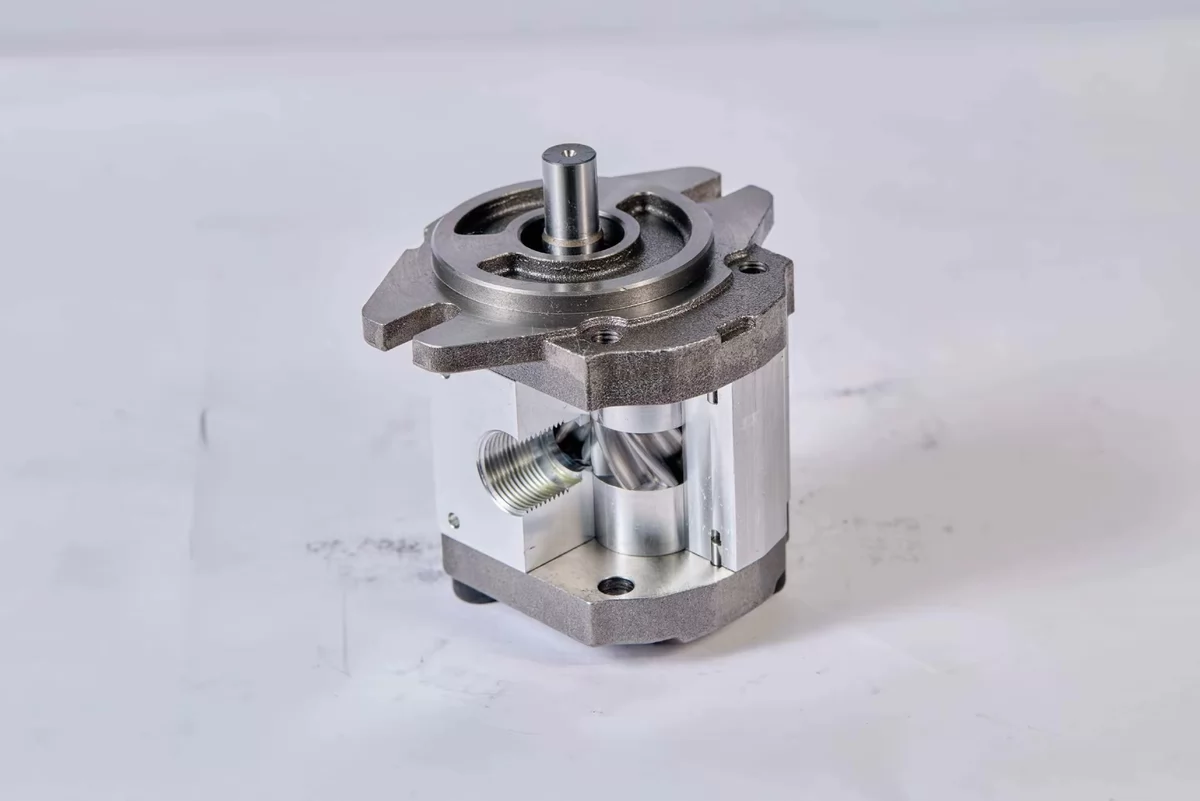
The cutaway shows how the helical gears sit inside the pump housing.
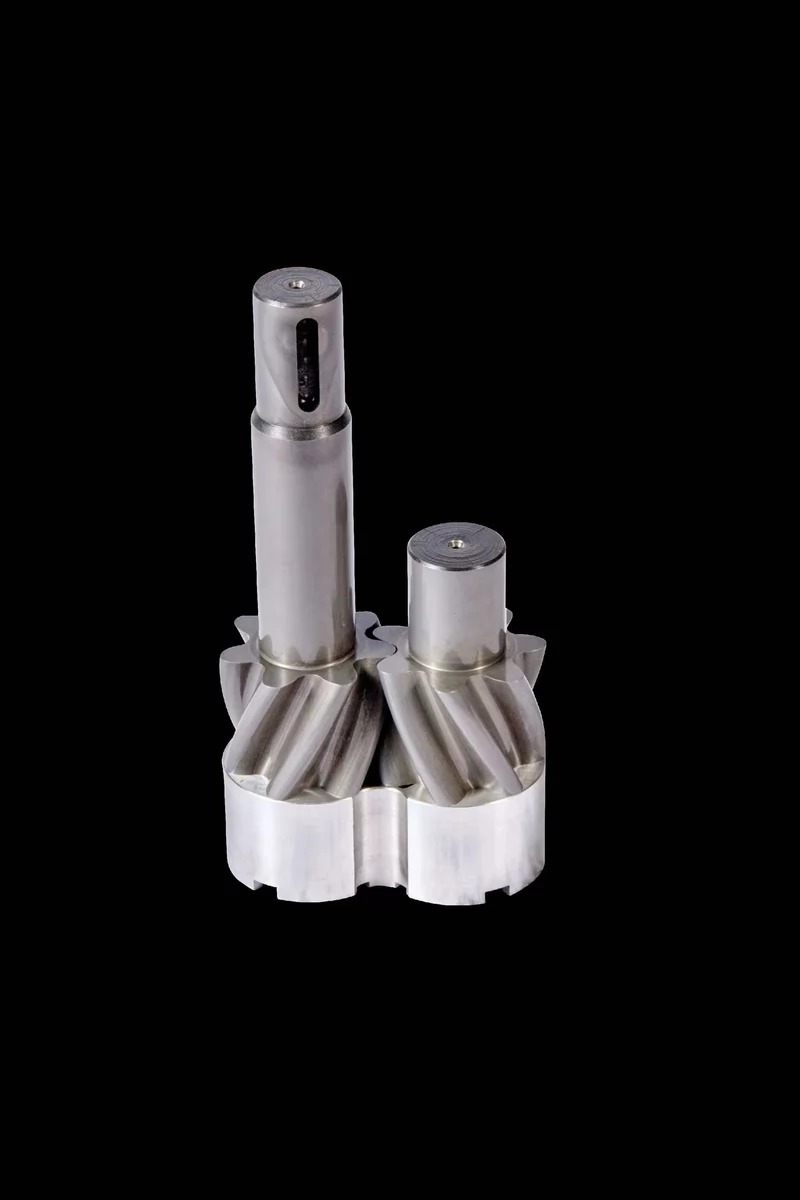
Close-up of the helical gear pair and shafts.
What displacement do I need for 24 L/min?
Start with the flow your equipment needs at working pressure and the speed the motor can sustain. A pump’s displacement is the volume it moves per shaft revolution. To estimate delivered flow in litres per minute, multiply displacement in cc/rev by shaft speed in rpm and volumetric efficiency as a decimal, then divide by 1,000.
Suppose you need 24 L/min at 1,500 rpm. A 16 cc/rev pump gives 24 L/min of theoretical flow. At an assumed 90% volumetric efficiency, it would deliver about 21.6 L/min. At that same assumed efficiency, an 18 cc/rev pump would deliver about 24.3 L/min. Check the selected pump’s flow curve at your operating pressure, speed and oil temperature before finalising the size.
Our low-noise helical gear pump range includes nominal displacement options of 6, 8, 10, 13, 15, 18, 20, 25, 28, 32, 40, 50 and 57 cc/rev. The CBXB4-F16-AL@13 reference configuration is 16 cc/rev, with 200 bar rated pressure and 250 bar maximum pressure. Check the rated pressure for continuous duty and the permitted conditions for maximum pressure on the exact model you order. View the CBXB4-F16 specifications and installation drawing.
Will a quiet gear pump fit my machine?
For electric forklifts, aerial work platforms and industrial hydraulic power units, the equipment model is a starting point. To confirm a replacement, match the original pump’s full model or OEM part number, then verify these details.
- Shaft and mount — shaft type, spline tooth count and diameter, shaft extension, pilot diameter and mounting-hole spacing.
- Rotation and ports — rotation viewed from the shaft end, plus inlet and outlet size, connection type and position.
- Duty point — required flow, normal and maximum operating pressure, shaft speed and oil temperature.
If you have a sound limit such as 58 dB(A), ask for a test result at your duty point. For sound-pressure comparisons, use the same measurement distance and position, with comparable speed, pressure, oil temperature and mounting conditions. The machine’s noise at the operator’s position will also depend on the motor, valves and structure.
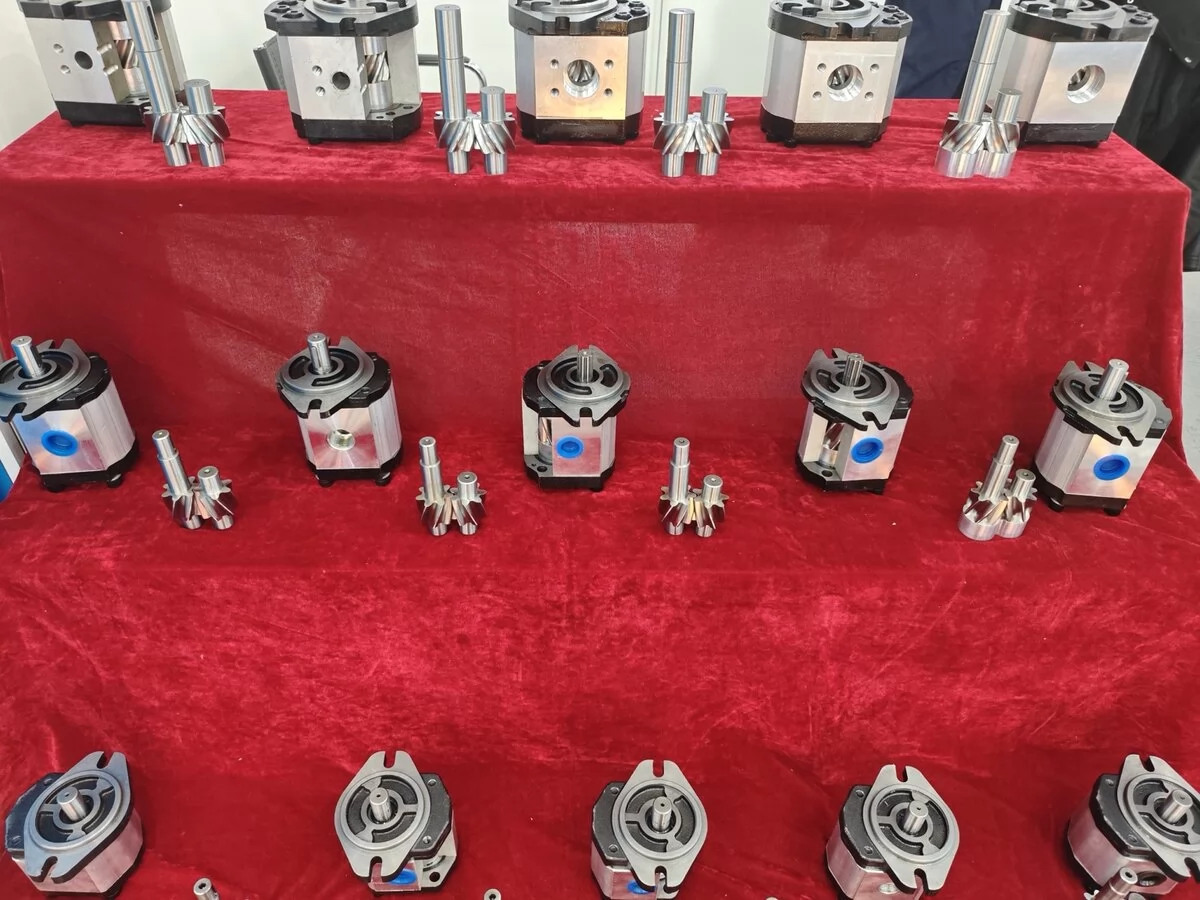
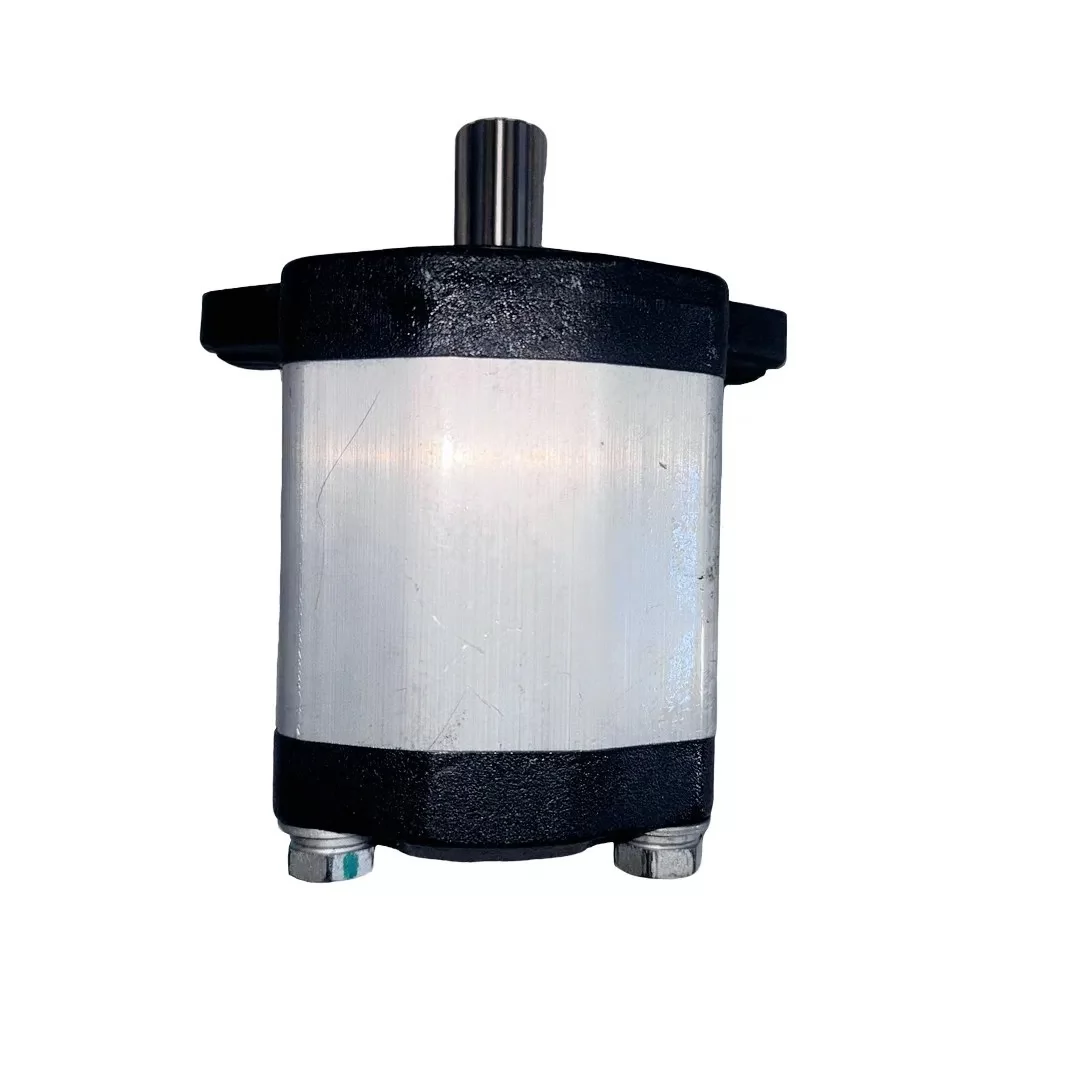
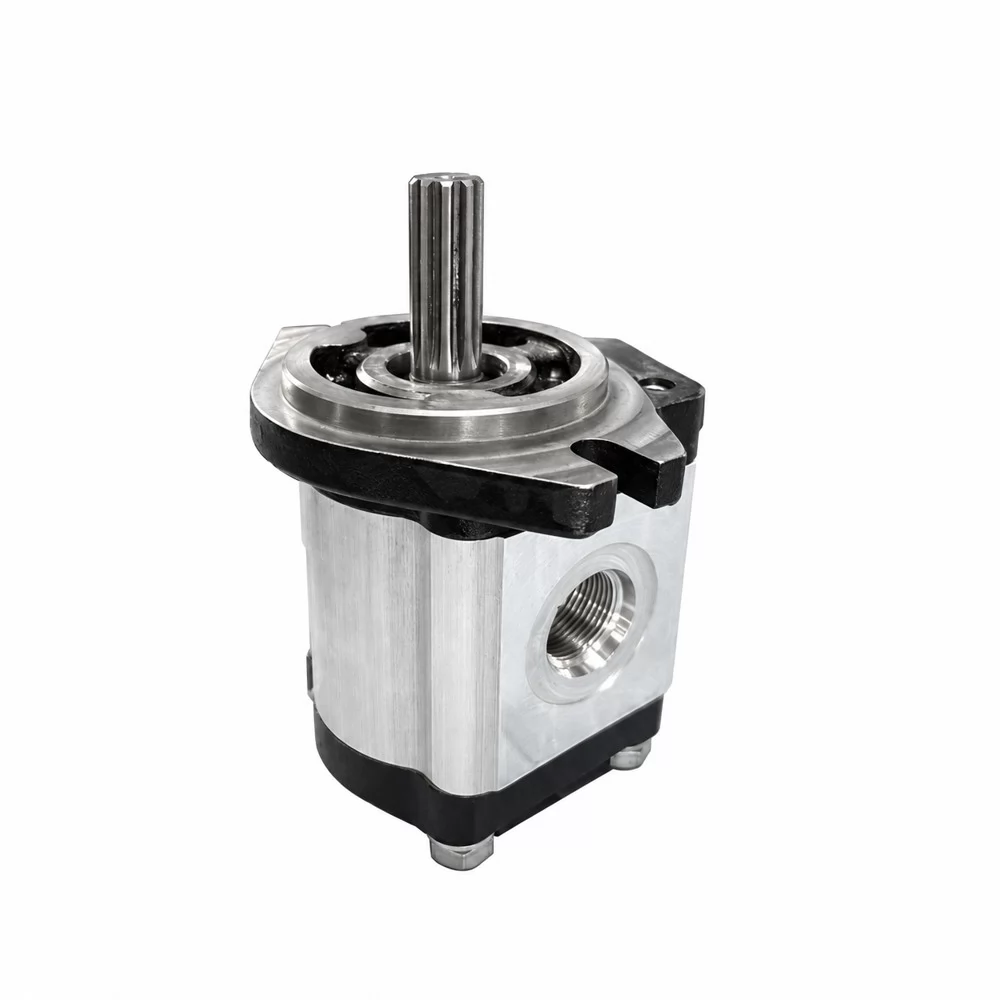
Compare shaft, mounting and port details when choosing a replacement.
Request a fitment check and quote
Send Olive Branch Hydraulics your machine make and model, the pump nameplate or OEM part number, and clear photos of the shaft, flange and oil ports. Include your target flow and working pressure. That gives us the information to check the pump configuration before you order. Request a pump fitment check and quote.