When A Low-Noise Helical Gear Pump Can Quiet Your Machine
Find out why hydraulic gear pumps whine, when helical gears can reduce noise, and how to match flow, pressure,…

| Parameter | Specification |
|---|---|
| Model | CBXB4-F16-AL@13 |
| Displacement | 16 cm³/rev (16 cc/rev) |
| Rated / maximum pressure | 200 / 250 bar (20 / 25 MPa) |
| Speed range | 300 / 2,000 / 4,000 rpm min / rated / max |
| Theoretical flow | 24 L/min at 1,500 rpm; 32 L/min at 2,000 rpm |
| Drive shaft | 13-tooth SAE spline |
| Mounting | Ø82.55 mm pilot, 106 ±0.2 mm centers |
| Ports (L arrangement) | G1 inlet, G3/4 outlet (threaded L drawing reference) |
| Rotation | Confirm from the shaft end against the original pump and nameplate. |
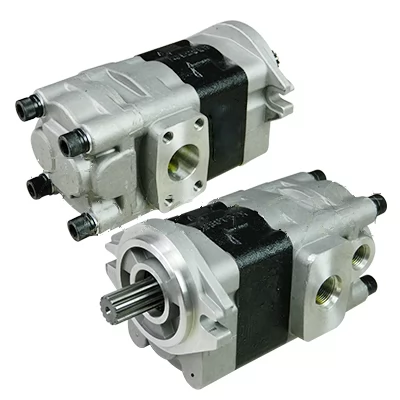
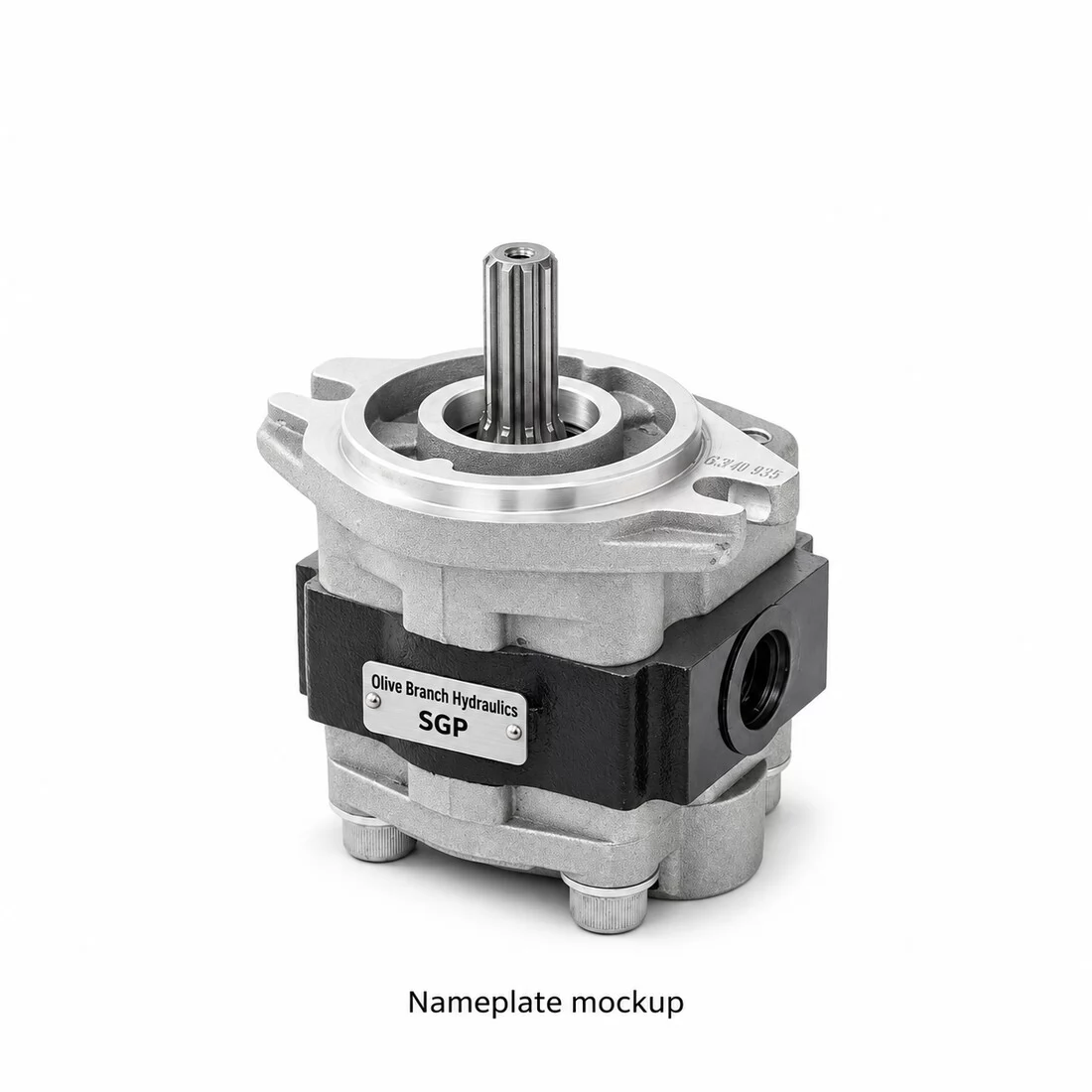
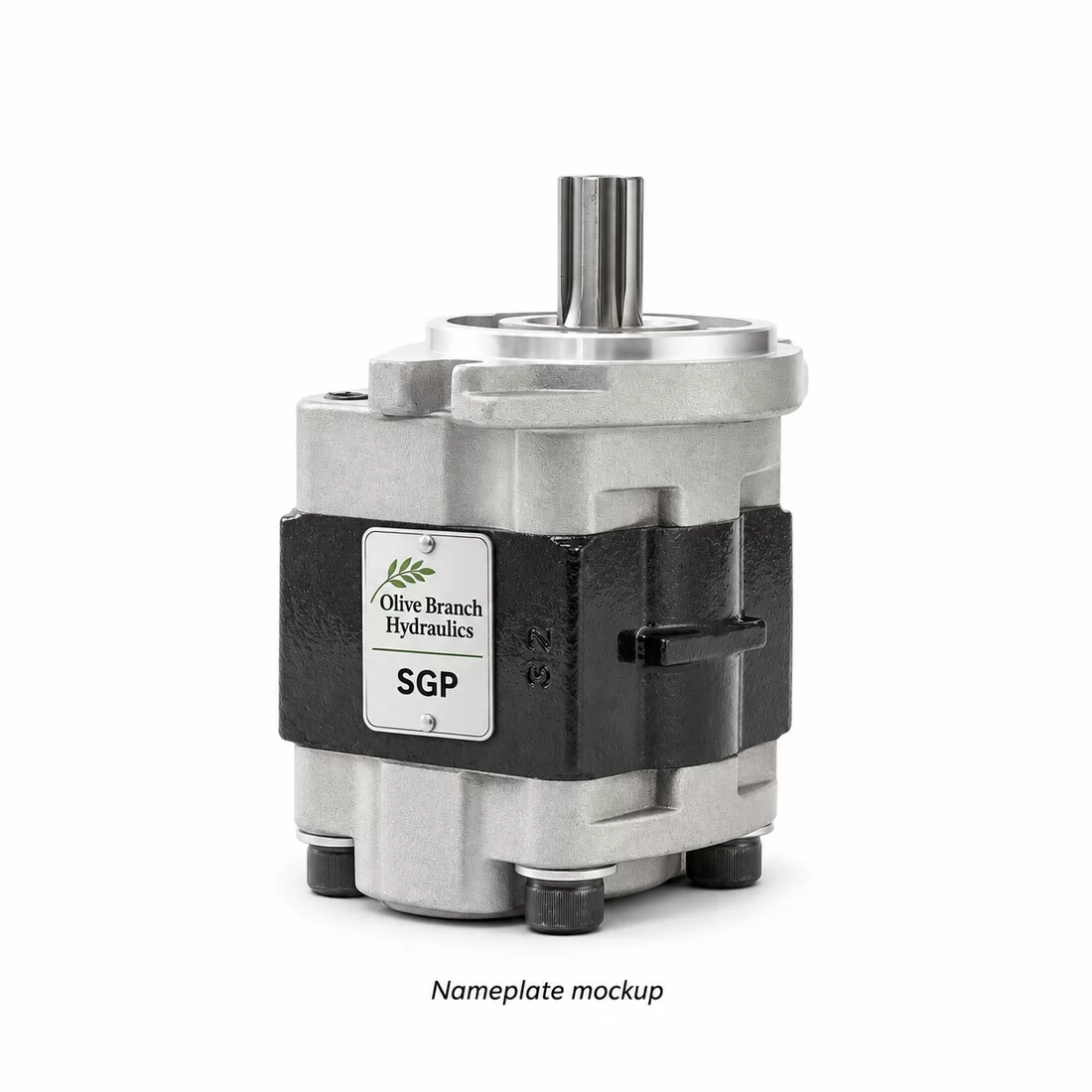
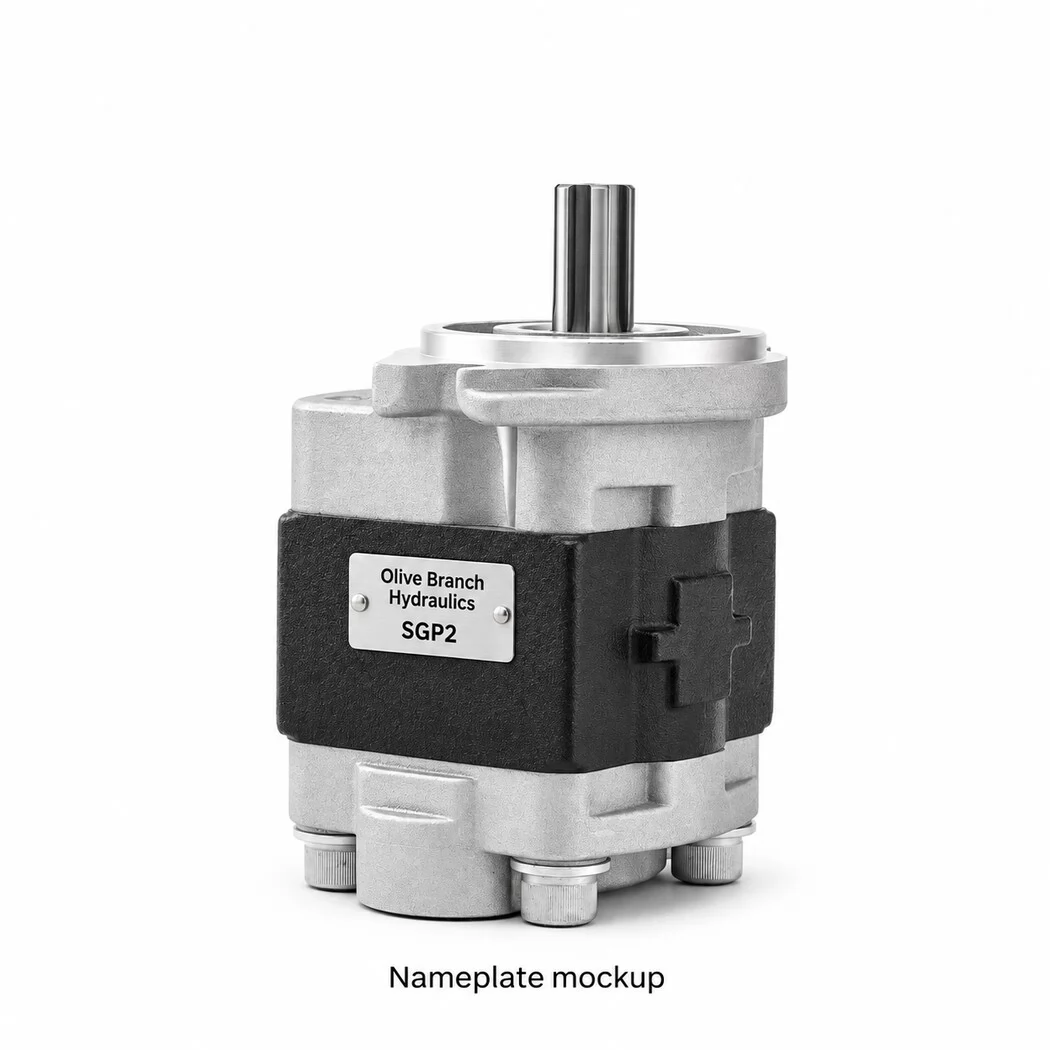
The CBXB4-F16-AL@13 is a low-noise helical gear pump with a displacement of 16 cc/rev and a rated pressure of 200 bar, for systems where spur-gear whine and line pulsation are a problem.
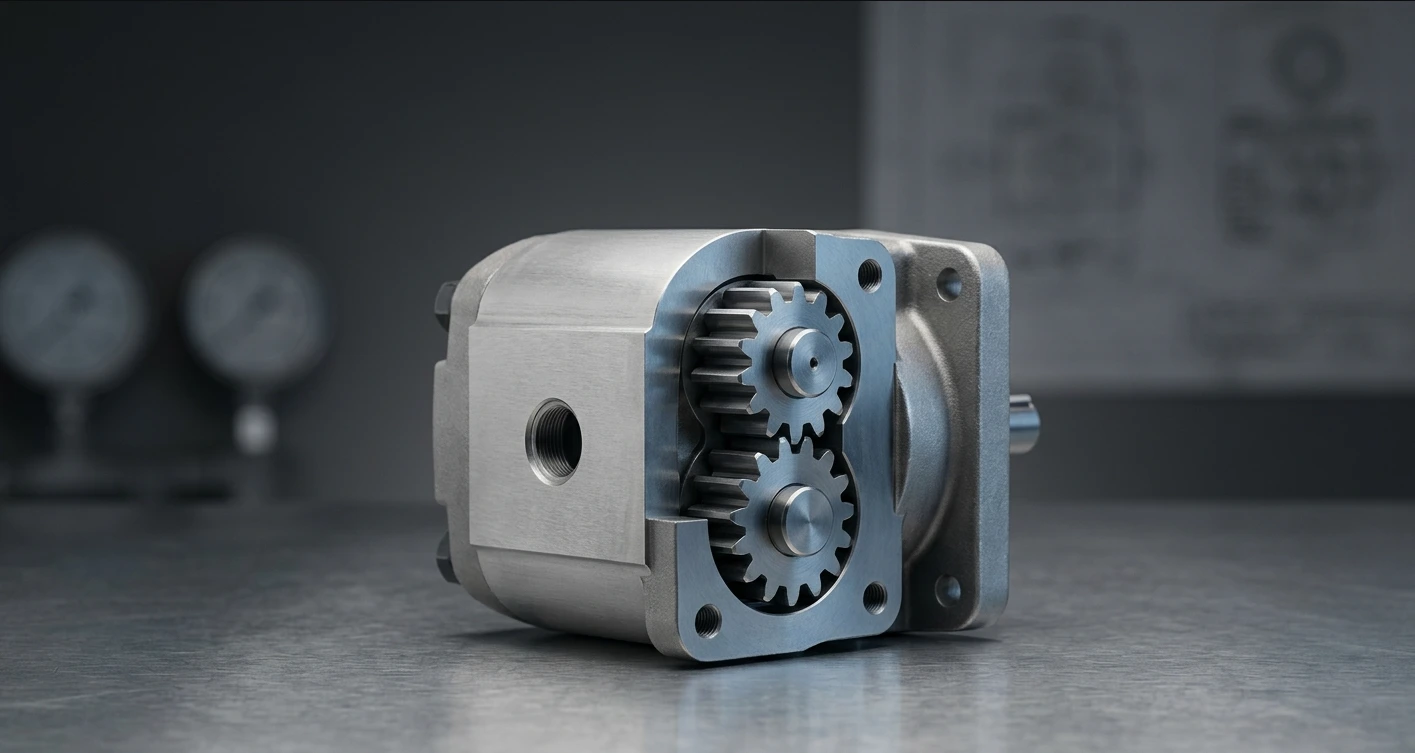
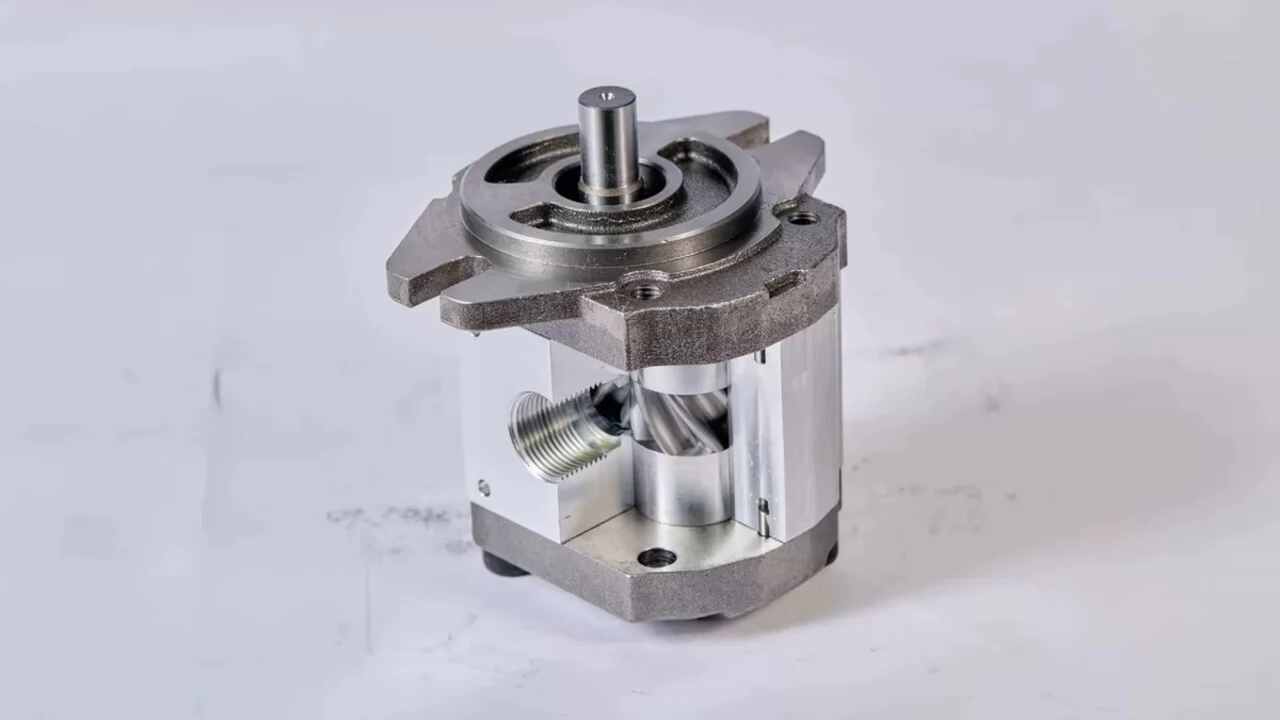
A spur-gear pump and a helical-gear pump of the same 16 cc/rev displacement both give a theoretical 32 L/min at 2,000 rpm. The difference is in how the teeth mesh. Spur teeth engage across the full face width at once and produce a sharp flow pulse with every mesh. Helical teeth engage gradually, so outlet flow is smoother and pressure ripple is lower at the same duty point.
This model has a 13-tooth SAE spline shaft, a Ø82.55 mm pilot, 106 ±0.2 mm mounting centers, and a G1 inlet with a G3/4 outlet in the threaded L arrangement. It is used in industrial hydraulic power units, electric forklifts and aerial work platforms, provided the mounting interface, rotation and duty point match the original pump.
View CBXB4-F16 Specifications
In a spur gear pump, each tooth pair enters the mesh across its full face width at the same moment. This causes an abrupt change in trapped volume and a flow pulse at the outlet. The pulse travels through hoses, fittings and the reservoir and is heard as a whine, usually at tooth-mesh frequency. Electric forklifts, aerial work platforms and indoor power units have quiet electric motors, so the pump often becomes the loudest component.
Helical teeth enter the mesh progressively along the face width. More than one tooth pair usually carries load at any instant, which gives a higher total contact ratio. Because the volume change at each mesh is spread over time, outlet flow is smoother and pressure pulsation drops, along with the noise it causes. The trade-off is axial thrust from the helix angle, which the bearing and side-plate arrangement has to absorb. For that reason, the published 200/250 bar and 4,000 rpm limits should be treated as firm limits.
Published data for the listed configuration. Port sizes are drawing references for the threaded L arrangement.
| Model | CBXB4-F16-AL@13 |
|---|---|
| Pump type | Fixed-displacement external helical gear pump |
| Displacement | 16 cm³/rev (16 cc/rev) |
| Rated / maximum pressure | 200 / 250 bar (20 / 25 MPa) |
| Minimum / rated / maximum speed | 300 / 2,000 / 4,000 rpm |
| Theoretical flow | 24 L/min at 1,500 rpm; 32 L/min at 2,000 rpm |
| Drive shaft | 13-tooth SAE spline for the listed configuration |
| Mounting pilot | Ø82.55 mm |
| Mounting centers | 106 ±0.2 mm |
| Threaded port reference | G1 inlet, G3/4 outlet for L arrangement |
| Rotation | Confirm viewed from shaft end against the original pump before ordering |
First, check rotation as viewed from the shaft end. A pump run in the wrong direction will not prime and can be damaged. Second, confirm that the shaft is a 13-tooth SAE spline and that it mates with the coupling or motor hub. Third, measure the Ø82.55 mm pilot and the 106 mm mounting centers on the original pump. Fourth, check that the G1 inlet and G3/4 outlet positions line up with the existing hose routing in the L arrangement.
Send the original pump code, machine make and model, and photos of the nameplate and mounting face. Olive Branch Hydraulics can use those details to check the configuration before quoting.
Each application needs the mounting interface and the duty point (pressure and speed) checked against the original pump first.
Indoor units close to operators benefit from lower pulsation, and 32 L/min at 2,000 rpm suits mid-size circuits. Confirm the motor flange and working pressure first.
With a quiet traction motor, pump whine is easy to hear, and the 16 cc/rev output covers typical lift and tilt flow. Verify the mounting, spline and motor speed range first.
Smoother flow makes lifting quieter in indoor and night work. Check the pilot, rotation and relief setting against the 200 bar rated pressure first.
These are separate low-noise pump options. Part numbers, shafts and mounting interfaces are confirmed for each one individually.
At 1,500 rpm these give roughly 9 to 19.5 L/min theoretical flow, which suits compact power packs and auxiliary circuits. Shaft and flange details have to be confirmed separately for each displacement.
At 1,500 rpm theoretical flow ranges from about 22.5 to 42 L/min, which brackets the CBXB4-F16. Choose by the required flow at your actual motor speed, then check the mounting.
At 1,500 rpm these give about 48 to 85.5 L/min theoretical, for larger lift and drive circuits. Higher flow usually needs larger ports and a bigger mounting interface, so a drawing check is required.
At 16 cc/rev, theoretical flow is 24 L/min at 1,500 rpm and 32 L/min at 2,000 rpm. Actual delivery depends on operating pressure, oil temperature and volumetric efficiency.
Match the full nameplate code, shaft and coupling, mounting pilot, bolt spacing, port locations and shaft-end rotation. Send photos of the nameplate, mounting face, shaft and ports for a fitment check.
The listed rated pressure is 200 bar and the listed maximum is 250 bar. Confirm allowable peak duration and the applicable speed and pressure limits for your duty cycle before installation.
Send your full pump code, equipment model, working pressure, shaft speed and required quantity. For a replacement, include photos of the nameplate, shaft, mounting face and ports and specify the rotation viewed from the shaft end.
Request a CBXB4-F16 Quote
Model and quantity
Destination port
Nameplate code and rotation for replacements
Find out why hydraulic gear pumps whine, when helical gears can reduce noise, and how to match flow, pressure,…
Reduce hydraulic pump noise with proven methods. Cut energy waste, prevent component failure & meet safety sta…
Skip priming and your gear pump dies in seconds. Learn the 5-minute procedure that prevents scoring, cavitatio…
Discover how hydraulic gear pumps work, why they still dominate industry, and key components to watch when spe…
Contact us now for a professional solution and fast quote.
Fill in your info to start a conversation.