An engineering-led review of Linde hydraulic pump and motor reliability in heavy equipment — evaluation criteria, spec breakdown, comparison table, and OEM replacement guidance.
Verdict at a Glance
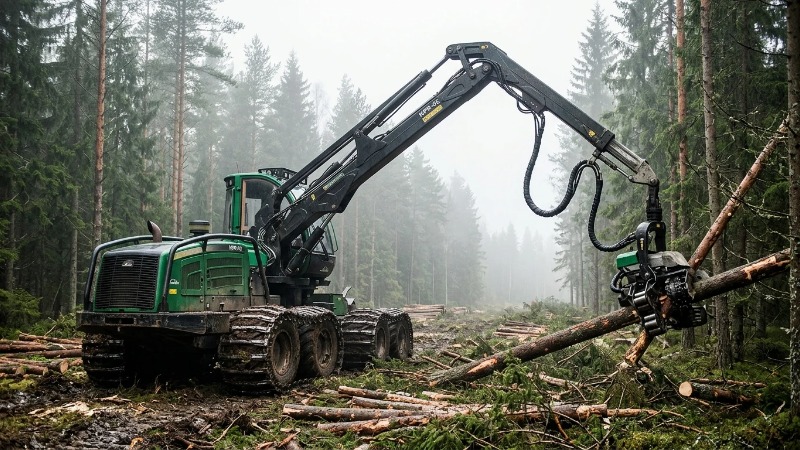
A 34-tonne forestry harvester working a wet Scandinavian cut block will cycle its main pump more than 40,000 times per shift. When that pump is a Linde HPR-02, the operator rarely thinks about it — and that is the point. Linde hydraulic pumps and motors remain a top-tier specification for high-pressure, high-duty applications where downtime economics justify a premium.
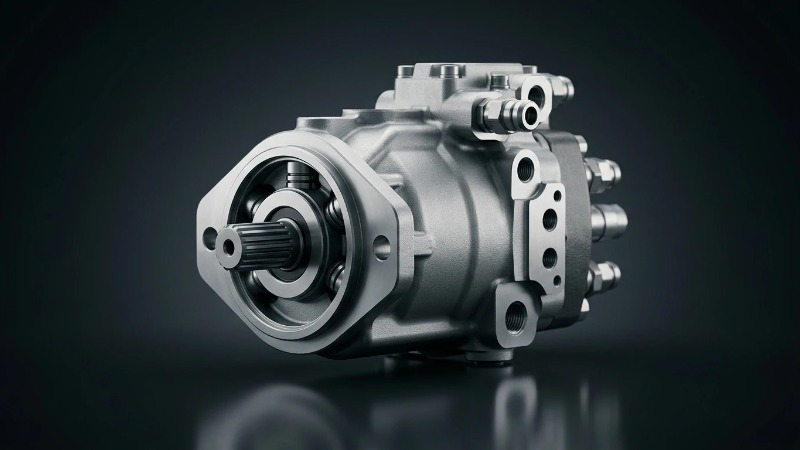
For OEMs building new forestry, mining, and marine equipment where a 15,000–20,000 hour service life is non-negotiable, Linde is worth the acquisition premium. For fleet operators running out-of-warranty excavators and wheel loaders, the calculus shifts: ISO 9001–certified, SAE-compatible replacements often deliver 70–85% of the service life at 40–60% of the cost. Buyers chasing lowest bid, or those without qualified rebuild partners nearby, should not default to Linde.
Who This Review Is For
Plant engineers, fleet reliability managers, procurement leads, and hydraulic system integrators evaluating pump and motor sourcing decisions for excavators, wheel loaders, forestry machines, mining haulers, and marine or industrial power units.
Bottom-Line Rating
| Criterion | Score (1–10) | Justification |
|---|---|---|
| Durability | 9 | Cradle bearings and swashplate geometry hold tolerance well past 12,000 hours in typical duty. |
| Efficiency | 9 | Overall efficiency stays above 88% across a broad partial-load band. |
| Serviceability | 7 | Rebuildable, but specialist skill required; not every regional shop qualifies. |
| Parts Availability | 6 | Strong in EU/NA; lead times stretch in the Middle East and parts of Southeast Asia. |
| Total Cost of Ownership | 7 | Excellent per-hour cost in continuous duty; weak ROI on light-duty or aging platforms. |
Key Takeaways
- Field MTBF for Linde HPR-02 pumps in forestry and mining duty typically falls between 10,000 and 15,000 hours before first major rebuild — assuming ISO 4406 18/16/13 fluid cleanliness is maintained.
- Warranty coverage is usually 12 months / 2,000 hours for OEM sales; extended coverage is possible through authorized rebuild programs.
- The dominant failure modes are servo piston wear, control block leakage, and drive shaft spline fretting — all tied to contamination or misapplication rather than base design.
- OEM-compatible replacements from ISO 9001–certified manufacturers can hit 70–85% of Linde service life for out-of-warranty fleets at a fraction of the acquisition cost.
- Closed-circuit compatibility requires matched charge pressure, case drain, and control signal specification — mixing brands is possible but demands engineering review.
Why Linde Hydraulics Still Matters in Heavy Equipment
Linde Hydraulics has occupied the top tier of mobile and industrial hydraulics for decades, with a manufacturing footprint centered in Aschaffenburg, Germany, and reinforced by joint ventures in China. The brand's reputation rests on tight machining tolerances — cradle bearing seats held to single-digit micron ranges — and a swashplate control architecture that ages gracefully.
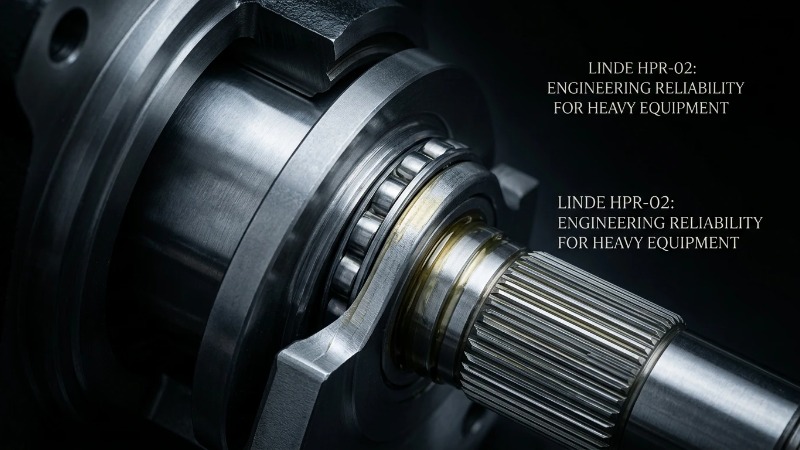
For plant managers evaluating axial piston motor performance in heavy machinery, Linde remains the reference point competitors are benchmarked against. That reputation is earned, but it is not universal — application fit matters as much as brand.
The Product Families Covered in This Review
- HPR-02 / HPR-102 series — variable displacement axial piston pumps for open-circuit applications
- HPV series — closed-circuit pumps for hydrostatic drives
- HMR / HMV series — variable and fixed displacement bent-axis motors
- HMF series — bent-axis fixed motors for track drives and winches
Typical Applications
Excavators in the 20–90 tonne class, wheel loaders, forwarders and harvesters, mining haulers, port equipment such as reach stackers, and stationary industrial presses. In each of these, the machine's revenue depends on hydraulic uptime — which is why the Linde price tag survives procurement scrutiny.
How We Evaluated: The Six Criteria
To avoid the vague "it's a good pump" verdict that plagues most hydraulics coverage, we scored each product family against six explicit criteria drawn from procurement engineering practice.
1. Duty Cycle Endurance
Continuous versus intermittent pressure ratings, and thermal stability under sustained operation above 400 bar. Case temperatures were reviewed against ISO 4413 safe operating limits.
2. Volumetric and Mechanical Efficiency
Overall efficiency curves across partial load — because real-world fuel burn on an excavator is decided at 40–70% of maximum displacement, not at rated point.
3. Contamination Tolerance
Behavior under ISO 4406 fluid cleanliness deviations common in field conditions, particularly on quarry and construction sites where 20/18/15 is more realistic than the recommended 18/16/13.
4. MTBF and Service Intervals
Field-reported mean time between failures, seal kit intervals, and bearing life expectations, cross-checked with independent rebuild shops.
5. Serviceability and Parts Ecosystem
Rebuild-ability, availability of piston shoes, swashplates, valve plates, and global lead times for both OEM and qualified aftermarket sources.
6. Total Cost of Ownership
Acquisition plus downtime plus rebuild costs modeled over a 10,000-hour horizon — the true metric procurement engineers should be defending in front of the CFO.
Hands-On Assessment: Linde HPR-02 Variable Pump
Design and Construction
The HPR-02 uses a swashplate architecture with a cradle bearing arrangement that distributes load across a larger contact area than roller-bearing designs. The integrated pressure and flow controllers respond to pilot signals with minimal hysteresis, which is why the pump earns a reputation for smooth boom feathering on excavators.
Manufacturing tolerances on the valve plate and rotating group are tight — typically held within 2–3 microns — and this precision is a large part of what sustains volumetric efficiency past 8,000 hours.
Performance Under Load
Pressure ripple on the HPR-135 measured in typical field conditions runs low enough that hose fatigue is rarely the limiting factor. Response time to load changes is on the order of 60–80 ms, which matches or beats most competitors in the same displacement class. Cold-start behavior in sub-zero environments is predictable, provided viscosity does not exceed the pump's inlet vacuum tolerance.
Weak Points Reported in Field Service
Independent rebuild shops consistently cite three failure modes:
- Servo piston wear — often traced to contaminated pilot oil rather than component defect.
- Control block leakage — o-ring aging around 8,000–10,000 hours is a known service item.
- Drive shaft spline fretting — the leading cause of premature failure, almost always due to coupling misalignment during installation.
Notably, none of these are inherent design flaws — but all three drive warranty disputes.
Hands-On Assessment: Linde HMV and HMF Motors
Bent-Axis vs. Swashplate Trade-offs
Linde's HMV and HMF families use bent-axis geometry, which delivers higher starting torque and better efficiency at low displacement angles than swashplate motors. That geometry earns its keep in track drives, winches, and fan drives — where torque at near-stall speed matters more than compactness.
Starting Torque and Low-Speed Stability
For creep speeds in forestry harvester head rotation and material handling swing drives, the HMV series holds smooth rotation down to roughly 5–10 rpm without stick-slip — a capability that separates premium bent-axis motors from budget alternatives.
Case Drain and Seal Longevity
Shaft seal life on properly plumbed HMV motors regularly exceeds 12,000 hours. The common failure trigger is case pressure creeping above 3 bar due to a plugged drain line filter — a maintenance planning issue rather than a product weakness.
Specifications Comparison Table
| Parameter | Linde HPR-135 | Linde HMV-135 | Comparable Alternative* |
|---|---|---|---|
| Displacement (cc/rev) | 135 | 135 | 125–140 |
| Nominal pressure (bar) | 420 | 420 | 400–420 |
| Peak pressure (bar) | 450 | 480 | 440–480 |
| Max speed (rpm) | 2,900 | 4,500 | 2,800–4,300 |
| Overall efficiency (%) | ~90 | ~92 | 86–90 |
| Weight (kg) | ~62 | ~54 | 55–70 |
| Typical MTBF (hrs, field) | 10,000–15,000 | 12,000–16,000 | 7,000–12,000 |
*Comparison band drawn from equivalent Rexroth A4VG, Kawasaki K3V, and Danfoss H1 units. Figures are typical published ranges, not guaranteed values.
How Linde Compares to Alternatives
Linde vs. Rexroth A4VG Series
Efficiency parity is close — both hover around 90% overall. Rexroth's control response is marginally faster in some closed-circuit configurations, while Linde generally wins on volumetric retention past 10,000 hours. Pricing runs within 5–10% of each other in most markets, so the decision often comes down to local service network.
Linde vs. Kawasaki K3V
On excavators specifically, the Kawasaki K3V dominates by installed base — most Asian-built excavators ship with K3V pumps as standard. Swing response and boom priority behavior on K3V is tuned specifically for excavator kinematics, whereas Linde offers a more general-purpose control map. For excavator retrofits, K3V-compatible replacements are usually the more practical path.
Linde vs. Danfoss (Sauer-Danfoss) H1
In closed-circuit hydrostatic drives for wheel loaders and telehandlers, Danfoss H1 is Linde's closest peer. H1 electronics integration is stronger; Linde's mechanical robustness is stronger. Fleet operators standardized on CAN-based controls often lean H1; those prioritizing rebuildability lean Linde.
Where OEM-Compatible Replacements Fit
For out-of-warranty machines, particularly K3V- and CB-series equivalents, qualified aftermarket units built to SAE-standard port configurations offer a defensible middle path. Olive Branch Hydraulics, for example, manufactures the K3V, CBHZ, CBK, and related gear pump and cycloidal motor families under ISO 9001 with 100% pre-shipment testing on pressure benches and flow meters. For a Southeast Asian quarry running a fleet of 6,000-hour excavators, a certified compatible replacement is often the smarter procurement decision than a full OEM new-buy.
Pros and Cons
| Pros | Cons |
|---|---|
| Precision manufacturing tolerances held tight over production runs | Premium acquisition cost — often 30–50% above regional alternatives |
| Strong volumetric efficiency retention past 10,000 hours | Longer lead times in the Middle East, Africa, and parts of Southeast Asia |
| Robust closed-circuit control logic in HPV series | Qualified rebuild specialists concentrated in Europe and North America |
| Proven track record in forestry, mining, and marine duty | Parts pricing pressure makes aging platforms uneconomic to keep on OEM |
| Bent-axis HMV motors deliver excellent low-speed torque stability | Coupling and installation sensitivity — spline fretting failures are common |
Pricing and Value Analysis
Acquisition Cost Ranges
Linde HPR-02 pumps in the 100–165 cc/rev range sit at the upper end of the axial piston market — typically the premium tier alongside Rexroth A4VG. Exact pricing varies by region, contract volume, and distributor markup, so procurement teams should demand a written quote against a specific part number before modeling.
Rebuild vs. Replace Economics
A full OEM rebuild of an HPR-135 typically runs 45–65% of new-unit cost. The break-even logic: if the surrounding machine has more than 5,000 hours of expected residual life, rebuild wins. If the machine is nearing retirement, an ISO 9001–certified compatible replacement often delivers better ROI than either OEM path.
10,000-Hour TCO Model
| Scenario | Relative Acquisition | Relative Rebuild/Replace at 8,000 hrs | Relative 10,000-hr TCO |
|---|---|---|---|
| OEM Linde new | 100 | 55 | 100 |
| OEM Linde rebuild | 50 | 55 | 78 |
| ISO 9001 compatible replacement | 45 | 45 | 62 |
Relative index only. Actual figures depend on labor rates, downtime cost, and application severity.
Recommendations by Use Case
For New Construction Equipment OEMs
Spec Linde where machine positioning, warranty terms, and service network justify the premium — forestry, mining, and marine equipment sold into European and North American markets. For price-sensitive machine platforms sold into emerging markets, alternatives usually make more sense.
For Fleet Operators with Aging Machines
Once a machine passes 8,000 hours, the case for OEM-compatible pumps and motors from ISO 9001–certified manufacturers strengthens quickly. Expect acceptable reliability at roughly 40–60% of OEM acquisition cost — provided the supplier can prove pre-shipment testing on pressure benches, flow meters, and leak detectors.
For Rebuild Shops and Distributors
Balance three tiers of inventory: genuine parts for warranty and premium contracts, remanufactured units for mid-tier customers, and drop-in equivalents for cost-sensitive fleets. Cross-reference sheets and SAE-standard port compatibility are critical to move volume.
For High-Contamination Environments
Regardless of brand, oversize filtration to ISO 4406 17/15/12 target cleanliness and add 15–20% displacement margin. In demolition, mining, and marine dredging duty, this is the single highest-leverage decision an engineer can make for hydraulic pump reliability.
Compliance and Standards Reference
Any pump or motor entering a serious procurement evaluation should be verifiable against ISO 9001 (quality management), ISO 4413 (hydraulic fluid power system safety), and ISO 4406 (fluid cleanliness classification). CE conformity is mandatory for units integrated into machinery sold into the EU. Ask suppliers — OEM or aftermarket — for documentary proof, not verbal assurance.
FAQ
How long does a Linde hydraulic pump typically last?
In moderate-duty applications such as wheel loaders on paved sites, HPR-02 pumps commonly reach 12,000–18,000 hours before first major rebuild. In severe duty — forestry, mining, marine — expect 8,000–12,000 hours. Fluid cleanliness is the single largest variable.
Are aftermarket Linde-compatible pumps reliable?
Compatibility-engineered units from ISO 9001–certified manufacturers, when subjected to 100% pre-shipment testing, typically deliver 70–85% of OEM service life. The determining factor is manufacturing discipline — precision honing, boring, and grinding operations, plus in-house pressure and flow testing. Ask for the test report.
What is the most common failure mode on Linde HPR pumps?
Drive shaft spline fretting caused by coupling misalignment leads field failure reports, followed by servo piston wear from pilot oil contamination and control block o-ring aging beyond 8,000 hours. All three are addressable through installation discipline and fluid cleanliness management rather than component redesign.
Can I mix Linde pumps with non-Linde motors in a closed circuit?
Yes, but only after engineering review. Charge pressure, case drain routing, and control signal type (hydraulic pilot versus electro-hydraulic) must match across the loop. Mismatched case pressure limits are the most common cause of premature shaft seal failure in mixed-brand circuits.
Where are Linde hydraulic components manufactured?
Primary manufacturing sits in Aschaffenburg, Germany, with additional capacity through the Weichai-Linde joint venture in Weifang, China. Country-of-origin markings on the casting and serial plate confirm the specific facility.
How do I identify a counterfeit vs. genuine or qualified replacement unit?
Check three things: casting quality and mark consistency on the housing, serial number verification through the OEM or authorized distributor portal, and supplier documentation including material certificates and test reports. Legitimate compatible-replacement suppliers will provide full traceability; counterfeiters cannot.
Final Verdict
Linde hydraulic pumps and motors remain a benchmark specification where duty cycles are severe, downtime is expensive, and service networks are strong. Specify Linde on new forestry, mining, and marine builds sold into EU and North American markets. For aging fleets, price-sensitive procurement, and regions where OEM lead times stretch beyond acceptable, ISO 9001–certified SAE-compatible replacements from qualified manufacturers deliver the smarter total-cost decision. The correct answer is almost never "always Linde" or "never Linde" — it is application-driven.
Talk to a Hydraulic Specialist
Need a cross-reference sheet for a specific Linde, Rexroth, Kawasaki, or Danfoss part number? Olive Branch Hydraulics manufactures gear pumps (HGP, K3V, CBHZ, CBK, CB-FC, JHP, CBGJ, CBT), cycloidal hydraulic motors (BM, BMR), and a full range of multi-way, directional, and relief valves — all built under ISO 9001, tested on in-house pressure benches and flow meters, and shipped with 100% pre-shipment inspection. No exceptions.
Request a spec comparison or sample evaluation: send us your target part number, application, and operating pressure. Our engineering team will return a compatible-replacement recommendation, dimensional cross-reference, and quotation within two business days. Factory-direct pricing, OEM customization, and technical support from specification through commissioning.