
An opinion piece on one of the most misunderstood questions in fluid power, written for technicians, designers, and shop floor pros who've heard conflicting answers their whole careers.
The Short Answer Nobody Wants to Give You
Walk into any hydraulic shop and ask whether you can run a pump as a motor, and you'll get three different answers from three different people. All of them will sound confident. Most of them will be partially right.
I've spent enough years on service calls to know why this question keeps coming back. Let's put a real answer on the table before we get into the why.
Yes, Sometimes. No, Often. Here's Why Both Are True
The honest verdict is that it depends entirely on the unit in your hand and the duty cycle you're throwing at it. Some pumps will run as motors all day without complaint. Others will weep oil onto your floor within an hour.
The question isn't really "is it possible?" The question is whether it'll be reliable, efficient, and still under warranty next quarter. Those three constraints are where most conversions fall apart.
Where the Confusion Comes From
Catalogs hedge their language. Sales reps optimize for the sale in front of them. Forum threads pile anecdote on top of anecdote until the original engineering question gets buried.
The whole topic of hydraulic pump motor conversion has been muddied by decades of "well, my buddy did it once and it worked." That's not engineering. That's survivor bias with a torque wrench.
Pumps and Motors Are Cousins, Not Twins
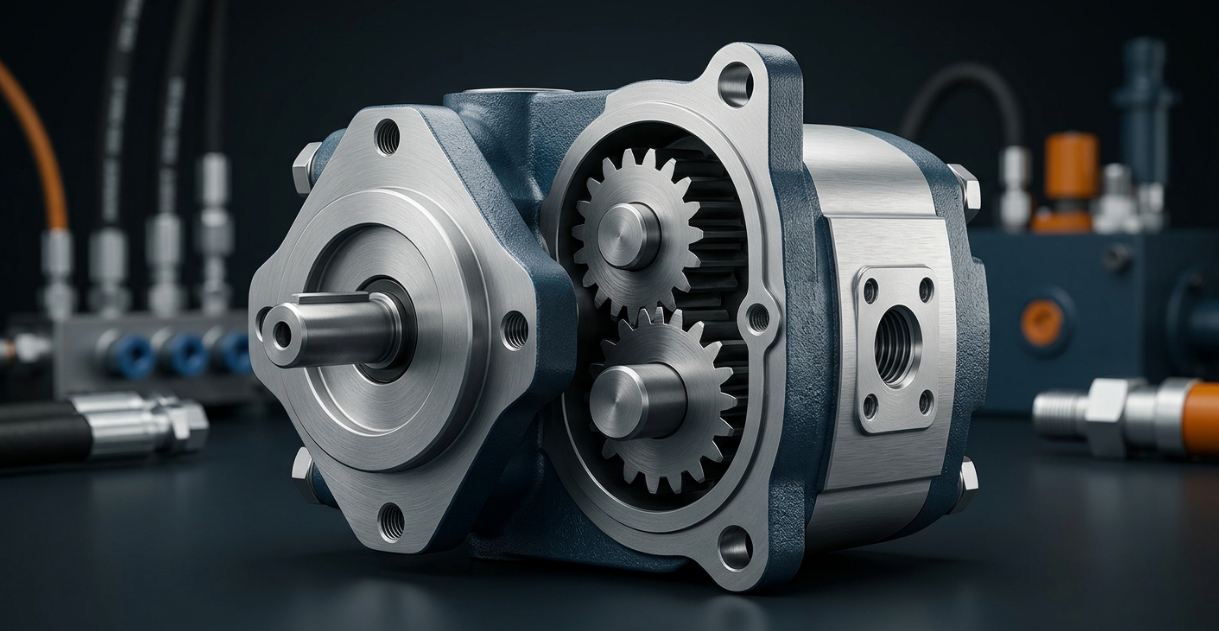
The two devices look almost identical on a parts diagram. They share housings, shafts, and often the same casting molds. That visual similarity is exactly what gets people in trouble.
Same Hardware, Opposite Job
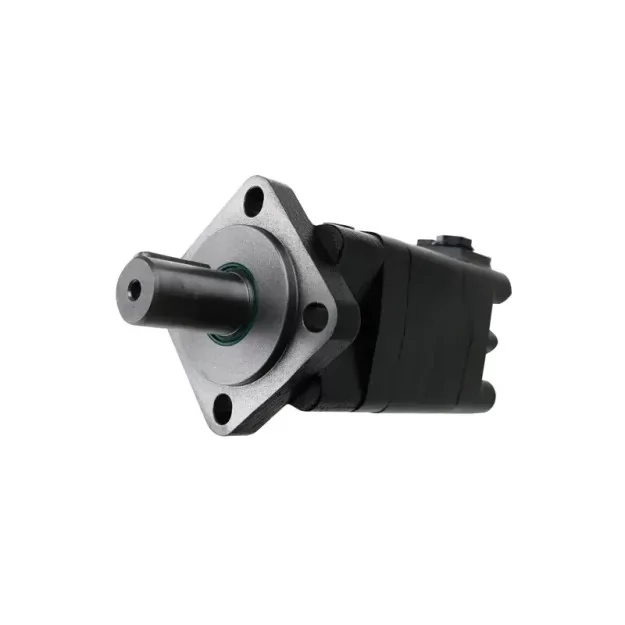
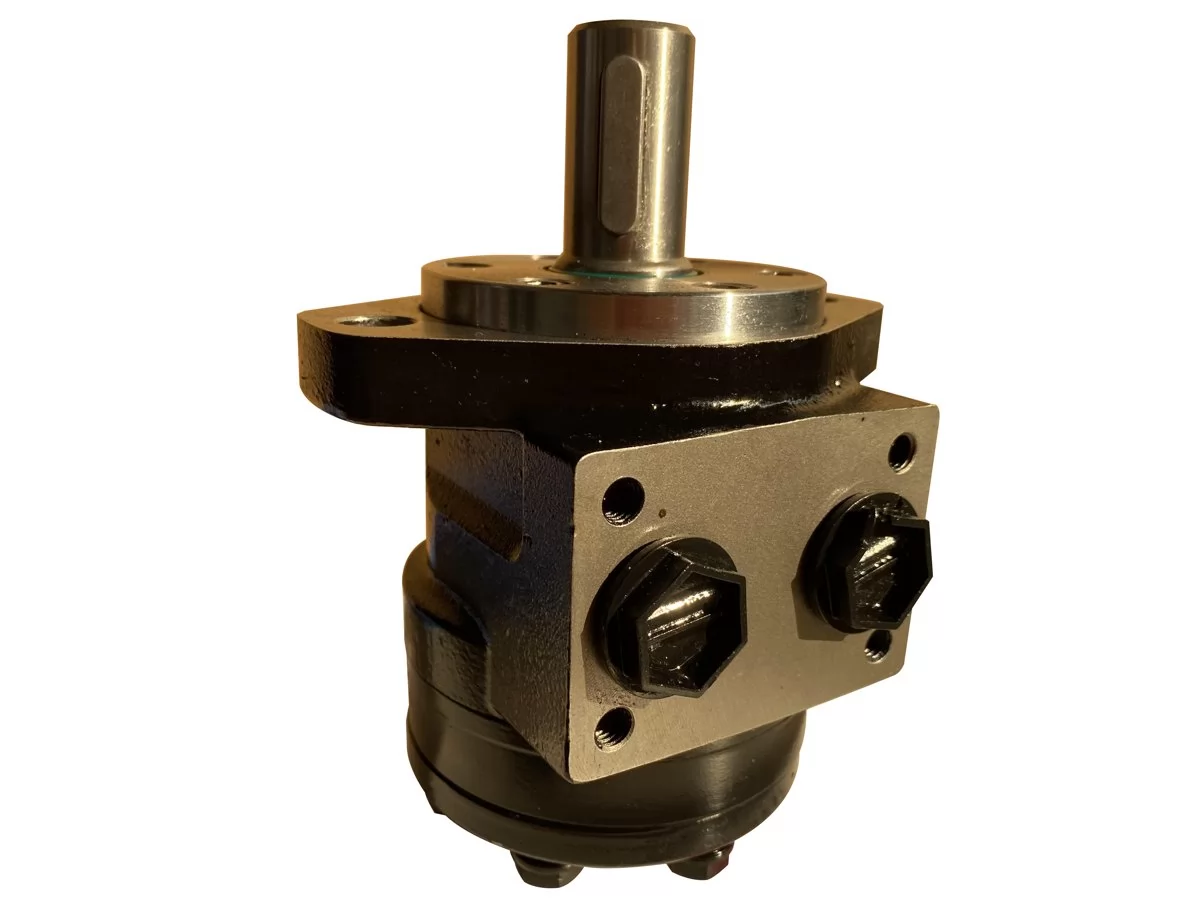
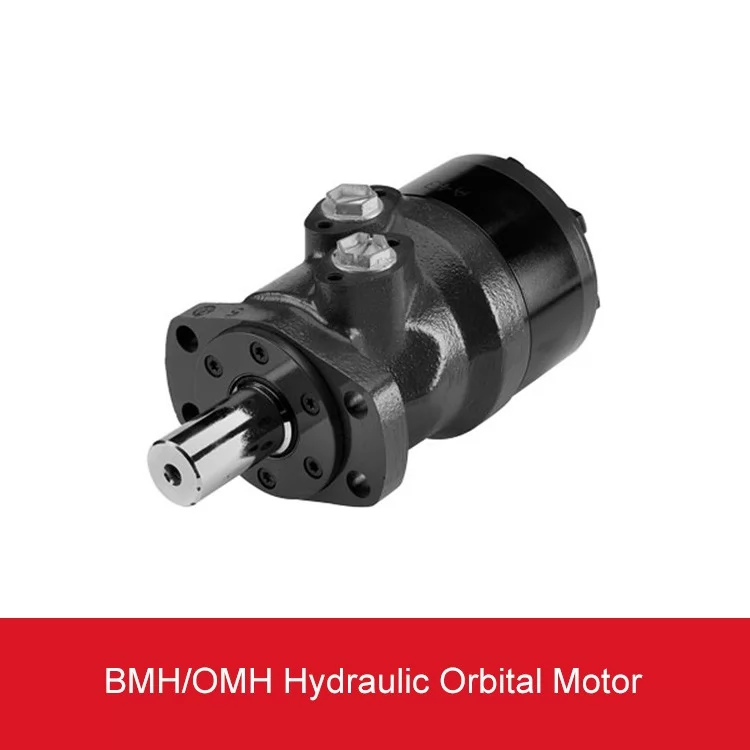
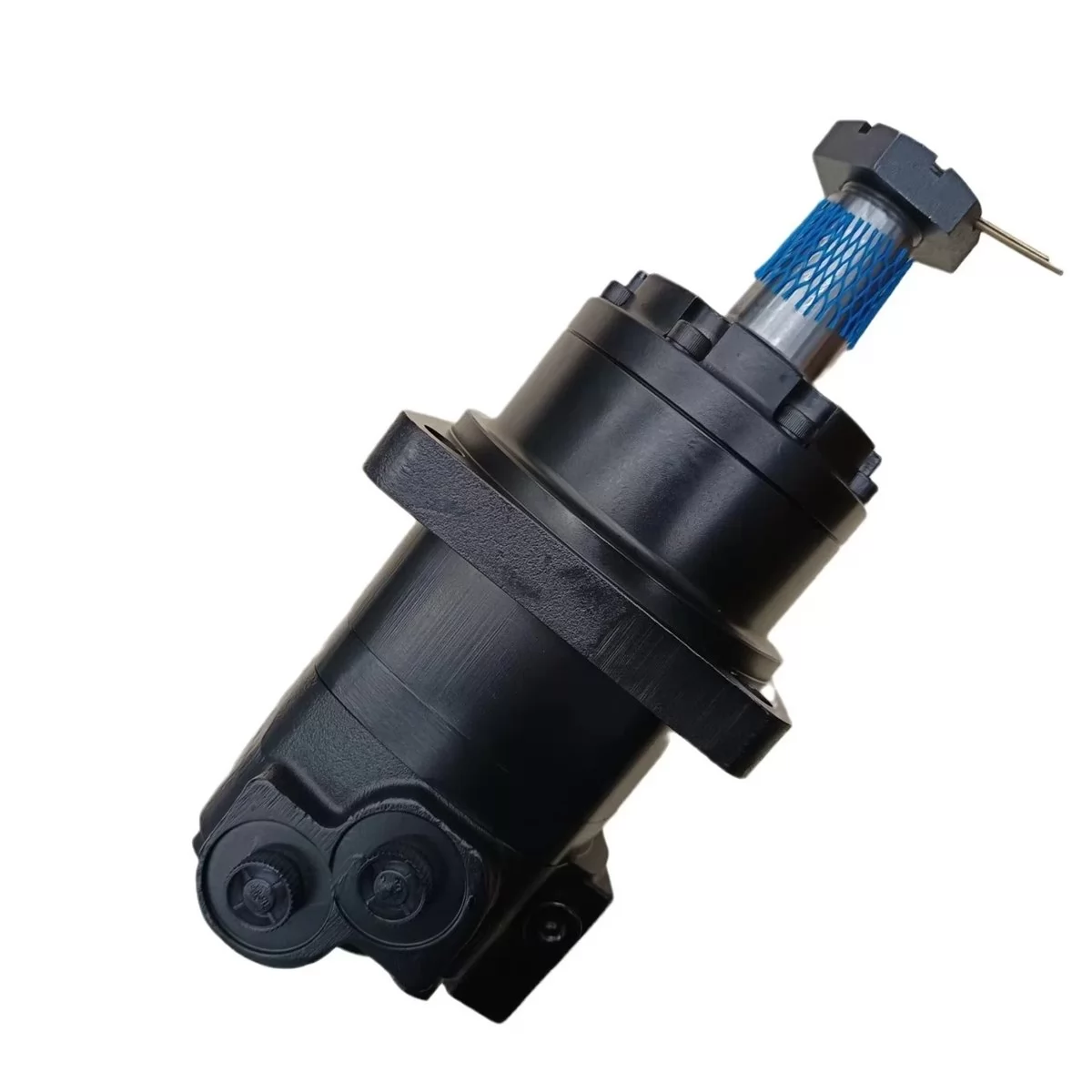
A pump takes mechanical torque from a prime mover and turns it into pressurized fluid. A motor takes pressurized fluid and turns it back into mechanical torque. That's the entire fluid power motor function in one sentence.
The hardware that performs each task is genuinely similar. The design choices around bearings, seals, and porting are where the cousins start to look less alike.
The Reversibility Principle
In theory, every positive displacement machine is reversible. Push fluid in, the shaft turns. Spin the shaft, fluid comes out. Physics doesn't care which direction you're going.
The workshop floor cares a lot, though. Theory ignores the realities of seal orientation, bearing pre-load, and which port was sized for what pressure. Those practical details are what separate a working motor from a leaking paperweight.
Quick Comparison: Hydraulic Motor vs Pump
| Characteristic | Hydraulic Pump | Hydraulic Motor |
|---|---|---|
| Primary input | Mechanical torque | Pressurized fluid |
| Primary output | Pressurized fluid | Mechanical torque |
| Shaft seal rating | Low pressure (case drain) | High pressure capable |
| Bearing load direction | Designed for one direction | Designed for both |
| Typical speed range | 600–3000 RPM | 0–3000 RPM (incl. low speed) |
| Internal leakage tolerance | Lower priority | Critical for low-speed torque |
When Running a Pump as a Motor Actually Works
Not every pump is off-limits for motor duty. Some designs cross over with minor compromises. Knowing which families forgive the swap saves you from chasing the wrong unit.
Gear Pumps: The Forgiving Workhorse
External gear pumps are the most common candidates for a casual reversal. Their construction is symmetrical enough that running fluid backwards through them produces usable torque without immediate drama.
The trade-off is efficiency. Expect noticeably lower volumetric performance and more internal slip than you'd get from a purpose-built motor of the same displacement.
Piston Pumps: Built-In Versatility
Many axial piston units ship from the factory as a bidirectional hydraulic pump, meaning they're already engineered to handle flow and torque in both directions. Spotting one is usually a matter of checking for symmetric port sizing and an over-center swashplate.
If the data sheet lists separate inlet and outlet pressure ratings that are nearly identical, you're looking at a unit that won't flinch at motor service.
Vane Pumps: Read the Spec Sheet Twice
Vane pumps are where I've seen the most expensive mistakes. Balanced and unbalanced designs behave completely differently under reverse flow.
The shop floor rule of thumb: if the pump has a single intake and a single discharge port located 180 degrees apart, treat it as unbalanced and don't bother. If the porting is symmetric and the cam ring is concentric, you might have a candidate.
When It's a Bad Idea (And How to Tell)
I've cleaned up enough of these jobs to recognize the failure patterns on sight. The warning signs are consistent across every brand I've worked with.
Shaft Seal Blowout
This is the single most common way a pump-as-motor swap ends in a puddle on the floor. Pump shaft seals are rated for the low pressure of a case drain, not the higher case pressures that show up in motor service.
The seal lip extrudes, fluid finds the path of least resistance, and you've got a mess by lunch.
One-Way Bearings and Pre-Loaded Internals
Some pumps physically cannot accept reverse torque. Tapered roller bearings installed in a single orientation, sprag clutches in the drive train, or pre-loaded thrust washers all conspire to make reversal impossible without internal damage.
You won't always see this in the catalog. A teardown or a phone call to the OEM is the only way to be sure.
Case Drain and Lubrication Path Failures
This is the silent killer. The internal lubrication paths in a pump are designed assuming flow goes one direction. Reverse the flow, and certain bearings or bushings stop seeing fresh oil.
The unit will run fine for hours, days, sometimes weeks. Then it seizes during a Tuesday afternoon production run, and nobody can figure out why.
Failure Risk by Pump Type
| Pump Type | Reverse Operation Risk | Recommended Use as Motor |
|---|---|---|
| External gear | Low | Acceptable for light duty |
| Internal gear | Medium | Check manufacturer specs |
| Axial piston (fixed) | Low–Medium | Often viable |
| Axial piston (variable) | High | Avoid unless rated |
| Balanced vane | Medium | Limited applications |
| Unbalanced vane | High | Not recommended |
| Radial piston | High | Purpose-built motor preferred |
The Reversible Hydraulic Pump Question
The marketing language around reversibility is where buyers get fooled. Three different words get used as if they're synonyms, and they absolutely are not.
"Bidirectional" vs "Reversible" vs "Over-Center"
Bidirectional usually means the unit can accept flow or rotation in either direction without internal damage. Reversible often refers to shaft rotation only, not port flow. Over-center is a specific feature of variable displacement units where the swashplate can swing past neutral, allowing the unit to pump or motor on either side of zero.
Tape that distinction to the inside of your toolbox lid. It will save you a procurement call eventually.
Reading a Data Sheet Like a Skeptic
Five fields tell you almost everything you need to know. Look for separate continuous and intermittent pressure ratings on each port. Check whether case drain is required and at what flow rate. Verify the shaft rotation specification reads "CW, CCW, or both" rather than just one. Confirm bearing life is rated for bidirectional load. Finally, look for any footnote referencing motor duty.
If any of those fields are missing or ambiguous, treat the unit as pump-only until proven otherwise.
My Opinion: Stop Improvising, Start Specifying
This is the part where I get a little opinionated. If you're a junior engineer asking me this question on a Monday morning, here's what I'd tell you straight.
The Cost Argument Is Usually Wrong
The most common reason people try this conversion is to save money. A spare pump in the parts cabinet costs $200 less than the proper motor, so why not press it into service?
Run the math on a single failure event. One blown seal, one production stoppage, one oil cleanup, and one warranty void. You just spent $3,000 to save $200. The arithmetic almost never favors the improvisation.
When Improvisation Is Defensible
I'm not a purist. There are legitimate cases where running a pump as a motor makes sense. Prototype rigs where you're proving a concept on a bench. One-off test fixtures that'll see fifty hours of use total. Low-pressure auxiliary circuits where the duty is gentle and the consequences of failure are trivial.
In those situations, grab the gear pump off the shelf and get on with your week. Just don't put it in a production machine and call it engineering.
What I'd Like to See From Manufacturers
Clearer labeling would solve most of this confusion overnight. A simple icon system indicating "pump only," "motor capable," or "bidirectional rated" would do more for the industry than another revision of the application guide.
The vague "may be used as motor in some applications" disclaimer needs to die. Either the unit is rated for it or it isn't. Pick one.
A Practical Decision Framework
Here's the flowchart I'd hand to any technician staring at a pump and wondering whether to risk it.
Step 1: Check the Pressure Rating on Both Ports
If the inlet port is rated for, say, 30 psi and the outlet for 3000 psi, you have a one-way unit. End of analysis. Don't proceed to Step 2.
Step 2: Verify Shaft Rotation Tolerance
The nameplate, the catalog page, and ideally a quick call to the OEM should all agree on whether the unit accepts both directions. If two of those three sources disagree, default to the most conservative answer.
Step 3: Confirm Drain Line Requirements
External case drain is your friend in motor service. Internal drain pumps are usually a hard no for conversion because the case will pressurize beyond seal limits the moment you reverse the duty.
Step 4: Run a Bench Test, Not a Field Test
An hour on a test stand with a pressure gauge and a thermometer beats an afternoon troubleshooting a leaking machine in front of an angry production manager. Always.
Frequently Asked Questions
Will using a hydraulic pump as a motor void the warranty?
In nearly every case I've worked, yes. Manufacturers warranty the unit for the application stated on the order. Putting a pump in motor service is an off-label use, and claims adjusters know exactly what to look for.
How much efficiency do I lose in the conversion?
Expect a 10 to 25 percent drop in combined volumetric and mechanical efficiency compared to a purpose-built motor. The wide range reflects how much variation exists between pump families. A high-quality piston pump might land at the better end. A worn gear pump pressed into service will sit at the worse end.
Can I run the unit in reverse rotation?
This is a completely separate question from pump-versus-motor, and conflating them causes most of the failures I see. Reverse rotation refers to the shaft turning the opposite direction during normal pump duty. Motor conversion refers to the unit's role in the circuit. Sort out which one you actually need before you start ordering parts.
What about hydrostatic transmissions — aren't those exactly this?
Closed-loop hydrostatic transmissions use units specifically engineered to switch between pumping and motoring on demand. They're purpose-built for that duty cycle from the casting up. That's not the same thing as taking a generic pump off a shelf and hoping for the best.
Is there a universal test to confirm compatibility?
The closest thing to a universal answer is a low-pressure bench test with case pressure monitored continuously. Even that requires manufacturer input to interpret correctly. There's no oscilloscope reading that says "yes, this will work for ten thousand hours."
Does the same logic apply to electric motor and pump pairings?
Not really. Electric motors and pumps follow different reversibility rules entirely because their energy conversion mechanisms are based on magnetic fields rather than fluid displacement. The fluid power conventions discussed here don't transfer cleanly to the electrical side of the system.
The Bottom Line
Yes, you can run many hydraulic pumps as motors. The hardware overlap is real, the physics permit it, and in the right circumstances it's a perfectly defensible engineering choice. I've done it myself on prototype rigs without losing sleep.
But the question worth asking isn't "can I?" The question is "should I, and what does it cost when I'm wrong?" The professionals who ask the second question are the ones who stay out of warranty disputes, off the floor with a mop, and in the good graces of the production team. That's the version of this trade worth practicing.