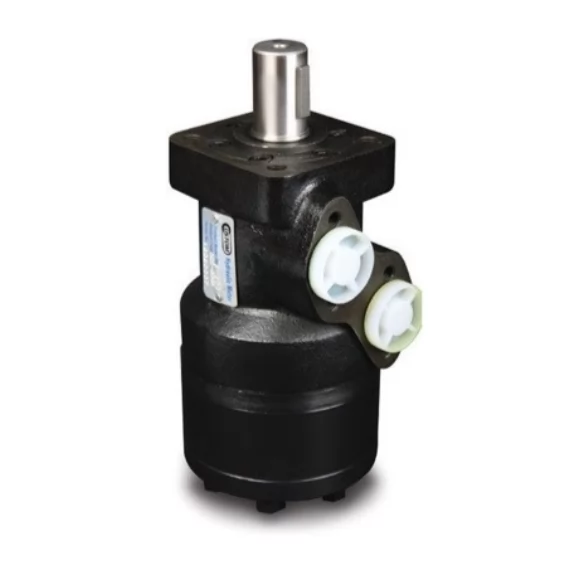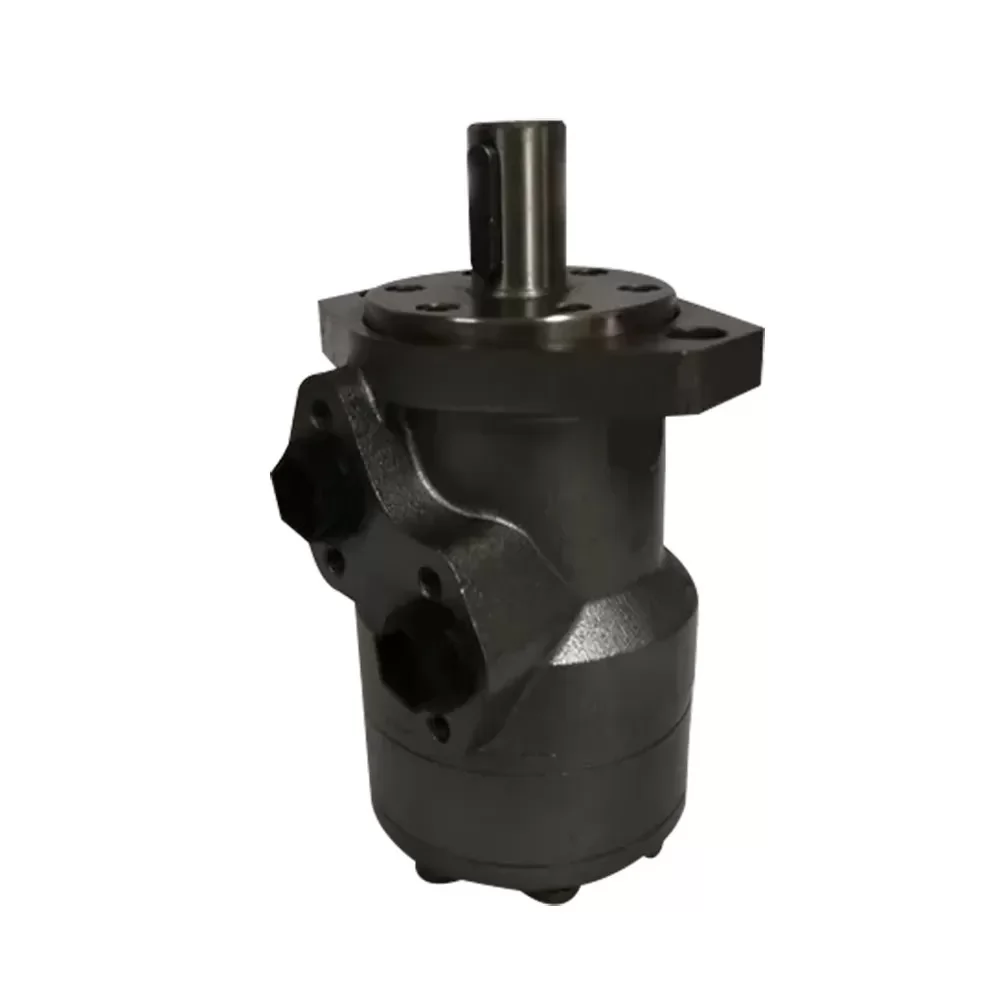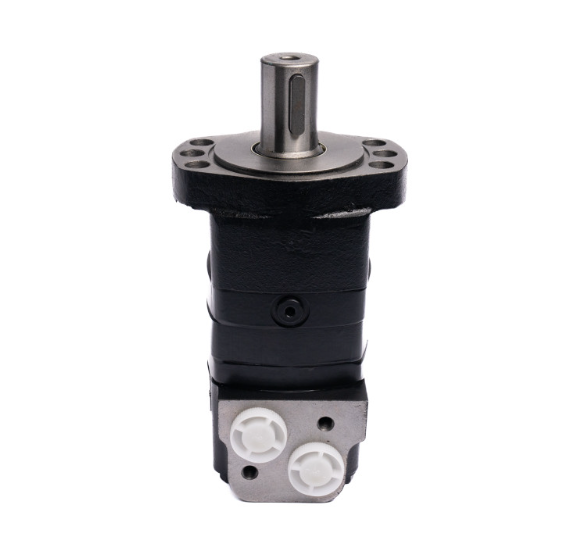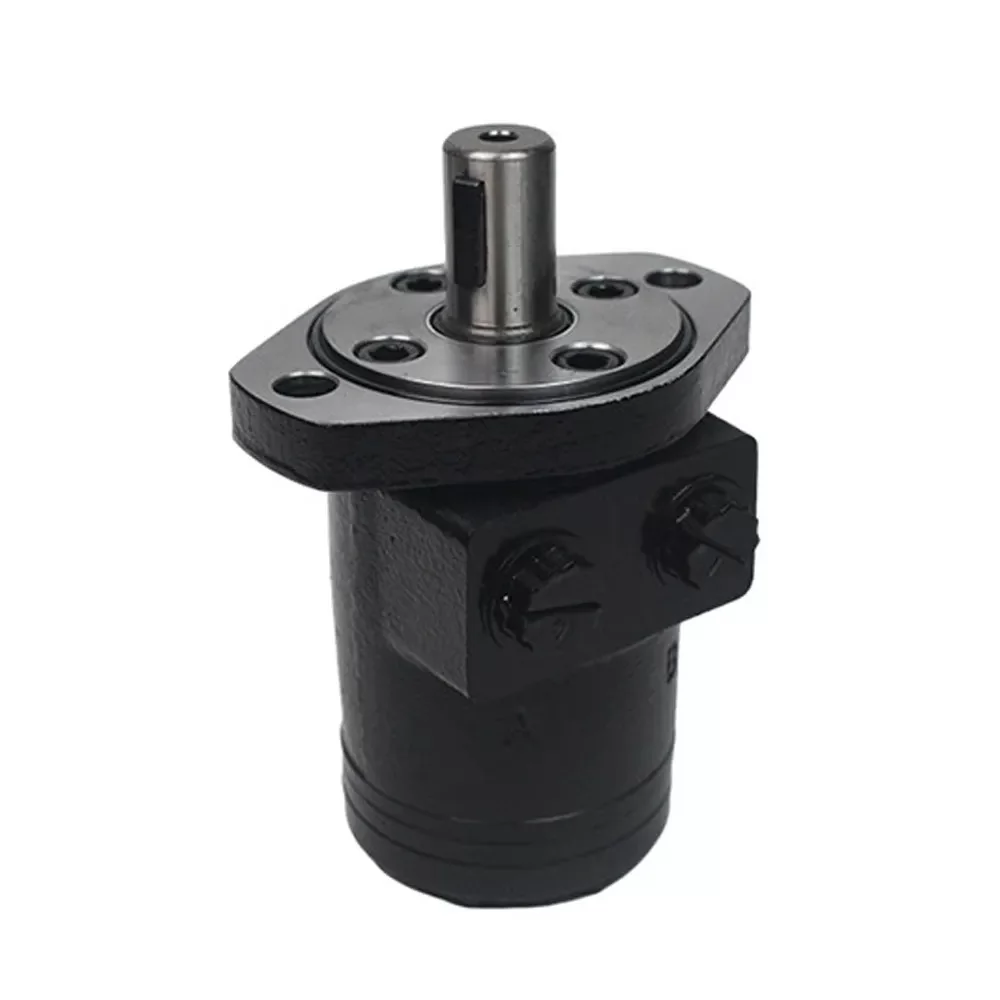

For engineers tasked with specifying compact drive solutions, the BM2 orbital motor occupies a strategic position in the low speed high torque hydraulic motor segment. This review dissects its architecture, benchmarks its real-world performance, and contextualizes its place against established OEM equivalents. The goal is to give specifying engineers and procurement teams a complete reference for sizing, sourcing, and supporting the BM2 across mobile, industrial, and marine applications.
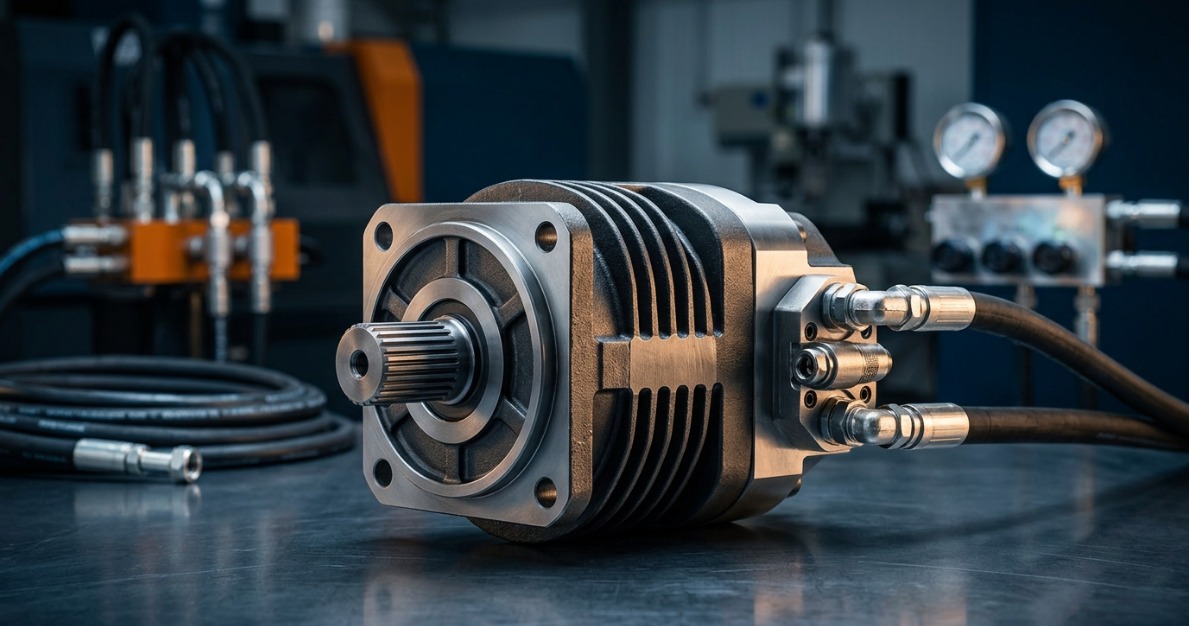
Overview of the BM2 Series Hydraulic Motor Platform
The BM2 is a mid-range gerotor hydraulic motor built around a geroler element set and disc valve distribution. It sits between the compact BM1 and the heavier-duty BM3 within the broader BM family (BM1, BM2, BM3, BM4, BM5), each step up the ladder corresponding to larger displacement, higher torque output, and a larger physical envelope.
In practical terms, the BM2 covers the application band where a BM1 runs out of torque headroom but a BM3 introduces unnecessary mass and cost. It is the workhorse choice for sub-50 kW hydraulic drive circuits demanding consistent low-speed torque.
Design Philosophy and Engineering Architecture
The BM2 orbital motor uses a geroler-style rotor set, where rolling elements between the inner star and outer ring reduce friction compared with a pure gerotor profile. This translates into improved volumetric efficiency and longer service life under continuous duty.
Fluid distribution is handled by a flat disc valve, hydraulically balanced to minimize internal leakage as wear progresses. The compact aluminum-and-cast-iron housing keeps the installation footprint short, which matters when the motor mounts directly into a wheel hub or a tight roller-drive bracket.
Where the BM2 Fits in the Product Hierarchy
Compared with the BM1 (typically 32–200 cc/rev) and BM3 (typically 195–490 cc/rev), the BM2 covers the central 50–400 cc/rev band. Engineers should specify a BM2 when the load requires sustained torque between roughly 90 and 700 N·m at moderate speeds, with shaft loads that do not justify the BM3's heavier bearing housing.
| Series | Displacement Range (cc/rev) | Continuous Torque Band (N·m) | Typical Use |
|---|---|---|---|
| BM1 | 32–200 | 40–280 | Light conveyors, small augers |
| BM2 | 50–400 | 90–700 | Mid-duty drives, sweepers, mixers |
| BM3 | 195–490 | 380–950 | Wheel drives, heavy winches |
| BM4 | 250–625 | 500–1300 | Skid steers, industrial winches |
| BM5 | 315–800 | 700–1700 | Heavy mobile drives |
Core Technical Specifications and Performance Data
The following sections present the full BM2 specification matrix as referenced in current manufacturer datasheets. Values are typical of the consolidated industry standard for BM2 hydraulic motor specifications and should be verified against the specific supplier's published catalog.
BM2 Displacement Variants and Output Range
| Displacement (cc/rev) | Max Continuous Speed (rpm) | Continuous Torque (N·m) | Peak Torque (N·m) | Rated Flow (L/min) |
|---|---|---|---|---|
| BM2-50 | 750 | 92 | 118 | 40 |
| BM2-80 | 600 | 148 | 186 | 50 |
| BM2-100 | 475 | 185 | 235 | 50 |
| BM2-125 | 380 | 232 | 290 | 50 |
| BM2-160 | 300 | 295 | 370 | 50 |
| BM2-200 | 240 | 368 | 462 | 50 |
| BM2-250 | 190 | 460 | 578 | 50 |
| BM2-315 | 150 | 578 | 720 | 50 |
| BM2-400 | 120 | 720 | 905 | 50 |
Pressure Ratings and Flow Characteristics
Across the BM2 lineup, pressure ratings remain consistent regardless of displacement variant, with flow capacity capped to keep tip speeds within the geroler's design envelope.
| Parameter | Value | Notes |
|---|---|---|
| Continuous Pressure (Δp) | 14 MPa | Sustained duty across both ports |
| Intermittent Pressure (Δp) | 17.5 MPa | Short-duration peaks, <10% duty |
| Peak Pressure (Δp) | 20 MPa | Momentary, <5 seconds |
| Max Return Line Pressure | 10 MPa | Without case drain |
| Rated Flow | 40–50 L/min | Variant-dependent |
| Max Intermittent Flow | 60 L/min | Reduced lifespan above rated |
Mechanical Interface Standards
The BM2 ships with several common shaft, port, and mounting configurations to suit retrofit and OEM use.
- Shaft options: Ø25 mm straight keyed, Ø25 mm parallel keyed (DIN 6885), 1-inch tapered, 6B/13T splined (SAE A).
- Mounting flange: Ø50.8 mm pilot with 2-bolt SAE A or 4-bolt wheel-mount pattern.
- Port configurations: G1/2 BSPP standard, 7/8-14 UNF SAE optional, side or rear port orientation.
- Drain port: G1/4, available on extended-life and high-back-pressure variants.
Performance Benchmarking and Real-World Testing
Catalog values describe the design intent. Field performance reveals how the BM2 behaves once it leaves the test bench, particularly across the operating pressure envelope.
Volumetric and Mechanical Efficiency Analysis
Across typical operating points, BM2 motors deliver volumetric efficiency in the 92–95% range and mechanical efficiency between 88 and 92%. The combined overall efficiency peaks near mid-pressure and mid-flow, dropping at the extremes.
| Operating Point | Volumetric Efficiency | Mechanical Efficiency | Overall Efficiency |
|---|---|---|---|
| Low load (5 MPa) | 95% | 83% | ~79% |
| Mid load (10 MPa) | 94% | 91% | ~85% |
| High load (14 MPa) | 92% | 89% | ~82% |
| Peak (17.5 MPa) | 89% | 87% | ~77% |
Starting Torque vs. Running Torque
Cold-start torque on a BM2 typically reaches 88–92% of the running torque value at equivalent pressure. For an application with a verified break-away load of 400 N·m, an engineer should size the motor to a continuous torque rating of at least 450 N·m to maintain start reliability across the temperature range.
Running torque consistency tightens once the motor reaches steady-state temperature, with cycle-to-cycle variation typically under 3% at constant pressure.
Noise, Vibration, and Thermal Behavior
At rated conditions, the BM2 produces 70–75 dB(A) measured at 1 meter, depending on displacement and mounting structure. Steel mounting brackets transmit more structure-borne noise than rubber-isolated mounts, a factor worth noting for cab-adjacent installations.
Continuous operating fluid temperature should be held between 30°C and 70°C, with absolute limits of -20°C cold start and 80°C maximum. Sustained operation above 80°C accelerates seal degradation and disc valve scoring.
Comparative Review: BM2 vs. Competing Orbital Motors
The BM2 is most often cross-shopped against Danfoss and Eaton equivalents, and against domestic alternatives carrying different prefix conventions. The comparison below clarifies where it competes and where it falls short.
BM2 vs. Danfoss OMP and Eaton H Series
| Parameter | BM2 | Danfoss OMP | Eaton H Series |
|---|---|---|---|
| Displacement Range | 50–400 cc/rev | 50–400 cc/rev | 49–392 cc/rev |
| Continuous Pressure | 14 MPa | 14 MPa | 13.8 MPa |
| Peak Pressure | 20 MPa | 22.5 MPa | 20.7 MPa |
| Volumetric Efficiency | 92–95% | 94–96% | 93–95% |
| Shaft Standard | Ø25 keyed / SAE A | Ø25 keyed / SAE A | SAE A 6B/13T |
| Price Index | 1.0 | 2.5–3.0 | 2.3–2.8 |
Dimensionally the BM2 mirrors the Danfoss OMP, which is why it dominates aftermarket replacement scenarios. The performance gap is narrowest at moderate loads and widens slightly at peak pressure, where the OMP retains a 2.5 MPa headroom advantage.
BM2 vs. BMP and BMR Equivalents
Chinese manufacturers use overlapping prefixes that confuse cross-reference work. In practical terms:
- BMP / BM2: Generally interchangeable, both targeting the OMP envelope. Mounting and port patterns usually match.
- BMR: A roller-stator variant with longer service life claims, typically priced 15–25% above standard BM2.
- BMER: Heavy-duty roller-stator unit with tapered roller bearings, suited for higher radial shaft loads.
Because the naming convention is not uniformly enforced, dimensional drawings remain the only reliable equivalency check.
Total Cost of Ownership Considerations
The BM2's purchase price advantage of 60–70% versus OEM motors is compelling, but TCO depends on duty cycle. For light-to-moderate duty under 6,000 service hours, BM2 economics are excellent. For continuous heavy-duty service beyond 10,000 hours, the OEM premium often pays back through longer mean time between failures and broader seal kit availability in regional service networks.
Application Suitability and Industry Use Cases
Mobile and Agricultural Equipment
The BM2 fits naturally into auger drives, conveyor systems, sweeper brushes, and small winches on tractors, skid loaders, and orchard equipment. For augers handling grain or fertilizer, BM2-160 to BM2-250 variants provide the torque overhead needed for occasional bridging and clog-clearing without oversizing.
Industrial and Material Handling
Roller drives in packaging lines, mixer paddle drives, and small industrial winches benefit from the BM2's compact footprint and bidirectional consistency. The BM2-100 and BM2-125 are common choices for variable-speed roller conveyors operating below 250 rpm.
Marine and Specialty Applications
For marine deck equipment, fluid compatibility takes priority. The standard BM2 supports HL, HM, and HV mineral oils. For biodegradable HEES or HEPG fluids, FKM (Viton) seal variants are required and should be specified at order time. Salt-spray environments call for zinc-nickel plated housings or stainless shaft options where the supplier offers them.
Installation, Maintenance, and Service Life
Installation Best Practices
Misalignment is the most common premature-failure cause. Maintain shaft-to-load coupling concentricity within 0.1 mm TIR and angular alignment within 0.5°. Direct wheel-hub mounting eliminates this risk entirely and is preferred where geometry allows.
Filtration should meet ISO 4406 20/18/15 or cleaner. For high-duty applications, target 18/16/13. A case drain is not required for standard back pressures below 1.5 MPa, but should be added if return-line pressure exceeds that threshold or if the motor is used in series with another consumer.
Recommended Maintenance Intervals
| Task | Light Duty | Moderate Duty | Heavy Duty |
|---|---|---|---|
| Visual inspection | 500 h | 250 h | 100 h |
| Fluid analysis | 2,000 h | 1,000 h | 500 h |
| Shaft seal replacement | 5,000 h | 3,000 h | 2,000 h |
| Full overhaul | 12,000 h | 8,000 h | 5,000 h |
Common Failure Modes and Diagnostics
- Disc valve wear: Symptoms include rising case drain leakage, dropping output speed at constant flow, and audible high-frequency whine. Remediated through valve plate replacement and surface lapping.
- Shaft seal failure: External oil weep at the front face. Replace seal and inspect shaft journal for scoring before reassembly.
- Geroler element scoring: Diagnosed via reduced volumetric efficiency and metallic particles in fluid analysis. Indicates contamination ingress or sustained over-pressure operation.
Procurement Guidance for Engineering Buyers
Specification Checklist Before Ordering
- Required displacement (cc/rev) based on flow and target speed.
- Continuous and peak pressure differential.
- Shaft type and dimensions (keyed, splined, tapered).
- Mounting flange pattern and pilot diameter.
- Port type, size, and orientation (side or rear).
- Case drain requirement (yes/no based on circuit topology).
- Fluid type and viscosity range.
- Operating temperature extremes.
- Seal material (NBR standard, FKM for synthetic or biodegradable fluids).
Quality Indicators and Supplier Vetting
Reputable BM2 suppliers maintain ISO 9001 certification with traceable batch testing reports. Request a sample test certificate covering volumetric efficiency, leakage, and pressure-hold testing. Warranty terms should cover at least 12 months or 2,000 operating hours, with seal kits and rotor sets stocked as service items rather than only as full-motor replacements.
Suppliers unwilling to provide dimensional drawings, material certifications, or batch test reports should be treated with caution regardless of price advantage.
Frequently Asked Questions
What is the maximum continuous pressure a BM2 motor can handle?
The BM2 series is rated for 14 MPa continuous, 17.5 MPa intermittent (short-duration peaks under 10% duty), and 20 MPa absolute peak for momentary events under five seconds. Sustained operation above 14 MPa significantly shortens disc valve and bearing life.
Can the BM2 series operate bidirectionally?
Yes, the BM2 is fully bidirectional with symmetric performance in both rotational directions. Pressure ratings apply equally across both ports. The only asymmetry to note is return-line pressure capacity, which is limited to 10 MPa without a case drain regardless of rotation direction.
Is the BM2 interchangeable with Danfoss OMP or Eaton H Series motors?
Dimensionally the BM2 closely follows the Danfoss OMP envelope, including mounting flange and shaft options, making it a frequent retrofit replacement. Eaton H Series interchangeability is partial and requires verification of shaft spline standard and port thread type. Always confirm against dimensional drawings before committing to a substitution.
What hydraulic fluids are compatible with BM2 motors?
Standard BM2 motors with NBR seals support HL, HM, and HV mineral hydraulic oils with viscosity in the 15–100 cSt operating range and optimal performance at 20–40 cSt. For HEES, HEPG, or HFDU fluids, specify FKM seal variants. Water-glycol fluids are not recommended without explicit supplier approval and pressure de-rating.
How long does a BM2 hydraulic motor typically last?
Service life varies with duty cycle, filtration, and pressure loading. Under light duty with ISO 4406 20/18/15 filtration and pressures below 10 MPa, expect 8,000–12,000 operating hours. Moderate duty at rated pressure typically yields 5,000–8,000 hours. Continuous heavy duty near peak pressure reduces this to 2,500–4,000 hours.
What is the difference between BM2 and BMR-2 designations?
BM2 typically denotes a standard geroler-element motor, while BMR-2 designations from some Chinese manufacturers indicate a roller-stator variant with extended life characteristics. However, naming conventions are not standardized across suppliers, so two motors marked BMR-2 from different brands may not share dimensions or performance specs. Confirm equivalency through the manufacturer's dimensional drawing and specification sheet rather than the prefix alone.