The global hydraulic equipment market is projected to exceed $52 billion by 2030, driven by expanding demand across construction, mining, agriculture, and industrial automation. Yet behind that growth lies a persistent challenge: what separates reliable hydraulic systems from costly, recurring failures?
The answer almost always traces back to two factors — precision manufacturing and custom engineering. When hydraulic system components are designed with tight tolerances, matched to real operating conditions, and built from verified materials, they perform. When they're not, downtime multiplies and total cost of ownership climbs fast.
This guide breaks down the core technology behind modern fluid power systems, explores industry-specific applications, and examines what to look for in a hydraulic pump manufacturer that delivers lasting solutions rather than off-the-shelf compromises.
The Evolution of Hydraulic Power Systems
From Basic Fluid Mechanics to Advanced Industrial Fluid Power Equipment
Hydraulic technology has evolved dramatically since Blaise Pascal first described fluid pressure transmission in the 17th century. Early systems were crude — simple presses and jacks with minimal control. Today's industrial fluid power equipment operates at pressures exceeding 350 bar, with electronic proportional control, load-sensing circuits, and energy-recovery features that would have been unimaginable a generation ago.
Modern demands have shifted the goalposts. Customers require higher efficiency, longer service life, reduced noise, and — increasingly — systems tailored to non-standard operating envelopes. Generic catalog components often fall short when real-world conditions involve extreme temperatures, unusual mounting geometries, or aggressive duty cycles.
Why Precision Manufacturing Defines Hydraulic Reliability
In hydraulic pump manufacture, machining tolerances measured in microns determine whether a system runs for 20,000 hours or fails at 5,000. Internal leakage paths created by poor surface finishes reduce volumetric efficiency. Misaligned bores accelerate seal wear. Inconsistent heat treatment leads to premature fatigue cracking under cyclic loading.
This is where non-standard customization becomes a genuine competitive advantage — not a marketing phrase. When a manufacturer can adjust bore tolerances, specify seal materials for a particular fluid chemistry, or redesign a port configuration to fit an existing machine envelope, the resulting component integrates cleanly and lasts longer. That capability requires vertically integrated R&D, precision CNC machining, and rigorous quality control working in concert.
Core Hydraulic System Components — A Technical Breakdown
Positive Displacement Pump Technology Explained
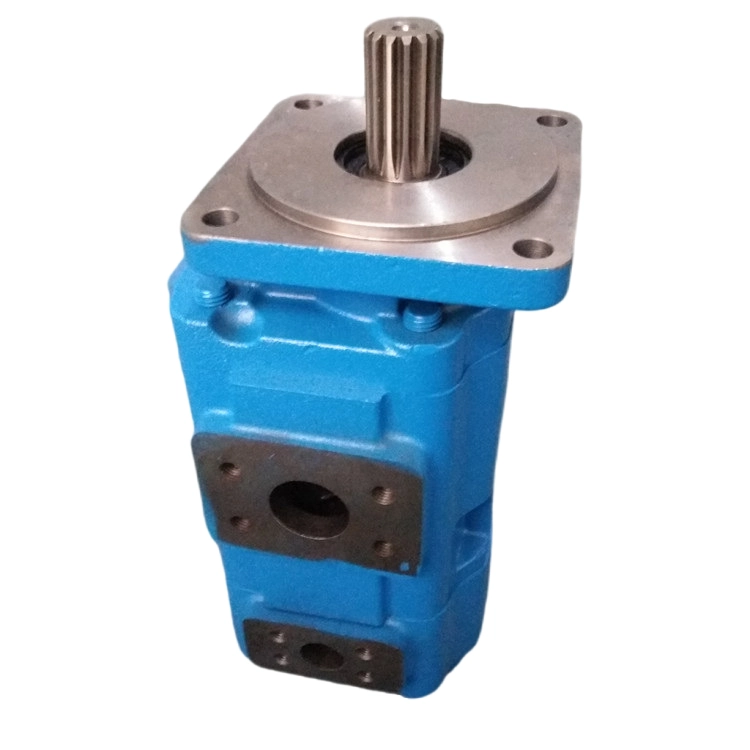
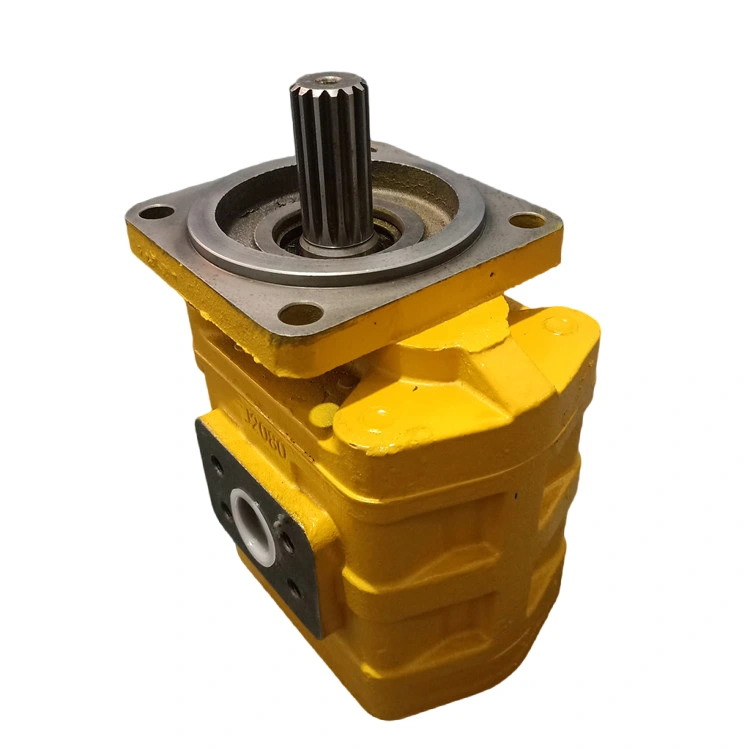
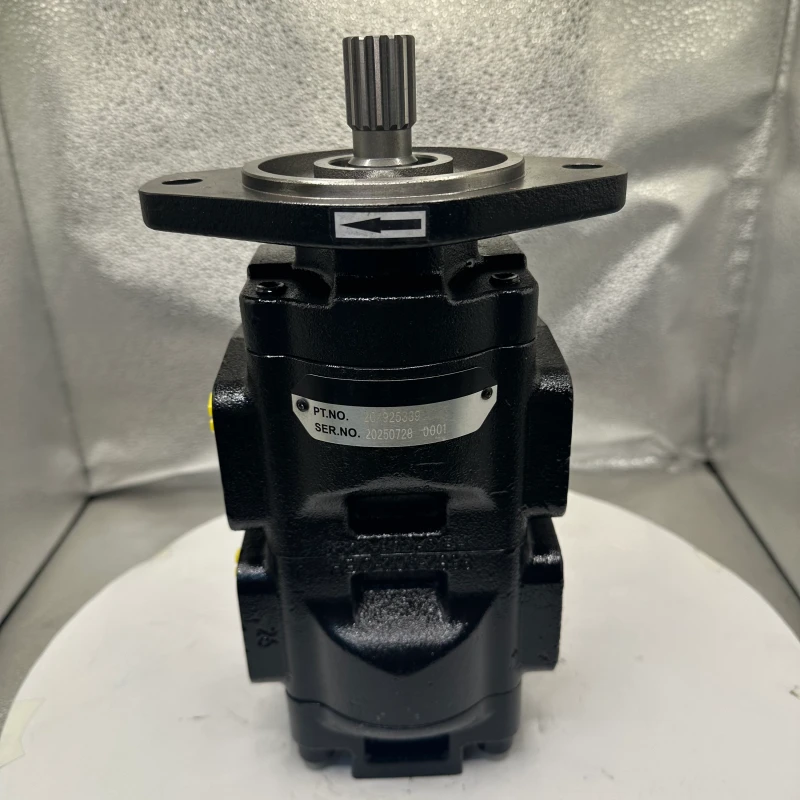
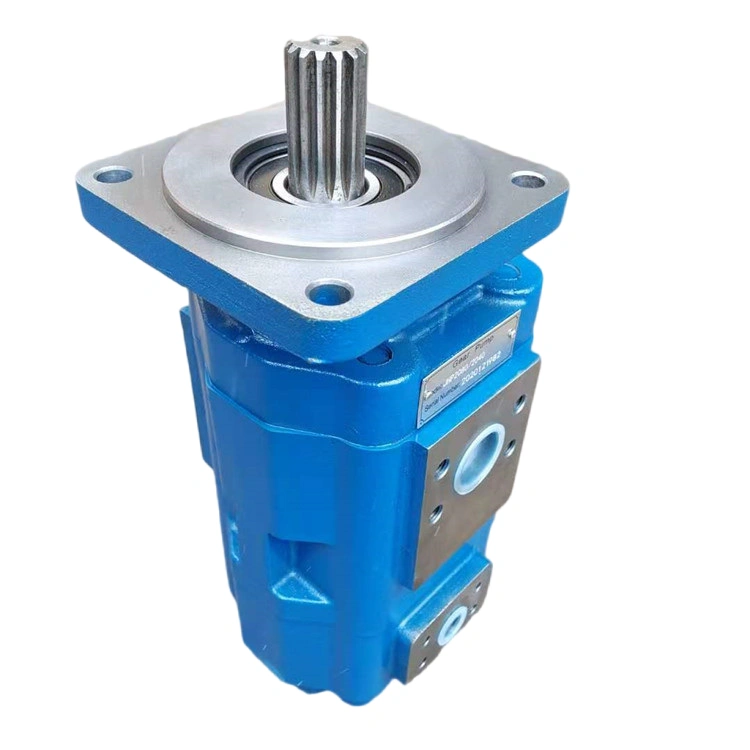
Positive displacement pump technology forms the heart of virtually every hydraulic power system. Unlike hydrodynamic (centrifugal) pumps that rely on velocity conversion, positive displacement pumps trap a fixed volume of fluid per revolution and force it into the discharge line. This makes them capable of generating high pressures independent of flow rate.
The three primary types serve different application profiles:
- Gear pumps — External or internal gear designs offer simplicity, low cost, and good tolerance to contamination. Ideal for mobile equipment and moderate-pressure circuits (up to ~250 bar).
- Vane pumps — Balanced designs deliver smooth, low-pulsation flow with good volumetric efficiency. Common in industrial applications requiring quiet operation and consistent pressure.
- Piston pumps — Axial or radial configurations achieve the highest pressures (up to 450 bar) and best efficiency. Variable displacement versions enable load-sensing and power-on-demand control strategies.
Selection depends on system pressure requirements, flow demand, fluid viscosity range, acceptable noise levels, and whether variable displacement is needed for energy management.
Hydraulic Power Unit Design Fundamentals
A hydraulic power unit (HPU) is more than a pump bolted to a motor. Effective hydraulic power unit design integrates multiple subsystems into a coherent package that maintains fluid condition, manages heat, and delivers precise flow and pressure to downstream actuators.
Key design considerations include:
- Reservoir sizing — Typically 3–5 times pump flow rate for adequate heat dissipation and air separation in industrial systems; mobile units often use smaller ratios with supplemental cooling.
- Filtration strategy — Suction strainers, pressure filters, and return-line filters each target different contamination sources. Target cleanliness class (ISO 4406) should match component sensitivity.
- Thermal management — Air-cooled or water-cooled heat exchangers sized to maintain fluid temperature within 40–60°C for optimal viscosity and seal life.
- Valve integration — Directional, pressure, and flow control valves configured as manifold assemblies reduce leak points and simplify maintenance.
Design choices at the HPU level cascade through the entire system. An undersized reservoir leads to overheating. Inadequate filtration accelerates pump wear. Poor valve layout creates pressure drops that waste energy.
Component Comparison Table
| Component | Function | Key Selection Criteria | Common Applications |
|---|---|---|---|
| Gear Pumps | Flow generation | Viscosity range, pressure rating, contamination tolerance | Mobile equipment, agriculture |
| Piston Pumps | High-pressure delivery | Volumetric efficiency, variable displacement capability | Construction machinery, mining |
| Directional Valves | Flow routing and actuator control | Response time, port configuration, flow capacity | Industrial automation, robotics |
| Hydraulic Cylinders | Linear force and motion | Bore size, stroke length, seal type, rod coating | Special vehicles, shipbuilding |
| Power Units | Complete system drive and fluid conditioning | Duty cycle, thermal capacity, reservoir volume | Manufacturing lines, test rigs |
Industry Applications and Custom Engineering Solutions
Construction Machinery and Mining Equipment
Construction and mining environments impose some of the harshest conditions on hydraulic system components: high shock loads, extreme temperature swings, abrasive dust ingress, and relentless duty cycles. Excavators, loaders, crushers, and drilling rigs depend on hydraulic circuits that cannot afford unplanned downtime — every hour of stoppage carries direct production cost.
Custom hydraulic solutions for these sectors often involve oversized rod diameters for shock resistance, heavy-duty wiper seals to exclude contamination, and pump configurations optimized for variable-load efficiency. Non-standard cylinder mounting arrangements are common when retrofitting or upgrading existing machines where envelope constraints don't match catalog dimensions.
Agricultural Equipment and Special Vehicles
Agricultural hydraulics face a unique combination of challenges: compact installation spaces, exposure to moisture and chemical agents, wide temperature operating ranges, and the need for reliable performance in remote locations where service access is limited.
Special vehicles — from municipal utility trucks to military transport — add further complexity with non-standard fitting requirements, multi-function circuits, and weight restrictions. These applications frequently demand custom-engineered hydraulic components that simply don't exist in standard product catalogs: unusual port orientations, integrated multi-function manifolds, or cylinders with non-standard stroke-to-bore ratios.
Industrial Automation and Shipbuilding
Industrial automation requires hydraulic systems that deliver precise, repeatable motion with minimal position error. Servo-hydraulic actuators, proportional valve circuits, and closed-loop feedback systems demand components manufactured to exceptionally tight tolerances.
Shipbuilding introduces corrosion resistance as a primary design driver. Marine-grade hydraulic cylinders require specialized rod coatings (ceramic or nickel-chrome), stainless steel fittings, and seal materials rated for saltwater exposure. Compliance with classification society standards (DNV, Lloyd's, ABS) adds documentation and traceability requirements that only disciplined manufacturers can consistently meet.
Hydraulic Cylinder Repair Services and Lifecycle Management
Diagnosing Common Hydraulic Failures
Most hydraulic cylinder failures trace to a limited set of root causes. Identifying the actual failure mechanism — rather than just replacing the failed part — prevents recurrence and extends system life.
- Seal degradation — Caused by fluid incompatibility, excessive temperature, or improper installation. Symptoms include external leakage and gradual loss of holding force.
- Contamination damage — Particulate ingress scores cylinder bores and rod surfaces, accelerating seal wear in a destructive feedback loop.
- Pressure loss — Internal bypass from worn piston seals or scored bore surfaces reduces effective force output without visible external leakage.
- Rod damage — Bending loads, side loading, or corrosion pitting compromise the rod surface, destroying seal integrity.
A root-cause analysis approach — examining fluid samples, measuring bore dimensions, and inspecting seal failure patterns — distinguishes professional hydraulic cylinder repair services from simple parts-swapping.
Repair vs. Replace Decision Framework
| Factor | Repair Recommended | Replacement Recommended |
|---|---|---|
| Cylinder age | Less than 60% of design life consumed | Beyond 80% of design life |
| Damage extent | Surface scoring under 0.05mm depth | Deep pitting, structural cracks, or tube distortion |
| Downtime tolerance | Low urgency, scheduled maintenance window available | Production-critical, immediate function required |
| Parts availability | Standard seals, rods, and glands readily sourced | Obsolete specifications, discontinued models |
| Cost ratio | Repair cost below 50% of replacement | Repair cost exceeds 65% of replacement |
When replacement is the better path, working with a manufacturer capable of non-standard customization means the new cylinder can incorporate design improvements — better seals, upgraded rod coatings, or modified mounting — rather than simply duplicating the original failure-prone design.
Preventive Maintenance Strategies
Proactive lifecycle management dramatically extends hydraulic component service life and reduces unplanned downtime. Key practices include:
- Fluid analysis — Sample hydraulic fluid every 500–1,000 operating hours. Test for particle count (ISO 4406), water content, viscosity change, and acid number to catch degradation before it damages components.
- Seal inspection intervals — Visually inspect rod seals and wipers at scheduled intervals. Any external weeping warrants immediate investigation before contamination enters the system.
- Filtration upgrades — Retrofit older systems with higher-efficiency filters (β₁₀ ≥ 200) and add breather filters to reservoirs. Contamination control is the single most cost-effective maintenance investment in any hydraulic circuit.
- Temperature monitoring — Install fluid temperature sensors and set alarm thresholds. Operating consistently above 60°C halves seal life and accelerates fluid oxidation.
What Sets a Specialized Hydraulic Manufacturer Apart
Integrated R&D and Precision Machining Capabilities
The difference between a component supplier and a solutions partner lies in vertical integration. When R&D, precision machining, assembly, and testing operate under one roof, design intent carries through to the finished product without the information loss that plagues multi-vendor supply chains.
Olive Branch Hydraulics operates from this integrated model. Based in Ningjin County, Xingtai City — within Hebei Province's established equipment manufacturing corridor — the company combines regional industrial expertise with global delivery capability. From initial concept discussion through prototype validation to series production, every stage is managed internally, ensuring that custom specifications translate accurately into finished components.
Non-Standard Customization as a Core Competency
Many hydraulic challenges don't fit neatly into catalog solutions. Unusual mounting configurations on legacy machines. Extreme operating temperatures that demand specialized seal compounds. Cylinder geometries dictated by tight installation envelopes. Integration with outdated systems where original manufacturers no longer exist.
A manufacturer built around problem-solving — rather than simply producing standard parts — reduces total cost of ownership by delivering components that fit correctly the first time, perform reliably under actual operating conditions, and integrate without costly machine modifications. This approach treats each project as an engineering challenge, not a catalog lookup exercise.
Quality Control in Hydraulic Pump Manufacture
Reliable hydraulic pump manufacture demands quality control that extends beyond final inspection. Effective protocols include:
- Material traceability — Full documentation from raw material certification through finished component, enabling root-cause analysis if field issues arise.
- In-process measurement — Critical dimensions verified at multiple machining stages, not just at completion, catching deviations before they compound.
- Pressure and leakage validation — Every assembled unit tested at rated pressure and proof pressure, with internal and external leakage measured against defined acceptance criteria.
- Performance mapping — Flow, pressure, and efficiency recorded across the operating range to verify compliance with design specifications.
These protocols apply consistently whether the component is destined for construction machinery, agricultural equipment, mining operations, special vehicles, industrial automation lines, or shipbuilding applications. The standard doesn't change based on the destination — reliability is non-negotiable regardless of sector.
Frequently Asked Questions
What is the difference between gear pumps and piston pumps?
Gear pumps use meshing gears to displace fluid, offering simplicity, lower cost, and good contamination tolerance. They typically operate at pressures up to 250 bar with volumetric efficiencies around 85–90%. Piston pumps use reciprocating pistons in a cylinder block, achieving pressures up to 450 bar with volumetric efficiencies exceeding 95%. Piston pumps also offer variable displacement capability for energy-efficient load-sensing systems. Gear pumps suit cost-sensitive mobile applications; piston pumps are preferred where high pressure, high efficiency, or variable flow is required.
How do I select the right hydraulic power unit for my application?
Start with four primary parameters: required flow rate (determined by actuator speed and size), maximum system pressure (determined by load forces), duty cycle (continuous, intermittent, or occasional), and operating environment (ambient temperature, available cooling, space constraints). From there, consider reservoir sizing for adequate heat rejection, filtration class matched to the most sensitive component in the circuit, and control valve configuration for the required motion sequences. A manufacturer with hydraulic power unit design expertise can help optimize these trade-offs for your specific conditions.
Can hydraulic components be custom-engineered for non-standard applications?
Yes. The process typically follows a structured path: specification review (operating parameters, envelope constraints, interface requirements), concept design with feasibility analysis, prototype manufacture, validation testing under simulated operating conditions, and then series production. Non-standard customization covers everything from modified port locations and unusual stroke lengths to complete ground-up designs for applications where no existing product fits. The key is working with a manufacturer whose engineering team engages early in the design process rather than simply quoting against a finished drawing.
What maintenance extends hydraulic pump lifespan?
Three factors have the greatest impact: fluid cleanliness, temperature management, and scheduled seal replacement. Maintain fluid cleanliness to ISO 4406 class 18/16/13 or better for gear pumps, and 16/14/11 for piston pumps. Keep operating temperature between 40–60°C to preserve both fluid properties and seal elasticity. Replace shaft seals and internal wear components at manufacturer-recommended intervals rather than waiting for failure. Regular fluid sampling (every 500–1,000 hours) provides early warning of developing problems before they cause catastrophic pump damage.
How does positive displacement pump technology differ from hydrodynamic pumps?
Positive displacement pumps deliver a fixed volume of fluid per revolution regardless of discharge pressure, making them suitable for hydraulic systems that require controlled flow against high resistance. Hydrodynamic (centrifugal) pumps convert kinetic energy to pressure energy and deliver variable flow depending on system resistance — output flow decreases as back-pressure increases. Hydraulic power systems use positive displacement designs almost exclusively because they can generate the high pressures (200–450 bar) required for compact force transmission, while hydrodynamic pumps are better suited to high-volume, low-pressure fluid transfer applications like water distribution and process circulation.
Partner With Olive Branch Hydraulics — Engineering Solutions, Not Just Components
If you're facing a hydraulic challenge — whether it's a custom cylinder design for a tight installation envelope, a power unit that needs to perform under extreme conditions, a legacy system requiring reverse-engineered replacement components, or a fleet maintenance strategy that reduces unplanned downtime — our engineering team is ready to work through it with you.
We solve problems. From our integrated manufacturing base in Ningjin County, Hebei Province, we serve customers worldwide across construction, agriculture, mining, special vehicles, industrial automation, and shipbuilding. Every project begins with understanding your actual operating conditions and ends with validated, production-ready components.
Contact Olive Branch Hydraulics today to discuss your hydraulic requirements with our engineering team. Whether you need a single custom cylinder, a complete hydraulic power unit, or ongoing technical partnership for complex fluid power systems — we're built to deliver.
Olive Branch Hydraulics — R&D, Precision Manufacturing, and Custom Engineering from China's Equipment Manufacturing Heartland to Your Operation, Worldwide.