
Two pumps can both be sold as "A10VSO compatible" and still have different shaft, control and port codes, and only one of them will bolt onto your machine and hold pressure. A hydraulic pump supplier for industrial equipment is more than a list of brand names with a price sheet. The real work is matching the complete assembly code, testing the pump and shipping it reliably.
- Codes decide fit: compatibility depends on the full assembly code, not the series name.
- Duty cycle drives type: pick piston, vane or gear by pressure, control needs and hours of operation.
- Replacements need three inputs: the original code, the machine model and the equipment details.
- QC belongs in the quote: agree on test items and documents before the PO.
- Cost is lifetime cost: judge total cost of ownership, not unit price.
What Does a Hydraulic Pump Supplier for Industrial Equipment Actually Do?
A competent pump supplier takes a part code or a machine requirement and turns it into a pump that fits, has been tested and ships with the agreed documents. Reselling a brand name is a small part of that work. Code verification, inspection and export logistics carry most of the risk you are paying the supplier to take on.
Series Name vs. Complete Assembly Code
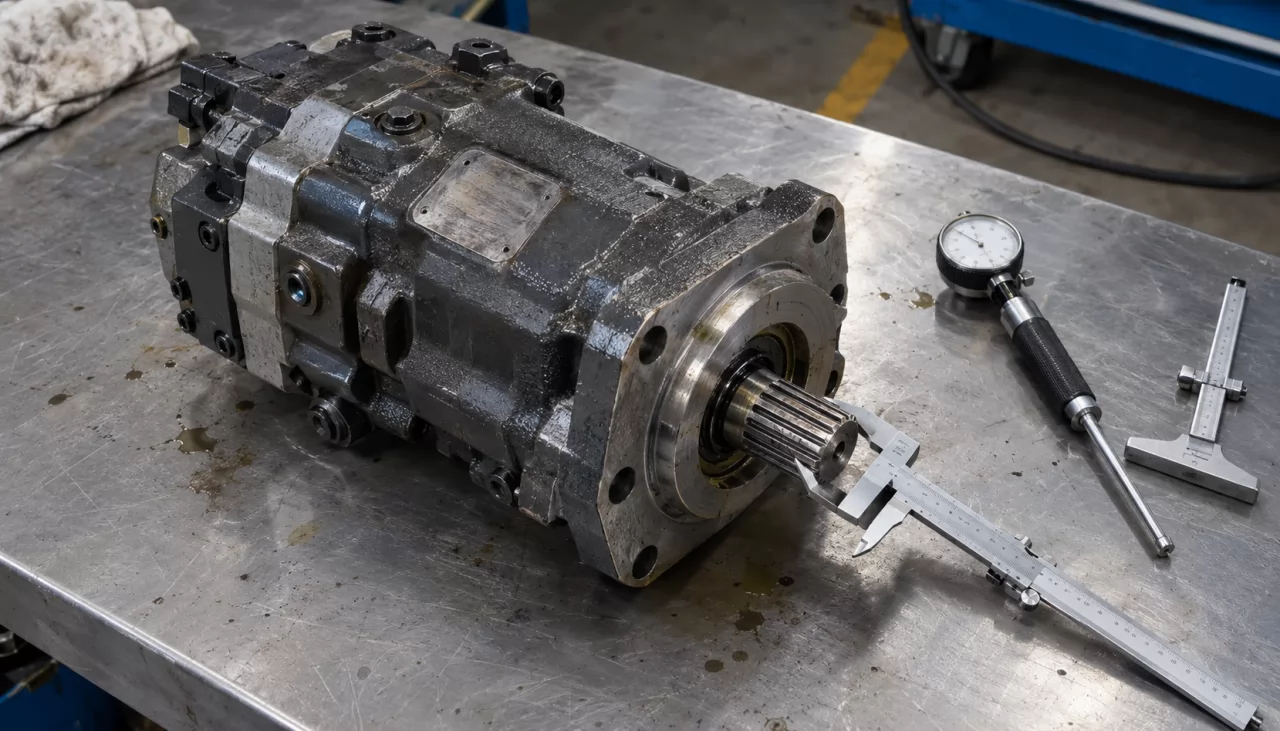
A complete assembly code is the full type designation on the pump nameplate. It records displacement, control, design series, direction of rotation, shaft, mounting flange, port layout and seal material. The series name records only the pump family.
Take an A10VSO. The name tells you it is a variable axial piston pump for open circuits. It does not tell you whether the unit is a size 45 or a size 71. It also leaves out whether the control is a pressure compensator (DR) or a pressure-flow control (DFR), whether the shaft is keyed or splined, and whether it turns clockwise or counter-clockwise. The same gaps apply to a PV2R vane pump, a "PV2R" alone is not a part number.
When a code is incomplete or worn off, the supplier has to rebuild it from measurements and the machine data. Rebuilding a code from that data counts as engineering work.
Why Brand References Are for Identification Only
References to Bosch Rexroth, Parker Hannifin, Vickers and Yuken in a compatible-pump catalog are there so you can identify the replacement. They do not show approval by those brands, and the compatible pump does not carry their certifications or warranties.
Any third-party document attached to a listing belongs to whoever issued it. It is not a certificate held by the reseller. Read the listing as an identification aid, then judge the pump on the supplier's own test records and the terms written into your quotation.
Which Pump Type Fits Your Application: Piston, Vane or Gear?
Pump type should follow pressure, flow-control needs, duty cycle and noise limits. Variable piston pumps suit high-pressure, load-sensing duty with long running hours. Vane pumps suit quieter mid-pressure circuits. Gear pumps suit simple, cost-sensitive circuits. Many machines combine two types, so check each circuit on its own.
Variable and Fixed Piston Pumps: What to Ask a Rexroth Compatible Piston Pump Supplier
A variable displacement axial piston pump changes its output by tilting a swashplate. Flow then follows demand instead of being dumped over a relief valve as heat. The A10VSO and A4VSO families cover most stationary industrial duty, with the A4VSO used for larger presses and heavy plant. The A11VO is common in mobile and load-sensing circuits. The A2FO (bent-axis) and A4FO (swashplate) are fixed displacement units, and they make sense where flow is constant.
Before you place an order, ask a Rexroth compatible piston pump supplier the following:
- Control type: does the quote cover the exact control, whether pressure compensator, load-sensing pressure-flow, or power (horsepower) control, with the same adjustment range?
- Through-drive: a through-drive is a rear shaft extension that drives a second pump. Confirm the rear flange and coupling if your machine stacks pumps.
- Code confirmation: how does the supplier check your code, and will it send a dimensional drawing back for sign-off?
- Interchangeability limits: which features (seal material, port threads, control valve housing) differ from the original, if any?
Vane Pumps for Low-Noise Industrial Circuits
A vane pump is a rotary pump in which sliding vanes in a slotted rotor sweep oil around an elliptical cam ring. It produces low pulsation and a quieter sound than most gear pumps. The T6/T7, PV2R, V and SQP series show up in injection molding machines, machine tools and hydraulic power units that run next to operators.
The trade-offs are clear. Vane pumps usually have a lower pressure ceiling than piston pumps. Fixed-displacement double vane pumps waste energy in long idle periods unless the circuit unloads them. In their favor, cartridge kits make field rebuilds quick, which suits maintenance teams that prefer to repair rather than replace.
Gear Pumps and Multi-Section Units
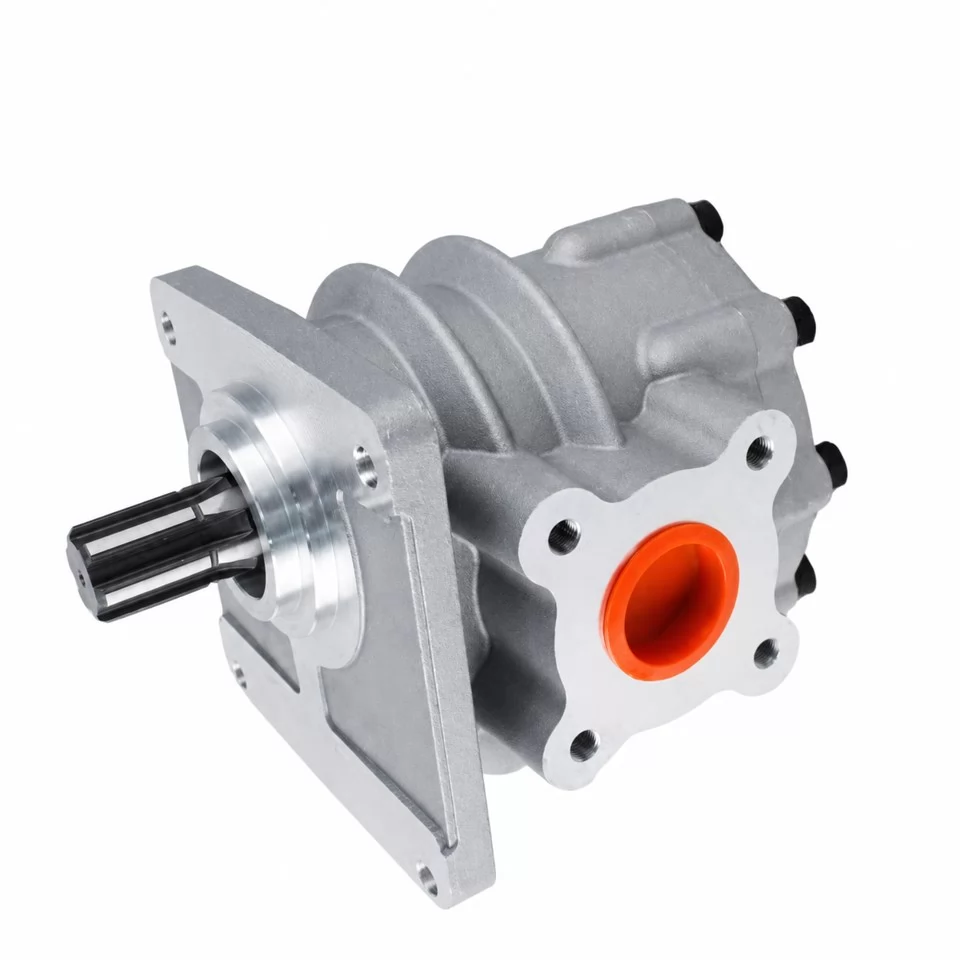
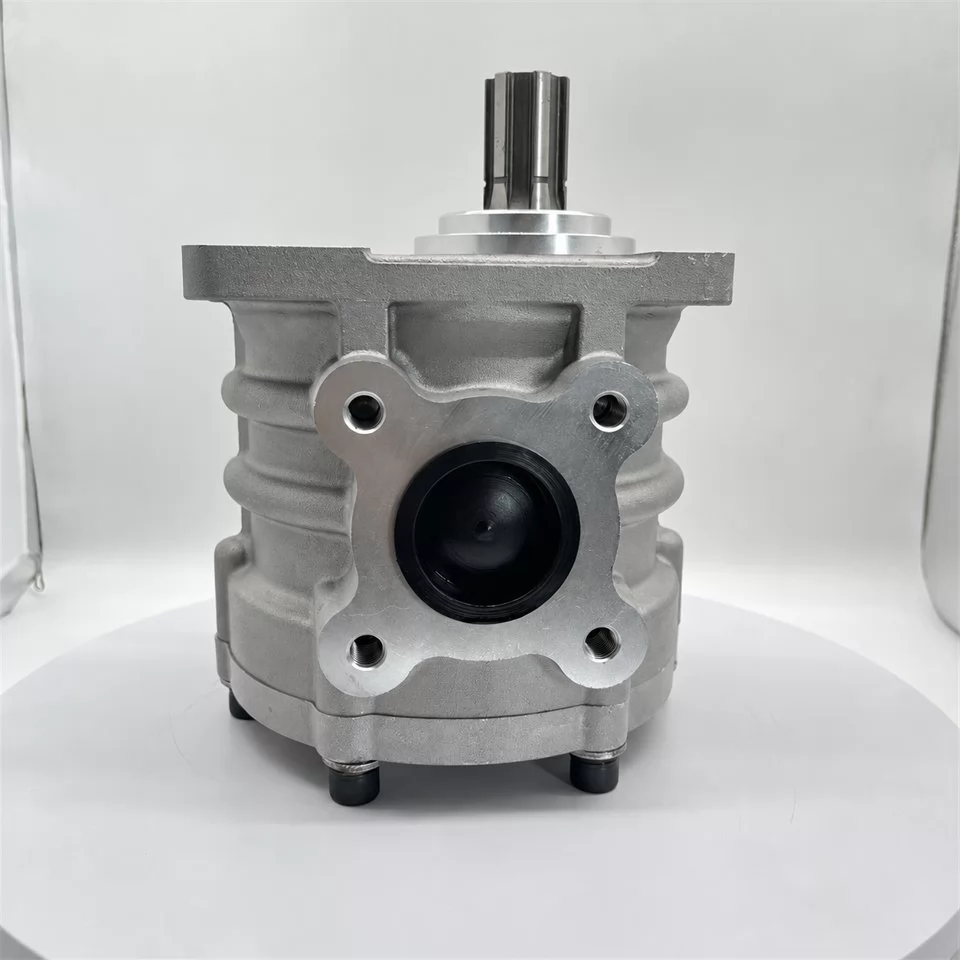
An external gear pump moves oil between the teeth of two meshing gears and the pump housing. The design is simple, tolerant of rough service and inexpensive. The AZPF (Rexroth), PGP (Parker) and ALP/GHP (Marzocchi) families cover a large share of auxiliary, cooling, lubrication and pilot circuits.
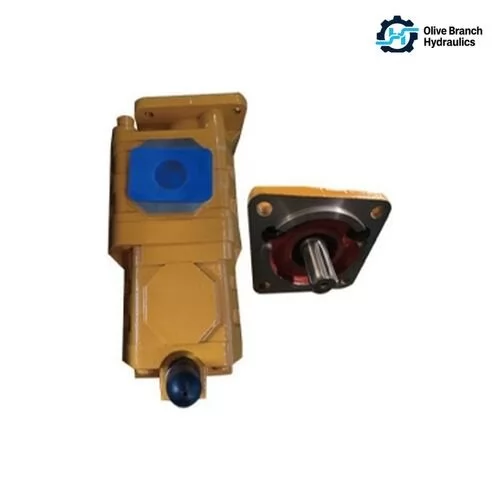
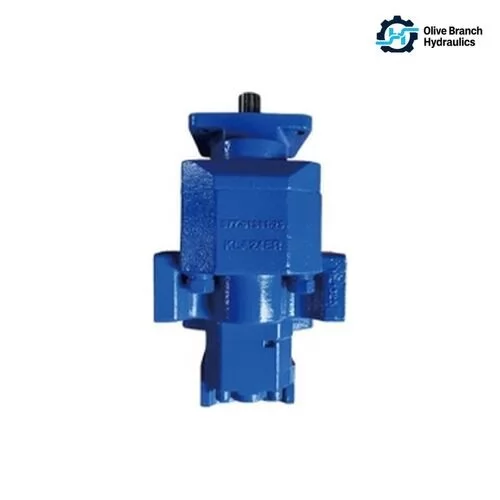
Tandem, triple and quadruple gear pumps put several sections on one shaft, so a single drive can feed separate circuits. For distributors, the P/T configuration matters more than it first appears. P and T are the pressure (outlet) and tank (inlet) ports. A custom port position, size or thread standard (BSP, SAE or metric) can let one stocked pump body serve several machine variants. You end up with fewer SKUs and fewer adapter fittings at the counter.
Replacement Hydraulic Pumps for Industrial Machinery: How Matching Works
Replacement hydraulic pumps for industrial machinery are matched from three inputs: the original product code, the machine model and the equipment details. With all three, a supplier can confirm displacement, control, mounting and porting. With only one or two, the match is a guess, and the guess usually goes wrong on rotation or port orientation.
The machine model matters because OEMs often fit a modified pump with a special control setting or flange. The nameplate does not always spell that out. Equipment details such as operating pressure, drive speed and fluid type tell the supplier whether a standard unit will survive the duty.
What to Send With Your RFQ
- Photograph the nameplate and write out the complete code, character by character.
- State the machine make, model and serial range.
- Identify the shaft type (keyed, splined, tapered) and the flange type (SAE or metric, number of bolts).
- Measure the port sizes and record their orientation (side, rear, or opposite sides).
- Confirm the rotation as viewed from the shaft end.
- Name the control type and its pressure or flow setting, if known.
- Give the normal and peak operating pressure.
- List the quantity per model.
- Specify the destination port and the Incoterm you prefer.
Where One Supplier Can Help
At Olive Branch Hydraulics, replacements are matched from the original code, the machine model and the equipment details. Design drafts and 3D renders go to the buyer for approval before any sample is made.
How to Choose a Reliable Hydraulic Pump Supplier
Choosing a reliable hydraulic pump supplier comes down to technical matching ability, quality control you can verify, clear commercial terms and fast, accurate responses. Catalog size matters less than any of these. A supplier with fewer series that confirms every code will cost you less than one that quotes everything by return email.
- Code verification: check that the supplier asks questions about your code before quoting. Silence suggests it is quoting by series name.
- Pre-sample approval: look for drawings or 3D renders before sampling, because changing a render costs nothing and changing a casting does.
- Verifiable QC: confirm which tests are run and on how many units, since "fully tested" means nothing until it is defined.
- Written commercial terms: get MOQ, lead time, Incoterm and packaging in the quotation, because verbal terms disappear when a shipment slips.
- Response quality: time how long technical answers take and how specific they are. That is how support will feel after a field failure.
Technical Match and Pre-Sample Approval
A credible supplier will sometimes tell you a code cannot be matched, or that a control option has to be substituted. Treat that as a good sign. Approve the drawing first and then the sample, and keep both on file as the reference for every repeat order.
Quality Control You Can Verify
In-process QC catches machining and assembly faults while parts are on the line. Final inspection catches what slips through. Ask whether every unit gets a final inspection before packaging or only an AQL sample.
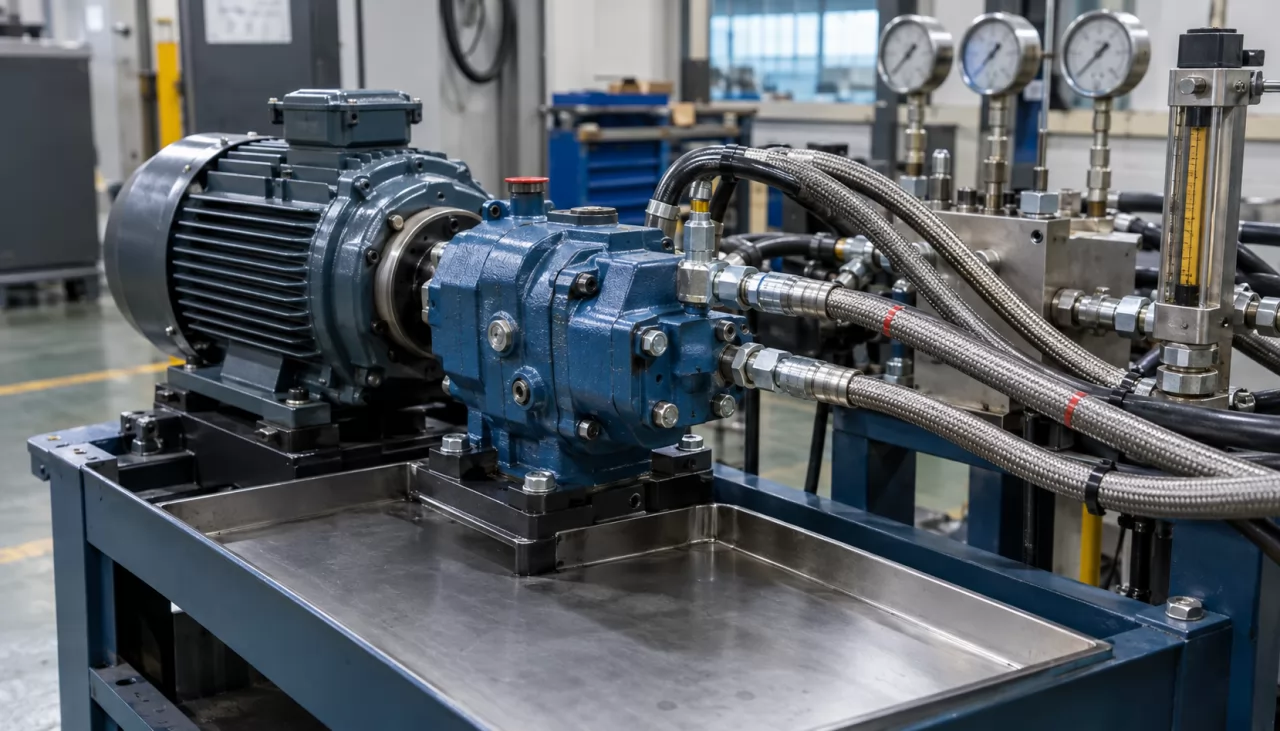
Then write the test items into the quotation: dimensional checks against the approved drawing, leak inspection, and pressure and flow testing where the pump type and test bench allow. Name the documents you need with the shipment, such as test records, a packing list and a certificate of origin. That way none of them becomes an argument later.
Commercial Terms: MOQ, Lead Time, Incoterms and Packaging
Standard compatible pumps usually carry lower MOQs and shorter lead times than custom units. Custom units need drafting, sampling and sometimes new tooling. Large piston pumps are heavy and have exposed shafts and machined flanges, so specify plugged ports, shaft protection, rust-preventive treatment and fumigation-free or fumigated wooden cases suited to the destination.
Before the PO goes out, confirm the Incoterm (FOB, CIF or EXW), the payment milestones, the sample-to-bulk conformity clause and who pays for a mismatched unit.
Rule of thumb: if a supplier will not put its test items and the agreed code in writing, the low unit price is not real.
Where Do Compatible Pumps Earn Their Place? Industrial Use Cases
Compatible hydraulic pumps make the most sense where downtime is expensive and the original part is slow or costly to source. That covers high-cycle presses, heavy plant in dirty environments, and repair businesses that serve mixed fleets. In each case the matching discipline matters more than the brand on the casting.
Die-Casting and Plastics Machinery
A maintenance manager at an injection molding or die-casting plant needs a replacement for a variable piston pump or double vane pump on a press that cycles all day. The control type comes first. A pressure-flow controlled piston pump that is swapped for a fixed unit will run hot and waste energy during hold and cooling phases.
Noise is the second filter. Where operators work beside the machine, a vane pump or a well-matched piston pump is usually the safer choice over a gear pump. Confirm the control setting range and response, not just the displacement.
Metallurgy and Mining Equipment
Rolling mills, furnaces, crushers and underground equipment run hydraulics in heat, dust and scale. The buyer here is usually a plant engineer or a mining service contractor who cannot wait weeks for a pump.
Look at seal material for fluid temperature and fluid type, including fire-resistant fluids where they are used. Check the filtration upstream. A target cleanliness code under ISO 4406 (the international standard for coding solid particle contamination in hydraulic fluid) protects a new pump better than any warranty clause. Keep at least one matched spare per critical line on the shelf.
Mixed Fleets for Maintenance Distributors
A distributor serving both industrial plants and construction-machinery workshops needs breadth without dead stock. A practical mix pairs fast-moving gear pumps and A10VSO-class piston pumps with orbital motors. An orbital motor is a low-speed, high-torque hydraulic motor built on a gerotor or geroler set, common on conveyors, augers and wheel drives.
Stock by assembly code, not by family. Ask for consistent port configurations across your gear pump range so that counter staff can swap units without hunting for adapters.
Sourcing From an Industrial Hydraulic Pump Manufacturer in China: Pitfalls That Raise Total Cost
When you source from an industrial hydraulic pump manufacturer in China, most of the avoidable cost comes from wrong matches, unclear test terms and skipped samples. Unit price is a smaller part of it. One returned pump can cost you freight both ways, machine downtime and a lost customer, which can erase the savings on a full order.
Pitfalls that show up again and again:
- Series-only orders: ordering "A4VSO 125" without the control, shaft and port characters.
- No sample approval: going straight to bulk on a code the supplier has never built.
- Vague QC clauses: "tested before shipment" with no test items, pressures or sample size.
- Unconfirmed geometry: rotation or port orientation assumed from a photo.
- Ignoring the circuit: fitting a new pump into contaminated oil or a clogged suction filter. The failure then gets blamed on the pump.
What works instead:
- Approve a sample against a signed drawing before bulk production.
- Write test items, acceptance criteria and documents into the quotation.
- Keep a code-to-part record that links each customer machine to an approved pump code, so repeat orders need no re-matching.
- Plan safety stock for critical lines based on your actual lead time, not the quoted one.
- Flush the system and replace filters whenever a pump is changed.
FAQ
Is a compatible pump a direct drop-in for the original brand?
Only when the complete assembly code matches. Brand names and model numbers are used for identification only. Displacement, control, shaft, flange, rotation and ports all have to agree before a pump can be treated as interchangeable.
What information gets the fastest, most accurate quote?
The model, quantity and destination port. For replacements, add the original product code, the machine model and the equipment details, so the supplier can confirm the match instead of sending follow-up questions.
Can I order custom port configurations or private-label gear pumps?
Yes. Custom hydraulic gear pumps and P/T port configurations can be built to your specification for OEM or aftermarket use. Design drafts and 3D renders are approved before sampling starts.
Which test reports and documents can I request?
Dimensional checks, leak inspection and pressure/flow testing where applicable. The exact test items and the required shipping and quality documents are agreed in the quotation, so put your list in the RFQ.
Send Your Pump Code for a Match
Email the nameplate code, machine model, quantity and destination port to our team at [email protected]. You will get a matched quote, with a reply within 24 hours.