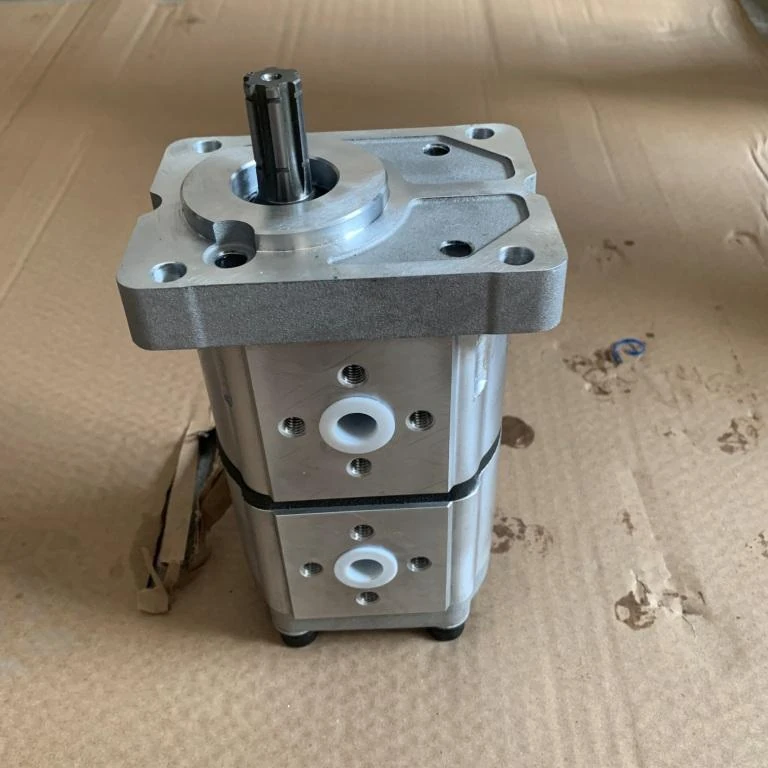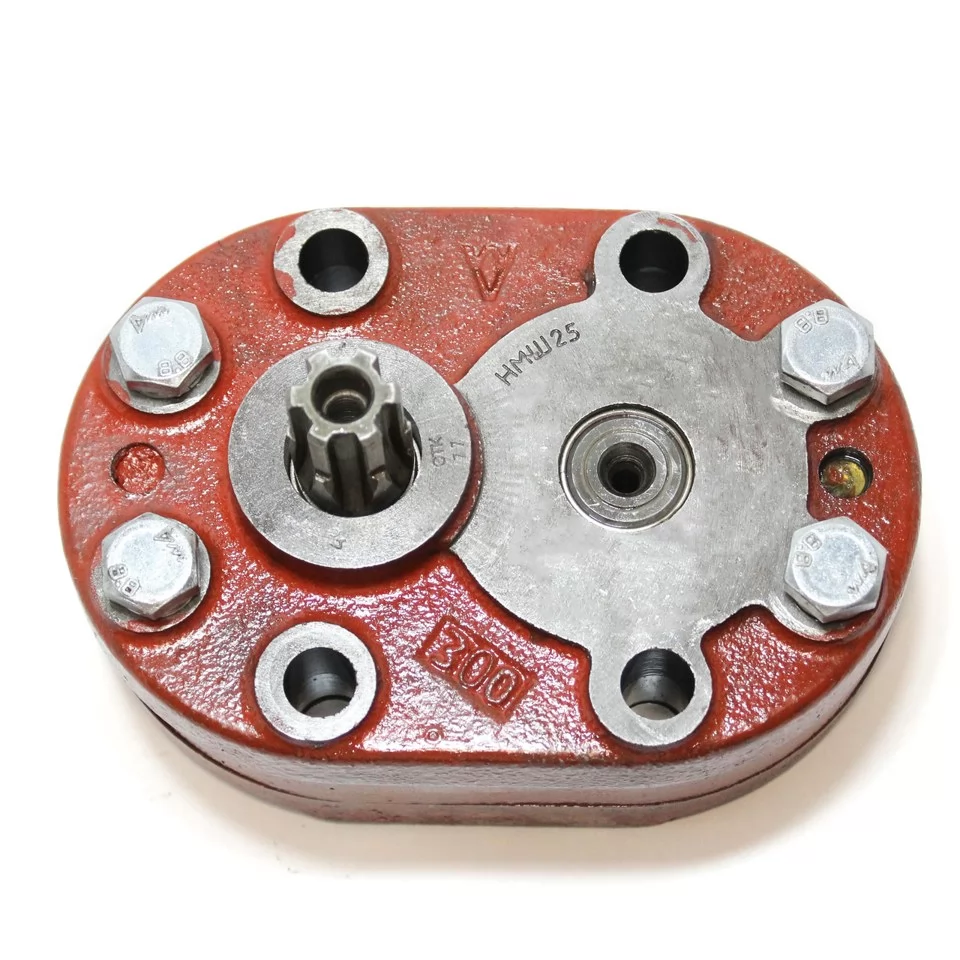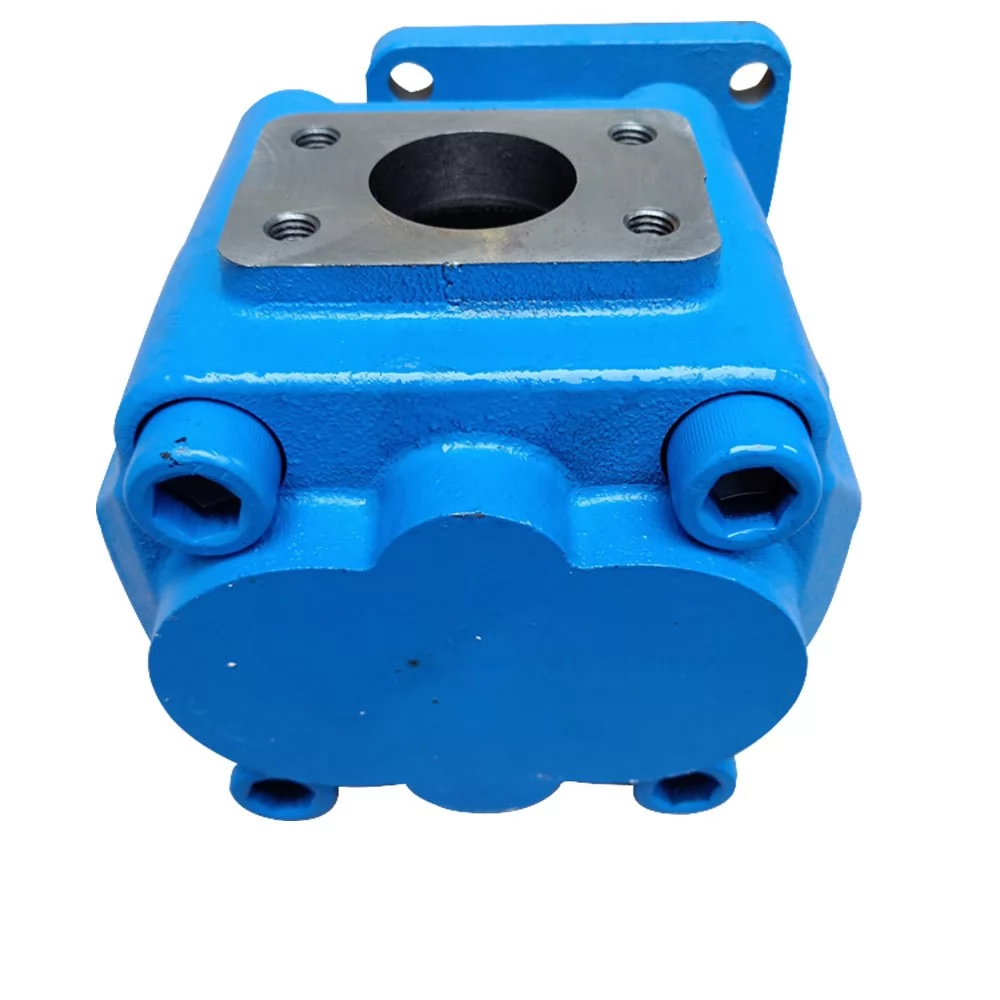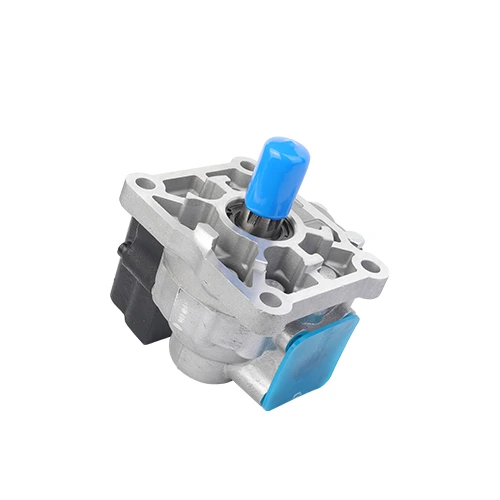

A car engine that idles smoothly in the driveway can still stall halfway up a steep hill. Gear pumps behave the same way. A unit that spins freely with no load can lose flow once it meets rated pressure. Proper gear pump testing puts the pump under load, and those loaded results are what you need on paper before the goods leave the port.
What Does Gear Pump Testing Actually Prove?
A proper bench test proves five things about a gear pump: it delivers rated flow at rated speed, it holds rated pressure, its volumetric efficiency is within the datasheet figure, it does not leak, and its noise and temperature stay stable. Each result counts only when the oil grade, oil temperature and shaft speed are recorded with it.
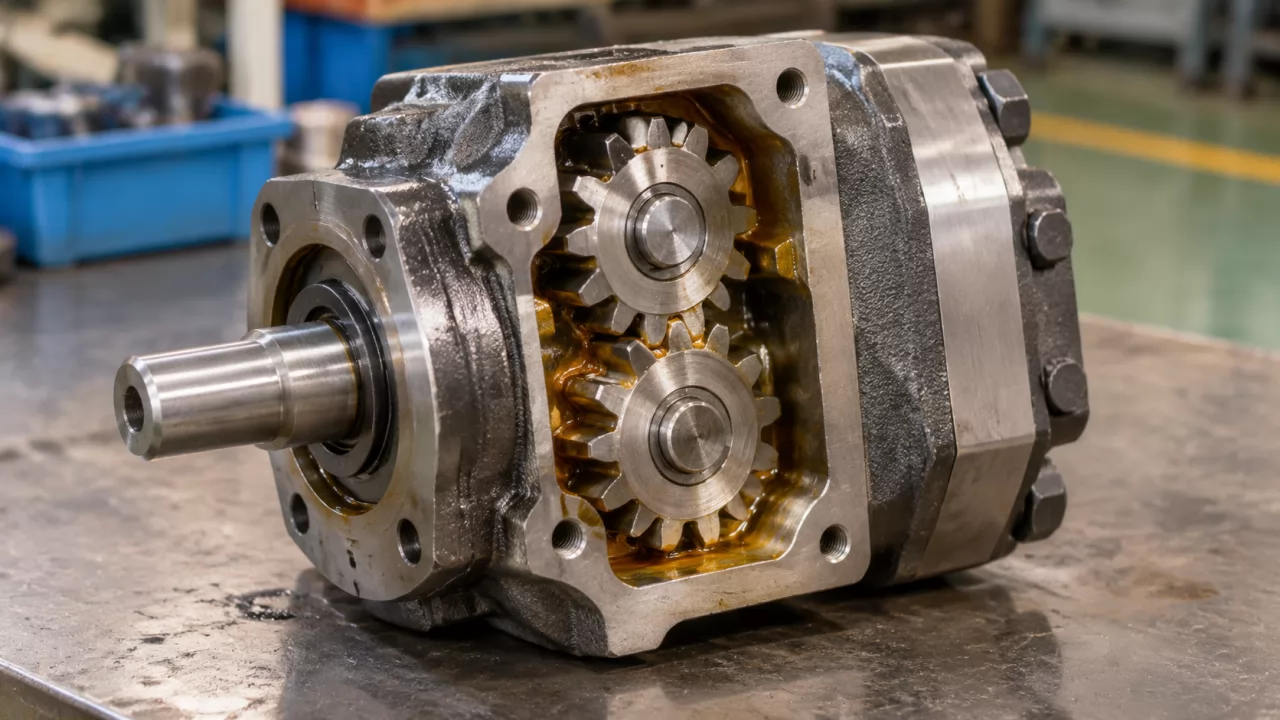
An external gear pump is a positive-displacement pump that carries oil in the spaces between two meshing gears and the housing wall. Its output depends on how closely the gears fit against the housing and side plates. That is why most of the testing is aimed at internal leakage paths.
Volumetric Efficiency in Plain Words
Volumetric efficiency is the measured flow divided by the theoretical flow. Theoretical flow is displacement multiplied by shaft speed. A 10 cc/rev pump running at 1,500 rpm should deliver 15 L/min in theory. Any shortfall on the flow meter is oil slipping back from the outlet side to the inlet side.
Three things widen that gap: higher pressure, thinner (hotter) oil, and larger internal clearance. Gear tips, side faces and bushing bores open the slip path when they are machined at the loose end of their tolerance or worn in service.
Why a No-Load Spin Test Is Not Enough
Internal leakage is driven by the pressure difference across the gears. At almost zero outlet pressure, very little force pushes oil back through the clearances. A pump with sloppy side plates can therefore show close to full flow. Load it and the shortfall appears. A free-run check confirms that the pump is assembled and turns in the right direction. It tells you nothing about performance.
How to Test a Hydraulic Gear Pump on a Test Bench
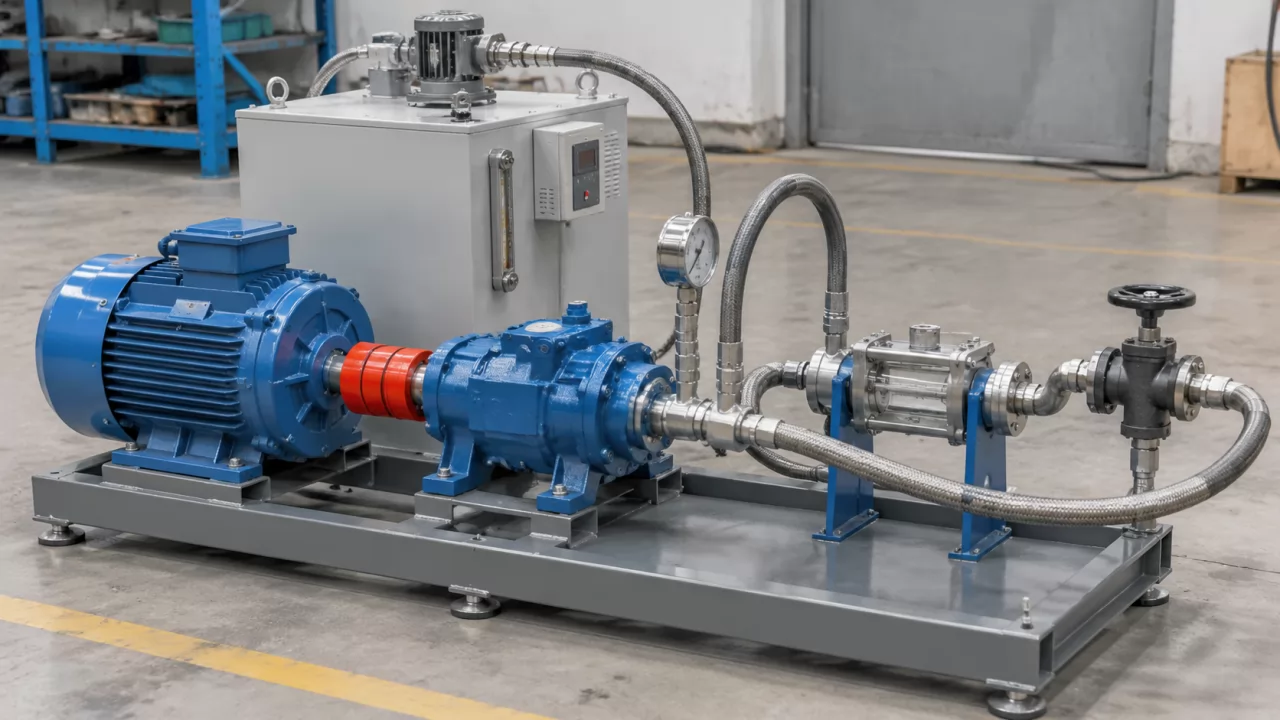
A hydraulic gear pump is bench tested in this order: run-in, flow at no load, flow at rated pressure, a pressure hold, then seal, noise and temperature checks. Oil temperature, viscosity and cleanliness are controlled throughout because each one changes the readings. ISO 4409 sets out the general method for testing the steady-state performance of positive-displacement pumps.
A gear pump test bench is a rig with these main parts: a drive motor, a temperature-controlled reservoir, an outlet flow meter, pressure transducers, and a loading valve that raises outlet pressure in steps.
Hydraulic Gear Pump Test Procedure, Step by Step
The sequence below is a typical production test. Each step is designed to catch a different kind of fault.
| Step | What happens | Failure it reveals |
|---|---|---|
| Visual and dimensional check | Shaft, flange, pilot and ports measured | Wrong spline, flange or port thread |
| Run-in | Pressure raised in stages | Assembly debris, early scoring, abnormal heat |
| No-load flow | Flow at rated speed, minimal pressure | Wrong rotation or displacement |
| Gear pump pressure and flow test | Flow measured at rated pressure | Excess internal leakage, low efficiency |
| Pressure hold | Rated pressure held for agreed time | Housing porosity, seal weeping, pressure drift |
| External leak check | Shaft seal and joints inspected | Seepage at shaft seal or gaskets |
| Noise and temperature check | Sound and case temperature monitored | Cavitation, gear mesh faults, bearing wear |
The pressure-and-flow step and the pressure hold carry most of the weight. A record that skips them shows the pump was assembled correctly. It does not show that the pump performs.
Reading the Numbers Correctly
Compare no-load flow with flow at rated pressure, taken at the same shaft speed. The drop between the two readings is internal leakage. It should fall inside the band on the datasheet or in the supplier's test standard. If one serial number shows a large drop in an otherwise consistent batch, the cause is usually machining or assembly on that unit.
Speed matters too. Flow scales with rpm, so you cannot compare a reading at 1,500 rpm directly with one at 1,800 rpm. Either convert both readings to volumetric efficiency first, or require a single test speed for the whole batch.
Tip: Ask for the test oil grade (for example ISO VG 46) and the oil temperature at measurement on every test sheet. Hot oil thins and increases slip, while cold oil hides it. The same pump can look better or worse depending on what was in the tank that day.
Which Test Results Should You Ask For in the Quotation?
Test results are only useful if the test items, test conditions and record format are agreed at quotation stage. A shipment marked "tested" with no stated speed, pressure, oil or acceptance limits leaves you nothing to hold the supplier to when a pump underperforms in the field.
Write the items into your RFQ. Then check that they appear in the quotation before you approve a sample.
| Test item | What the supplier should record | Acceptable evidence |
|---|---|---|
| Dimensional check | Shaft, flange and port sizes against drawing | Inspection sheet with measured values |
| Leak inspection | Test pressure, hold time, seepage observed | Serial-linked test record |
| Pressure and flow test | Speed, pressure, flow, oil temperature | Bench printout or test sheet per serial |
| Noise and temperature | Sound level, case temperature at load | Test sheet; video for samples |
Serial-linked records are the strongest evidence because a disputed pump can be traced to its own numbers. Video is useful for samples but rarely practical for a full batch.
Pressure and flow testing applies where the product and order make it practical. For some components, a dimensional and leak check is the agreed scope. Put every check and document you need into the quotation itself, such as test sheets, material certificates or packing photos. If a supplier cites third-party documents, those belong to their holders and are not the supplier's own certification.
Gear Pump Leak Test Before Shipment: A Pre-Shipment Checklist
The gear pump leak test before shipment is the last cheap chance to catch a defect. Match the leak and pressure results to each serial number, then check preservation, port protection and labelling before the cartons are sealed. This applies equally to your own inspection and to a hired third-party inspector.
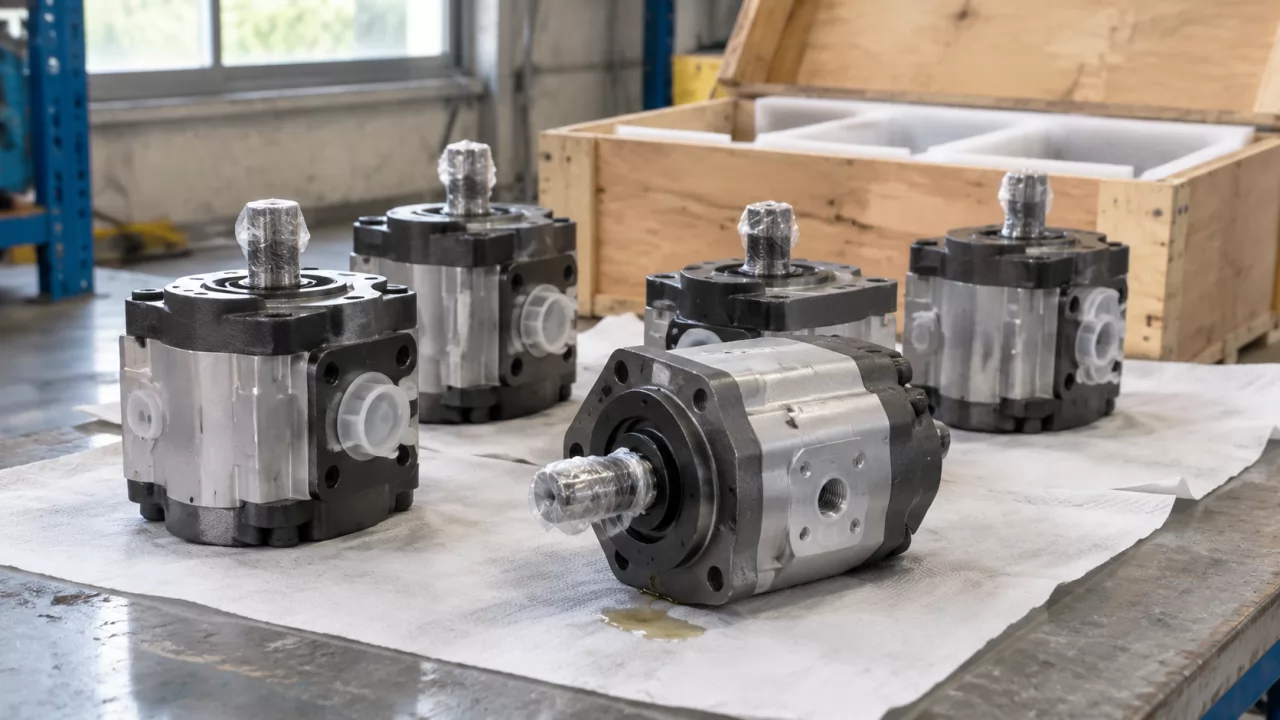
Work through these checks on the packing line, pump by pump:
- Match each test record to the serial number stamped on the pump body.
- Inspect the shaft seal and housing joints for seepage or oil film after testing.
- Confirm every port is capped and its threads are protected from impact and dirt.
- Check that internal preservation oil is present to prevent corrosion in transit.
- Compare the label with the complete assembly code, not just the series name.
- Verify the rotation direction is marked on the housing or tag.
- Review the packaging against the route, including sea-freight humidity and stacking loads.
A failure on this list costs far less to fix at origin than after customs clearance.
Note: Never feel for leaks by running a hand along a pressurized line or fitting. A fine jet of hydraulic oil can penetrate skin. Depressurize first, and use cardboard or a paper wipe to find the leak.
Testing Mistakes That Lead to Returns and Warranty Claims
Most returns that a bench test could have prevented come from a few wrong assumptions on the buying side, not from the test itself. Each mistake below is cheap to fix when you place the order and expensive to fix once the pump is installed on a machine.
Assuming a matching model number guarantees fit. Two pumps sold under the same series name can differ in shaft spline, flange pattern, port type and rotation. Compatibility depends on the complete assembly code. For replacements, also send the original product code, the machine model and the equipment details.
Accepting one sample test for the whole batch. A good sample proves the design, not every unit built after it. Ask for serial-linked final test records on every unit, or on an agreed sampling plan.
Treating a higher test pressure as a sign of a better pump. Testing well above rated pressure stresses the shaft seal, bushings and bearings of the very unit you are about to receive. Specify testing at the rated pressure on the datasheet.
Reading a short pressure hold as proof of durability. A pressure hold confirms sealing at the moment of the test. Life under cyclic load needs an endurance test. Agree it separately, usually on samples only.
Frequently Asked Questions
How long does a gear pump bench test usually take?
A standard production test usually takes minutes per unit. Once the oil is at temperature, the run-in, flow readings, pressure hold and leak check are all short steps. Endurance runs lasting hours are a separate item, agreed in the quotation and normally applied to samples only.
Can I test a gear pump without a full test bench?
Partly. A flow meter, a pressure gauge and a loading valve on the machine will show whether flow collapses under load. This setup cannot control oil temperature or speed precisely, so use it for fault-finding, not as acceptance evidence.
What causes low flow on a new gear pump?
Low flow on a new pump is usually an installation problem. Common causes are wrong rotation, a restricted inlet or clogged suction strainer, air drawn in at loose fittings, or oil that is too thin when hot. If all of those are ruled out, loose internal clearances are the likely cause.
Should test pressure match the system relief setting?
No. Test at the rated pressure in the pump specification. A machine's relief setting may be above or below that figure, so testing to it can either overstress the pump or under-test it.
Get a Test-Backed Quote
Send the pump model, quantity and destination port. For a replacement, include the original product code, machine model and equipment details. Our team replies within 24 hours, and the quote lists the test items and documents agreed for your order.