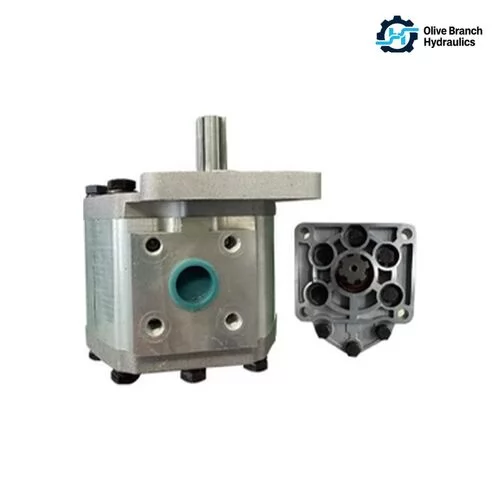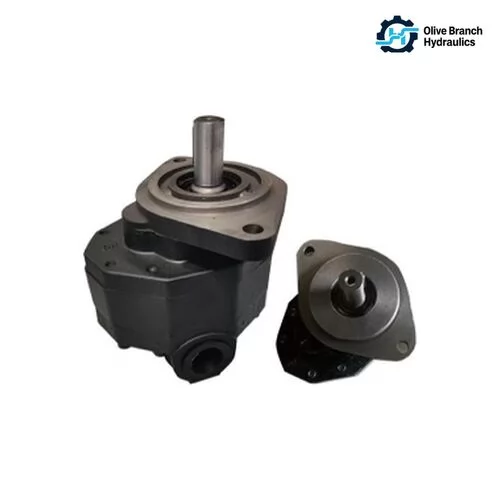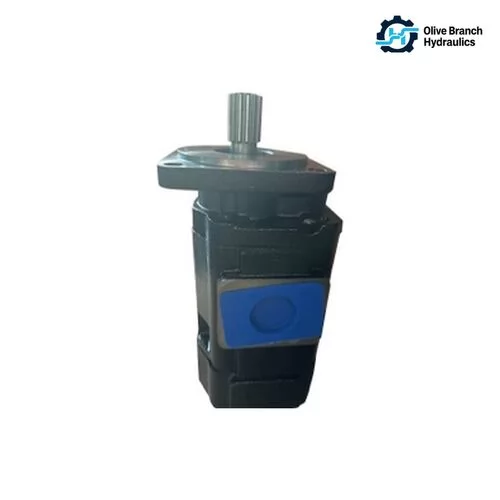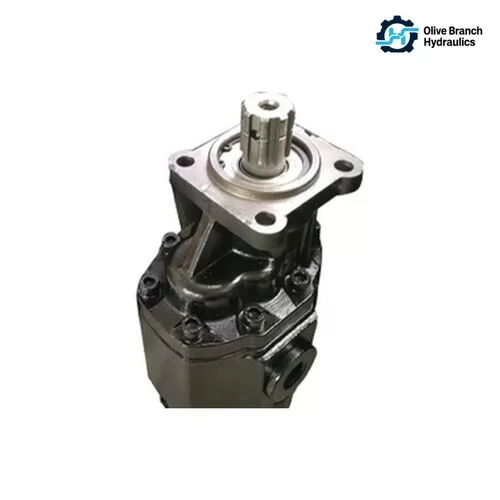

"It's reman, so it's as good as new." That line skips the one question that decides your returns rate: what was actually done inside the housing? There is no single binding definition of a remanufactured hydraulic pump. The label can cover anything from a seal kit and fresh paint to full re-machining of the rotating group back to original tolerances.
In short, remanufactured pumps are mainly worth stocking as high-value variable piston units such as A10VO, A4VG and K3V, and only if the rebuilder restores the rotating group to specification and supplies a bench test record for every serial number. For gear pumps and fast-moving series, a new compatible unit is usually the safer, simpler thing to keep on the shelf.
Are Remanufactured Hydraulic Pumps Reliable Enough to Resell?
They are, provided the rotating group and bearings have been restored to the original specification, the controls have been too, and the unit has passed its own bench test. What decides reliability is the scope of the rebuild and the condition of the core. The word "remanufactured" on the carton guarantees neither.
Remanufacturing starts with a used pump that is completely disassembled and cleaned, then inspected and measured. Worn parts are replaced or re-machined to the original specification before the pump is reassembled and tested as a complete unit. Repair (or "rebuild") is a narrower job. Only the parts that caused the failure get fixed; everything else goes back in as found.
Why does that matter? Piston pumps rarely wear in just one place. A pump pulled for a failed shaft seal will often have scored slippers and a worn valve plate as well, plus bearings close to the end of their life. Reseal it and ship it, and it will run fine on the test stand. In the field it may be back within months.
When a reman unit fails early, the cause is usually one of these:
- A rebuild that reused worn rotating-group parts that were still within visual tolerance but outside dimensional limits.
- A compensator or regulator that was set incorrectly, or never set for the application.
- Contamination left in the machine from the original failure.
The first two are the rebuilder's responsibility and the third is the installer's, though your customer will usually send the pump back to you whichever one it was. So reliability has to be checked supplier by supplier and unit by unit, not assumed for the category. Two rebuilders can ship pumps with identical part numbers and identical paint that differ by years of service life.
What Separates a True Reman From a Reseal-and-Repaint Job
Three things set them apart. The first is how much of the rotating group was replaced or re-machined. The second is whether each unit comes with its own test record, and the third is whether anyone knows the core's history. None of this is visible on delivery, to you or to your customer, because it sits inside the housing or in the paperwork.
Rebuild Scope: Rotating Group, Valve Plate, Swashplate and Bearings
In an axial piston pump, the rotating group is made up of the cylinder block, the pistons with their slippers (shoes), the retainer plate, and the valve plate the block runs against. Displacement is set by the swashplate, whose running face and support bearings or saddle take the full piston load.
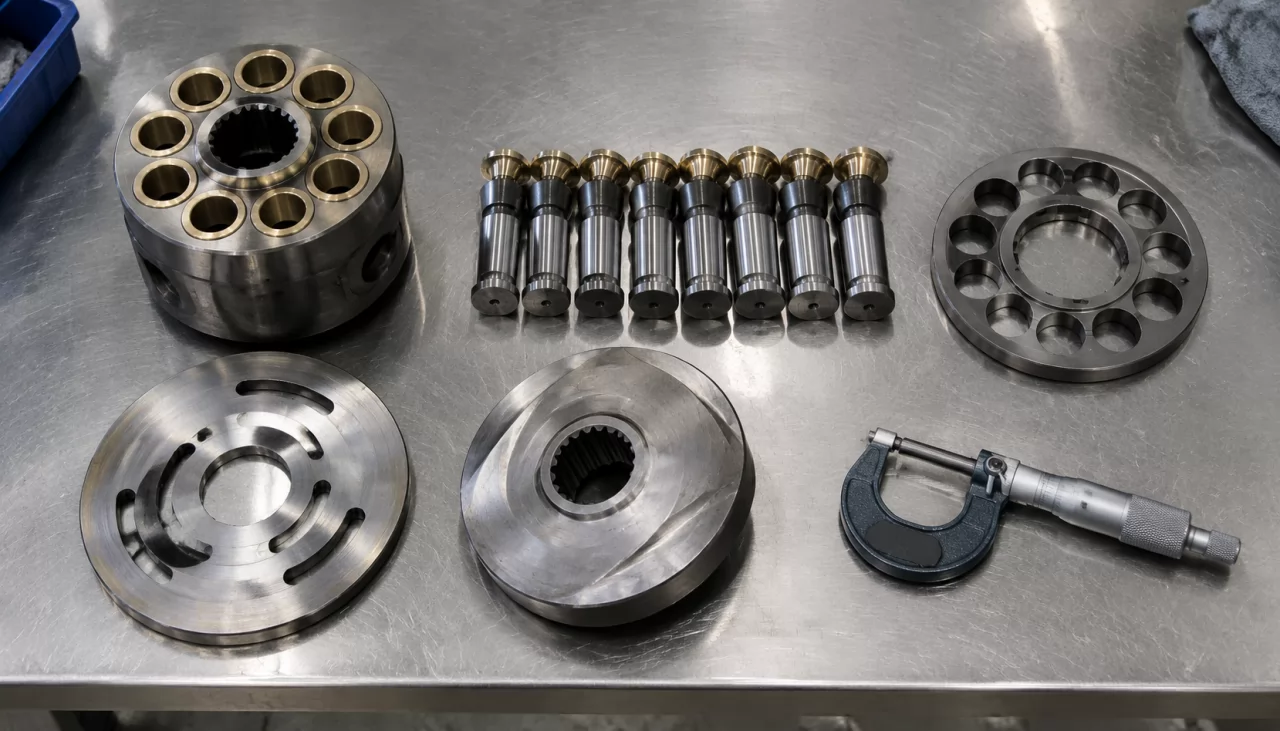
A full reman normally covers:
- Replacing all shaft bearings, seals and O-rings.
- Measuring piston-to-bore clearance and slipper ball-joint play.
- Replacing piston sets that fall outside limits.
- Re-lapping or replacing the valve plate and the cylinder block face.
- Resurfacing or replacing the swashplate running face.
Lapping takes material off, so every lapped part has a minimum thickness below which it has to be scrapped. Some parts quietly go back in anyway: bearings that "felt smooth," piston-slipper sets with a little crimp looseness, valve plates lapped past their limit. Compensator spools that were cleaned rather than measured are another common one. A generic process description won't tell you what happened to your unit, so ask for the list of parts replaced on each serial number.
Test-Bench Evidence: Pressure, Flow and Case Drain Leakage
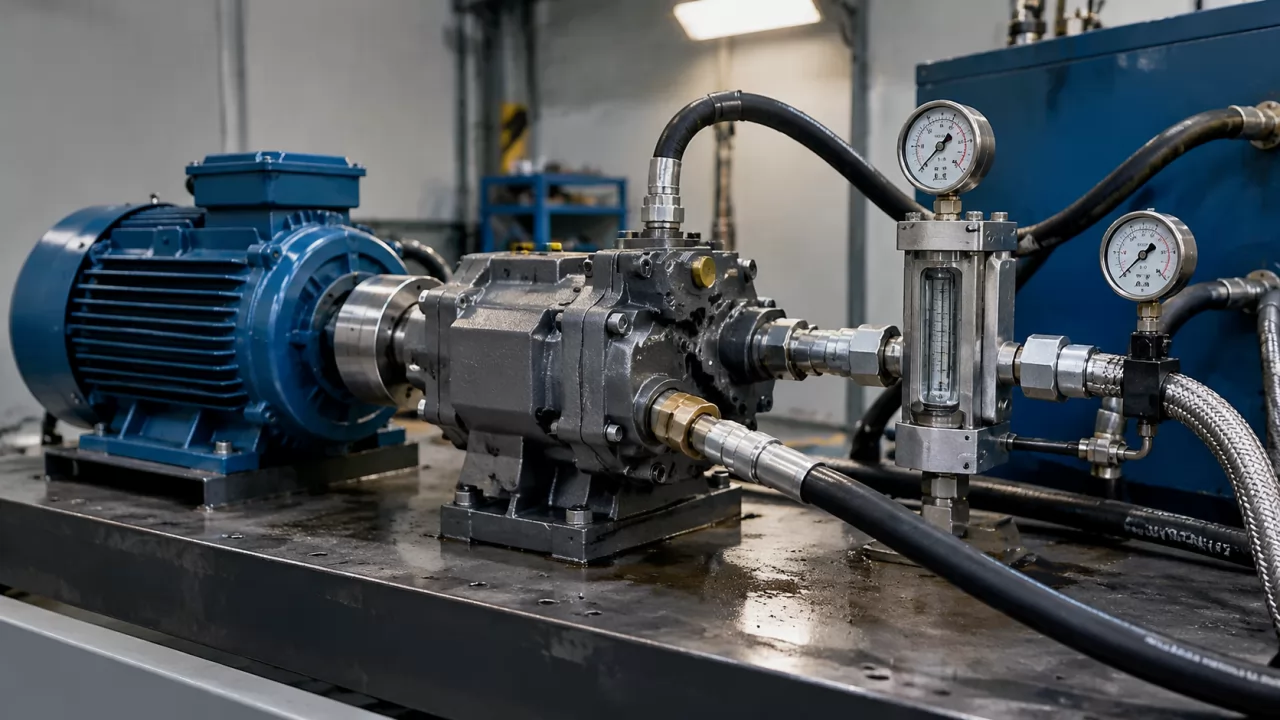
"100% tested" on a quotation says very little. What the pump actually did shows up only in a per-unit test record, which should include:
- The serial number and test date.
- Input speed, oil type and oil temperature.
- Output flow at rated pressure.
- The compensator or load-sensing setting as delivered.
- Case drain flow under pressure.
Case drain flow is internal leakage leaving the housing through the drain port. As clearances in the rotating group open up, it climbs, which makes it one of the clearest signs of internal wear you can get on a bench. Compare the reman figure with the new-pump reference for that series; the rebuilder should be able to give you that number. A record without case drain is a functional run, not a wear check.
Core Source and Traceability
The core is the used pump a reman starts from, and its history caps what can honestly be restored. A pump retired after normal wear makes a good candidate. One that failed catastrophically may have a cracked housing, a scored bore or a bent shaft, and the same goes for a pump that ran on heavily contaminated oil or cavitated. Parts like that belong in the scrap bin, not back in service.
Serial-level traceability ties the core, the parts list and the test record to one physical pump. When a warranty claim comes in, you and the rebuilder can then see whether the failure points to the rebuild or to the installation. Without that link, every claim becomes a negotiation.
Remanufactured vs New Hydraulic Pump: Cost, Warranty and Lead Time Side by Side
On price, a remanufactured pump usually lands between a basic repair and a new OEM unit. New compatible replacements often come close to reman on cost, with more predictable supply. Which one makes sense depends on the series and your volume. It also depends on how much warranty risk you are willing to carry as the seller.
Headline prices differ less than where the risk ends up. With a repaired unit the scope is minimal, so the risk lands on you; with OEM it stays with the brand. Reman and new compatible units fall in between, and in both cases the documentation decides how much of it is yours.
| Criterion | Repaired / rebuilt | Remanufactured | New OEM | New compatible |
|---|---|---|---|---|
| Typical price position | Lowest | Lower than OEM, varies with core condition | Highest | Lower than OEM, often close to reman |
| Warranty terms | Short or limited to replaced parts | Varies widely by rebuilder | Defined by the brand's network | Agreed per order, set in the quotation |
| Lead time | Depends on the customer's own pump | Depends on core availability | Can be long for less common codes | Usually predictable once the code is matched |
| Availability by series | Any series a shop can open | Limited to series with core supply | Full range, including obsolete codes in some cases | Strong for common piston, vane and gear series |
| Risk carried by you | High | Medium, lower with per-unit records | Low | Medium, lower with code matching and inspection |
Reading across the rows, reman wins on price only while core supply is steady, and it loses on lead time when it isn't.
Core charges change the real cost too. A price quoted "with core exchange" assumes your customer sends back an acceptable used pump. Each rejected core raises the effective price, and enough rejections can bring it close to what a new compatible unit costs.
Where Reman Piston Pumps Earn Their Place, and Where They Don't
Reman makes the most sense on expensive variable-displacement piston pumps, where much of the value sits in the housing and shaft, and in the control body, all of which can be safely reused. It rarely makes sense for gear pumps, since a new one often costs about the same as a refurbished one and comes with less uncertainty.
It comes down to the parts list. A variable piston pump's machined housing, port block and control assembly are costly to make and usually survive normal wear. In an external gear pump the gears and bushings, together with the body, simply are the pump; once they are worn there is little worth saving, so a refurbished gear pump seldom beats a new one.
| Advantages | Limitations |
|---|---|
| Lower cost than new OEM on high-value variable piston units | Quality depends entirely on rebuild scope, which is hard to verify on delivery |
| Can cover older or slow-moving codes that are hard to source new | Supply is tied to core availability, so lead times can swing |
| Keeps original housing and controls, so fit is usually identical | Core charges and rejection rules add cost uncertainty |
| Reuses castings and machined parts instead of scrapping them | Warranty terms vary widely and are often shorter than for new units |
| Per-unit test records, where provided, give clear evidence for claims | Little or no cost advantage on gear pumps and small vane pumps |
Remanufactured Piston Pump Replacement for Variable Units (A10VO, A4VG, K3V)
Variable units are where reman pays best. They are also where it most often goes wrong at installation. On an A10VO, the control (pressure compensator, pressure and flow, or load sensing) and its factory setting form part of the complete assembly code. Right frame size with the wrong control won't behave like the original. Neither will the right control at the wrong setting.
The A4VG is a closed-loop pump for hydrostatic drives, with an integrated charge pump and options such as hydraulic or electric proportional control; its compensator calibration and neutral setting have to suit the machine. K3V excavator main pumps depend on regulator configuration in much the same way. Ask the rebuilder to confirm the full code, not just the series, and to show the delivered settings on the test record.
Rebuilt Hydraulic Pump for Excavator Main Pumps
When an excavator main pump fails, it usually sends debris through the whole system. Bronze from the slippers and steel particles end up in the valves, the travel and swing motors and the coolers, along with oil that has already broken down. Skip the flush, and the replacement pump starts life in the same dirty oil that killed the last one.
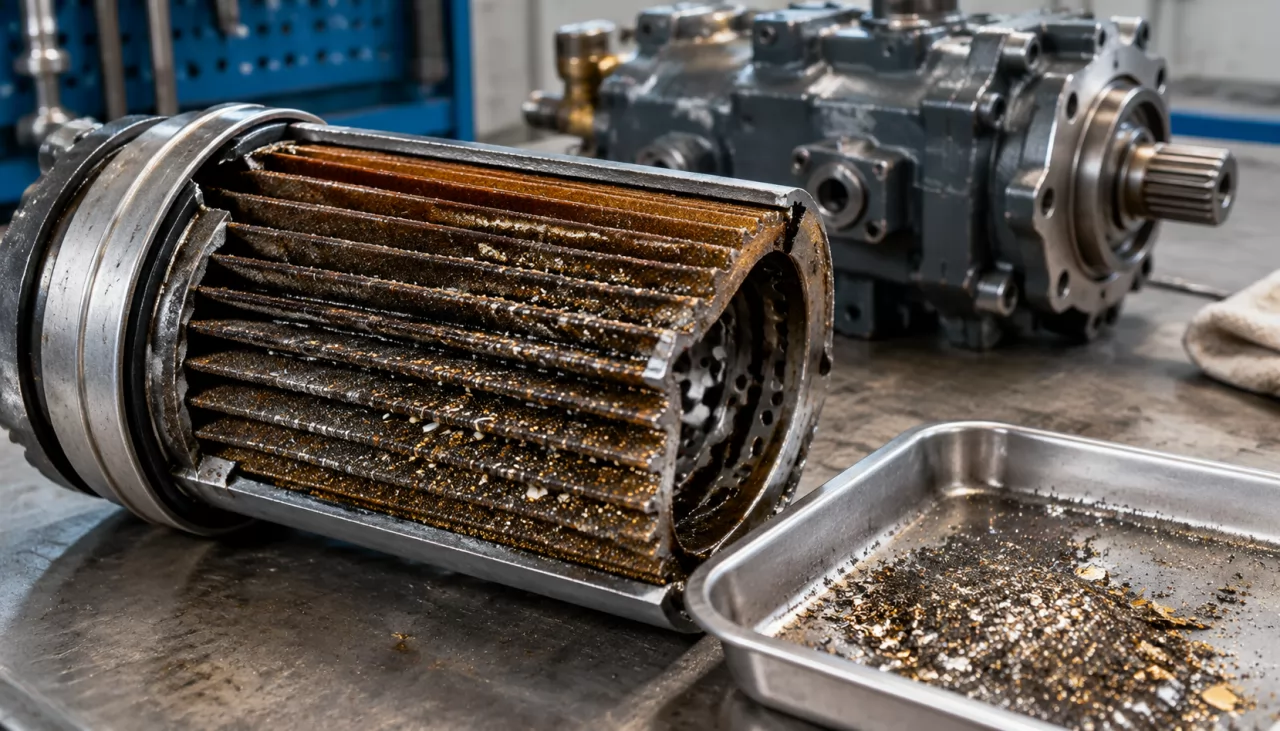
So before installation, flush the system and change every filter, including the case drain filter where there is one. Then check oil cleanliness against an ISO 4406 cleanliness code. The regulator also needs adjusting for the specific machine, since horsepower control settings on tandem main pumps vary between models. A short installation sheet for your customer covering these points will head off several claims before they are ever filed.
How Should You Vet a Reman Supplier Before the First Order?
Check documents, not promises. Before ordering, ask for a sample test record and a parts-replaced list. You also want the core exchange terms and the warranty procedure in writing. If a supplier can't produce these for a sample unit, they won't produce them for a production lot.
Go through these before the first purchase order, and again when the first shipment lands:
- Request a real test record for a recent unit, showing serial number, flow, pressure setting and case drain flow.
- Ask for the per-serial list of parts replaced, re-lapped or reused.
- Confirm that the complete assembly code on the nameplate matches the code on the order, including control, shaft, ports and rotation.
- Get core exchange terms in writing: deposit amount and return window, plus the acceptance criteria that decide the refund.
- Check that ports are plugged and machined surfaces are rust-protected and sealed for sea freight before the cartons close.
- Agree on how warranty claims are handled: what evidence is required and who pays return freight. Settle how long a decision takes as well.
If two of these come back vague, buy one sample unit and have it tested independently before committing to stock volume.
Which Option Fits Your Stock: Reman, New Compatible or OEM?
Reman suits high-value variable piston pumps backed by steady core supply and documented rebuilds. New compatible units suit fast-moving series, gear and vane as well as piston, where customers can't wait. OEM suits fleets tied to brand warranty or service contracts. Most distributors end up stocking some of each.
Large-frame A4VSO, A4VG or K3V units are a good fit for reman: the price gap to OEM is wide in those sizes and customers can return cores reliably. Where cores are scarce it is a poor fit, because you can't promise lead times you don't control.
New compatible units handle the high-turnover end of the shelf, such as AZPF and PGP gear pumps, T6 and PV2R vane pumps, and common A10VO codes. There is no core charge, and lead time depends on manufacturing rather than on returns. At Olive Branch Hydraulics, for instance, new compatible replacements are matched from the original product code together with the machine model and equipment details, and each unit goes through a final inspection before it is packed.
OEM is still the right call when the end user's warranty or insurance specifies original parts, or their service agreement does. Then price doesn't decide anything.
FAQ
How does a core exchange or core charge usually work?
On top of the reman price you pay a refundable deposit, which comes back when an acceptable used pump is returned within the agreed window. Cracked housings and missing parts are usually grounds for rejection, as is severe internal damage. Get the acceptance criteria in writing before you sell on core-exchange terms.
Can a reman pump carry the same warranty as a new one?
Sometimes, though terms differ a lot between rebuilders. Before ordering, get the warranty length and the claim procedure in writing, along with the exclusions (contamination, incorrect installation, wrong settings).
Does the complete assembly code have to match the original?
Yes. Brand names and series numbers only identify the pump family. The full assembly code sets the controls, shaft, port configuration, mounting flange and rotation, and a mismatch in any of them can stop the pump from fitting or working.
How long does a remanufactured pump typically last?
There is no general figure. Service life depends on how thorough the rebuild was and how clean the oil is, and on the duty cycle, not on the reman label. A well-rebuilt pump running in clean oil can come close to new-pump life; a reseal job in a contaminated system may not see out a season.
Get a Matched Quote
Email the original product code and machine model to our team at [email protected], with the quantity and destination port. The reply comes within 24 hours and gives the matched code along with the quality checks proposed for your order.