
Sourcing the right hydraulic pump for a dump trailer is rarely about catalog browsing alone. Engineers, fleet buyers, and trailer OEMs weigh performance specs, compliance markers, and supply chain reliability before committing to a brand. This roundup brings together the most recognized international names in the segment alongside a closer look at qualified Chinese manufacturers building compatible, OEM-ready alternatives.
Information here is aggregated from publicly available sources and is intended as a neutral reference for industry professionals evaluating procurement options.
Understanding the Dump Trailer Hydraulic Pump Landscape
Within the broader fluid power ecosystem, dump trailer pumps occupy a specific niche: low-voltage, mobile, duty-cycle-driven units engineered for repeatable lift performance under variable load. They sit between heavy industrial hydraulics and small portable power packs, sharing components with both.
What a Dump Trailer Hydraulic Pump Actually Does
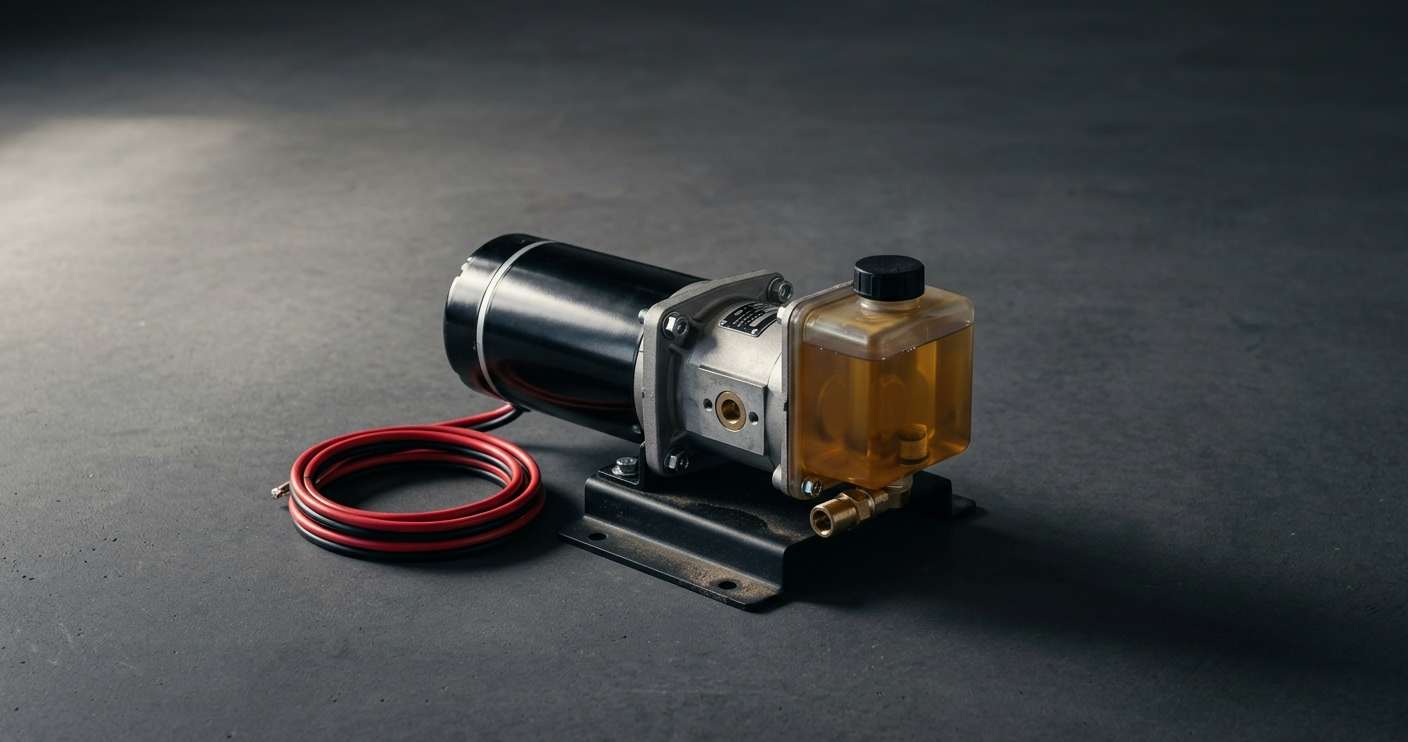
The dump trailer hoist pump is responsible for lifting the bed against load, holding it stable during discharge, and controlling the descent. It converts electrical energy from the trailer or tow vehicle battery into hydraulic pressure that drives a single or double-stage cylinder.
Because the unit operates intermittently and outdoors, it must tolerate vibration, moisture, and amperage spikes without losing seal integrity.
Core Component Architecture
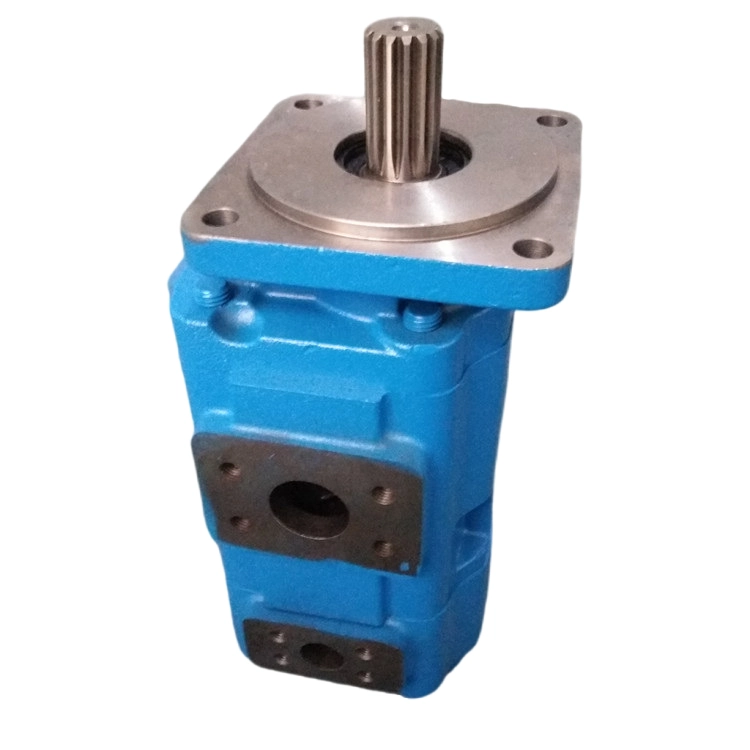
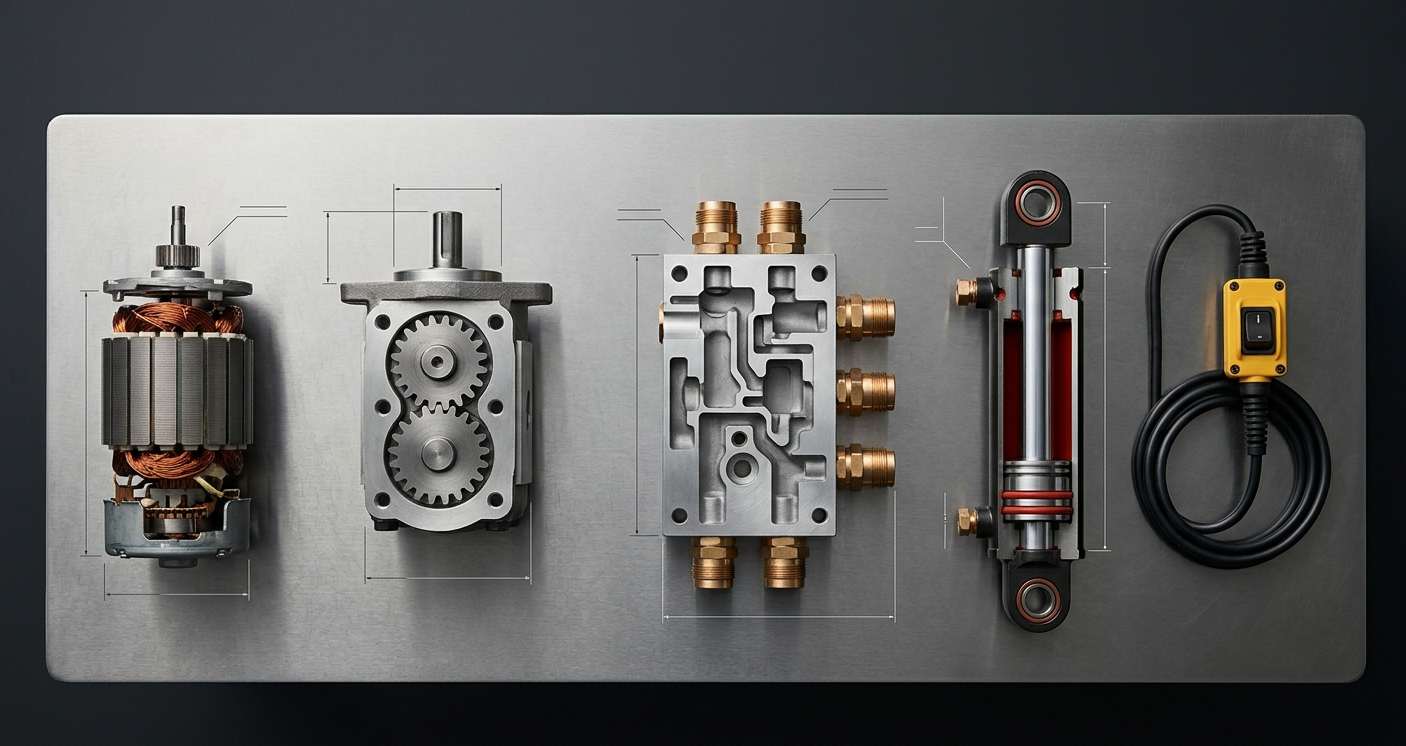
A typical hydraulic power unit (HPU) integrates a DC motor, a gear pump, a fluid reservoir, a manifold or valve block, and a remote control circuit. Each element shapes lift performance:
- Motor: Determines torque available at the pump shaft and amp draw under load.
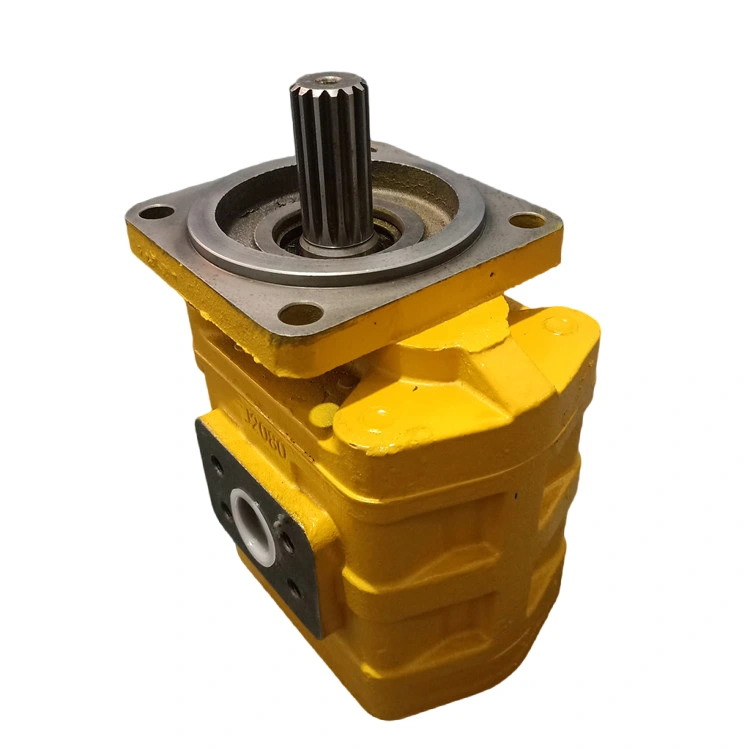
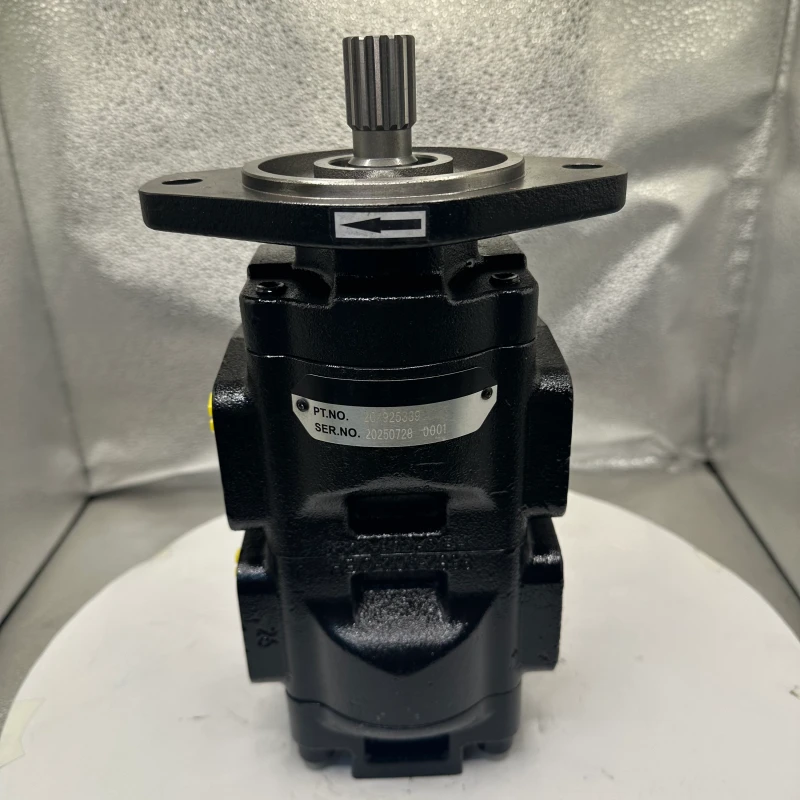
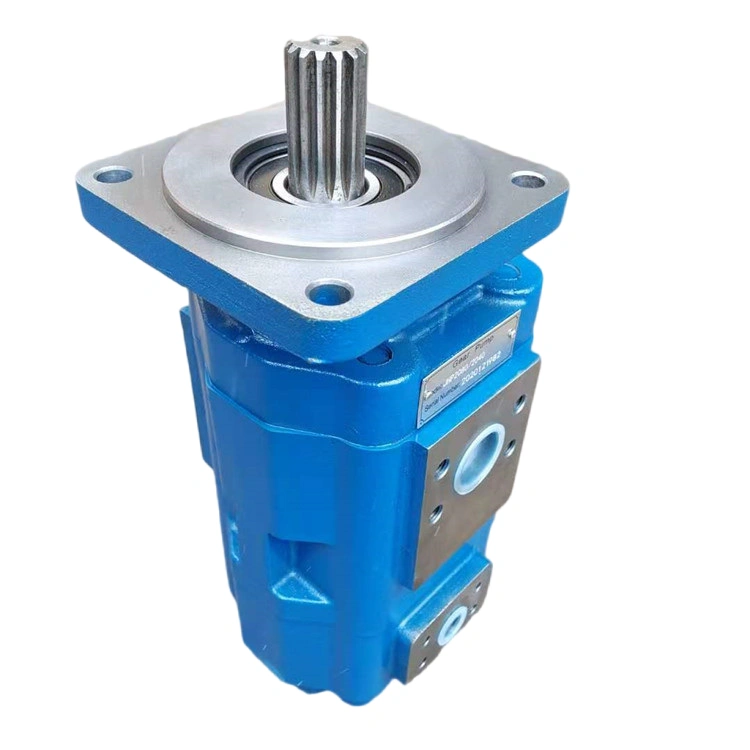
- Gear pump: Sets achievable flow (GPM) and contributes to pressure rating.
- Reservoir: Stores fluid for cylinder extension and dissipates heat during cycling.
- Valve block: Routes fluid for raise, hold, and lower functions; defines single or double acting behavior.
- Remote and solenoid: Provide operator control and electrical actuation.
Key Specification Categories Buyers Compare
Most procurement conversations start with five spec categories: voltage (12V DC hydraulic pump versus 24V), flow rate, working pressure, reservoir size, and mechanical action. These five numbers, taken together, determine whether a pump fits a given trailer chassis and load profile.
How to Evaluate a Dump Trailer Hydraulic Pump
Professional buyers tend to filter candidates through a consistent decision framework before shortlisting any brand or supplier. The criteria below reflect what typically appears on engineering review checklists.
Performance Metrics That Matter
Pressure rating (PSI), flow rate (GPM), duty cycle, and amp draw are the four metrics that map directly to trailer GVWR and cylinder size. Underspecifying pressure leads to slow or stalled lifts under load, while oversizing inflates cost and amp demand without proportional benefit.
A practical rule: match cylinder bore and stroke to expected load, then size the pump to deliver target lift time at rated pressure with margin.
Mechanical Action Type
Single-acting power up, gravity down units suit standard dump trailers where the bed and load weight return the cylinder. A double acting hydraulic pump is preferred for low-clearance unloading, sticky materials, or applications where forced retraction matters, such as enclosed cargo or hopper-style trailers.
Build Quality and Sealing Standards
Outdoor mobile use demands attention to IP rating, housing material, motor brush life, and seal compounds. Aluminum housings reduce weight; powder-coated steel resists impact. Viton or Buna-N seals handle hydraulic fluid temperature swings, and corrosion-resistant fasteners extend service life in salted road environments.
Certifications and Compliance Markers
Buyers should verify CE marking for European deployment, RoHS for restricted substances, ISO 9001 for manufacturing quality systems, and regional EMC compliance for the control electronics. These markers should appear on the data sheet, not just in marketing copy.
Global Dump Trailer Hydraulic Pump Brands at a Glance
The table below consolidates widely recognized international brands serving the dump trailer and light-mobile hydraulic segment. Specifications listed reflect publicly published catalog ranges and are intended as orientation, not as procurement quotes.
Comparison Table — Leading Global Brands
| Brand | HQ Country | Typical Voltage | Pressure Range | Action Type | Primary Market Focus |
|---|---|---|---|---|---|
| Bucher Hydraulics | Switzerland | 12V / 24V DC | Up to 3,200 PSI | Single & Double Acting | OEM mobile equipment |
| Parker Hannifin | USA | 12V / 24V DC | Up to 3,500 PSI | Single & Double Acting | Industrial & mobile |
| Bailey International | USA | 12V DC | Up to 3,000 PSI | Single & Double Acting | Aftermarket trailer kits |
| KTI Hydraulics | USA | 12V / 24V DC | Up to 3,200 PSI | Single & Double Acting | Dump trailer OEM |
| Monarch Hydraulics (Bucher) | USA | 12V DC | Up to 3,000 PSI | Single & Double Acting | Snowplow & dump |
| HALDEX (Concentric) | Sweden | 12V / 24V DC | Up to 3,000 PSI | Single & Double Acting | OEM agriculture & mobile |
| MTE Hydraulics | USA | 12V / 24V DC | Up to 3,500 PSI | Custom configurations | OEM mobile applications |
| SPX Stone | USA | 12V / 24V DC | Up to 2,500 PSI | Single Acting | Light-duty trailers |
Brand Profile Highlights
Bucher and Monarch are commonly specified by mobile equipment OEMs valuing European engineering heritage and consolidated parts support. Parker Hannifin brings broad industrial pedigree and a deep distribution network.
KTI and Bailey are familiar names in the North American dump trailer aftermarket, with Bailey particularly strong in distributor channels. HALDEX/Concentric serves agricultural and light-mobile OEMs, while MTE focuses on application-specific custom configurations. SPX Stone is widely seen on light-duty utility units.
China-Based Manufacturers Offering Compatible OEM Hydraulic Pumps
Over the past decade, the Chinese supply base has matured from low-cost replication into a credible source of compatible, drop-in electric hydraulic pump kit solutions. Multiple manufacturers now serve dump trailer brands, distributors, and equipment integrators worldwide.
Why OEMs Source Hydraulic Power Units from China
The drivers are structural: vertically integrated castings, in-house machining, and clustered component suppliers in regions like Hebei, Zhejiang, and Jiangsu compress lead times and unit cost. Custom-tooling timelines that take 12 to 16 weeks elsewhere often run 6 to 10 weeks at established Chinese plants.
For trailer brands building private-label programs, this combination of capability and responsiveness is increasingly difficult to match through traditional sourcing channels.
Comparison Table — Notable Chinese OEM/ODM Suppliers
| Manufacturer | Region | Capability Focus | OEM/ODM | Typical Lead Time |
|---|---|---|---|---|
| Olive Branch Hydraulics | Hebei (Xingtai) | Custom HPUs, pump assemblies, fluid power systems | Both | 20–35 days |
| Supplier B | Zhejiang | Gear pumps, valve blocks | OEM | 30–45 days |
| Supplier C | Jiangsu | DC power packs | ODM | 25–40 days |
| Supplier D | Shandong | Cylinders & pump combos | OEM | 30–50 days |
| Supplier E | Guangdong | Compact 12V units | Both | 20–35 days |
What "Compatible" Really Means
True compatibility is more than spec parity. It requires bolt pattern matching to existing trailer brackets, port thread standardization (SAE versus BSP), wiring harness pinout alignment, and reservoir mounting footprint replication. Reputable suppliers will confirm each of these dimensions on a sample drawing before tooling.
Spotlight: Olive Branch Hydraulics — A China-Based OEM Partner
Headquartered in Industrial Zone, North Zhujiazhuang Village, Sujiazhuang Town, Ningjin County, Xingtai City, Hebei Province — one of China's premier equipment manufacturing hubs — Olive Branch Hydraulics is a specialized provider of high-end hydraulic components and fluid power systems. We integrate R&D, precision manufacturing, and custom engineering to deliver reliable hydraulic solutions to customers worldwide.
Manufacturing Capabilities
Production is organized around in-house CNC machining cells, dedicated assembly lines for DC power units, and instrumented test benches for pressure and endurance verification. This vertical setup supports consistent quality across both standard catalog units and custom dump trailer hoist pump programs.
Custom Engineering & OEM Services
Buyers can specify the variables that matter to their platform: voltage (12V or 24V), pump displacement and flow, working pressure, reservoir geometry and capacity, valve logic for single or double acting operation, remote configuration, and external branding. Each electric hydraulic pump kit can be tailored from cosmetic finishes down to harness color and connector type.
Quality Assurance Workflow
Every hydraulic power unit passes through a defined QC sequence:
- Incoming material inspection on castings, motors, and seals
- Sub-assembly verification at the pump and manifold stage
- Pressure testing at rated and over-pressure conditions
- Endurance cycling to validate duty cycle behavior
- Pre-shipment functional and cosmetic QC with batch traceability
Partner With Us
Trailer brands, distributors, and equipment integrators seeking OEM or private-label hydraulic pump solutions are welcome to engage Olive Branch Hydraulics for sourcing discussions, sample evaluations, and tooling quotations. Whether you need a drop-in replacement for an existing platform or a clean-sheet design for a new trailer line, our engineering team can scope the project from specification to first-article approval.
Matching the Right Pump to Your Dump Trailer Application
Catalog units cover most mainstream needs, but selection still has to align with the trailer's intended duty. The guidance below reflects common configurations seen across the segment.
Light-Duty Utility Trailers (Under 7,000 lb GVWR)
A compact 12V DC hydraulic pump with a 1.5 to 2 quart reservoir and single-acting configuration typically suffices. Lift times stay reasonable, amp draw remains within standard battery and cable capacity, and the assembly fits tight tongue-mount enclosures.
Medium-Duty Dump Trailers (7,000–14,000 lb GVWR)
This segment usually steps up to a 12V power unit with 3 to 4 quart reservoir capacity. Double-acting options become attractive when low-clearance unloading, partial dumps, or sticky loads are part of the duty profile. Reservoir sizing should account for full cylinder extension plus a margin to prevent cavitation.
Heavy-Duty & Commercial Applications
For commercial fleets and the heavy end of the market, 24V systems, larger reservoirs (5+ quarts), and reinforced gear pumps deliver the duty cycle and longevity required. Fleet operators often standardize on a single configuration across multiple trailers to simplify spare parts and field service, which is where OEM partnerships become especially valuable.
FAQ — Dump Trailer Hydraulic Pump
What's the difference between a single-acting and double-acting hydraulic pump for a dump trailer?
Single-acting units power the bed up and rely on gravity for lowering, which is simpler and lower cost. Double-acting units power both directions, which is useful for low-clearance unloading, sticky loads, or any scenario where the bed needs forced retraction.
How many amps does a typical 12V DC hydraulic pump draw under load?
Most dump trailer hoist pumps draw between 150 and 250 amps at peak load. That makes battery health, cable gauge, and ground path quality decisive factors for real-world lift performance, often more so than the pump itself.
Can I replace my OEM pump with a Chinese-manufactured compatible unit?
Yes, provided port threads, mounting footprint, voltage, flow rate, and pressure rating match the original specification. Reputable OEM suppliers will confirm compatibility on a drawing or sample before shipment, and many can replicate connector and bracket details exactly.
How long does a hydraulic power unit typically last on a dump trailer?
With proper fluid maintenance, sealed wiring connections, and moderate duty cycles, seven to ten years of service life is a realistic expectation for a quality-built unit. Premature failure usually traces back to contaminated fluid, corroded electrical contacts, or undersized cabling rather than pump wear.
What hydraulic fluid should I use?
Most manufacturers specify AW32 anti-wear hydraulic oil or Dexron III ATF, depending on operating temperature range. Always confirm against the pump's data sheet — warranty terms can hinge on fluid type, and mixing incompatible fluids degrades seal life.
Does Olive Branch Hydraulics offer small-batch OEM orders?
Yes. Custom engineering and tooling support are available for both small pilot runs and full-scale production programs. Contact us with your target specifications, expected annual volume, and any drawings or samples, and we will scope a quotation covering tooling, lead time, and unit pricing.