Orbital Motor Shaft Seal Looks Uneven? Check Before Fitting
Orbital motor shaft seal looks uneven? Learn what photos to send, how to check the drawing, and what to verify…

| Parameter | Specification |
|---|---|
| Housing material | Cast iron |
| Displacement range | 32, 40, 50, 63, 80, 100 cc/rev |
| Catalogue reference pressure | 22/25 MPa (32-63); 20/23 MPa (80-100) |
| Catalogue reference speed | 2200 / 2500 rpm |
| Reference mounting | Four-hole square 80×80 mm, 4×Ø13, Ø80 pilot |
| Drive shaft | External rectangular spline, Ø36 / Ø32 reference |
| Catalogue ports | G3/4 (32-40), G1 (50-80), G1-1/4 (100) |
| Rotation | Bidirectional |
| MOQ | Confirmed with quotation |
| Lead time | Confirmed with quotation |
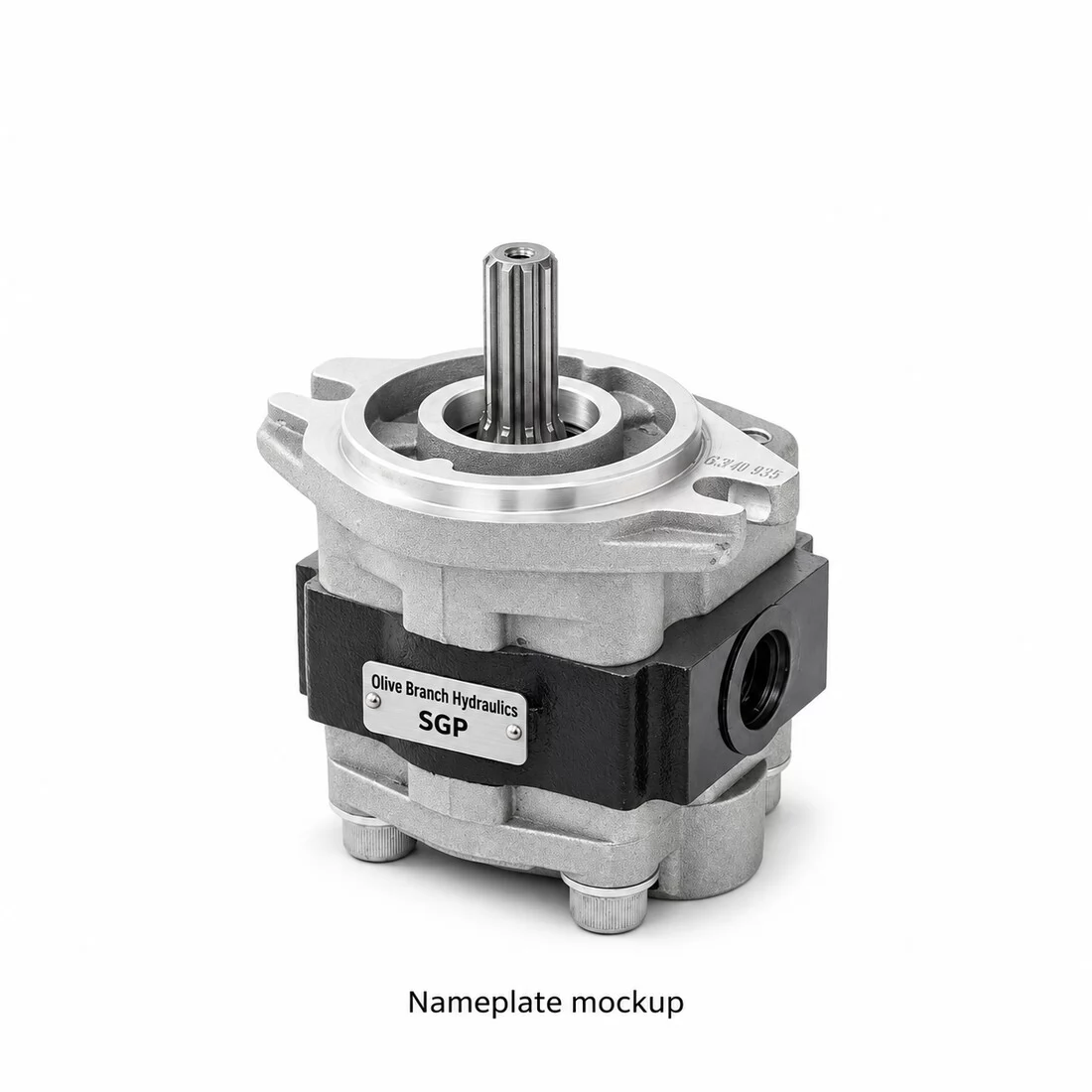
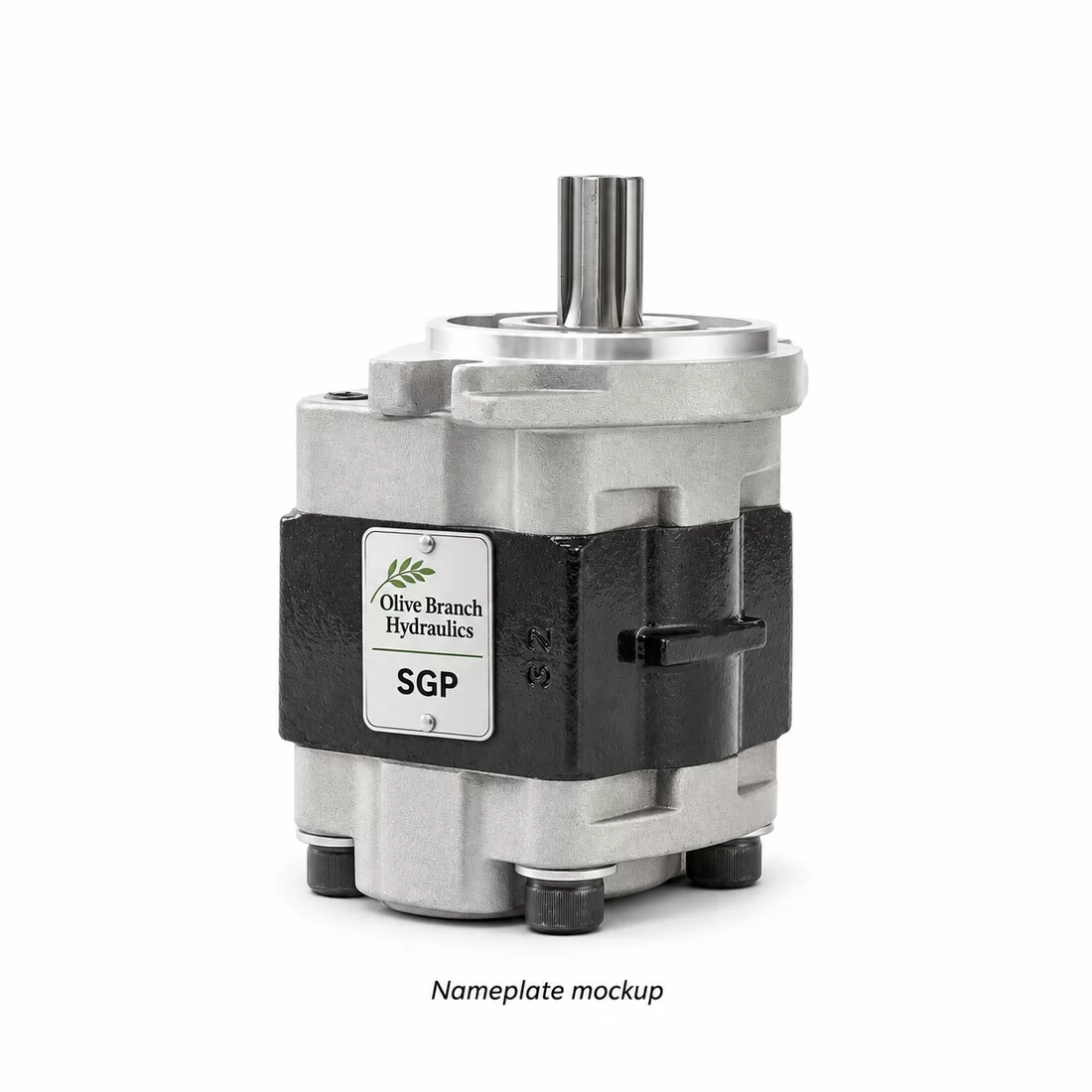
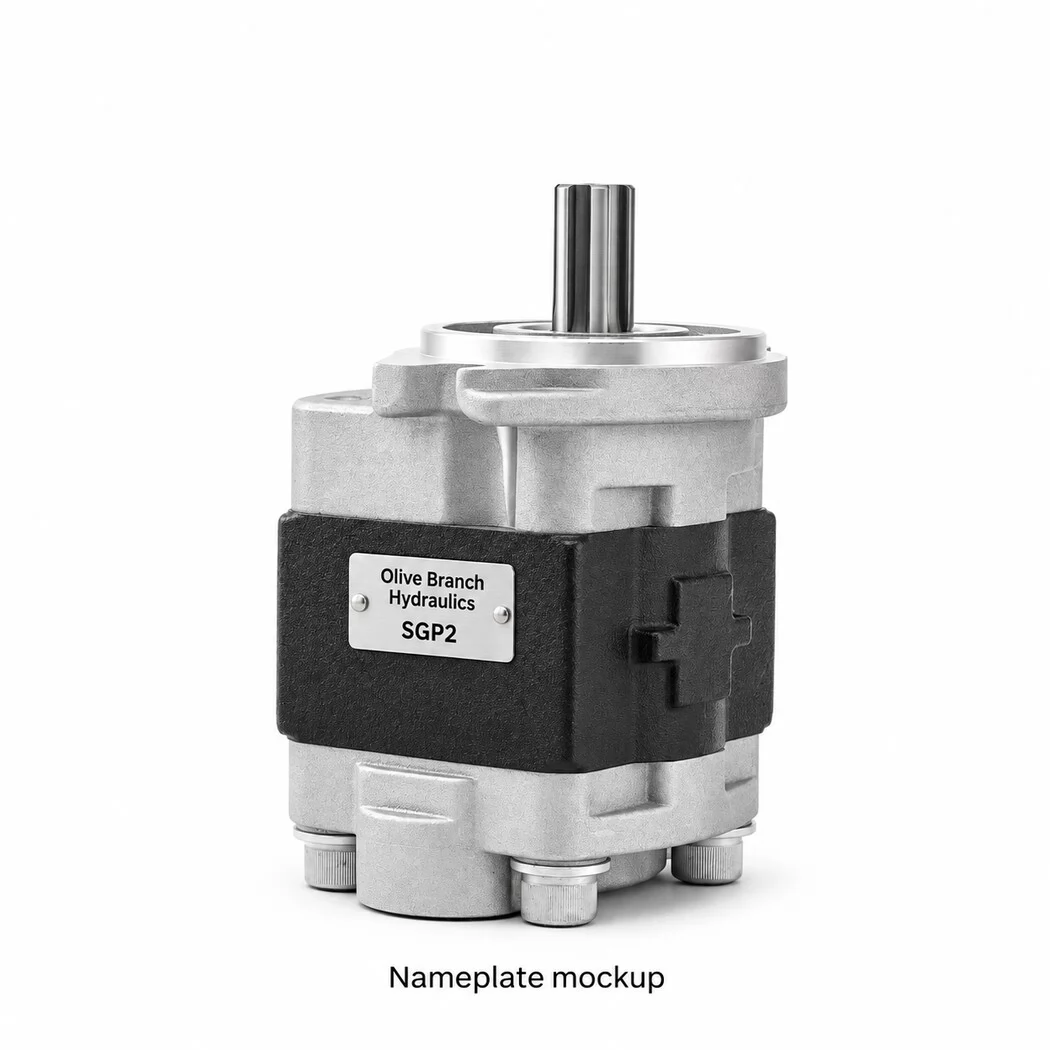
The CJH4 is a cast iron external gear pump for open-circuit agricultural machinery hydraulics. It is built in six catalogue sizes that share one mounting interface. The four-bolt square flange and splined drive are the features that decide whether it fits your machine. For that reason, every quotation starts with a dimensional check against your drawing, not a model-name match. The three-hole CJH3 uses a different mounting and is a separate family.
The pump body is cast iron, which typically gives the stiffness needed to hold gear-to-housing clearances at 20-25 MPa. Cast iron adds weight compared with lighter housings, which matters for mobile equipment with tight weight limits.
The pump is built to rotate in either direction, so inlet and outlet swap when rotation reverses. Confirm the shaft seal and any drain arrangement on the drawing. The suction-side port must be correct for the rotation you actually run.
The reference mounting is 80 × 80 mm with 4 × Ø13 holes and an Ø80 pilot across all sizes. Check the actual adapter, coupling, installation length and drive capacity for each selected displacement.
The CJH4-32 to CJH4-63 are rated 22 MPa (25 MPa max). The CJH4-80 and CJH4-100 drop to 20 MPa (23 MPa max). Choosing a larger size for flow therefore costs about 2 MPa of rated pressure.
Displacement, pressure and port size are the parameters that separate the six sizes. All sizes share a 2,200 rpm rated speed and a 2,500 rpm maximum.
Select the size by required flow at your engine or PTO speed, then check that rated pressure covers your relief setting. Port threads are catalogue references and must be confirmed on the drawing.
| Model | Displacement (cc/rev) | Rated / max pressure (MPa) | Catalogue port |
|---|---|---|---|
| CJH4-32 | 32 | 22 / 25 | G3/4 |
| CJH4-40 | 40 | 22 / 25 | G3/4 |
| CJH4-50 | 50 | 22 / 25 | G1 |
| CJH4-63 | 63 | 22 / 25 | G1 |
| CJH4-80 | 80 | 20 / 23 | G1 |
| CJH4-100 | 100 | 20 / 23 | G1-1/4 |
The housing is cast iron and carries the gear set and the bearing arrangement. The front face is machined to the four-hole square flange: 80 × 80 mm hole pattern, 4 × Ø13 through-holes and an Ø80 pilot on the reference drawing. Pilot diameter and hole position control alignment with the drive. These are the first dimensions we compare against your sample.
The drive is an external rectangular spline. The reference dimensions are Ø36 major and Ø32 minor diameter, with an 8 × 6 tooth callout on the source drawing. Spline engagement length and tooth form vary between drive couplings. A shaft that looks right in a photo can still fail to seat. Please check against a physical sample or a dimensioned drawing before you order.
Inspection is built around the drawing approved for your order.
Flange, pilot, spline, port threads and rotation are fixed on a confirmed drawing before production. That drawing is the acceptance reference for every later check.
Housings and covers are checked visually for casting defects and for machining allowance before they enter machining.
Pilot diameter, hole pattern and spline dimensions are measured against the confirmed drawing during machining.
Finished pumps are checked for port threads, rotation and marking, and for any test items agreed in the quotation. Required batch marking and inspection records are agreed with the order.
The general application is agricultural machinery hydraulics. Each installation is subject to matching against your drawing and duty.
Supplies open-circuit flow for lift, tipping and auxiliary functions. Choose the displacement from flow at working PTO or engine speed.
Larger sizes such as the CJH4-80 and CJH4-100 suit higher-flow circuits that run at or below 20 MPa rated pressure.
Used where the drive already has an 80 × 80 mm four-hole flange and matching spline. Fit is confirmed dimensionally, not by model name.
Match the pump rotation and the suction and pressure port positions to the drive direction before mounting.
Confirm that the coupling spline engages fully and that the Ø80 pilot seats without force. Misalignment typically loads the shaft seal and bearings.
Tighten the four mounting bolts in a cross pattern to the torque specified for your bolt grade.
Fill the pump and suction line with clean oil, then start at low speed and no load. Check for leaks and abnormal noise before you load the circuit.
Gear pump life typically depends more on oil condition and suction conditions than on running hours.
Contaminated oil is a common cause of side-wear in gear pumps. Follow the filtration and change intervals specified for the machine.
Restricted or long suction lines can cause cavitation. Keep inlet lines short and sized to the port.
Set the relief valve within the rated, not maximum, pressure for the chosen size.
Watch for flow loss, temperature rise and seal leakage. These are typical signs of internal wear.
Use required flow × 1,000 / drive speed to calculate theoretical displacement, allow for volumetric losses and select a build within pressure, torque and speed limits.
Confirm the continuous duty and relief setting against the selected build; maximum pressure is not a continuous-duty rating.
Send the flange, pilot and spline dimensions or a sample. A three-hole flange points to the separate CJH3 family.
Check whether your hoses need G3/4, G1 or G1-1/4 threads, or a different port specification on the drawing.
Give the rotation direction, oil type and working temperature so the build can be checked against your conditions.
Custom builds start from your sample or drawing and are quoted once the dimensions are confirmed.
Your existing pump is measured and reproduced to a drawing that you approve before tooling.
New castings or machining fixtures are made where your flange, port or shaft cannot be met from existing parts.
Port threads and spline details can be built to your drawing, subject to engineering review.
Your logo, labels, barcodes and cartons can be supplied. Your drawings and brand files are used only for your orders.
You send a drawing or sample, the quantity and the operating conditions.
A sample is built to the confirmed drawing. The sample terms are stated in the quote.
You test the sample on your machine and sign off on the drawing.
Batch production follows the approved sample. MOQ and schedule are confirmed in the quotation.
EXW Hebei, China. Other Incoterms are stated in the quotation on request.
Our sales office is in Xinji and production is in Ningjin, about 9 km apart.
Ports are capped to keep debris out during transit.
Neutral or private-label cartons are available. Packing quantity and weight are confirmed in the quote.
Commercial terms depend on the model mix, the customization and the tooling, so they are confirmed in each quotation.
| MOQ | Confirmed with quote · Depends on whether standard parts or new tooling are used |
|---|---|
| Sample | Confirmed with quote · Built to your confirmed drawing |
| Lead time | Confirmed with quote · Stated per order and quantity |
| Incoterms | EXW Hebei · Other terms are quoted on request |
| Payment | Confirmed with quote · Agreed before production |
Coverage and duration are written into the quotation for each order.
Specify the required batch identification and inspection documents for follow-up on field issues.
Engineers review installation, rotation and port questions against the order drawing.
Repeat orders are built to the same approved drawing, so specifications stay unchanged between batches.
Send your drawing or sample photos, the CJH4 size and quantity, the rotation and your destination market. Olive Branch Hydraulics will confirm fit and return a quotation that covers MOQ, sample terms, lead time and packaging.
| Standard model | Written variants | Displacement | Rated / max pressure (MPa) | Rated / max speed (rpm) |
|---|---|---|---|---|
| CJH4-32 | CJH4 32, CJH432 | 32cc | 22 / 25 | 2,200 / 2,500 |
| CJH4-40 | CJH4 40, CJH440 | 40cc | 22 / 25 | 2,200 / 2,500 |
| CJH4-50 | CJH4 50, CJH450 | 50cc | 22 / 25 | 2,200 / 2,500 |
| CJH4-63 | CJH4 63, CJH463 | 63cc | 22 / 25 | 2,200 / 2,500 |
| CJH4-80 | CJH4 80, CJH480 | 80cc | 20 / 23 | 2,200 / 2,500 |
| CJH4-100 | CJH4 100, CJH4100 | 100cc | 20 / 23 | 2,200 / 2,500 |
Pressure and speed values are catalogue references. Spaced and unhyphenated entries are writing variants, not additional manufacturer material numbers. Confirm any OEM number against the nameplate or sample.
Orbital motor shaft seal looks uneven? Learn what photos to send, how to check the drawing, and what to verify…
Can gear pumps run in reverse? Learn how bidirectional gear pump operation works, key design differences, and…
Vane pump vs gear pump: Compare efficiency, noise, cost & applications to find the best hydraulic pump for you…
Discover if gear pumps can safely run in reverse. Learn about bidirectional operation, seal design, and key tr…
Contact us now for a professional solution and fast quote.
Fill in your info to start a conversation.