Шестерёнчатые масляные насосы высокого давления: изменения в закупках 2026
Рост давления, эффективность 92–95% и кросс-справочник OEM меняют подход инженеров к выбору шестерёнчатых масл…

| Parameter | Specification |
|---|---|
| Pump type | Cast iron external gear pump |
| Displacement | 23–52 cm³/rev, 12 sizes |
| Continuous pressure | 250 bar (23–40 cc); 200 bar (44–52 cc) |
| Intermittent pressure | 280 bar (23–40 cc); 250 bar (44–52 cc) |
| Speed range | 600–3000 rpm |
| Fluid temperature | -15 to +80 °C (5–176 °F) |
| Fluid viscosity | 20–100 mm²/s (cSt) |
| Fit confirmation | By complete assembly code |
| Custom options | Shaft, flange, rotation, P/T ports |
| Incoterms | EXW Hebei, China |
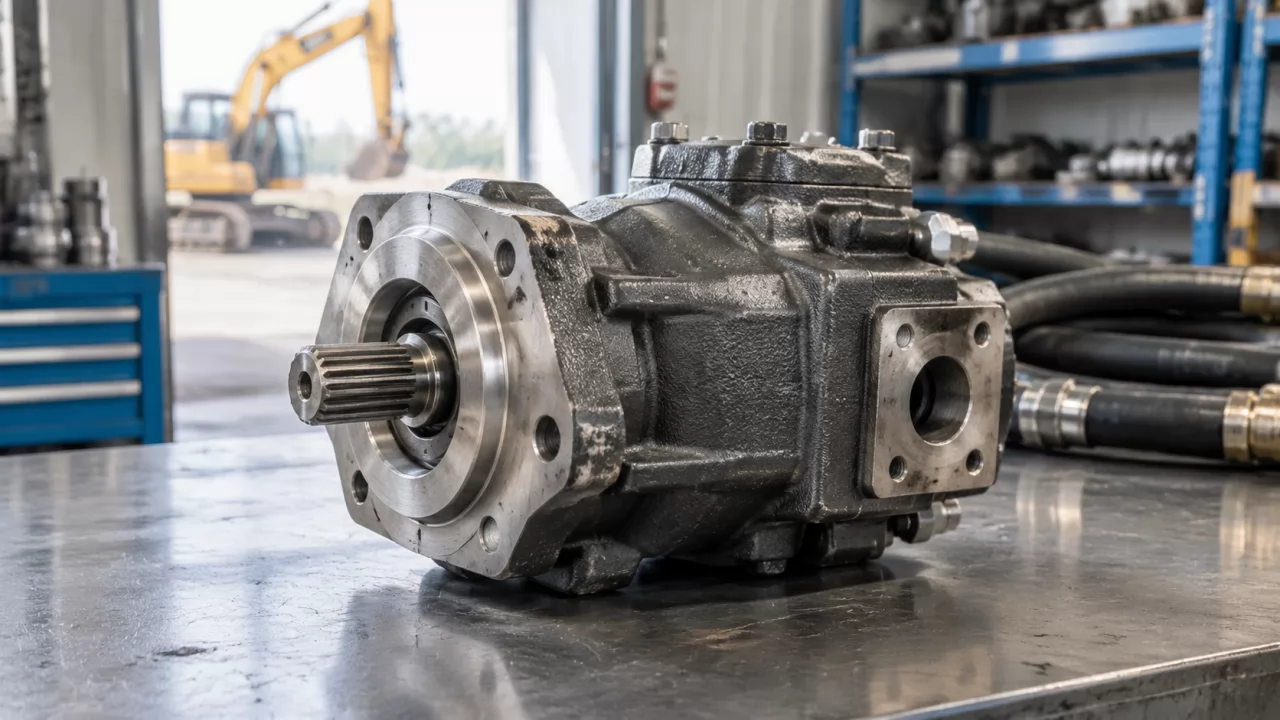
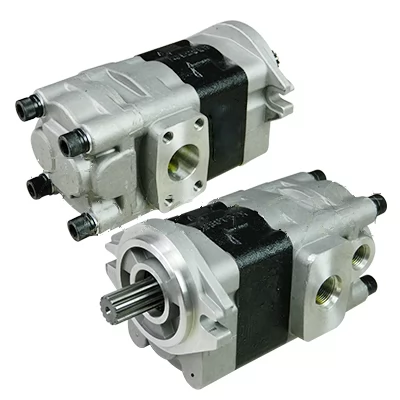
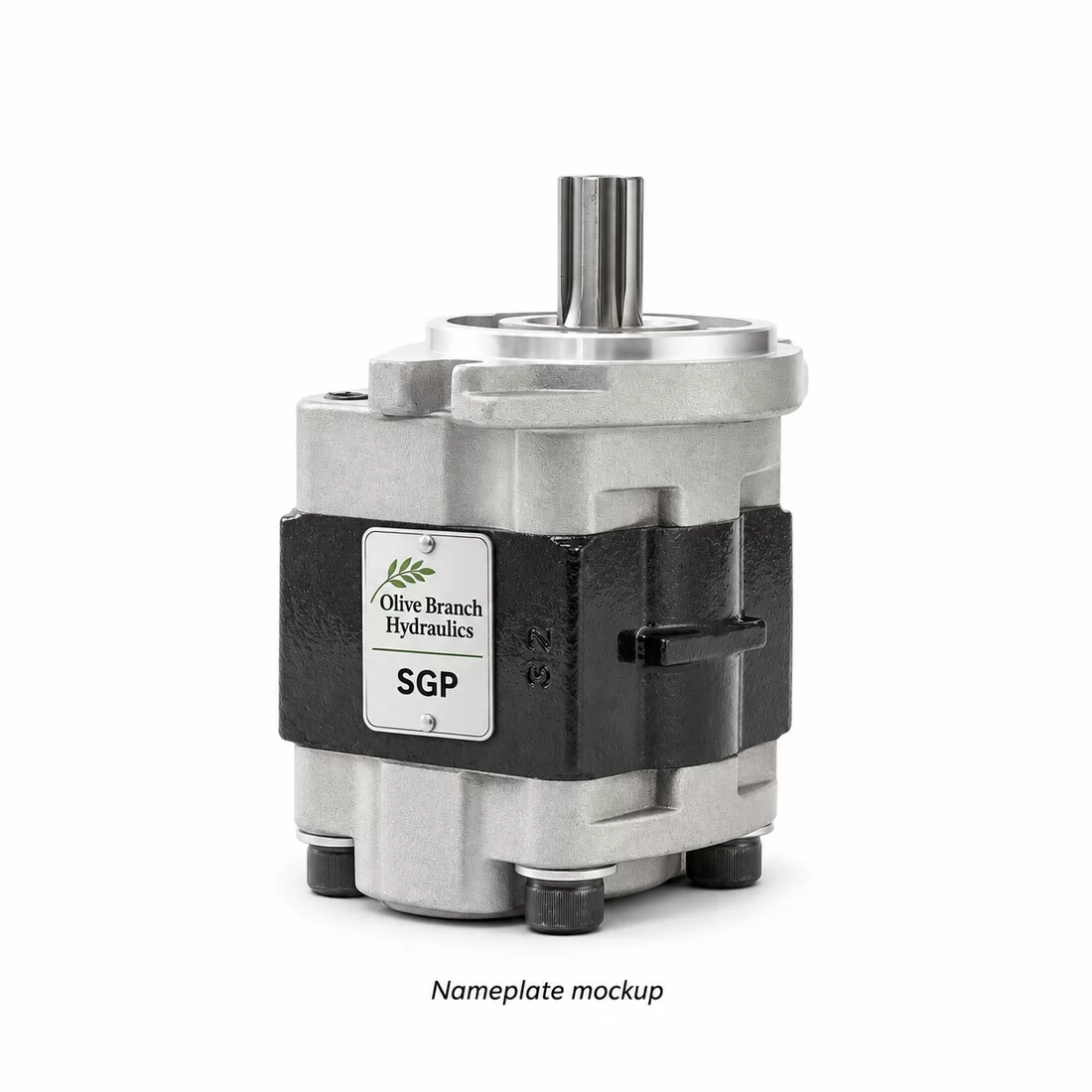
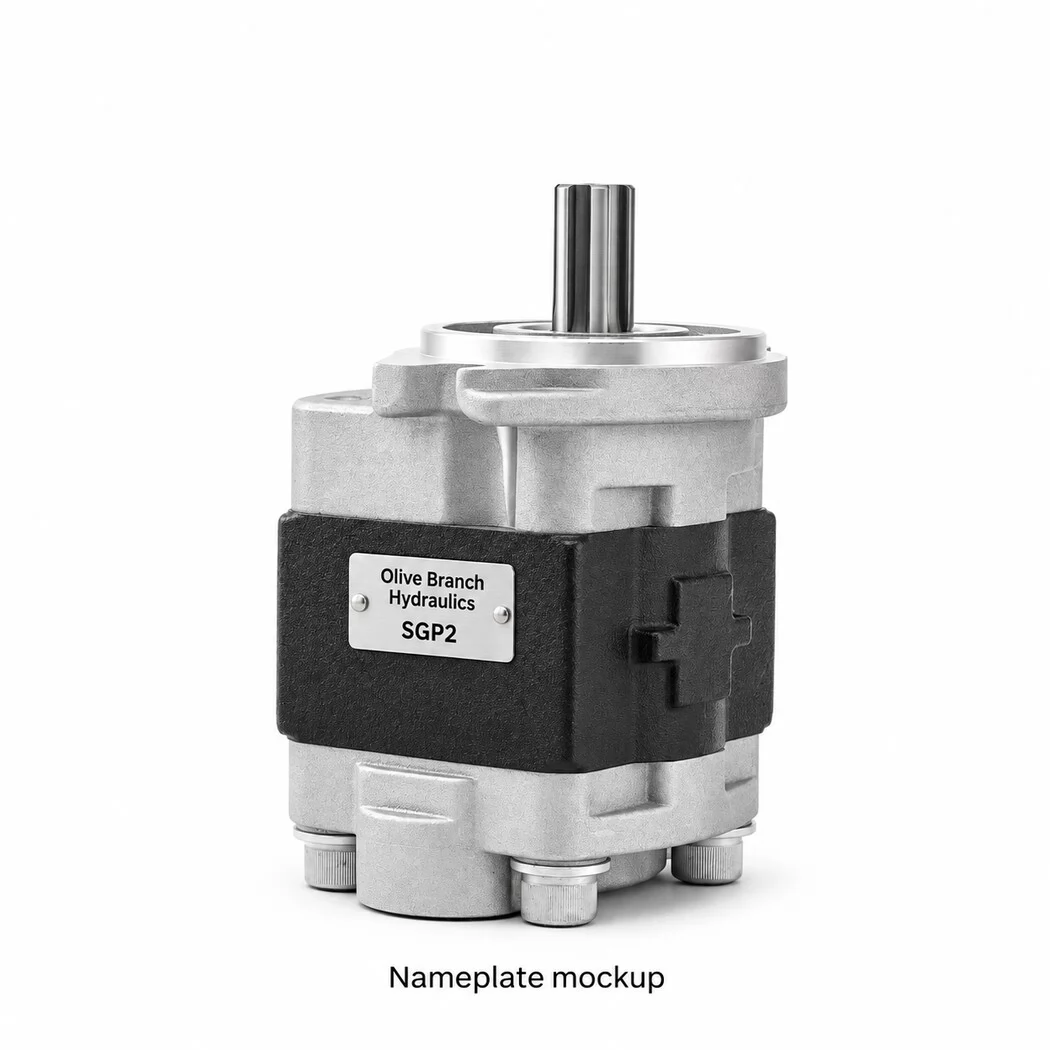
The product image is an Olive Branch Hydraulics nameplate mockup. The two catalogue drawings are reference views. Confirm the drawing and mounting dimensions for the selected assembly code.
This forklift gear pump is a cast iron external gear pump in 12 displacements from 23 to 52 cm³/rev. Sizes up to 40 cc are rated 250 bar continuous, and the 44–52 cc sizes are rated 200 bar continuous.
Start with where it does not fit. The larger sizes, 44 to 52 cm³/rev, drop to 200 bar continuous and 250 bar intermittent, so they are the wrong choice for a circuit that holds above 200 bar for long periods. No size in the range is rated above 250 bar continuous. The pump is also outside its catalogue conditions below 600 rpm or above 3000 rpm, with fluid hotter than +80 °C, or with viscosity outside 20–100 mm²/s.
It suits lift, tilt and auxiliary hydraulics on forklifts and similar material-handling equipment where the duty stays inside those limits. It also suits distributors who carry several displacements for replacement work. Displacement and the catalogue length dimension do not confirm fit. The shaft, rotation, flange and ports are fixed by the complete assembly code, and every order is matched against that code.
The 12 sizes split into two pressure classes, and the split falls between 40 and 44 cm³/rev.
The eight smaller sizes are 23, 25, 27, 28.2, 30, 32, 36 and 40 cm³/rev. They are rated 250 bar (3,626 psi) continuous and 280 bar (4,061 psi) intermittent. These sizes cover most lift-truck main pumps where the relief valve is set in the 200–250 bar band. The intermittent rating covers short pressure peaks, such as a mast reaching the end of its stroke. It does not cover a relief valve set to 280 bar for sustained operation.
The four larger sizes are 44, 48, 50 and 52 cm³/rev. They are rated 200 bar (2,901 psi) continuous and 250 bar intermittent. At a larger displacement, the same pressure puts more load on the gears, shafts and housing. The pressure rating comes down to keep that load within limits. If your circuit needs high flow and more than 200 bar continuous, a 36 or 40 cc size at higher shaft speed is often the better route. This works only if the drive can reach the required rpm within the 600–3000 rpm window.
All 12 sizes share the same catalogue conditions: 600–3000 rpm, fluid temperature from -15 to +80 °C (5–176 °F), and viscosity from 20 to 100 mm²/s (cSt). Below 20 mm²/s, internal leakage usually rises and volumetric efficiency falls, which is typical in hot, heavily cycled forklifts. Above 100 mm²/s, which is typical of cold starts, inlet filling becomes the risk. If your duty cycle regularly reaches either end of these limits, include it in your inquiry so the size choice can be checked against the operating point.
L is the catalogue drawing dimension only. It is useful for a first comparison against your installation space, but it does not confirm fit.
Theoretical flow is displacement × rpm ÷ 1000, shown here at 2,000 rpm before volumetric losses. Actual delivered flow is typically a few percent lower and depends on pressure, speed and viscosity.
| Displacement cm³/rev (in³/rev) | Drawing L mm (in) | Continuous bar (psi) | Intermittent bar (psi) | Theoretical flow at 2,000 rpm L/min |
|---|---|---|---|---|
| 23 (1.40) | 56.7 (2.23) | 250 (3,626) | 280 (4,061) | 46 |
| 25 (1.53) | 57.7 (2.27) | 250 (3,626) | 280 (4,061) | 50 |
| 27 (1.65) | 58.7 (2.31) | 250 (3,626) | 280 (4,061) | 54 |
| 28.2 (1.72) | 59.3 (2.33) | 250 (3,626) | 280 (4,061) | 56.4 |
| 30 (1.83) | 60.3 (2.37) | 250 (3,626) | 280 (4,061) | 60 |
| 32 (1.95) | 61.3 (2.41) | 250 (3,626) | 280 (4,061) | 64 |
| 36 (2.20) | 63.3 (2.49) | 250 (3,626) | 280 (4,061) | 72 |
| 40 (2.44) | 66.0 (2.60) | 250 (3,626) | 280 (4,061) | 80 |
| 44 (2.69) | 67.3 (2.65) | 200 (2,901) | 250 (3,626) | 88 |
| 48 (2.93) | 69.3 (2.73) | 200 (2,901) | 250 (3,626) | 96 |
| 50 (3.05) | 70.3 (2.77) | 200 (2,901) | 250 (3,626) | 100 |
| 52 (3.17) | 71.3 (2.81) | 200 (2,901) | 250 (3,626) | 104 |
Two pumps can share the same displacement and L dimension and still not fit the same truck.
The L column above comes from the catalogue drawing. It reflects the gear width that changes from size to size, but the overall installed length also depends on the shaft and flange version. The shaft type, direction of rotation, mounting flange, and port size and position are all defined in the complete assembly code. That code is the reference used for matching and quoting. Brand names and model numbers from other manufacturers are used only to identify the replacement. Compatibility is confirmed against the full assembly code, not a partial number.
External gear pumps of this type are usually built for one direction of rotation. The direction is stated as clockwise or counter-clockwise viewed from the shaft end. A pump running in the wrong direction will not prime and can be damaged quickly. Drive shafts on forklift pumps are typically splined or keyed and must match the coupling or gearbox output. Spline count, keyway width and shaft protrusion should be read from the original pump or its drawing.
The flange pattern and pilot diameter decide whether the pump bolts to the existing drive housing without adapters. Inlet and outlet port type, thread and position decide whether the existing hoses reconnect without rework. These are the dimensions most often missed when a replacement is ordered by displacement alone. Port configurations can be specified to suit your stock or hose standard, as described in the custom section below.
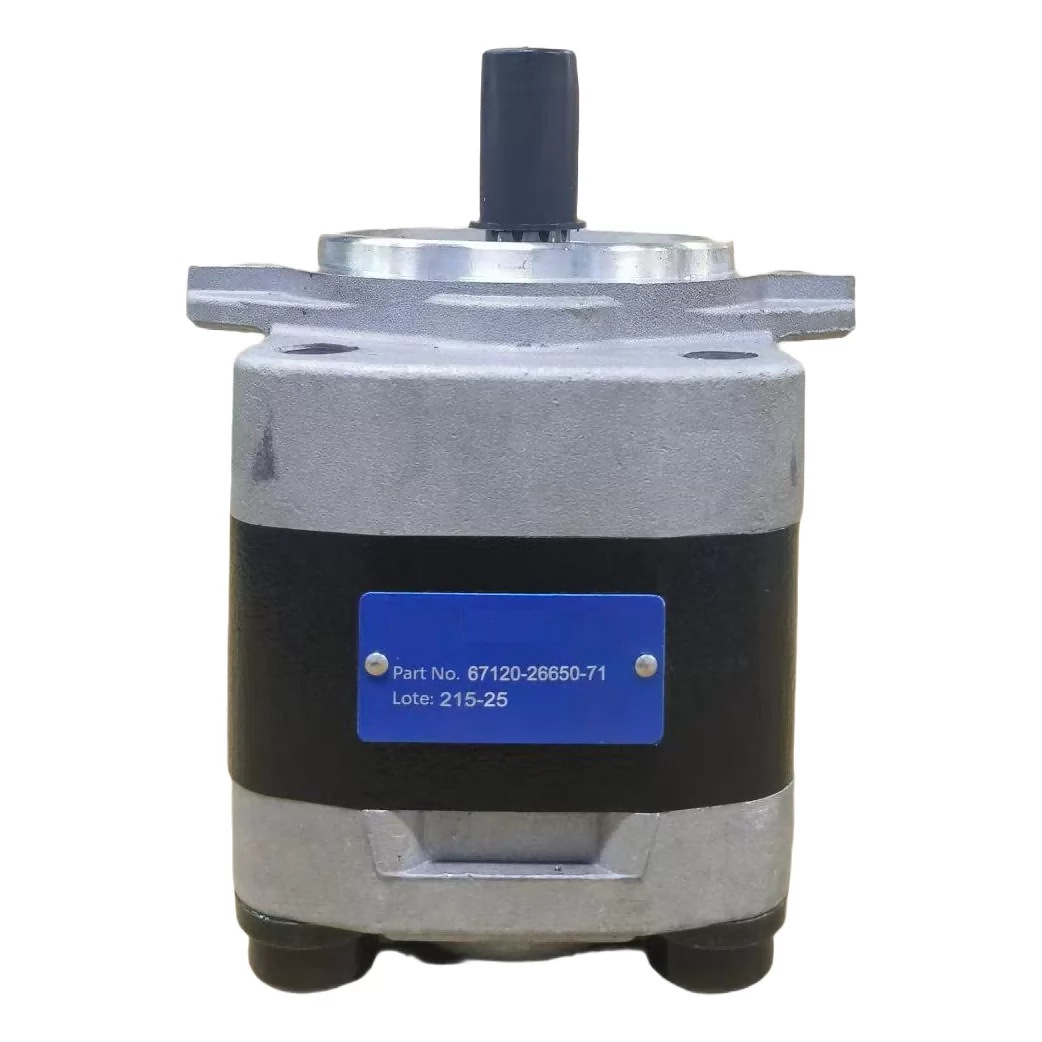
The most reliable input is the complete assembly code from the original pump nameplate. If the nameplate is missing or unreadable, send the original product code, the forklift make and model, and any equipment details, and the configuration is matched from those. Photos of the shaft end, flange face and ports, with key dimensions in mm or inches, shorten the matching step. For custom configurations, the original sample or an approved drawing is reviewed first to confirm the mounting interface, drive and ports.
Quote by assembly code, not by displacement. That is how a correctly sized pump avoids arriving with the wrong shaft.
Only have the forklift model and an old part number?Send the original product code, the truck model and photos of the shaft, flange and ports. The configuration is matched from those details before any price is fixed.
Custom pumps are built to your specification for OEM lines and aftermarket programmes. Drawings are approved before any sample is made.
Customisation stays within the cast iron SGP-type platform and the pressure and speed ratings shown above. A change of port, shaft or flange does not change the rated pressure class of a displacement.
Pressure and tank port type, thread and position can be set to match the hose standard a distributor already stocks. This reduces the number of adapter fittings needed at installation.
Drive shaft, mounting flange and direction of rotation are built to customer specification or to the original pump. They are confirmed against your sample or drawing before tooling.
Design drafts and 3D renders are provided for approval before sampling. Dimensional disputes are settled on paper rather than on a finished batch.
Where a configuration needs dedicated tooling, the tooling fee is stated in the quotation. It is refunded in full once cumulative purchases of that model reach the agreed quantity, and quantities from multiple orders count towards the total.
You send the assembly code, original sample details or drawing, and quantity per size. The mounting interface, drive and ports are reviewed against that input.
Design drafts and 3D renders are issued for your approval. The approved drawing becomes the reference for sampling and inspection.
A sample is built to the approved drawing for fit checks on your equipment before production is released.
Batch production runs with in-process quality control. The quality checks are agreed in the quotation: dimensional checks, leak inspection, and pressure and flow testing where applicable.
Every pump goes through 100% final inspection before packaging. Goods are then handed over EXW Hebei, China.
All commercial terms are fixed in one written quotation before tooling or production begins.
Pricing
Unit price by quantity tier
Tiers are stated per configuration in the written quotation
MOQ
Stated in the written quotation
Depends on the confirmed configuration and order quantity
Lead time
Confirmed per stage in the written quotation
Covers drawing approval, sampling and repeat production orders
Incoterms
EXW Hebei, China
Handed over at the manufacturer's facility in Hebei
Payment
Confirmed in the written quotation
Agreed together with price tiers and Incoterms
Tooling fee
Refunded in full at the agreed cumulative quantity
Applies only to configurations that need dedicated tooling
Send the complete assembly code, or the original product code with the forklift model, plus the quantity per size and your destination port. You will receive a written quotation covering tiered unit pricing, MOQ, lead time by stage, any tooling fee and refund quantity, and EXW Hebei terms.
Рост давления, эффективность 92–95% и кросс-справочник OEM меняют подход инженеров к выбору шестерёнчатых масл…
Узнайте, как выбрать шестеренный гидронасос высокого давления по непрерывному давлению, режиму работы и типу м…
Испытания шестеренного насоса под нагрузкой показывают, обеспечивает ли он номинальный расход, удерживает ли н…
Узнайте, как пошагово отрегулировать давление поршневого насоса. Получите информацию о необходимых инструмента…
Свяжитесь с нами прямо сейчас для получения профессионального решения и быстрого расчёта стоимости.
Fill in your info to start a conversation.